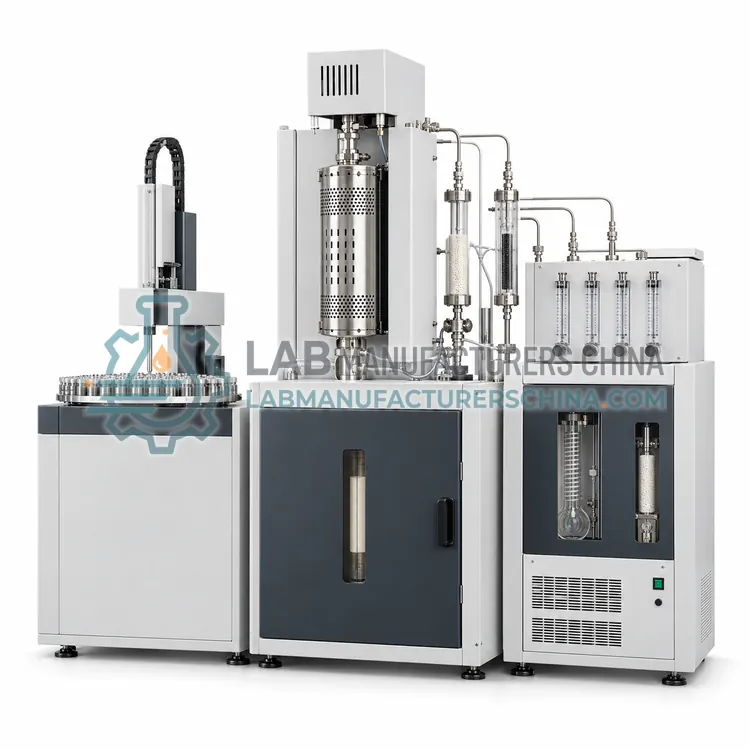
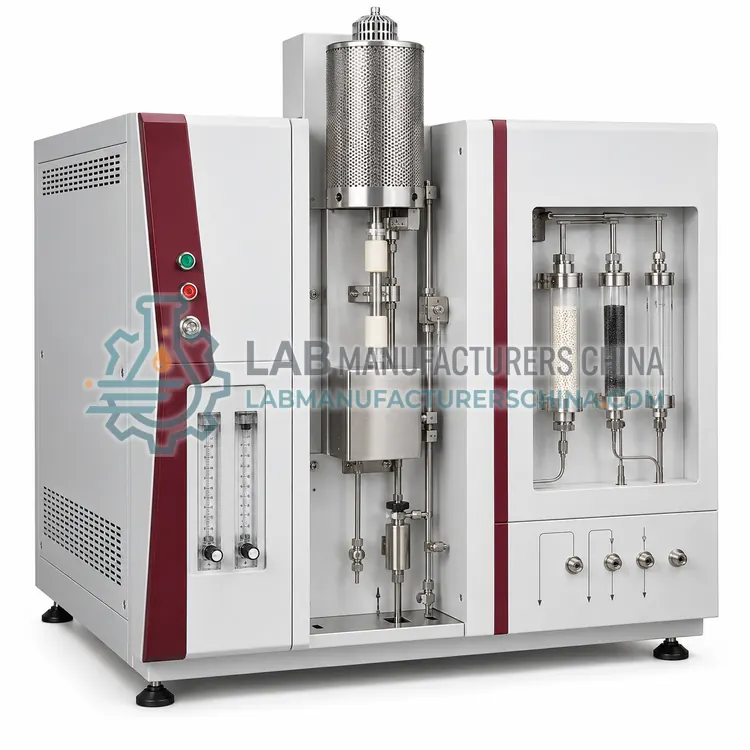
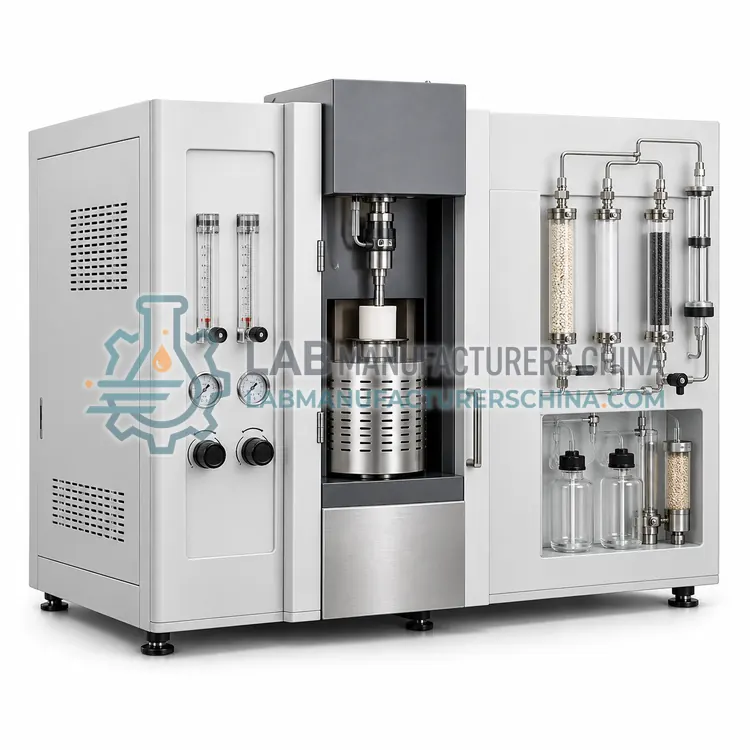
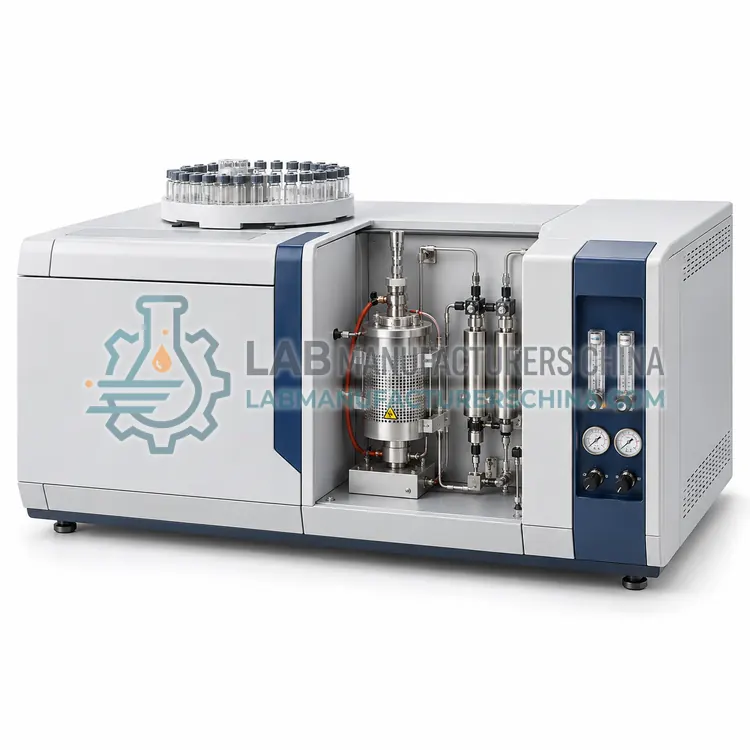
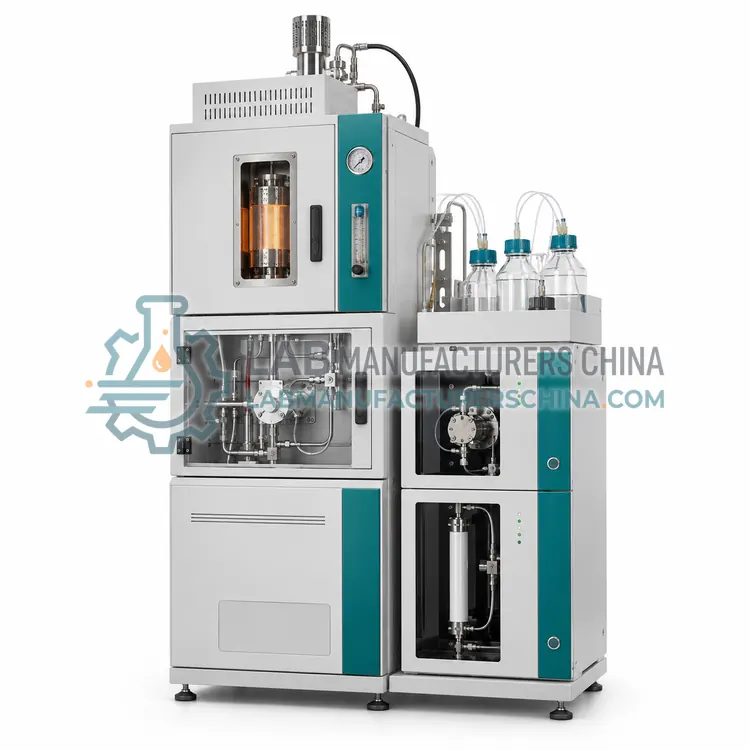
How do Elemental Analyzers work?
Elemental analyzers decompose a sample completely, so the element of interest can be measured regardless of its chemical form. Combustion systems burn organic samples in oxygen at about 1000 °C and detect CO2, H2O, N2, and SO2 by thermal conductivity or infrared cells. Inert gas fusion melts metals and ceramics in graphite crucibles, releasing oxygen as CO, and nitrogen and hydrogen as N2 and H2. Induction furnace analyzers combust metals in oxygen and detect CO2 and SO2 by infrared. For liquid fuels, UV fluorescence detects SO2 excited at about 215 nm and chemiluminescence detects nitric oxide reacting with ozone. Combustion ion chromatography absorbs halogen gases into solution and separates the anions on an ion-exchange column. All methods are calibrated against certified standards and require blank control.
Which Elemental Analyzers variants are available?
- Combustion CHNS/O Organic Elemental Analyzer — A combustion CHNS/O organic elemental analyzer burns milligram samples at about 1000 °C and measures C, H, N, S, and optionally O with a thermal conductivity detector.
- Inert Gas Fusion Oxygen-Nitrogen-Hydrogen Elemental Analyzer — An inert gas fusion elemental analyzer melts metals and ceramics in a graphite crucible at 2000–3000 °C and detects oxygen, nitrogen, and hydrogen.
- Infrared Induction Furnace Carbon-Sulfur Elemental Analyzer — An infrared induction furnace carbon-sulfur analyzer combusts metals, ores, and inorganic solids in oxygen and measures CO2 and SO2 by infrared absorption.
- UV Fluorescence and Chemiluminescence Sulfur-Nitrogen Elemental Analyzer — A UV fluorescence and chemiluminescence sulfur-nitrogen analyzer burns liquid or gaseous hydrocarbon samples at about 1050 °C and detects SO2 by UV fluorescence and NO by chemiluminescence.
- Combustion Ion Chromatography Halogen-Sulfur Elemental Analyzer — A combustion ion chromatography analyzer burns solid, liquid, or gas samples, absorbs the gases in solution, and separates fluoride, chloride, bromide, and sulfate by ion chromatography.
How do I choose the right variant?
Choose by the element and matrix rather than by instrument name. Organic powders needing C, H, N, S call for a flash combustion analyzer, and metals needing oxygen, nitrogen, or hydrogen need inert gas fusion. Carbon and sulfur in steel and minerals call for an infrared induction furnace analyzer. Sulfur and nitrogen at mg/kg levels in liquid fuels call for UV fluorescence and chemiluminescence analyzers. Total halogens and sulfur in polymers, electronics, or waste point to combustion ion chromatography. Next specify concentration range, sample mass, required standards, autosampler capacity, and throughput. Ask suppliers for repeatability on reference materials representing your matrix, and confirm consumable requirements such as crucibles, catalysts, reagents, and high-purity gases, since these often dominate operating costs.
Where are Elemental Analyzers used?
Elemental Analyzers are specified in materials composition verification, petroleum and fuel quality testing, polymer and electronics halogen screening, metallurgical gas and carbon analysis and pharmaceutical and organic synthesis purity.
Which standards and certifications apply?
Work with Elemental Analyzers is commonly governed by ASTM E1019, ASTM D5373, ASTM D5453, ASTM D4629, ISO 10304-1, ASTM D7359, ISO/IEC 17025 and IEC 61010-1. Instrument certifications such as CE marking are confirmed per configuration and never assumed.
What are the key considerations before purchase?
Elemental analyzers require stable power, clean dry gases of 99.99–99.999% purity, and exhaust extraction for SO2 and combustion gases. Microbalance-based systems need a vibration-free bench and temperature stability within about 2 °C. Calibrate with certified reference materials at installation, after maintenance, and at defined intervals, and run check standards at the start of each batch. Consumables such as combustion tubes, crucibles, and traps have defined lifetimes based on sample count. Samples must be homogeneous, dry, and free of surface contamination. Laboratories under ISO/IEC 17025 or GLP should keep calibration records, balance certificates, and maintenance logs, and validate methods on matrix-matched standards. Electrical safety of laboratory equipment is commonly assessed to IEC 61010-1.