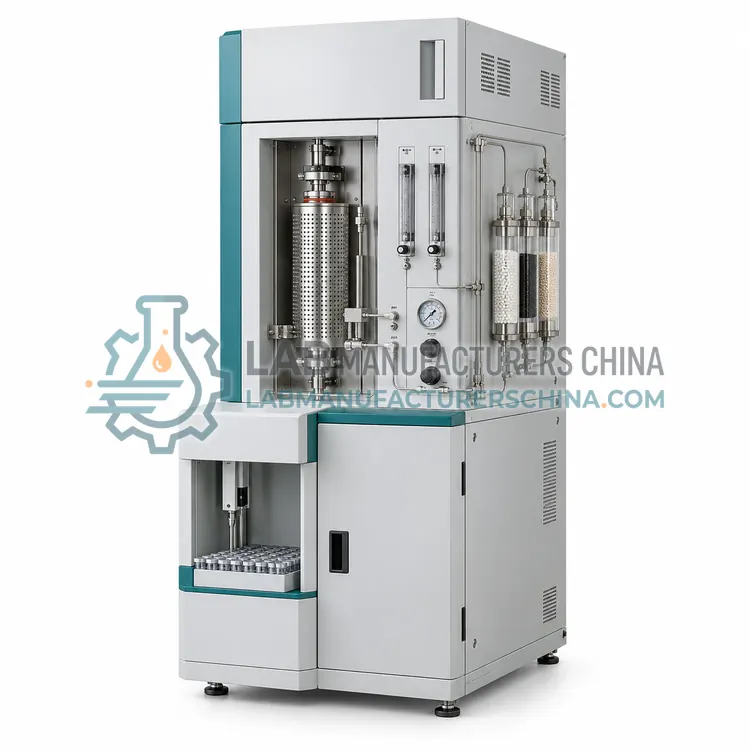
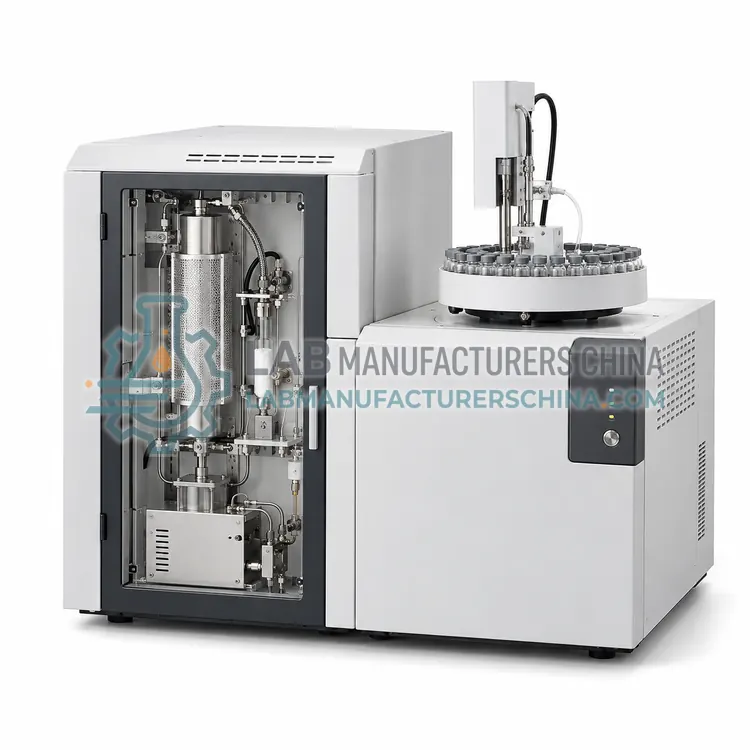
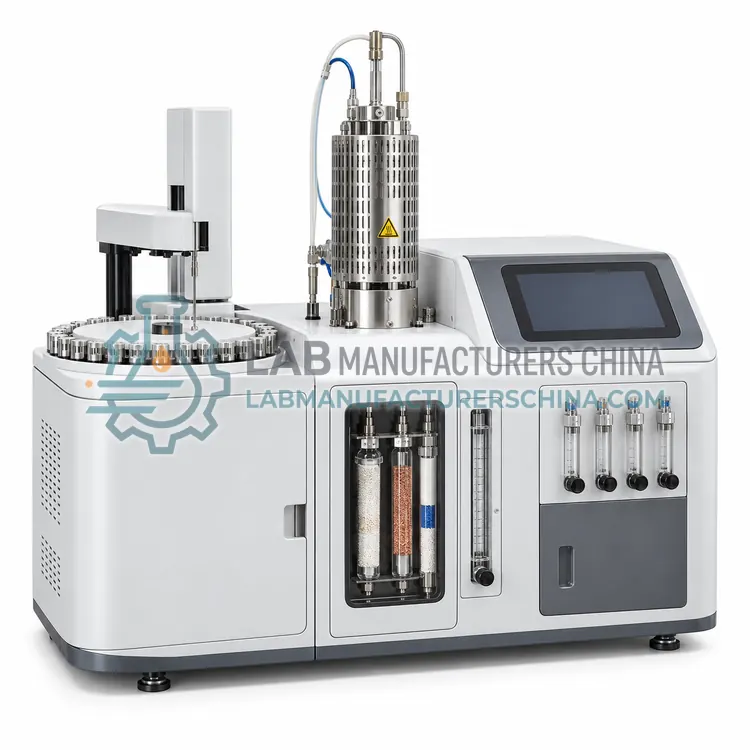
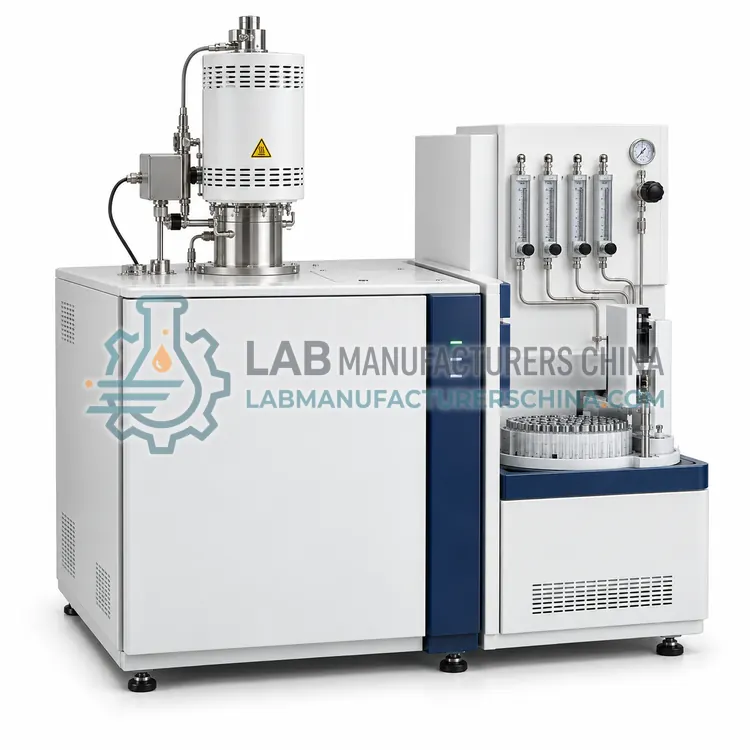
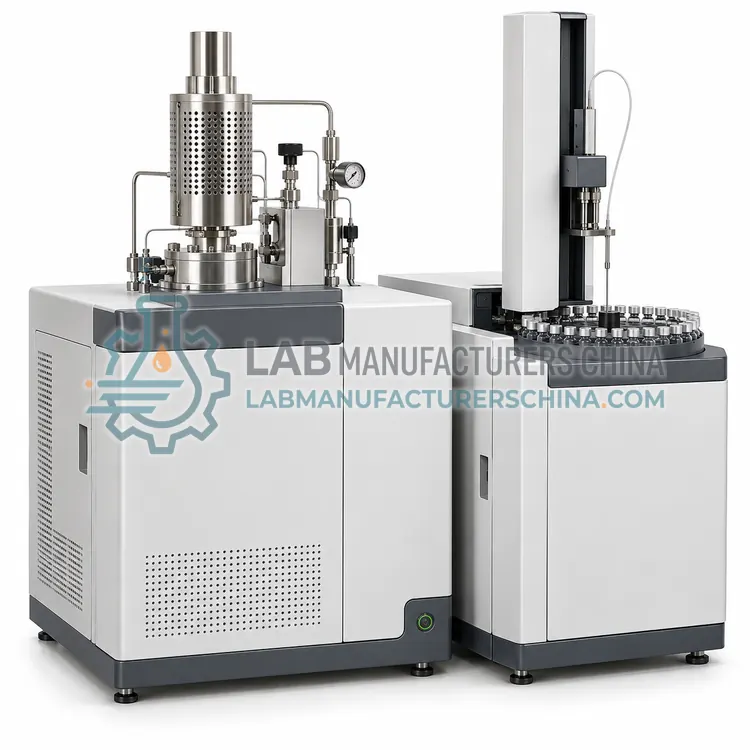
How do CHNS Analyzers work?
A CHNS analyzer drops a weighed sample of 1–10 mg, sealed in a tin capsule, into a combustion reactor held at roughly 950–1150 °C while a timed oxygen pulse is injected. The tin oxidizes exothermically and lifts the local temperature to about 1800 °C, converting the sample to CO2, H2O, N2, nitrogen oxides, and SO2. A helium carrier gas sweeps these products through a reduction zone of hot copper, which converts nitrogen oxides to N2 and removes excess oxygen. Water traps or a chromatographic column then separate the gases. A thermal conductivity detector measures each in turn and the software integrates peak areas against a calibration with a standard such as acetanilide or sulfanilamide. Oxygen mode uses pyrolysis over nickel-coated carbon to form CO.
Which CHNS Analyzers variants are available?
- Micro CHNS Elemental Analyzer — A micro CHNS elemental analyzer burns 1–3 mg organic samples by dynamic flash combustion and reports carbon, hydrogen, nitrogen, and sulfur.
- Macro CHNS Elemental Analyzer — A macro CHNS elemental analyzer handles 50 mg to several grams of heterogeneous material such as coal, soil, biomass, or fertilizer.
- CHNS/O Elemental Analyzer with Oxygen Pyrolysis — A CHNS/O elemental analyzer adds a dedicated pyrolysis reactor so oxygen can be measured by difference-free direct determination alongside C, H, N, and S.
- CHNS Analyzer with Liquid and Volatile Sample Module — A CHNS analyzer with a liquid and volatile sample module seals liquids, oils, and volatile solids in hermetic capsules or injects them directly.
- Benchtop CHN Analyzer for Routine Nitrogen-Protein Testing — A benchtop CHN analyzer for nitrogen-protein testing uses the Dumas combustion method to determine total nitrogen and convert it to crude protein.
How do I choose the right variant?
The main decision is the set of elements and the sample type. A CHN configuration suits most organic synthesis work, while CHNS adds a sulfur channel and requires a column able to resolve SO2. Add oxygen pyrolysis if O is required. Microbalance resolution governs precision for small samples, so specify 0.001 mg for 1–2 mg weighing. Autosampler capacity of 50–120 positions matters for routine throughput. Liquid and volatile samples need sealed capsules or a liquid-capable module. Large-sample and heterogeneous materials such as soil, coal, and biomass benefit from macro analyzers handling 100 mg to several grams. Check whether the vendor documents accuracy, typically within 0.3% absolute of theoretical values for pure standards, and whether the software supports 21 CFR Part 11 style audit trails if used in regulated laboratories.
Where are CHNS Analyzers used?
CHNS Analyzers are specified in organic synthesis and purity confirmation, pharmaceutical raw material QC, polymer and battery material composition, coal, coke, and biomass ultimate analysis and food and feed nitrogen-to-protein testing.
Which standards and certifications apply?
Work with CHNS Analyzers is commonly governed by ASTM D5373, ISO 29541, ASTM D5291, ASTM E1019, USP <233>, ISO/IEC 17025 and IEC 61010-1. Instrument certifications such as CE marking are confirmed per configuration and never assumed.
What are the key considerations before purchase?
Install in a draft-free room with stable temperature and a vibration-free bench for the microbalance. Helium of 99.999% purity and oxygen of 99.995% purity are typical, and gas leaks are the most common cause of drift. Calibrate with a certified standard in multiple weights and run blanks and conditioning samples at the start of each day. Replace the combustion tube packing, reduction copper, and water trap on a schedule based on sample count, usually every 300–1000 samples. Halogenated and high-ash samples consume consumables faster and may need additives such as vanadium pentoxide. Laboratories under GLP or ISO/IEC 17025 should record system suitability using check standards and keep balance calibration records.