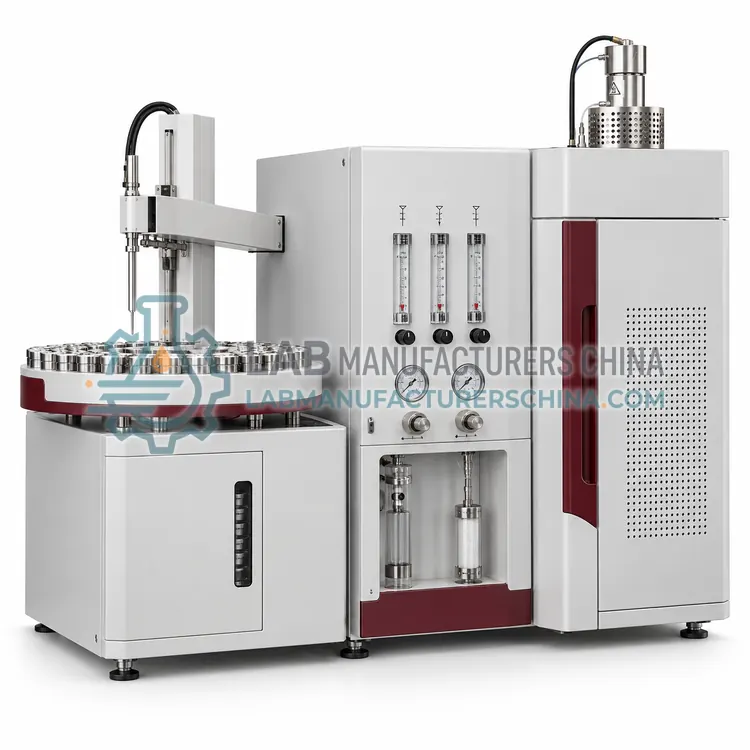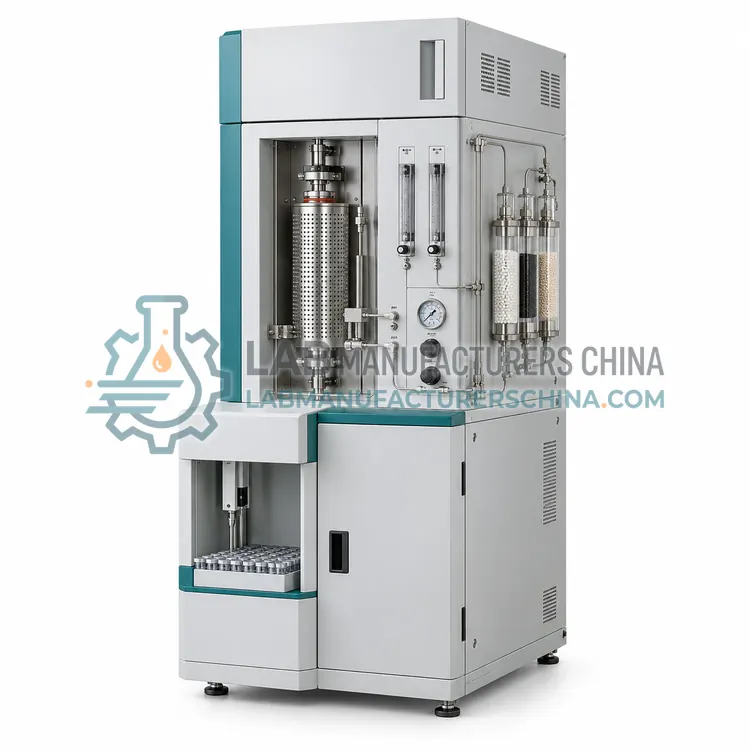
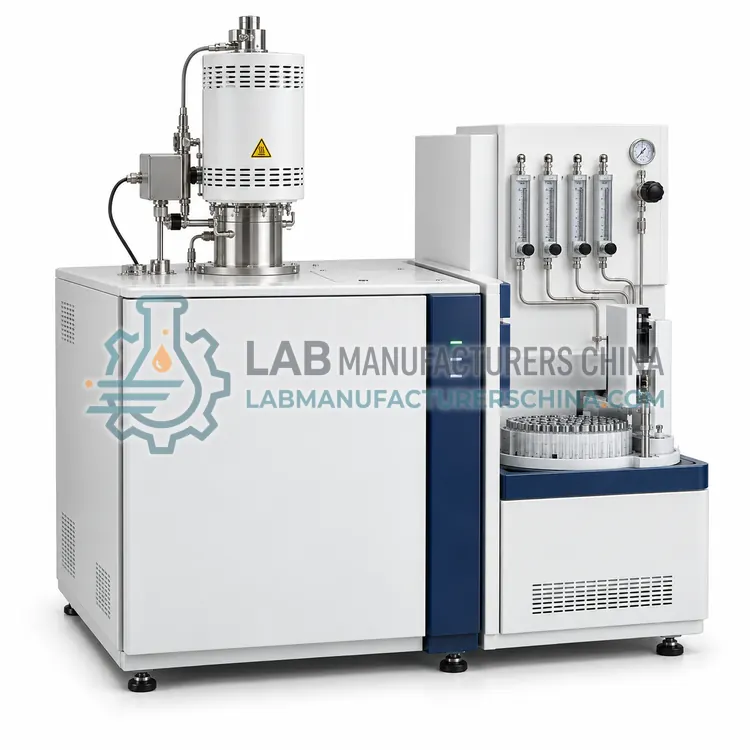
CHNS Analyzer with Liquid and Volatile Sample Module
带液体和挥发性样品模块的 CHNS 分析仪
- SKU CHA-0004
- CHNS Analyzers
- CE (to be confirmed)
- ISO 9001 manufacturing (to be confirmed)
Price on request — FOB / CIF quoted per order
Prices depend on configuration, quantity and destination port.
Key specifications
| Elements measured | C, H, N, S |
|---|---|
| Liquid sample mass | 1–10 mg sealed, or 0.2–2 µL injected |
| Carbon range | 0.1–100% |
| Hydrogen range | 0.1–25% |
| Sample types | Liquids, oils, volatile solids |
| Capsule material | Tin, aluminum, silver |
Request a quote Download brochure · to be provided
By Lab Manufacturers China Technical TeamLast reviewed Standards: ASTM D5373, ISO 29541, ASTM D5291
What is the CHNS Analyzer with Liquid and Volatile Sample Module?
A CHNS analyzer with a liquid and volatile sample module seals liquids, oils, and volatile solids in hermetic capsules or injects them directly. It is selected for fuels, solvents, resins, and monomers that evaporate from open tin capsules.
What is the CHNS Analyzer with Liquid and Volatile Sample Module?
A CHNS analyzer with a liquid and volatile sample module seals liquids, oils, and volatile solids in hermetic capsules or injects them directly. It is selected for fuels, solvents, resins, and monomers that evaporate from open tin capsules.
Overview
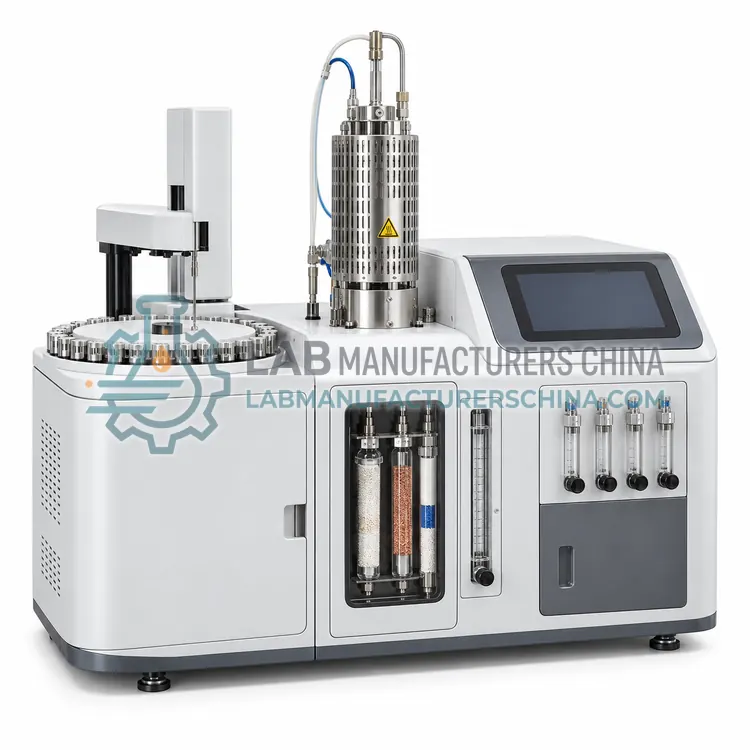
This variant retains the standard flash combustion reactor but adds hardware for samples that cannot be weighed into open tin capsules. A capsule sealing press cold-welds tin or aluminum capsules around liquids of 1–10 mg, preventing evaporation before combustion. Alternatively, a liquid autosampler injects microliter volumes directly into the reactor through a septum port. For volatile solids and viscous oils, sealed capsules or absorbent carriers such as chromosorb are used. The module often includes a dedicated autosampler tray with a cooled option, and software records a separate calibration for liquid standards such as high-purity hydrocarbons or diesel reference fuels. Combustion parameters are extended to handle higher hydrogen content and soot formation, with longer oxygen dosing. The result accuracy depends strongly on sample transfer technique, so sealing quality and weighing speed matter as much as detector performance.
How does it work?
A CHNS analyzer drops a weighed sample of 1–10 mg, sealed in a tin capsule, into a combustion reactor held at roughly 950–1150 °C while a timed oxygen pulse is injected. The tin oxidizes exothermically and lifts the local temperature to about 1800 °C, converting the sample to CO2, H2O, N2, nitrogen oxides, and SO2. A helium carrier gas sweeps these products through a reduction zone of hot copper, which converts nitrogen oxides to N2 and removes excess oxygen. Water traps or a chromatographic column then separate the gases. A thermal conductivity detector measures each in turn and the software integrates peak areas against a calibration with a standard such as acetanilide or sulfanilamide. Oxygen mode uses pyrolysis over nickel-coated carbon to form CO.
What are the key features?
- Capsule sealing press cold-welds tin or aluminum capsules around liquid samples.
- Optional liquid autosampler injects microliter volumes directly into the combustion reactor.
- Extended oxygen dosing handles hydrogen-rich samples and reduces soot formation.
- Separate liquid calibration using hydrocarbon and fuel reference materials.
- Cooled autosampler tray limits evaporation loss during long sequences.
What are the technical specifications?
A typical chns analyzer with liquid and volatile sample module configuration offers elements measured of C, H, N, S, liquid sample mass of 1–10 mg sealed, or 0.2–2 µL injected, carbon range of 0.1–100%, hydrogen range of 0.1–25%, sample types of Liquids, oils, volatile solids and capsule material of Tin, aluminum, silver. Values are indicative of the product class; the exact figures for each configuration are confirmed on the quotation and the calibration documents supplied with the instrument.
Which applications is it used for?
The CHNS Analyzer with Liquid and Volatile Sample Module is used in petroleum products and lubricant analysis, solvent and monomer purity, resin and adhesive composition and biofuel and bio-oil characterization. Across the wider CHNS Analyzers class, laboratories also deploy it for organic synthesis and purity confirmation, pharmaceutical raw material QC and polymer and battery material composition.
Which standards and certifications apply?
Relevant standards and methods include ASTM D5373, ISO 29541, ASTM D5291, ASTM E1019, USP <233>, ISO/IEC 17025 and IEC 61010-1. Certification candidates for this model are CE and ISO 9001 manufacturing; each is to be confirmed for the specific configuration before shipment, and certificates are supplied only where they have been issued.
Install in a draft-free room with stable temperature and a vibration-free bench for the microbalance. Helium of 99.999% purity and oxygen of 99.995% purity are typical, and gas leaks are the most common cause of drift. Calibrate with a certified standard in multiple weights and run blanks and conditioning samples at the start of each day. Replace the combustion tube packing, reduction copper, and water trap on a schedule based on sample count, usually every 300–1000 samples. Halogenated and high-ash samples consume consumables faster and may need additives such as vanadium pentoxide. Laboratories under GLP or ISO/IEC 17025 should record system suitability using check standards and keep balance calibration records.
How do I select the right CHNS Analyzer with Liquid and Volatile Sample Module?
Choose this variant when a significant share of samples are liquids or volatile solids that evaporate during weighing. Verify the method with your own matrix and certified liquid standards. In an RFQ, specify sealing press or liquid autosampler, volatility range, sample mass, and whether methods such as ASTM D5291 must be supported.
How does it compare with other CHNS Analyzers variants?
The main decision is the set of elements and the sample type. A CHN configuration suits most organic synthesis work, while CHNS adds a sulfur channel and requires a column able to resolve SO2. Add oxygen pyrolysis if O is required. Microbalance resolution governs precision for small samples, so specify 0.001 mg for 1–2 mg weighing. Autosampler capacity of 50–120 positions matters for routine throughput. Liquid and volatile samples need sealed capsules or a liquid-capable module. Large-sample and heterogeneous materials such as soil, coal, and biomass benefit from macro analyzers handling 100 mg to several grams. Check whether the vendor documents accuracy, typically within 0.3% absolute of theoretical values for pure standards, and whether the software supports 21 CFR Part 11 style audit trails if used in regulated laboratories.
Full specifications
| Elements measured | C, H, N, S |
|---|---|
| Liquid sample mass | 1–10 mg sealed, or 0.2–2 µL injected |
| Carbon range | 0.1–100% |
| Hydrogen range | 0.1–25% |
| Sample types | Liquids, oils, volatile solids |
| Capsule material | Tin, aluminum, silver |
| Repeatability (RSD) | ≤0.5% for hydrocarbon standard |
| Combustion temperature | Up to 1150 °C |
| Autosampler tray | Cooled option, 60–100 positions |
| Detector | Thermal conductivity detector |
Indicative values for this product class. Final specifications are confirmed on the quotation and in the calibration documents supplied with the instrument.
Applications
- Petroleum products and lubricant analysis
- Solvent and monomer purity
- Resin and adhesive composition
- Biofuel and bio-oil characterization
Key features
- Capsule sealing press cold-welds tin or aluminum capsules around liquid samples.
- Optional liquid autosampler injects microliter volumes directly into the combustion reactor.
- Extended oxygen dosing handles hydrogen-rich samples and reduces soot formation.
- Separate liquid calibration using hydrocarbon and fuel reference materials.
- Cooled autosampler tray limits evaporation loss during long sequences.
Frequently asked questions about CHNS Analyzer with Liquid and Volatile Sample Module
Liquids are sealed in tin or aluminum capsules using a cold-welding press, or injected directly with a liquid autosampler. Sealing prevents evaporation between weighing and combustion, which is the main source of low results for volatile samples.
It is commonly applied to ASTM D5291 for carbon, hydrogen, and nitrogen in petroleum products and lubricants. Laboratories should validate recovery on reference fuels and oils, since sealing technique and hydrogen-rich combustion affect results.
Hydrogen-rich hydrocarbons can burn incompletely and form soot, leading to low carbon. Longer oxygen dosing, higher oxygen flow, and additives such as tungsten trioxide help, and the combustion tube should be inspected and replaced when deposits appear.
It measures the percentages of carbon, hydrogen, nitrogen, and sulfur in a sample. Chemists use the result to confirm empirical formulas and purity, QC laboratories to verify raw materials, and fuel and food laboratories to characterize coal, biomass, and protein content.
For homogeneous pure organic standards, results typically agree with theoretical values within about 0.3% absolute, which is the usual acceptance criterion in chemistry journals. Accuracy depends on weighing precision, complete combustion, calibration with suitable standards, and sample homogeneity.
Not in the standard combustion mode. Oxygen is determined in a separate pyrolysis run, where the sample decomposes at about 1060 °C over nickel-coated carbon to form CO, detected by the thermal conductivity detector. Many instruments offer this as an optional configuration, and it requires a different reactor setup.
Related models
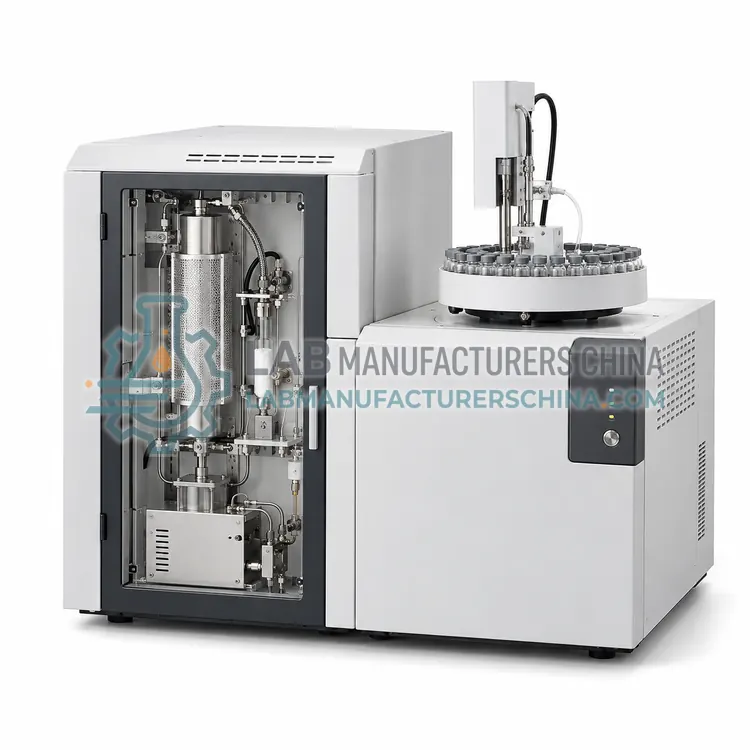
Benchtop CHN Analyzer for Routine Nitrogen-Protein Testing
用于常规氮-蛋白质检测的台式 CHN 分析仪
- CE (to be confirmed)
- +1