Combustion Ion Chromatography Halogen-Sulfur Elemental Analyzer
燃烧离子色谱卤素硫元素分析仪
- SKU ELA-0005
- Elemental Analyzers
- CE (to be confirmed)
- ISO 9001 manufacturing (to be confirmed)
Price on request — FOB / CIF quoted per order
Prices depend on configuration, quantity and destination port.
Key specifications
| Elements measured | F, Cl, Br, I, S (as sulfate) |
|---|---|
| Detection limit (halogens) | 1–10 mg/kg |
| Sample mass | 10–100 mg |
| Combustion temperature | 900–1100 °C |
| Absorption solution | Water with hydrogen peroxide |
| IC detector | Suppressed conductivity |
Request a quote Download brochure · to be provided
By Lab Manufacturers China Technical TeamLast reviewed Standards: ASTM E1019, ASTM D5373, ASTM D5453
What is the Combustion Ion Chromatography Halogen-Sulfur Elemental Analyzer?
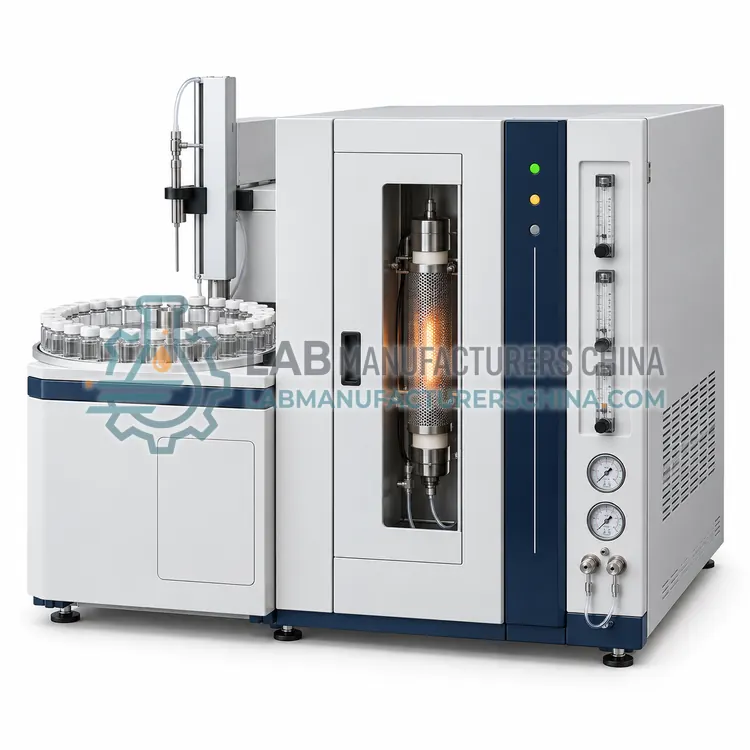
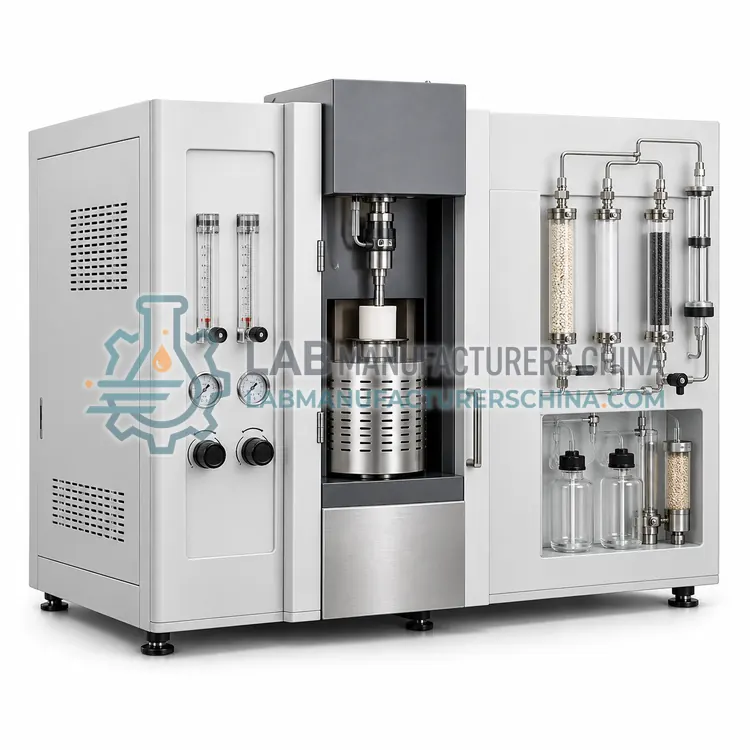
A combustion ion chromatography analyzer burns solid, liquid, or gas samples, absorbs the gases in solution, and separates fluoride, chloride, bromide, and sulfate by ion chromatography. It determines total halogens and sulfur in polymers, electronics, and waste.
What is the Combustion Ion Chromatography Halogen-Sulfur Elemental Analyzer?
A combustion ion chromatography analyzer burns solid, liquid, or gas samples, absorbs the gases in solution, and separates fluoride, chloride, bromide, and sulfate by ion chromatography. It determines total halogens and sulfur in polymers, electronics, and waste.
Overview
The combustion ion chromatography analyzer couples a pyrohydrolytic combustion furnace at 900–1100 °C, an absorption module, and an ion chromatograph with suppressed conductivity detection. Samples of 10–100 mg are burned in an argon and oxygen stream with water addition, which converts organic halogens and sulfur to HF, HCl, HBr, and SO2. The gases are absorbed in an aqueous solution, often with hydrogen peroxide to oxidize sulfite to sulfate, and injected automatically into the IC. Detection limits are typically 1–10 mg/kg for halogens. The method is used to verify halogen-free status of electronics materials according to IEC 61249-2-21 and EN 14582, where limits such as 900 mg/kg chlorine and 900 mg/kg bromine apply. Since sample preparation is minimal, it replaces bomb combustion and offline digestion in many laboratories.
How does it work?
Elemental analyzers decompose a sample completely, so the element of interest can be measured regardless of its chemical form. Combustion systems burn organic samples in oxygen at about 1000 °C and detect CO2, H2O, N2, and SO2 by thermal conductivity or infrared cells. Inert gas fusion melts metals and ceramics in graphite crucibles, releasing oxygen as CO, and nitrogen and hydrogen as N2 and H2. Induction furnace analyzers combust metals in oxygen and detect CO2 and SO2 by infrared. For liquid fuels, UV fluorescence detects SO2 excited at about 215 nm and chemiluminescence detects nitric oxide reacting with ozone. Combustion ion chromatography absorbs halogen gases into solution and separates the anions on an ion-exchange column. All methods are calibrated against certified standards and require blank control.
What are the key features?
- Pyrohydrolytic combustion converts organic halogens and sulfur to HF, HCl, HBr, and SO2.
- Automatic absorption and injection into ion chromatography minimize manual handling.
- Simultaneous determination of fluoride, chloride, bromide, and sulfate.
- Detection limits of 1–10 mg/kg for halogens in solid and liquid samples.
- Autosampler handles boats for solids and syringes for liquids.
What are the technical specifications?
A typical combustion ion chromatography halogen-sulfur elemental analyzer configuration offers elements measured of F, Cl, Br, I, S (as sulfate), detection limit (halogens) of 1–10 mg/kg, sample mass of 10–100 mg, combustion temperature of 900–1100 °C, absorption solution of Water with hydrogen peroxide and IC detector of Suppressed conductivity. Values are indicative of the product class; the exact figures for each configuration are confirmed on the quotation and the calibration documents supplied with the instrument.
Which applications is it used for?
The Combustion Ion Chromatography Halogen-Sulfur Elemental Analyzer is used in halogen-free verification of electronics and PCBs, roHS and WEEE screening, polymer and plastic halogen content and waste and alternative fuel characterization. Across the wider Elemental Analyzers class, laboratories also deploy it for materials composition verification, petroleum and fuel quality testing and polymer and electronics halogen screening.
Which standards and certifications apply?
Relevant standards and methods include ASTM E1019, ASTM D5373, ASTM D5453, ASTM D4629, ISO 10304-1, ASTM D7359, ISO/IEC 17025 and IEC 61010-1. Certification candidates for this model are CE and ISO 9001 manufacturing; each is to be confirmed for the specific configuration before shipment, and certificates are supplied only where they have been issued.
Elemental analyzers require stable power, clean dry gases of 99.99–99.999% purity, and exhaust extraction for SO2 and combustion gases. Microbalance-based systems need a vibration-free bench and temperature stability within about 2 °C. Calibrate with certified reference materials at installation, after maintenance, and at defined intervals, and run check standards at the start of each batch. Consumables such as combustion tubes, crucibles, and traps have defined lifetimes based on sample count. Samples must be homogeneous, dry, and free of surface contamination. Laboratories under ISO/IEC 17025 or GLP should keep calibration records, balance certificates, and maintenance logs, and validate methods on matrix-matched standards. Electrical safety of laboratory equipment is commonly assessed to IEC 61010-1.
How do I select the right Combustion Ion Chromatography Halogen-Sulfur Elemental Analyzer?
Select combustion ion chromatography for halogen or sulfur speciation in complex solids and liquids where XRF screening is not accurate enough. It is slower than screening techniques. Specify elements, limits, sample types, absorption conditions, and IEC 61249-2-21 or EN 14582 support.
How does it compare with other Elemental Analyzers variants?
Choose by the element and matrix rather than by instrument name. Organic powders needing C, H, N, S call for a flash combustion analyzer, and metals needing oxygen, nitrogen, or hydrogen need inert gas fusion. Carbon and sulfur in steel and minerals call for an infrared induction furnace analyzer. Sulfur and nitrogen at mg/kg levels in liquid fuels call for UV fluorescence and chemiluminescence analyzers. Total halogens and sulfur in polymers, electronics, or waste point to combustion ion chromatography. Next specify concentration range, sample mass, required standards, autosampler capacity, and throughput. Ask suppliers for repeatability on reference materials representing your matrix, and confirm consumable requirements such as crucibles, catalysts, reagents, and high-purity gases, since these often dominate operating costs.
Full specifications
| Elements measured | F, Cl, Br, I, S (as sulfate) |
|---|---|
| Detection limit (halogens) | 1–10 mg/kg |
| Sample mass | 10–100 mg |
| Combustion temperature | 900–1100 °C |
| Absorption solution | Water with hydrogen peroxide |
| IC detector | Suppressed conductivity |
| Repeatability (RSD) | ≤5% at 100 mg/kg |
| Analysis time | About 15–25 min per sample |
| Gas supply | Argon and oxygen, 99.99% |
| Autosampler | Boat and liquid |
Indicative values for this product class. Final specifications are confirmed on the quotation and in the calibration documents supplied with the instrument.
Applications
- Halogen-free verification of electronics and PCBs
- RoHS and WEEE screening
- Polymer and plastic halogen content
- Waste and alternative fuel characterization
Key features
- Pyrohydrolytic combustion converts organic halogens and sulfur to HF, HCl, HBr, and SO2.
- Automatic absorption and injection into ion chromatography minimize manual handling.
- Simultaneous determination of fluoride, chloride, bromide, and sulfate.
- Detection limits of 1–10 mg/kg for halogens in solid and liquid samples.
- Autosampler handles boats for solids and syringes for liquids.
Frequently asked questions about Combustion Ion Chromatography Halogen-Sulfur Elemental Analyzer
XRF is a fast screening technique but is affected by matrix and sample geometry. Combustion IC destroys the matrix and measures halogen anions by ion chromatography, giving lower detection limits and more reliable quantification near regulatory limits.
IEC 61249-2-21 defines halogen-free as at most 900 mg/kg chlorine, 900 mg/kg bromine, and 1500 mg/kg combined. Customers may specify stricter limits, and analytical results should state uncertainty near these thresholds.
Fluoride can be measured, but it needs pyrohydrolytic conditions and quartz-free or ceramic parts in some configurations, because fluorine can react with quartz. Verify recovery with fluorine-containing reference materials before routine use.
An elemental analyzer measures the total mass fraction of specific elements in a sample. It decomposes the sample by combustion or fusion, converts elements to detectable gases or ions, and quantifies them using thermal conductivity, infrared, fluorescence, chemiluminescence, or ion chromatography.
Common targets are carbon, hydrogen, nitrogen, sulfur, oxygen, and halogens such as chlorine, bromine, and fluorine. Trace metals are normally measured by atomic spectroscopy or ICP instead, so elemental analyzers cover mainly light, non-metallic elements and gases in metals.
Often yes. Flash combustion, inert gas fusion, induction furnace, UV fluorescence, and combustion ion chromatography each target different elements and matrices. Some platforms are modular, but no single design is optimal for all elements and sample types.
Related models
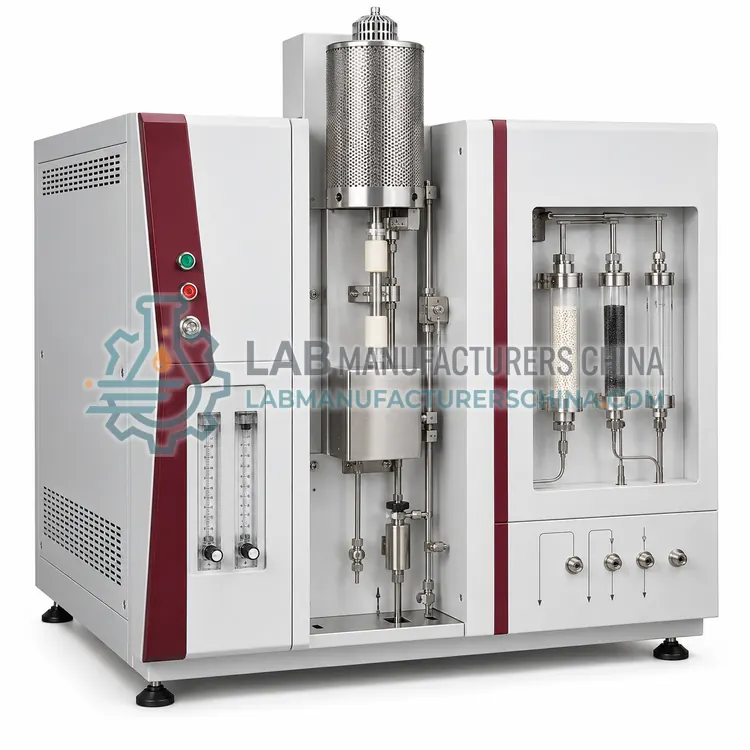
UV Fluorescence and Chemiluminescence Sulfur-Nitrogen Elemental Analyzer
紫外荧光和化学发光硫氮元素分析仪
- CE (to be confirmed)
- +1