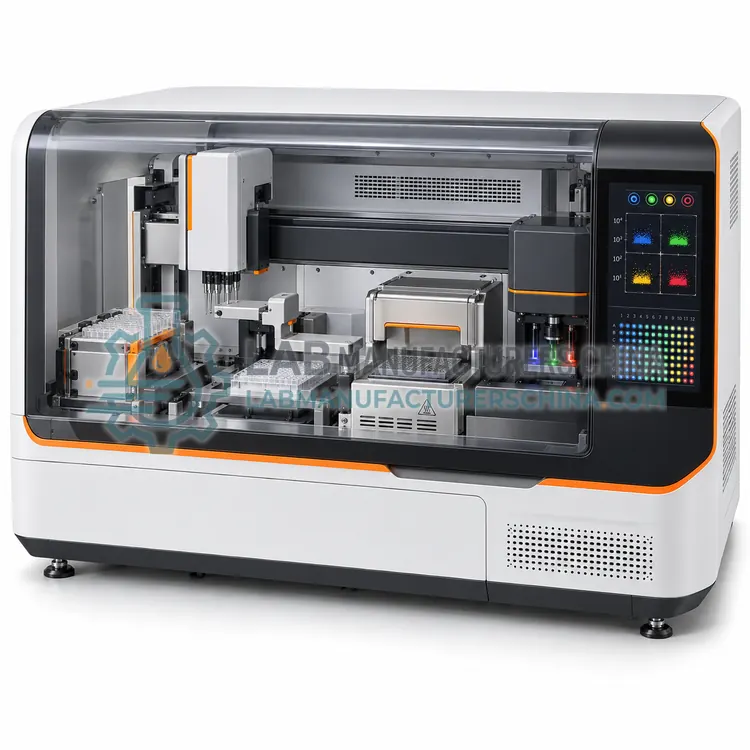
How do Digital PCR work?
In digital PCR the sample and master mix are partitioned into many independent reactions, as water-in-oil droplets, nanoliter wells on a plate, or microchambers on a chip. Partitions are thermally cycled to end point, and a fluorescence reader classifies each as positive or negative. If λ is the average number of copies per partition, the fraction of negative partitions equals e^−λ, so concentration follows from the count of negatives, partition volume and dilution. Because quantification relies on counting rather than amplification kinetics, it is less affected by inhibitors and efficiency differences and offers high precision at low copy number. Key components are the partitioning unit, a thermal cycler, a multi-color optical reader and analysis software with threshold setting.
Which Digital PCR variants are available?
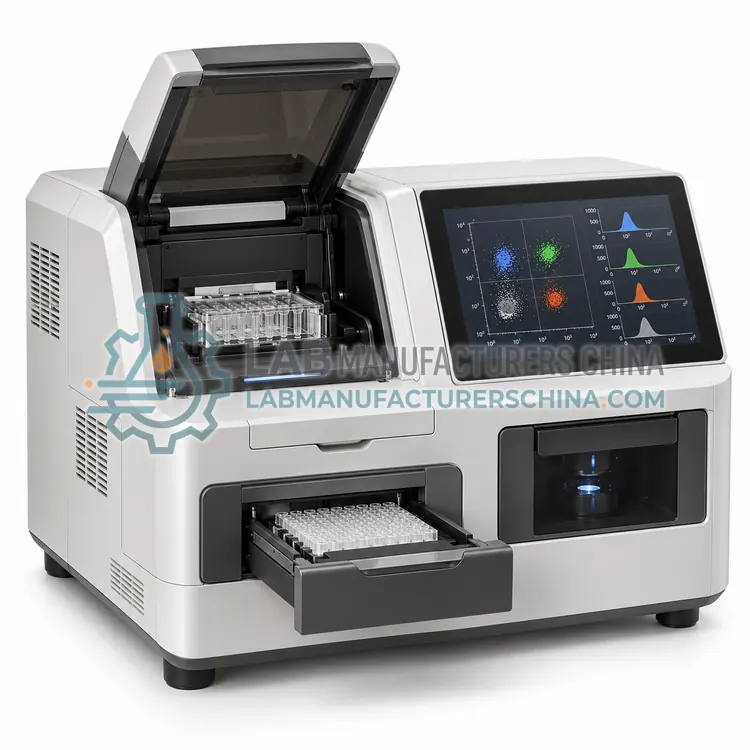
- Droplet Digital PCR System — A droplet digital PCR system partitions each sample into about 20,000 nanoliter water-in-oil droplets using a generator, cycles them in a standard thermal cycler, then reads fluorescence droplet by droplet in a flow reader.
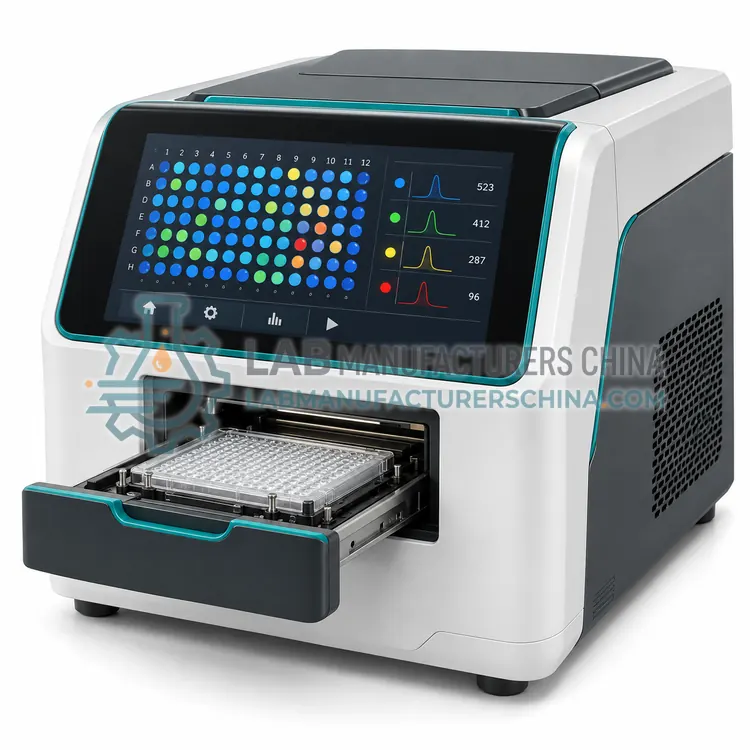
- Nanoplate-Based Digital PCR System — A nanoplate digital PCR system loads each sample into thousands of fixed nanoliter wells on a single-use plate, then cycles and images the plate in an integrated instrument.
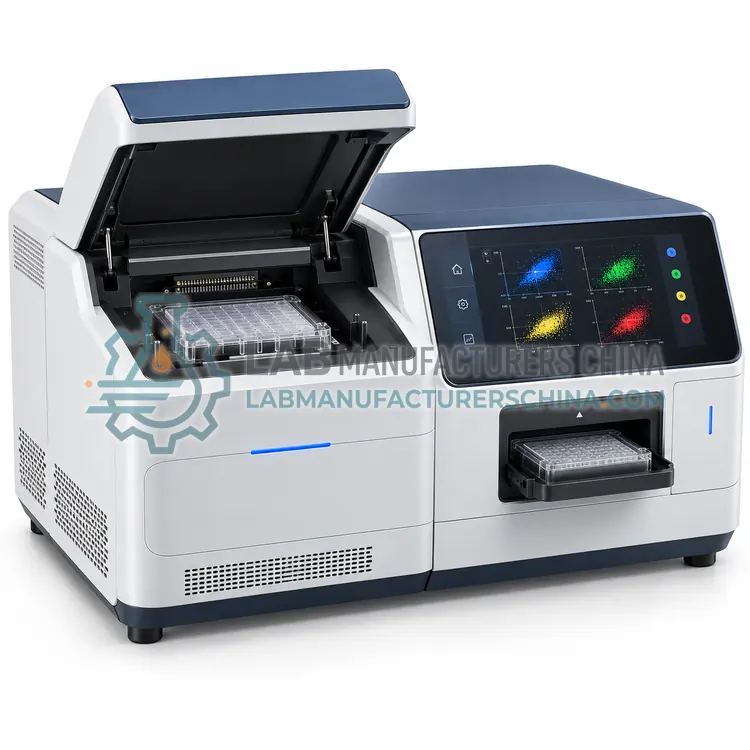
- Chip-Based Microchamber Digital PCR System — A chip-based microchamber digital PCR system distributes each sample through microfluidic channels into thousands of fixed microchambers on a disposable chip, then cycles and images it.
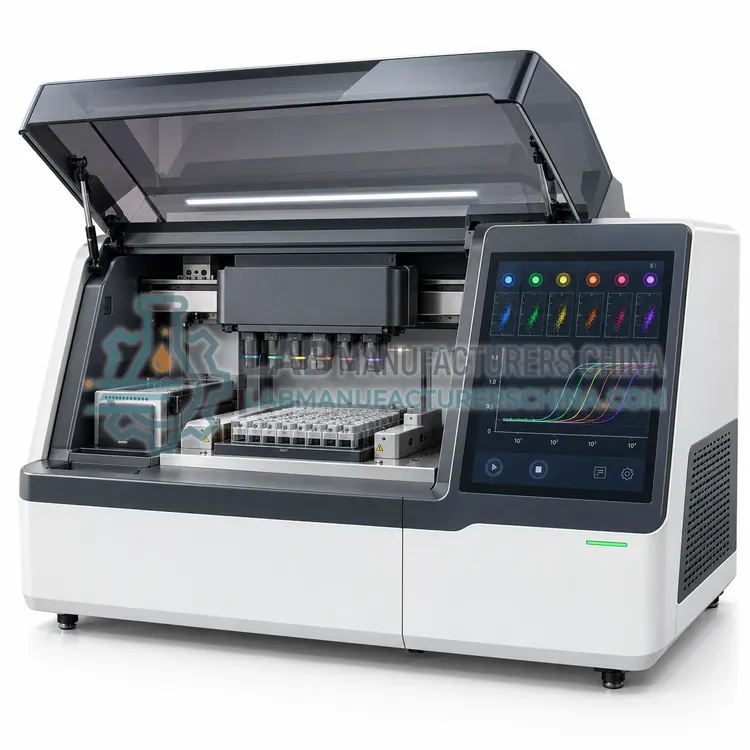
- High-Multiplex Six-Color Digital PCR System — A six-color digital PCR system reads up to six fluorescence channels per partition, enabling several targets to be quantified together, for example a multi-gene mutation panel or viral targets with controls.
- Automated Droplet Digital PCR Workstation — An automated droplet digital PCR workstation integrates droplet generation, plate sealing, thermal cycling and droplet reading with a robotic arm, processing 96 to 384 samples with little manual handling.
How do I choose the right variant?
The decisive parameters are partition number and volume, which set dynamic range and precision, and the number of fluorescence colors, which set multiplexing. Droplet systems offer high partition counts at relatively low consumable cost, nanoplate and chip formats offer simpler, more automated workflows and lower contamination risk. Consider sample throughput, hands-on time, and whether partitioning, cycling and reading are integrated or separate instruments. Check software for rare-event calling, copy-number variation and Poisson confidence intervals. For clinical or reference-material work, ask about lot traceability of consumables and validation guidance such as the dMIQE recommendations. Account for consumable cost per sample, which often exceeds qPCR.
Where are Digital PCR used?
Digital PCR are specified in rare mutation and liquid biopsy detection, absolute quantification of viral load, copy-number variation analysis, reference material value assignment and GMO quantification.
Which standards and certifications apply?
Work with Digital PCR is commonly governed by ISO 20395, ISO 22174, CLSI MM19, dMIQE guidelines (research reporting), IEC 61010-1 and IEC 61010-2-101. Instrument certifications such as CE marking are confirmed per configuration and never assumed.
What are the key considerations before purchase?
Place the system on a stable bench, and keep sample preparation, partitioning and post-amplification steps in separate areas to limit amplicon contamination. Use the consumables and oil specified by the supplier, and avoid bubbles during droplet or plate loading. Include no-template and positive controls in every run and set fluorescence thresholds consistently. Verify partition volume and optical performance at installation and periodically with reference materials. Droplet generators and readers need routine cleaning and cartridge inspection. Plan for software validation, data retention and audit trail if results are used for clinical or regulated decisions, and establish the acceptable range of partitions per sample.