How do Sterilization Equipment work?
Moist-heat sterilization kills organisms by coagulating and denaturing proteins and nucleic acids in the presence of saturated steam. The decisive conditions are temperature, pressure and time: at 121 degrees Celsius and about 1 bar gauge a standard cycle holds for 15 to 20 minutes, while 134 degrees Celsius achieves quicker cycles typical of clinical waste. Steam must contact every surface, so the chamber is purged of air by gravity displacement in simple units or by repeated vacuum pulses in more advanced ones. Dry heat kills by oxidation and requires higher temperature or longer time, often 160 to 180 degrees Celsius for one to two hours. Media preparators combine mixing, heating and in-vessel sterilization so that agar is prepared and sterilized in one vessel rather than in bottles.
Which Sterilization Equipment variants are available?
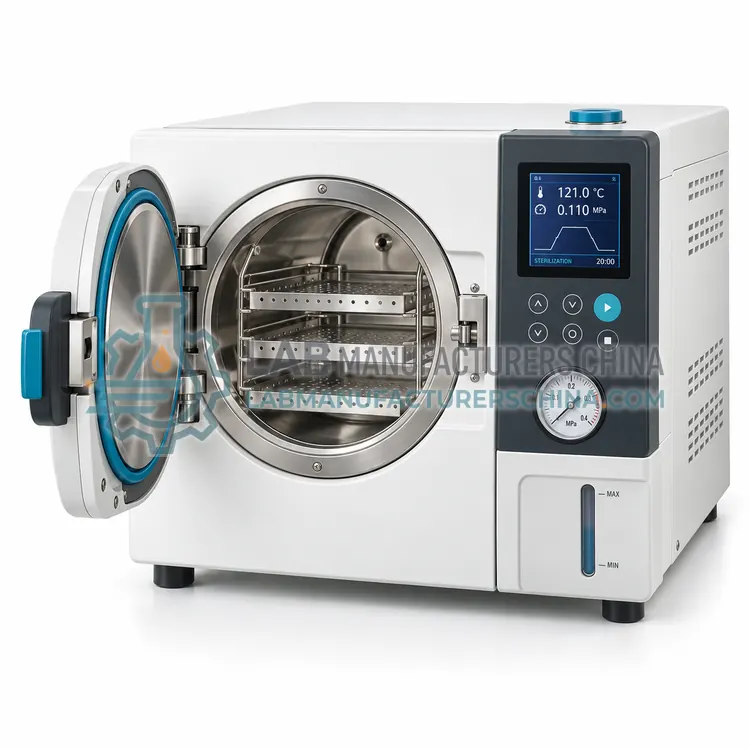
- Benchtop Autoclave — A benchtop autoclave is a compact steam sterilizer for small loads of media, glassware and instruments.
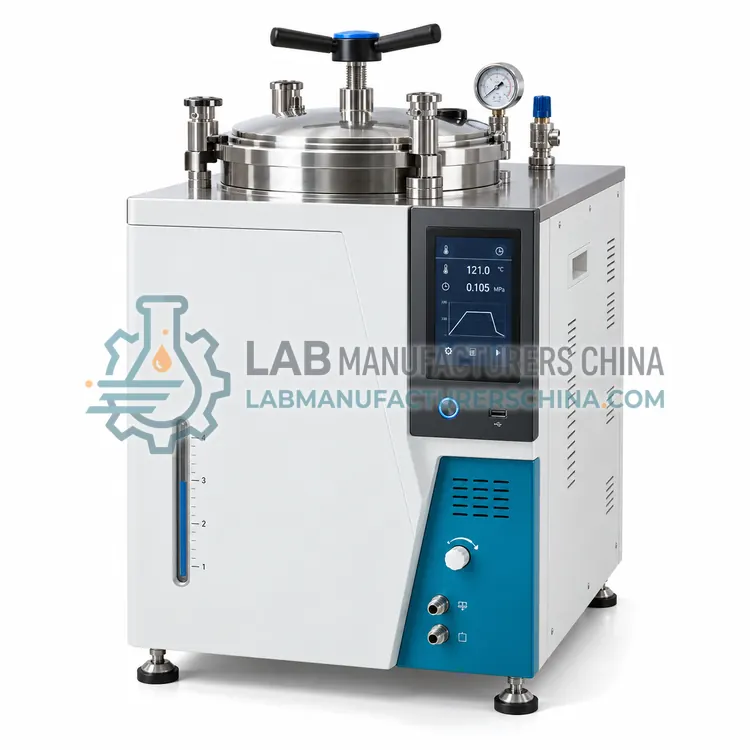
- Vertical Autoclave — A vertical autoclave is a top-loading steam sterilizer with a larger chamber than a benchtop unit.
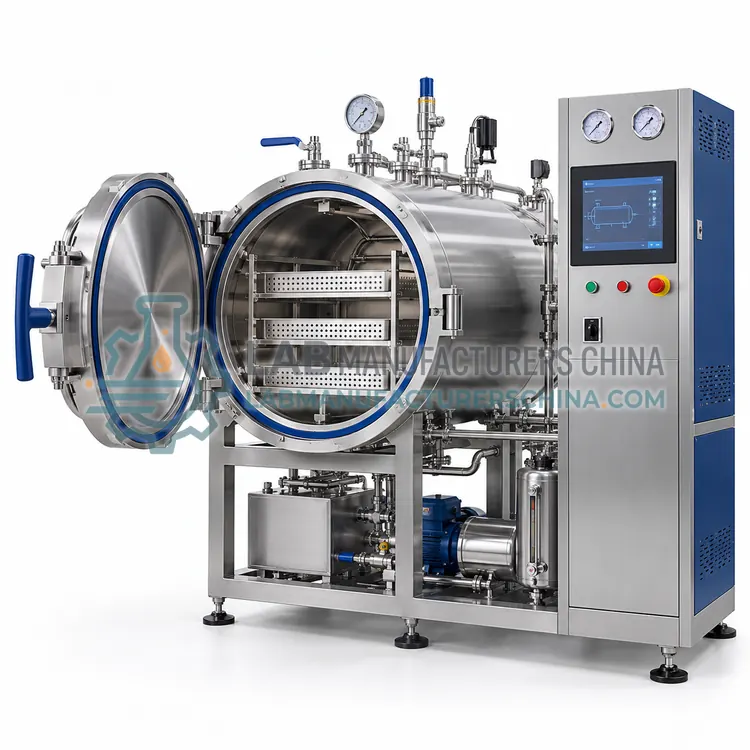
- Horizontal Autoclave — A horizontal autoclave is a front-loading steam sterilizer with a long cylindrical chamber and sliding trays.
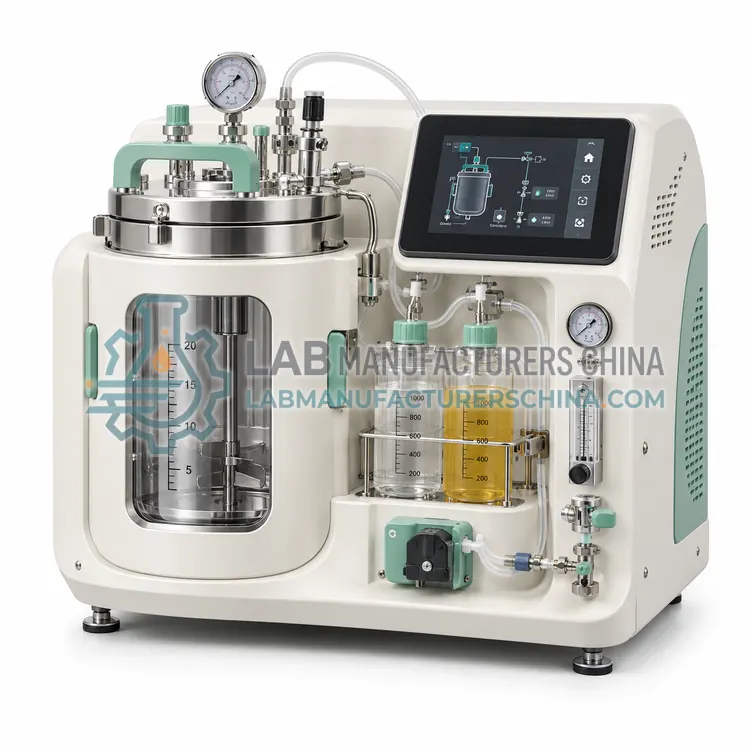
- Media Preparator and Sterilizer — A media preparator mixes, heats and sterilizes agar in one jacketed vessel and then dispenses it, reducing handling and improving consistency.
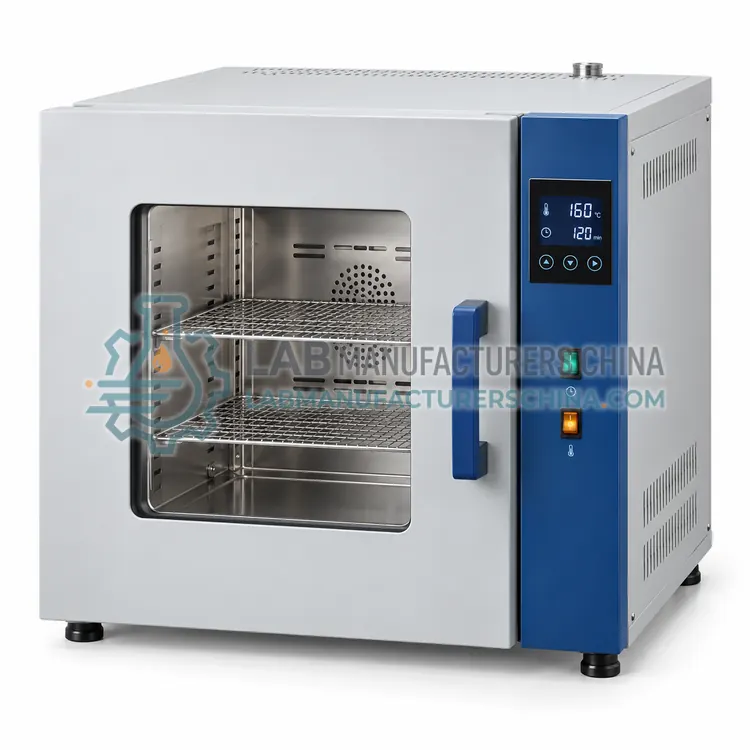
- Dry Heat Sterilizer — A dry heat sterilizer uses hot air rather than steam to sterilize glassware, metal instruments and powders that steam would corrode, wet or fail to penetrate.
How do I choose the right variant?
Begin with the load and the required throughput. Small volumes of media, glassware and instruments suit a bench-top autoclave of 20 to 50 L, while a busy laboratory sterilizing large batches or waste may need a vertical or horizontal unit of 50 to 200 L or more. Confirm that the chamber size and basket arrangement fit your largest items and that the cycle type, gravity or pre-vacuum, removes air from porous loads and liquids. For media, a preparator reduces handling and improves consistency. Choose dry heat when steam would corrode instruments, wet powders or damage glassware. Check safety features such as door interlocks, pressure relief, overtemperature cut-out and cycle recording, and confirm that validation, biological indicators and service support are available.
Where are Sterilization Equipment used?
Sterilization Equipment are specified in sterilization of culture media and glassware, decontamination of microbiological waste, sterilization of instruments and labware, pharmaceutical media and buffer preparation and food and environmental laboratory sterilization.
Which standards and certifications apply?
Work with Sterilization Equipment is commonly governed by ISO 17665-1, EN 285, ISO 11138-1, ISO 14937, ISO 7218 and IEC 61010-1. Instrument certifications such as CE marking are confirmed per configuration and never assumed.
What are the key considerations before purchase?
Operators must be trained in safe loading, correct cycle selection and the risks of hot liquids and pressurized steam. Load items so that steam circulates freely; do not overfill baskets, and loosen closures on bottles and containers. Verify each cycle with physical indicators and temperature records, and confirm performance periodically with biological indicators such as Geobacillus stearothermophilus spores. Drain and clean the chamber, check the door gasket and strainer, and descale the generator on a schedule. Record maintenance and requalification, including chamber temperature mapping. Ensure adequate ventilation and drainage, and confirm that the electrical installation meets the manufacturer's requirements and IEC 61010-1.