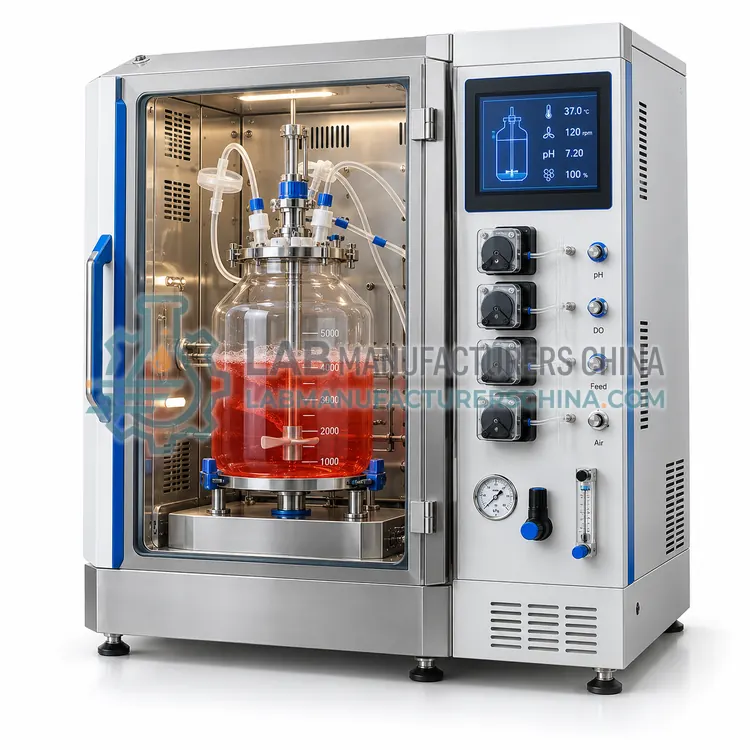
How do Culture Equipment work?
Culture equipment holds a defined temperature and, where needed, provides motion that improves gas exchange. A microbiological incubator controls temperature with a thermostat or microprocessor driving heating elements, a water jacket or an air jacket, and a fan circulates air so that all shelves stay within a narrow range. A shaking incubator adds a motor-driven platform that moves in a circular orbit, increasing the surface area available for oxygen transfer and keeping broth cultures suspended, with speed set in revolutions per minute and amplitude in millimetres. Refrigerated models add a compressor or Peltier element for below-ambient temperatures used for psychrophiles and fungi. Roller apparatus rotates bottles about their long axis so adherent cells are alternately exposed to medium and gas, and spinner flask systems use a magnetic stir bar or impeller to keep suspension cells mixed.
Which Culture Equipment variants are available?
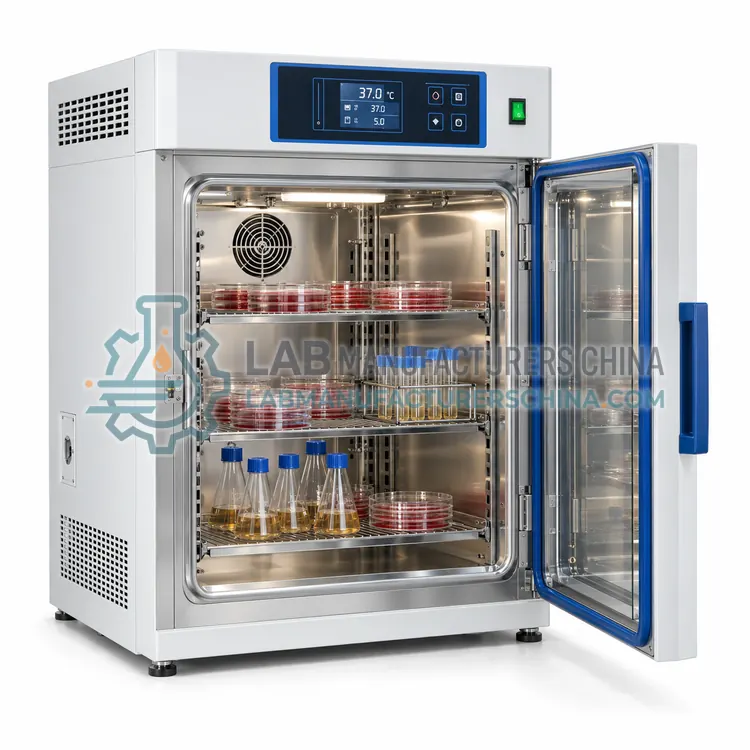
- Microbiology Incubator — A microbiology incubator is a temperature-controlled cabinet for static culture of plates, slants and tubes.
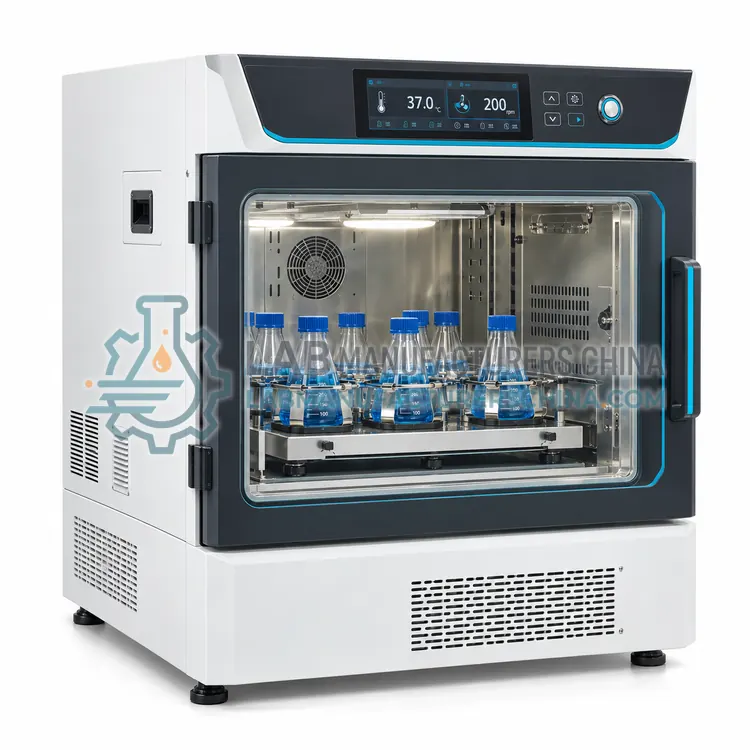
- Shaking Incubator — A shaking incubator combines temperature control with an orbital shaking platform so that broth cultures receive oxygen and stay suspended.
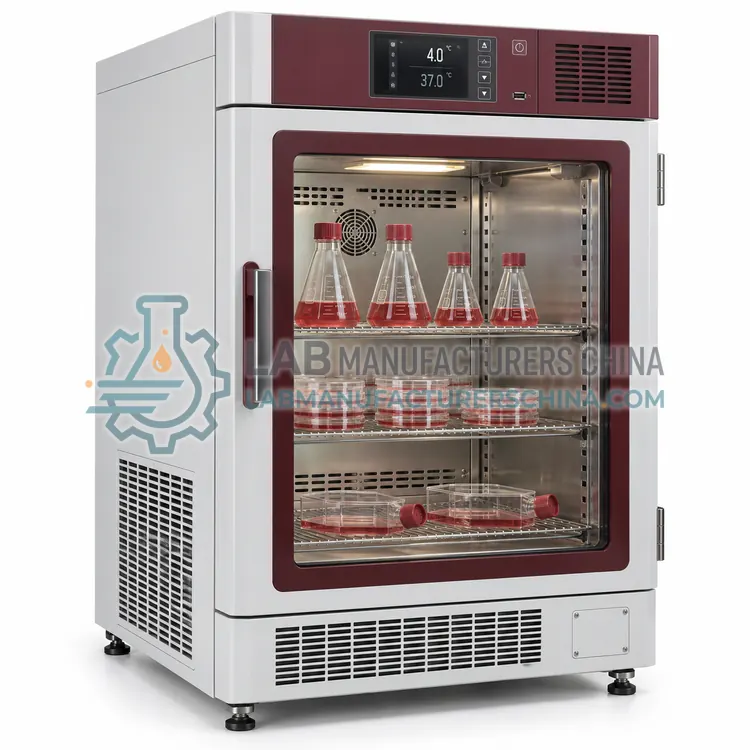
- Refrigerated Incubator — A refrigerated incubator holds cultures below room temperature as well as above it, allowing work with psychrophiles, yeasts and moulds, and temperature-sensitive samples.
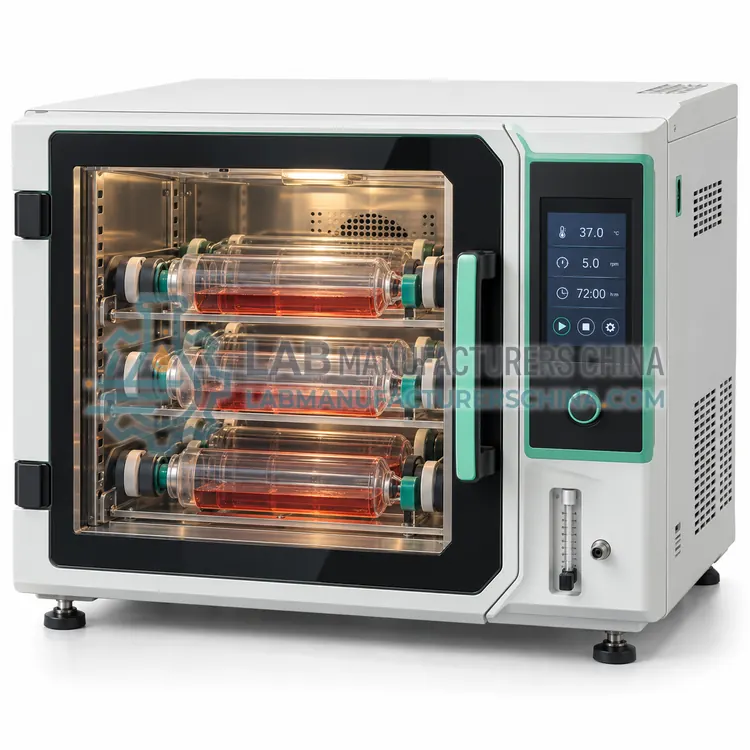
- Roller Culture Apparatus — A roller culture apparatus rotates bottles about their long axis so adherent cells are alternately bathed in medium and exposed to gas.
- Spinner Flask Culture System — A spinner flask culture system mixes suspension or microcarrier cultures with a gentle magnetic stirrer or impeller in a flask.
How do I choose the right variant?
Choose the format from the culture method. Static plates and slants need a microbiological incubator with even temperature and adequate shelf space; broth cultures that demand oxygen need a shaking incubator, and the required speed, orbit diameter and shaking capacity should be matched to the flask sizes used. Add refrigeration when you work with psychrophiles, fungi or samples that must stay below room temperature. Roller culture apparatus suits scale-up of adherent cells in bottles, and spinner flask systems suit suspension or microcarrier culture. Confirm temperature range and uniformity, how fast the chamber recovers after door opening, chamber volume and shelf loading, alarm and data logging, and whether humidity or a CO2 option is needed. For regulated work, document calibration, mapping and verification success criteria.
Where are Culture Equipment used?
Culture Equipment are specified in microbial culture in clinical and food laboratories, antibiotic and susceptibility testing, cell culture and scale-up studies, environmental and water microbiology, pharmaceutical sterility and bioburden testing and research and teaching.
Which standards and certifications apply?
Work with Culture Equipment is commonly governed by ISO 7218, ISO 11133, ISO 17025, USP <1116> and IEC 61010-1. Instrument certifications such as CE marking are confirmed per configuration and never assumed.
What are the key considerations before purchase?
Install the unit on a level surface with clearance for ventilation, and let the chamber stabilize before use. Verify temperature with an independent calibrated probe at several shelf positions, because displayed values can differ from actual conditions. Do not overload shelves, as this blocks airflow and creates cold or hot spots. Clean and disinfect the chamber on a schedule, and handle spills promptly to prevent contamination. For shakers, check that flasks are clamped and balanced, and reduce speed if liquid climbs the flask wall. Record calibration and maintenance, review alarm logs, and confirm that any CO2 or humidity sensors are calibrated and their gas supply is stable. Electrical safety follows IEC 61010-1.