Shaking Incubator
振荡培养箱
- SKU CUE-0002
- Culture Equipment
- CE (to be confirmed)
- ISO 9001 manufacturing (to be confirmed)
- IEC 61010-1 compliance (to be confirmed)
Price on request — FOB / CIF quoted per order
Prices depend on configuration, quantity and destination port.
Key specifications
| Temperature range | Ambient +5 to 60 °C; refrigerated 4 to 60 °C |
|---|---|
| Temperature uniformity | ±0.5 °C |
| Shaking speed | 30–300 rpm |
| Orbit diameter | 20–50 mm |
| Maximum load | 10–30 kg |
| Flask capacity | Up to 6 × 2 L or equivalent |
Request a quote Download brochure · to be provided
By Lab Manufacturers China Technical TeamLast reviewed Standards: ISO 7218, ISO 11133, ISO 17025
What is the Shaking Incubator?
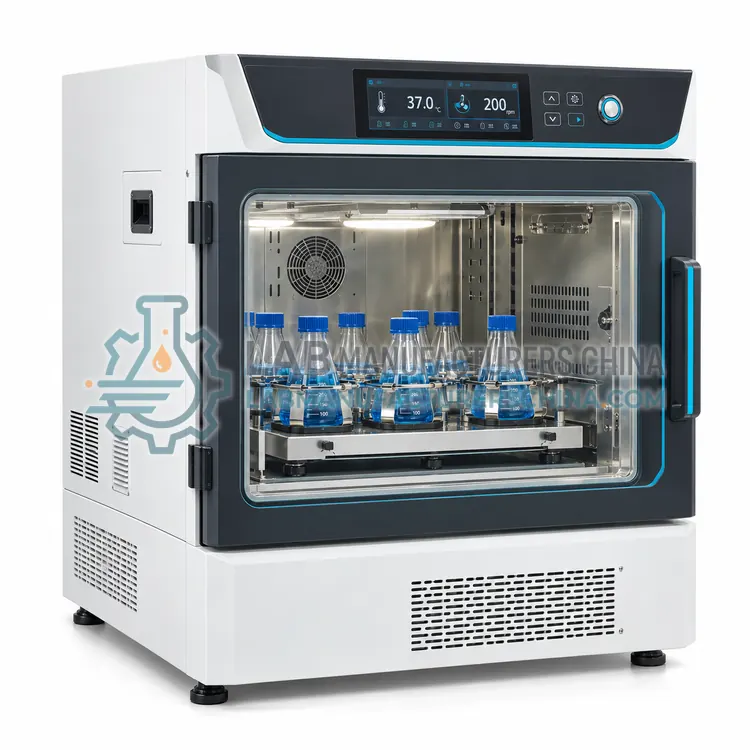
A shaking incubator combines temperature control with an orbital shaking platform so that broth cultures receive oxygen and stay suspended. It is used for growth curves, protein expression and liquid microbiological work.
What is the Shaking Incubator?
A shaking incubator combines temperature control with an orbital shaking platform so that broth cultures receive oxygen and stay suspended. It is used for growth curves, protein expression and liquid microbiological work.
Overview
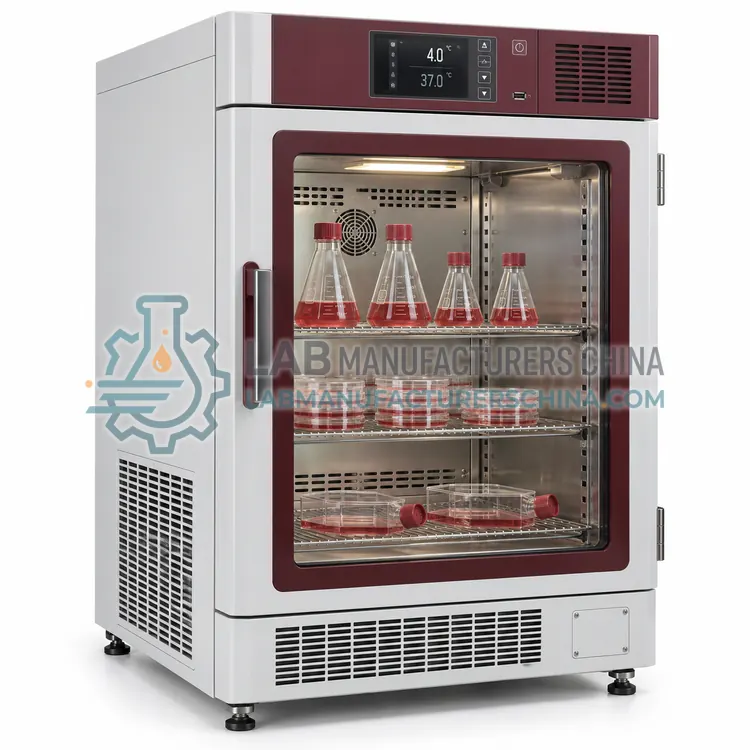
A shaking incubator holds flasks or tubes on a platform that moves in a circular orbit while the chamber maintains a set temperature. Shaking increases the liquid surface area and the relative motion of medium and air, which raises oxygen transfer and prevents cells from settling. Key parameters are shaking speed in revolutions per minute, orbit diameter, typically 20 to 50 mm, and the load the drive can move without losing speed. Magnetic or direct-drive motors reduce noise and maintenance, and clamps or spring racks hold flasks of various sizes. A door or lid with a viewing window lets operators check cultures, and many units offer programmed speed ramps and timers. Models may be benchtop or floor-standing, and refrigerated versions extend the range below ambient. Balanced loading and secure clamping are essential to avoid vibration.
How does it work?
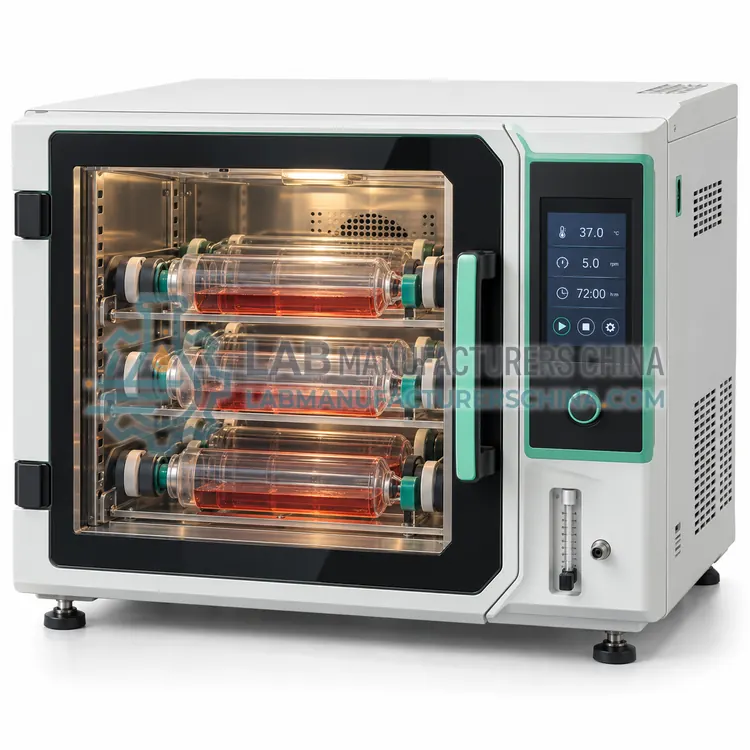
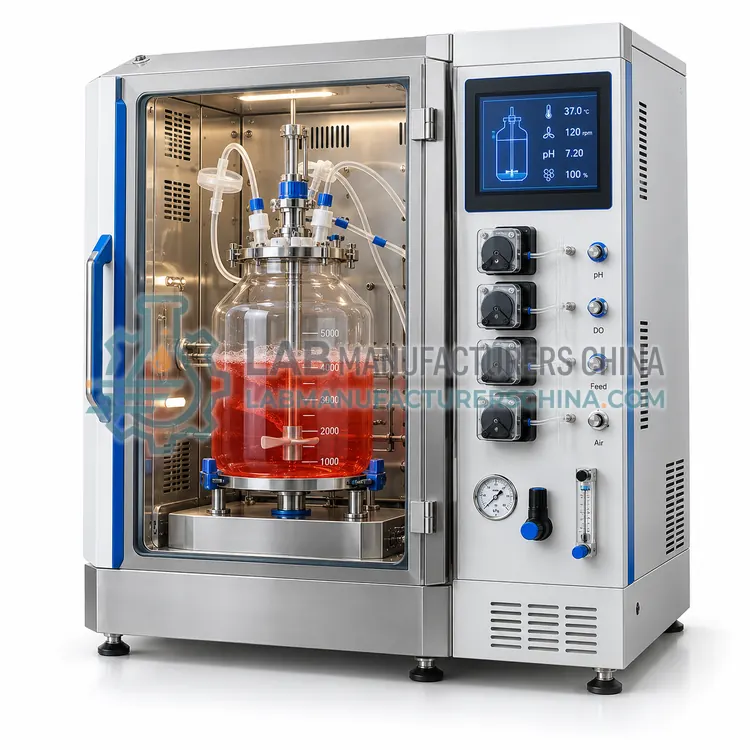
Culture equipment holds a defined temperature and, where needed, provides motion that improves gas exchange. A microbiological incubator controls temperature with a thermostat or microprocessor driving heating elements, a water jacket or an air jacket, and a fan circulates air so that all shelves stay within a narrow range. A shaking incubator adds a motor-driven platform that moves in a circular orbit, increasing the surface area available for oxygen transfer and keeping broth cultures suspended, with speed set in revolutions per minute and amplitude in millimetres. Refrigerated models add a compressor or Peltier element for below-ambient temperatures used for psychrophiles and fungi. Roller apparatus rotates bottles about their long axis so adherent cells are alternately exposed to medium and gas, and spinner flask systems use a magnetic stir bar or impeller to keep suspension cells mixed.
What are the key features?
- Orbital shaking platform with adjustable speed
- Forced-air temperature control with uniformity
- Interchangeable clamps for flasks and tubes
- Programmable ramps and timed runs
- Optional refrigeration for below-ambient temperatures
What are the technical specifications?
A typical shaking incubator configuration offers temperature range of Ambient +5 to 60 °C; refrigerated 4 to 60 °C, temperature uniformity of ±0.5 °C, shaking speed of 30–300 rpm, orbit diameter of 20–50 mm, maximum load of 10–30 kg and flask capacity of Up to 6 × 2 L or equivalent. Values are indicative of the product class; the exact figures for each configuration are confirmed on the quotation and the calibration documents supplied with the instrument.
Which applications is it used for?
The Shaking Incubator is used in growth curve and kinetics studies, recombinant protein expression, antibiotic susceptibility in broth, fermentation seed culture and environmental enrichment culture. Across the wider Culture Equipment class, laboratories also deploy it for microbial culture in clinical and food laboratories, antibiotic and susceptibility testing and cell culture and scale-up studies.
Which standards and certifications apply?
Relevant standards and methods include ISO 7218, ISO 11133, ISO 17025, USP <1116> and IEC 61010-1. Certification candidates for this model are CE, ISO 9001 manufacturing and IEC 61010-1 compliance; each is to be confirmed for the specific configuration before shipment, and certificates are supplied only where they have been issued.
Install the unit on a level surface with clearance for ventilation, and let the chamber stabilize before use. Verify temperature with an independent calibrated probe at several shelf positions, because displayed values can differ from actual conditions. Do not overload shelves, as this blocks airflow and creates cold or hot spots. Clean and disinfect the chamber on a schedule, and handle spills promptly to prevent contamination. For shakers, check that flasks are clamped and balanced, and reduce speed if liquid climbs the flask wall. Record calibration and maintenance, review alarm logs, and confirm that any CO2 or humidity sensors are calibrated and their gas supply is stable. Electrical safety follows IEC 61010-1.
How do I select the right Shaking Incubator?
Choose a shaking incubator when liquid cultures need oxygen and mixing. In an RFQ specify temperature range, shaking speed and orbit diameter, maximum load, flask sizes and clamps, whether refrigeration is needed, and programming and alarm options.
How does it compare with other Culture Equipment variants?
Choose the format from the culture method. Static plates and slants need a microbiological incubator with even temperature and adequate shelf space; broth cultures that demand oxygen need a shaking incubator, and the required speed, orbit diameter and shaking capacity should be matched to the flask sizes used. Add refrigeration when you work with psychrophiles, fungi or samples that must stay below room temperature. Roller culture apparatus suits scale-up of adherent cells in bottles, and spinner flask systems suit suspension or microcarrier culture. Confirm temperature range and uniformity, how fast the chamber recovers after door opening, chamber volume and shelf loading, alarm and data logging, and whether humidity or a CO2 option is needed. For regulated work, document calibration, mapping and verification success criteria.
Full specifications
| Temperature range | Ambient +5 to 60 °C; refrigerated 4 to 60 °C |
|---|---|
| Temperature uniformity | ±0.5 °C |
| Shaking speed | 30–300 rpm |
| Orbit diameter | 20–50 mm |
| Maximum load | 10–30 kg |
| Flask capacity | Up to 6 × 2 L or equivalent |
| Drive | Direct-drive or magnetic motor |
| Control | Microprocessor, programmable |
| Power supply | 220–240 V, 50/60 Hz |
Indicative values for this product class. Final specifications are confirmed on the quotation and in the calibration documents supplied with the instrument.
Applications
- Growth curve and kinetics studies
- Recombinant protein expression
- Antibiotic susceptibility in broth
- Fermentation seed culture
- Environmental enrichment culture
Key features
- Orbital shaking platform with adjustable speed
- Forced-air temperature control with uniformity
- Interchangeable clamps for flasks and tubes
- Programmable ramps and timed runs
- Optional refrigeration for below-ambient temperatures
Frequently asked questions about Shaking Incubator
Speed depends on the flask and organism, but 100 to 250 revolutions per minute is common for bacterial broth culture, with lower speeds for shear-sensitive cells. The decisive factors are adequate oxygen transfer without wetting the flask closure or splashing the medium.
Yes. A larger orbit gives more vigorous mixing and oxygen transfer at the same speed, so a 50 mm orbit can replace a higher speed on a 20 mm platform. This helps protect shear-sensitive cultures while maintaining aeration.
An uneven or excessive load causes vibration, noise and wear on the drive, and may make the platform lose speed or stop. Laboratories distribute flasks evenly, use the correct clamps and stay within the rated maximum load to keep shaking consistent.
It provides the temperature and motion conditions needed to grow microorganisms and cells, from static plate incubation to shaking broth culture and roller or spinner culture of cells. It supports clinical, food, environmental and pharmaceutical microbiological testing and research.
Use shaking when the culture needs oxygen or must stay suspended, such as broth cultures for growth curves, protein expression or susceptibility work. Static incubation suits plates, slants and samples where gentle conditions are sufficient and sedimentation is not a concern.
Refrigeration allows incubation below ambient temperature, which is required for psychrophilic organisms, many fungi and yeasts, and for sample holding at 20 to 25 degrees Celsius. It also lets the same cabinet serve as a controlled-temperature storage or enrichment unit.
Related models