How do Blotting Systems work?
Blotting moves separated molecules from a fragile gel to a durable membrane while preserving their relative positions. In electroblotting, the gel and membrane are pressed together in a sandwich between filter papers and sponges or buffer-wetted stacks, and an electric field drives charged molecules out of the gel and onto the membrane, where they bind by hydrophobic or electrostatic interaction. Wet tank systems submerge the sandwich in buffer between plate electrodes, semi-dry systems place it between flat graphite or metal plate electrodes with only buffer-soaked paper, and rapid systems use high current with special buffers. Vacuum and capillary blotting draw buffer through the gel to carry nucleic acids onto the membrane. After transfer, the membrane is blocked and probed, and signals are detected chemically or by fluorescence.
Which Blotting Systems variants are available?
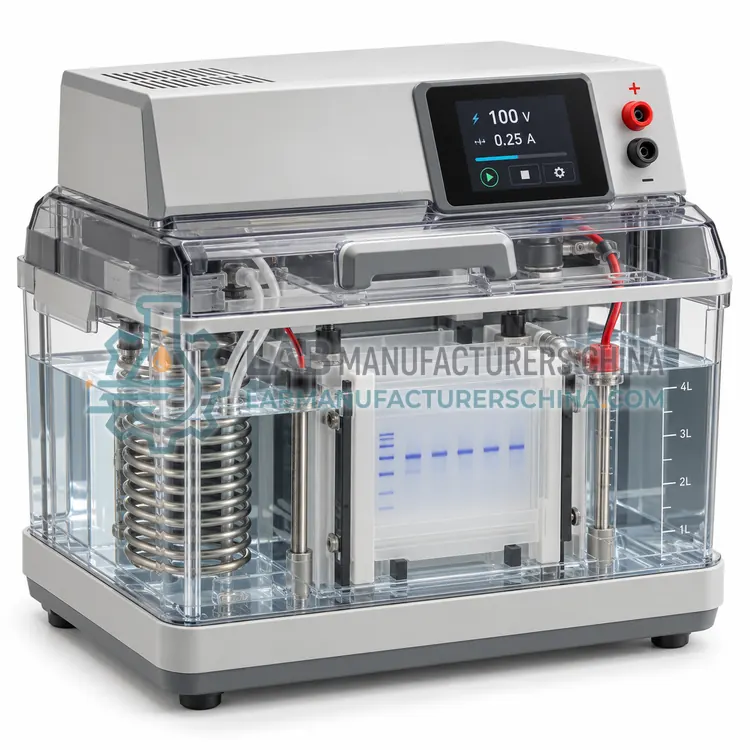
- Wet Tank Electroblotting System — A buffer-filled tank that holds gel-membrane cassettes between plate or wire electrodes with a cooling core.
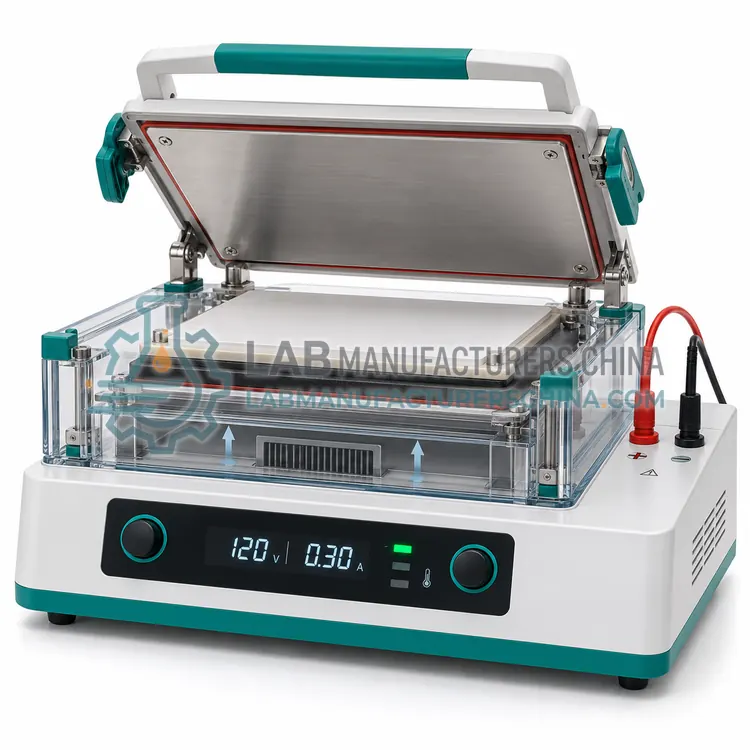
- Semi-Dry Electroblotting System — A flat-plate blotter that transfers proteins between two graphite or metal electrodes through buffer-soaked paper, using little buffer and finishing in 30–60 minutes.
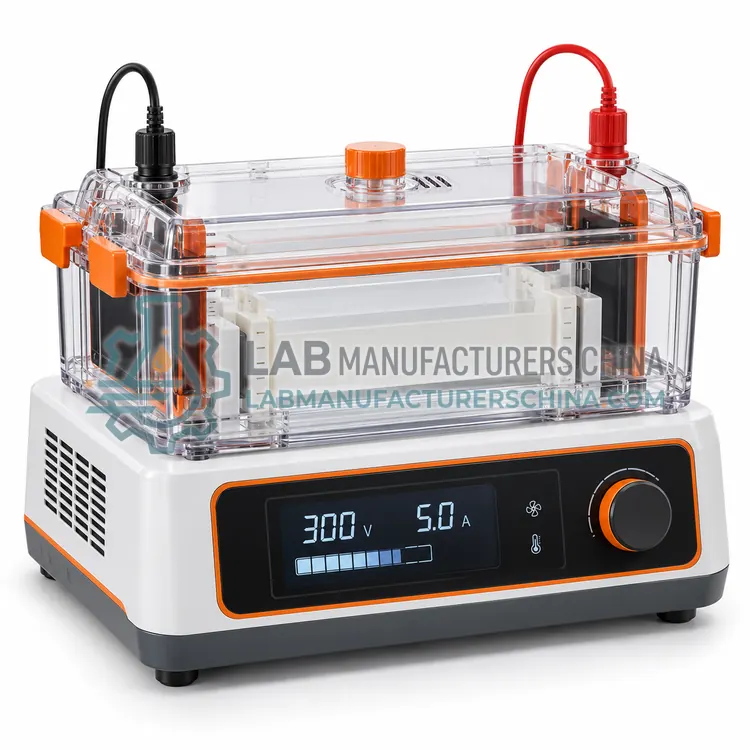
- Rapid High-Current Protein Transfer System — A cassette-based blotter that completes protein transfer in about 3–10 minutes using high current and ready-to-use transfer stacks.
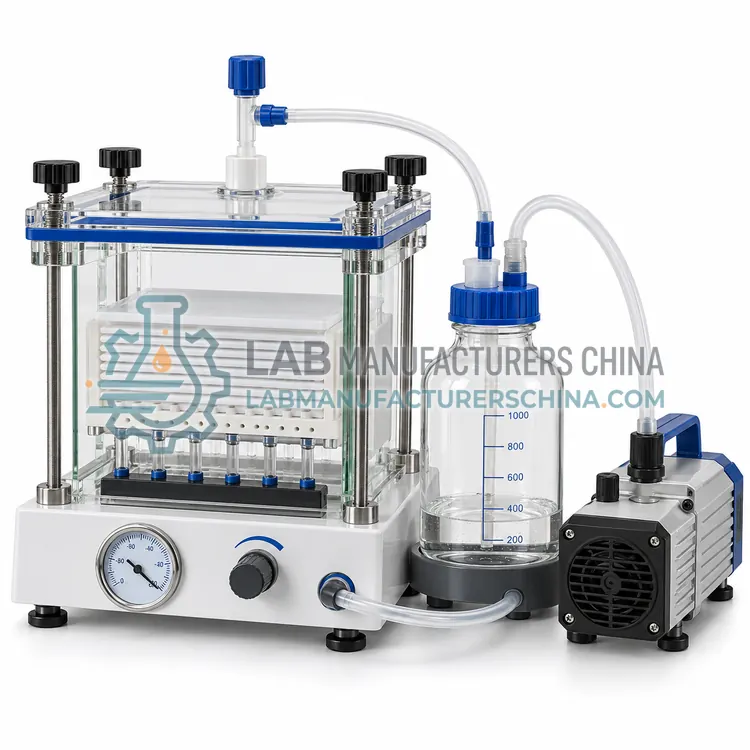
- Vacuum Blotting System for Nucleic Acids — A vacuum-driven blotter that draws transfer buffer through an agarose gel to move DNA or RNA onto a nylon or nitrocellulose membrane in 30–90 minutes.
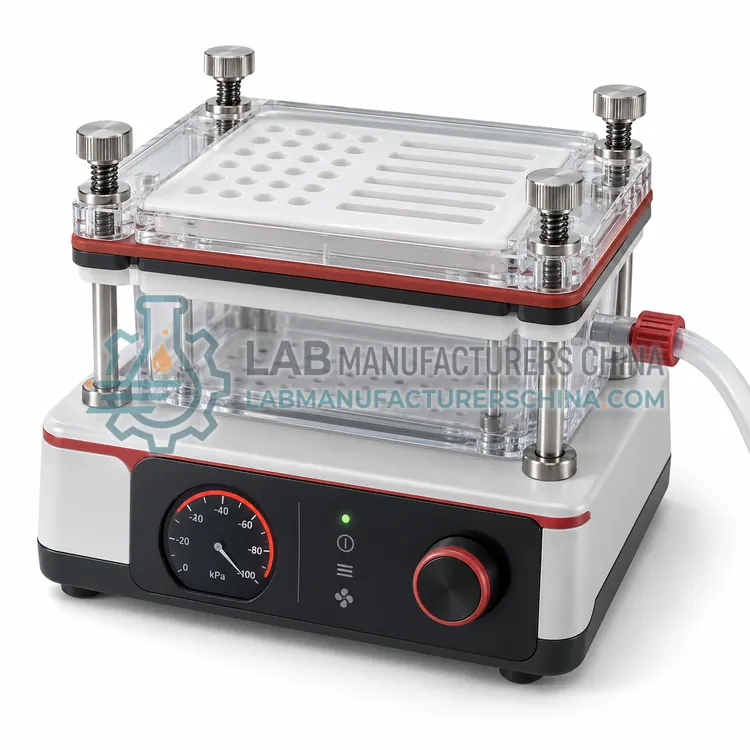
- Dot and Slot Blot Manifold — A vacuum filtration manifold with 48 or 96 wells or slots that applies samples directly onto a membrane without electrophoresis.
How do I choose the right variant?
Choose the transfer format from the target and the workload. Wet tank transfer is the most forgiving for large proteins above 100 kDa and for quantitative work. Semi-dry is faster and uses less buffer, which suits routine transfers of small and medium proteins. Rapid systems finish in about 7–10 minutes and suit high sample turnover but need matching consumables. Vacuum and capillary blotting are standard for Southern and northern work with large DNA and RNA fragments. Dot or slot manifolds are used when no separation is needed. Check transfer area against your gel format, membrane compatibility with PVDF, nitrocellulose or nylon, cooling options, maximum current and whether the power supply you have can drive the system.
Where are Blotting Systems used?
Blotting Systems are specified in western blotting, southern blotting, northern blotting, dot and slot blot assays and protein sequencing membrane preparation.
Which standards and certifications apply?
Work with Blotting Systems is commonly governed by IEC 61010-1, IEC 61326-1, ISO 17025, Ph. Eur. 2.2.31 and USP <1053>. Instrument certifications such as CE marking are confirmed per configuration and never assumed.
What are the key considerations before purchase?
Good contact between gel and membrane without trapped bubbles is the main factor for transfer quality, so roll out air with a tube before closing the cassette. Pre-wet PVDF in methanol and equilibrate gels in transfer buffer. Keep buffer cold or use an ice pack and stirrer for wet transfers to limit heating. Do not exceed the current or voltage limits of the tank, and follow the orientation of electrodes carefully. Clean electrodes and cassettes regularly, and do not leave buffer in the tank. Mind methanol flammability and the chemical safety of acrylamide and probe reagents. Electrical safety follows IEC 61010-1, and transfer efficiency should be checked with reversible stains or pre-stained markers.