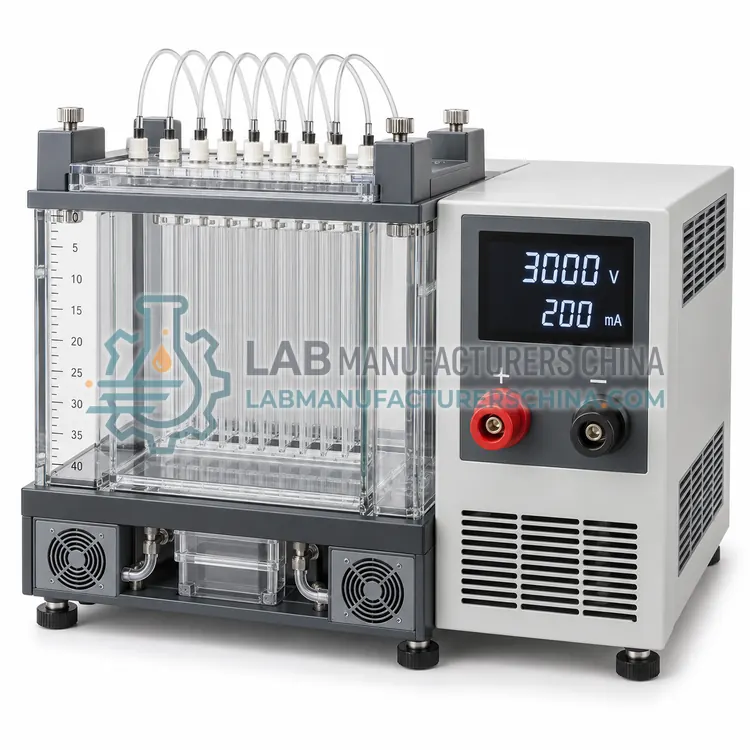
How do Power Supplies work?
An electrophoresis power supply converts mains alternating current into a regulated direct-current output. A transformer or switch-mode stage steps the voltage, a rectifier and filter create DC, and a feedback loop holds one chosen variable constant. Because the electrical resistance of a gel changes during a run as ions migrate and buffer heats, the three quantities voltage, current and power are linked by Ohm's law and P = V x I. Constant voltage gives predictable field strength, constant current keeps migration speed steady, and constant power limits heating. Most supplies switch automatically to a limiting mode when a set limit is reached. Key features include multiple outputs, programmable multi-step runs, timers, amp-hour accumulation, no-load and short-circuit detection, and isolated outputs with safety interlocks.
Which Power Supplies variants are available?
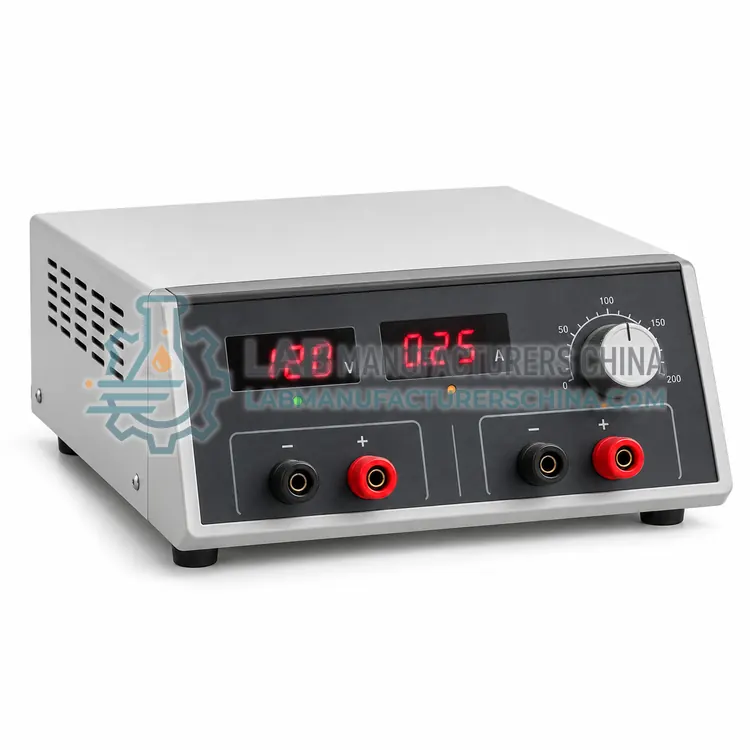
- Basic Constant-Voltage Electrophoresis Power Supply — A simple single-output supply with constant-voltage operation up to 300 V and about 400 mA, plus a timer.
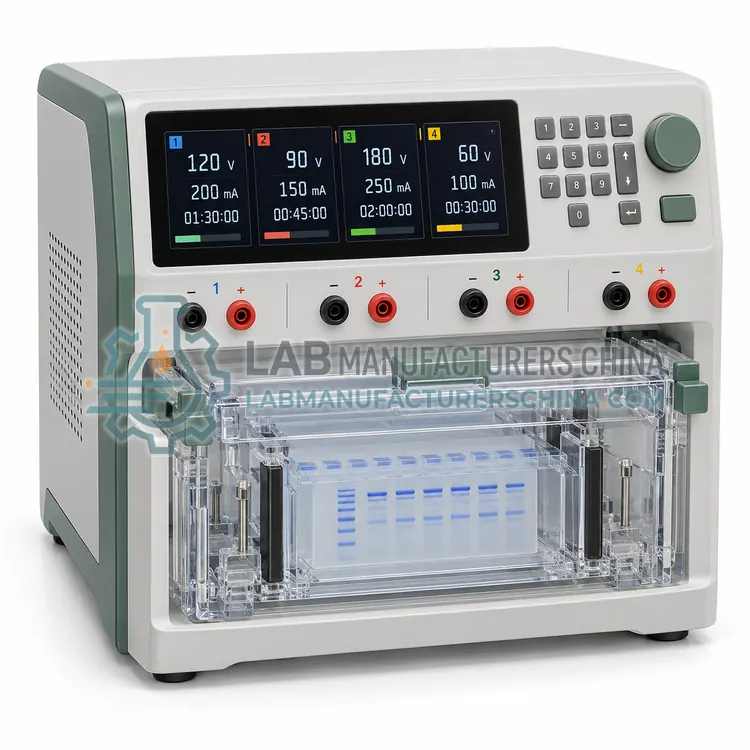
- Programmable Multi-Output Electrophoresis Power Supply — A supply with constant voltage, current and power modes, up to about 300–500 V and 2 A, and memory for multi-step programs.
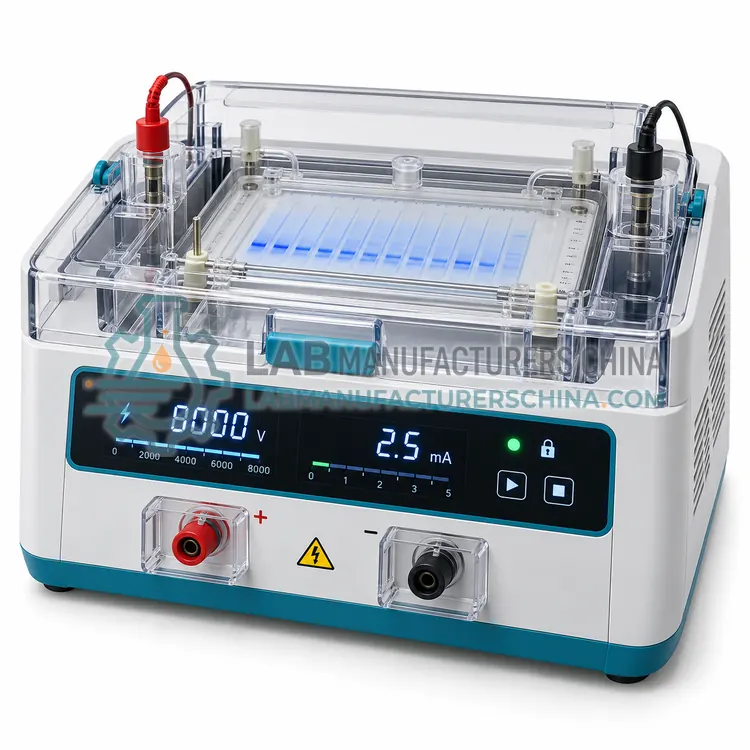
- High-Voltage Power Supply for Isoelectric Focusing — A low-current, high-voltage supply reaching about 3500 V for isoelectric focusing and immobilised pH gradient strip runs.
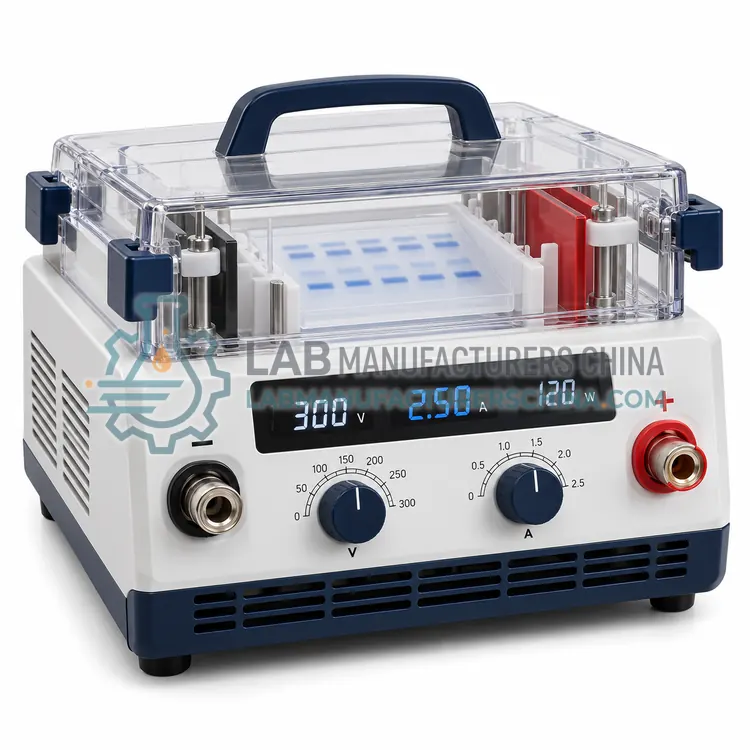
- High-Current Power Supply for Blotting — A supply delivering 2–5 A at 10–100 V, often with constant-current mode, to drive wet, semi-dry and rapid transfer units.
- High-Power Power Supply for Sequencing and Denaturing Gels — A high-voltage, constant-power supply reaching 3000 V and 100–200 W with thermal plate control, built for sequencing slab gels and denaturing PAGE.
How do I choose the right variant?
Match the power supply to the most demanding application. Gel electrophoresis of DNA usually needs up to 300 V and 400 mA, protein and blotting work need higher current, and isoelectric focusing or sequencing need 2000–5000 V at low current. Decide whether constant voltage alone is sufficient or constant current and power modes are also needed. Programmable multi-step protocols, such as ramped focusing, require memory and stepping. Count how many tanks run together, because multiple outputs share total power. Look for clear displays, automatic overload, no-load and short-circuit protection, isolation from earth, and compliance with IEC 61010-1. Check connector type and whether cables are compatible with your tanks, and consider remote-control or USB options for documentation.
Where are Power Supplies used?
Power Supplies are specified in agarose gel electrophoresis, SDS-PAGE and native PAGE, western blot transfer, isoelectric focusing and DNA sequencing gels.
Which standards and certifications apply?
Work with Power Supplies is commonly governed by IEC 61010-1, IEC 61326-1, IEC 61010-2-010, ISO 17025 and 21 CFR Part 11. Instrument certifications such as CE marking are confirmed per configuration and never assumed.
What are the key considerations before purchase?
Place the supply on a dry bench away from splash and buffer spills, and never operate it with damaged leads. Connect cables with the supply switched off and respect polarity colours. Use only tanks with interlocked lids and shrouded connectors rated for the output voltage. Verify output accuracy periodically against a calibrated meter, and keep vents clear for cooling. Output above 60 V DC is hazardous, so staff should be trained and local electrical safety rules followed. Safety compliance is typically based on IEC 61010-1 and EMC on IEC 61326-1. For regulated laboratories, schedule calibration, keep service records and store run parameters where data integrity is required.