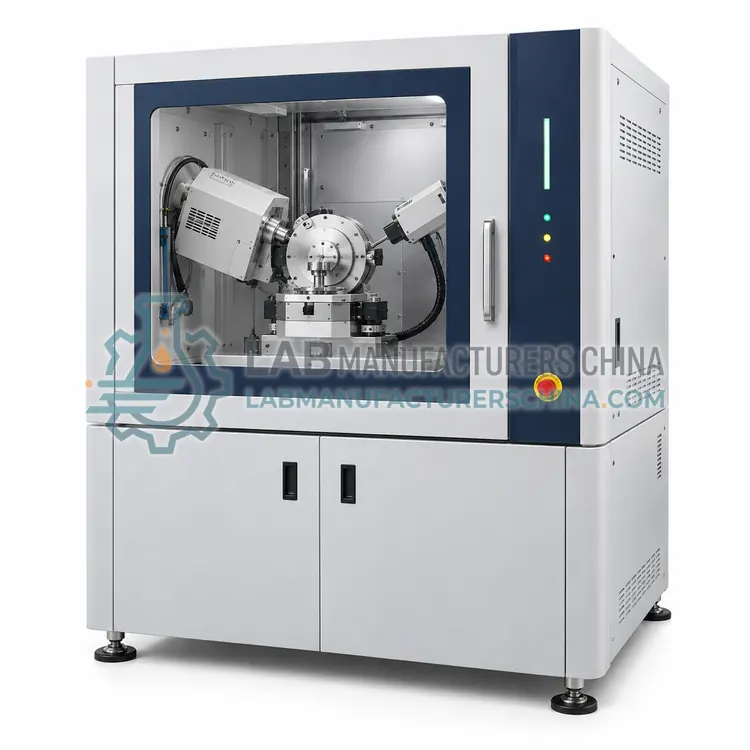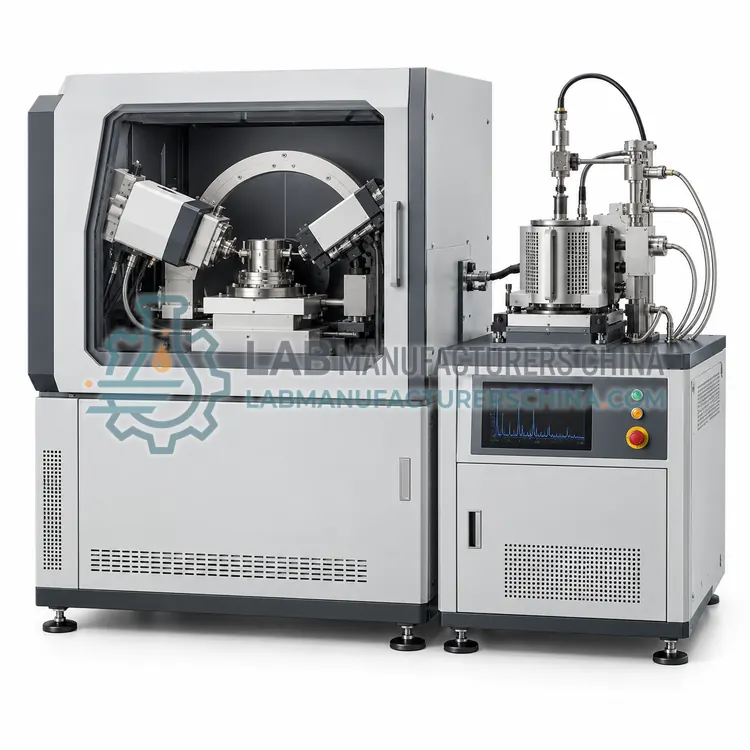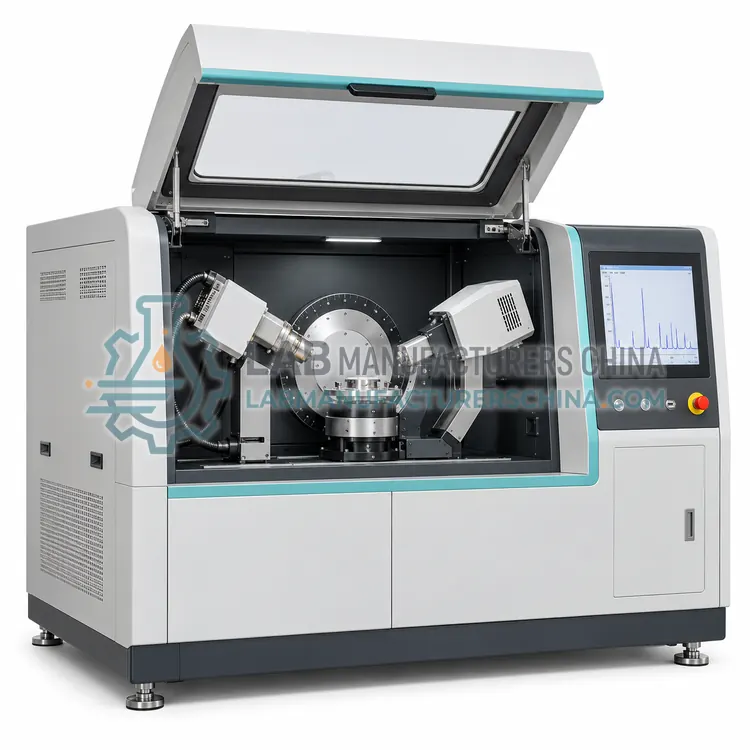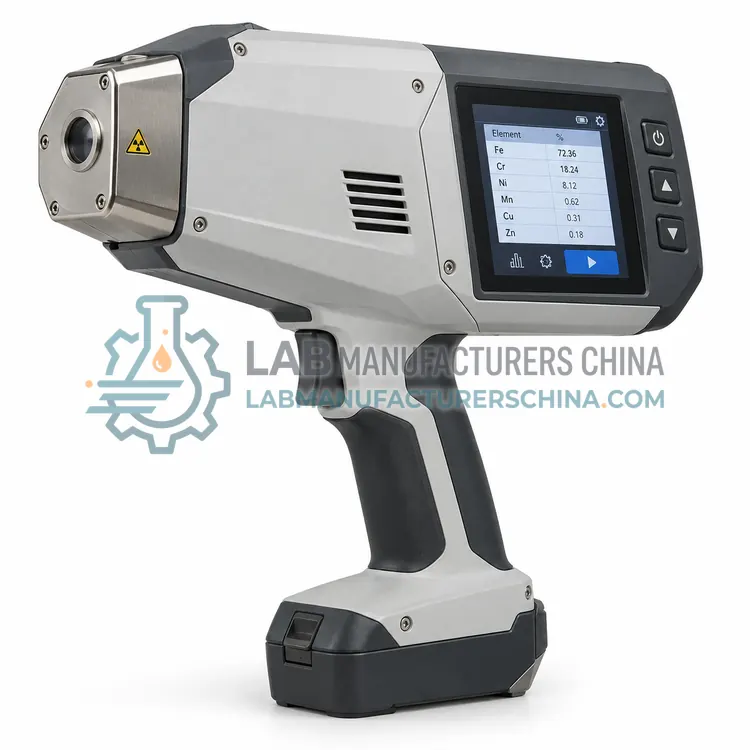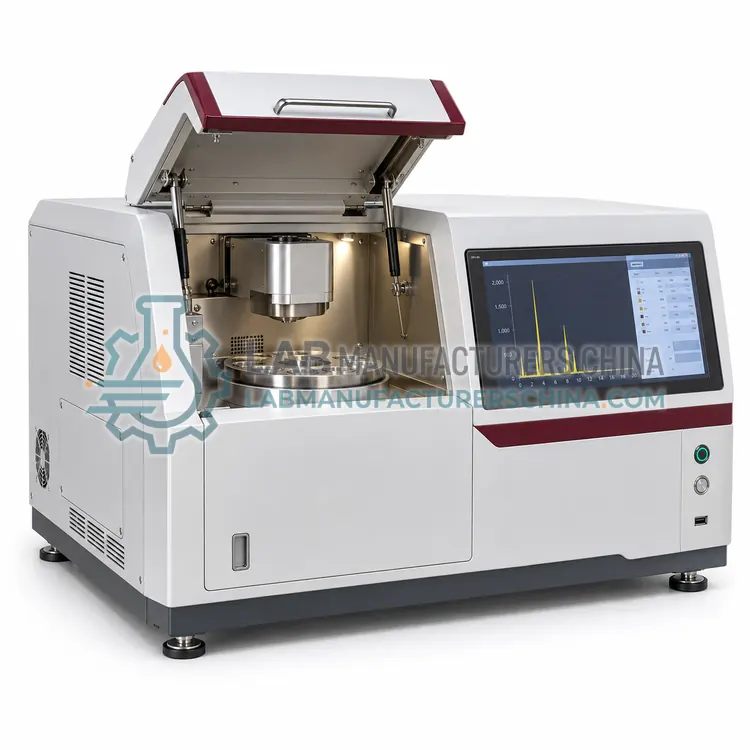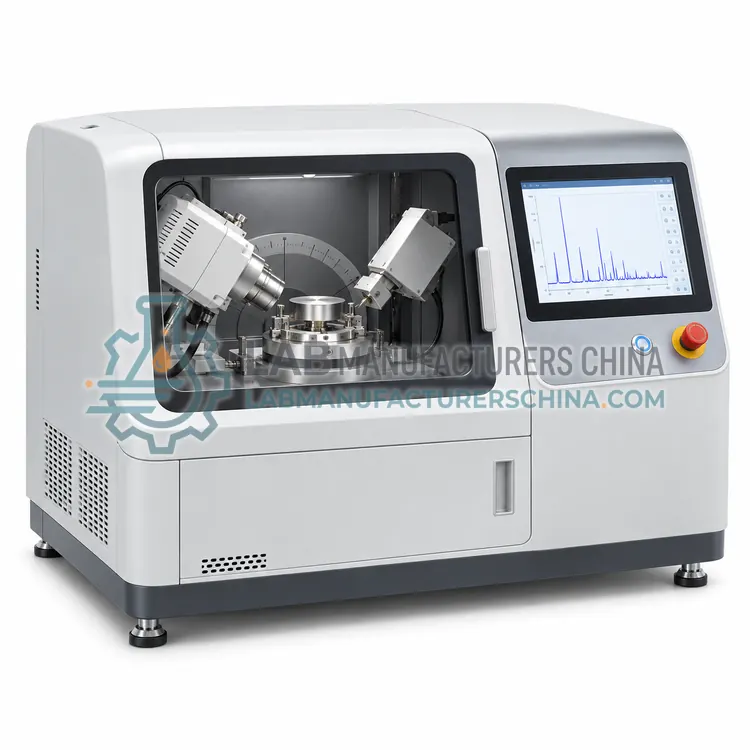
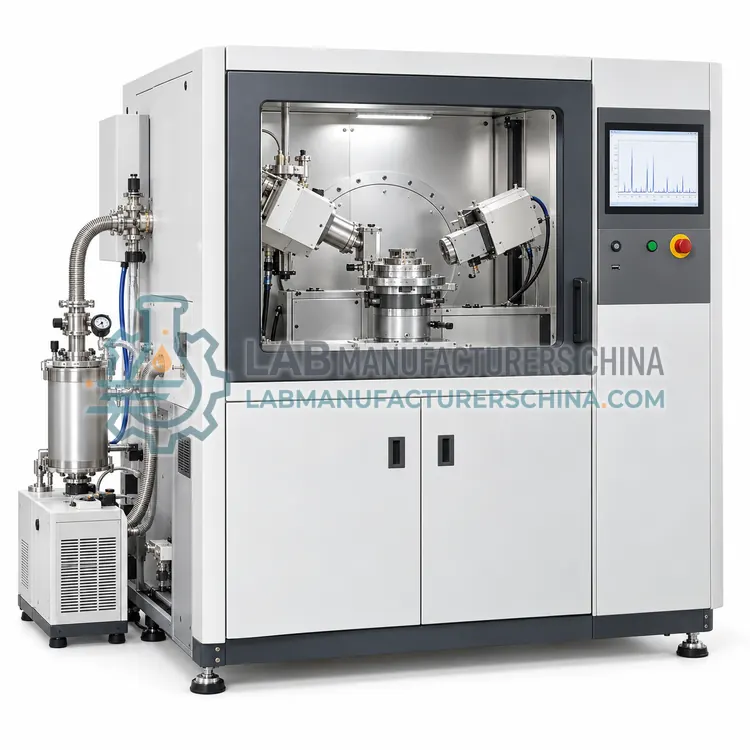
Transmission Powder X-Ray Diffractometer
透射粉末 X 射线衍射仪
- SKU XRD-0005
- XRD
- CE (to be confirmed)
- Radiation safety enclosure (to be confirmed)
- ISO 9001 manufacturing (to be confirmed)
Price on request — FOB / CIF quoted per order
Prices depend on configuration, quantity and destination port.
Key specifications
| Geometry | transmission capillary |
|---|---|
| Capillary diameter | 0.3–1.0 mm |
| 2-theta range | 0–150° |
| Detector | position-sensitive or area detector |
| Sample mass | 1–20 mg |
| X-ray tube power | 30–1500 W |
Request a quote Download brochure · to be provided
By Lab Manufacturers China Technical TeamLast reviewed Standards: USP <941> X-Ray Diffraction, ASTM E915 Verifying the alignment of X-ray diffraction instrumentation, ASTM D934 Identification of crystalline compounds in water-formed deposits
What is the Transmission Powder X-Ray Diffractometer?
A transmission powder X-ray diffractometer passes X-rays through a capillary or thin sample. It is chosen for weakly absorbing organic and pharmaceutical materials and for samples such as plate-like crystals prone to strong preferred orientation.
What is the Transmission Powder X-Ray Diffractometer?
A transmission powder X-ray diffractometer passes X-rays through a capillary or thin sample. It is chosen for weakly absorbing organic and pharmaceutical materials and for samples such as plate-like crystals prone to strong preferred orientation.
Overview
In transmission geometry the beam passes through a thin-walled capillary or a flat thin sample, and the diffracted beam is collected on the far side by a position-sensitive or area detector. Because the beam traverses the whole sample volume, particle statistics improve and preferred orientation is reduced compared with reflection geometry, which is valuable for plate-like crystals such as many pharmaceutical polymorphs. Organics, polymers, clays and hydrates absorb X-rays weakly, so transmission gives good intensity and low background. Samples can be sealed in capillaries for air-sensitive or humidity-controlled measurement, and spinning further averages orientation. Absorption corrections depend on sample packing, and a zero-background capillary or support is used. The configuration is common in pharmaceutical and organic materials research.
How does it work?
A focused X-ray beam, usually copper K-alpha radiation, strikes a powdered or polycrystalline sample. Crystal lattice planes scatter the beam, and constructive interference occurs at angles that satisfy Bragg's law, n times lambda equals two d sine theta. The detector records peak positions and intensities as the angle between the beam and the sample changes, producing a diffractogram. Peak positions reveal the lattice spacing and identify phases from reference databases, while peak intensities give relative phase amounts and peak widths relate to crystallite size and microstrain. Preferred orientation, sample displacement and fluorescence can distort results, so sample preparation and instrument alignment are critical. Modern instruments use theta-theta geometry, solid-state or position-sensitive detectors, and software for search-match, Rietveld refinement and profile analysis.
What are the key features?
- Capillary or thin flat sample in transmission
- Improved particle statistics and reduced orientation
- Excellent for weakly absorbing organics
- Sealed capillaries for air-sensitive samples
- Spinning to average crystallite orientation
- Position-sensitive or area detector
What are the technical specifications?
A typical transmission powder x-ray diffractometer configuration offers geometry of transmission capillary, capillary diameter of 0.3–1.0 mm, 2-theta range of 0–150°, detector of position-sensitive or area detector, sample mass of 1–20 mg and X-ray tube power of 30–1500 W. Values are indicative of the product class; the exact figures for each configuration are confirmed on the quotation and the calibration documents supplied with the instrument.
Which applications is it used for?
The Transmission Powder X-Ray Diffractometer is used in pharmaceutical polymorph and crystallinity, organic and polymeric materials, clays, hydrates and humidity-sensitive phases and small and scarce powder samples. Across the wider XRD class, laboratories also deploy it for pharmaceutical polymorph and crystallinity testing, cement, clinker and mineral phase analysis and catalyst, battery and ceramic materials.
Which standards and certifications apply?
Relevant standards and methods include USP <941> X-Ray Diffraction, ASTM E915 Verifying the alignment of X-ray diffraction instrumentation, ASTM D934 Identification of crystalline compounds in water-formed deposits, ISO 20203 Carbonaceous materials for aluminium production — XRD of calcined coke, ISO/IEC 17025 and IEC 61010-2-091. Certification candidates for this model are CE, Radiation safety enclosure and ISO 9001 manufacturing; each is to be confirmed for the specific configuration before shipment, and certificates are supplied only where they have been issued.
X-ray diffraction instruments are regulated radiation devices and require shielding, interlocks, radiation surveys and trained operators. Powder samples must be ground finely and packed reproducibly, because particle size, packing density and preferred orientation bias peak intensities; back-loading, side-loading or spinning stages reduce orientation effects. Sample fluorescence from iron, cobalt or manganese samples raises background with copper radiation, which may require an alternative wavelength or a monochromator. Alignment, zero-offset and instrument profile are verified with standards such as silicon or corundum. Detectors and X-ray tubes are wear items, and goniometer calibration should be checked periodically. Keep sample preparation records for method traceability.
How do I select the right Transmission Powder X-Ray Diffractometer?
Select transmission geometry when samples are weakly absorbing, prone to preferred orientation, moisture or air sensitive, or available only in small amounts. Specify the sample type, capillary size and whether humidity or inert conditions are needed. Confirm the detector and software support transmission data corrections.
How does it compare with other XRD variants?
Select a powder diffractometer by resolution, detector type, sample environment and throughput. Benchtop instruments are compact and easy to use for phase identification and routine QC but have lower resolution and fewer accessories. High-resolution research systems use long arms, monochromators and high-precision goniometers for accurate lattice parameters, quantitative analysis and complex profile fitting. In-situ systems add heating, cooling, humidity or gas stages for time-resolved studies. Micro-focus instruments provide small beams for inclusions and small samples. Transmission geometry suits weakly absorbing organic and pharmaceutical materials and can reduce preferred orientation. Confirm the 2-theta range, angular resolution, sample changer capacity and software features such as Rietveld and PDF database access for your application.
Full specifications
| Geometry | transmission capillary |
|---|---|
| Capillary diameter | 0.3–1.0 mm |
| 2-theta range | 0–150° |
| Detector | position-sensitive or area detector |
| Sample mass | 1–20 mg |
| X-ray tube power | 30–1500 W |
| Spinning | capillary spinner fitted |
| Sample sealing | air-tight capillary |
| Measurement time | 5–60 min per scan |
| Radiation | Cu or Co K-alpha |
Indicative values for this product class. Final specifications are confirmed on the quotation and in the calibration documents supplied with the instrument.
Applications
- Pharmaceutical polymorph and crystallinity
- Organic and polymeric materials
- Clays, hydrates and humidity-sensitive phases
- Small and scarce powder samples
Key features
- Capillary or thin flat sample in transmission
- Improved particle statistics and reduced orientation
- Excellent for weakly absorbing organics
- Sealed capillaries for air-sensitive samples
- Spinning to average crystallite orientation
- Position-sensitive or area detector
Frequently asked questions about Transmission Powder X-Ray Diffractometer
In transmission the beam passes through the entire sample volume rather than only a packed surface, so crystallites are sampled from many orientations. Spinning the capillary further averages the diffraction, giving more accurate relative intensities than reflection geometry for plate-like crystals.
A sealed capillary is used for air-sensitive or hygroscopic samples, for measurements under controlled humidity and for reactive materials. The capillary wall is X-ray transparent and thin enough to limit absorption. Attenuation corrections differ from flat-plate samples and are handled by the software.
A capillary holds only about 1 to 20 milligrams because the diameter is small, which suits scarce samples and high-value pharmaceuticals. Precise packing and consistent density are needed for reproducible absorption corrections. Larger flat transmission cells are used when more material is available.
Grind the sample to a fine, uniform powder, then pack it into a holder by back-loading or side-loading so the surface is flat and level with the holder edge. Spinning or using a zero-background holder reduces preferred orientation and background. Preparation quality strongly affects relative peak intensities.
Plate-like or needle-like crystallites align when packed, so some lattice planes diffract more strongly than they should, distorting quantitative results. Gentle grinding, side-loading, spray drying and sample spinning reduce the effect. Rietveld refinement can model and correct residual orientation when the degree is known.
Quantitative phase analysis compares measured peak intensities with reference intensity ratios or applies full-pattern Rietveld refinement using known crystal structures. Rietveld is preferred for complex mixtures because it fits the whole pattern and accounts for overlap, background and preferred orientation. Accuracy depends on good sample preparation and structural models.
Related models