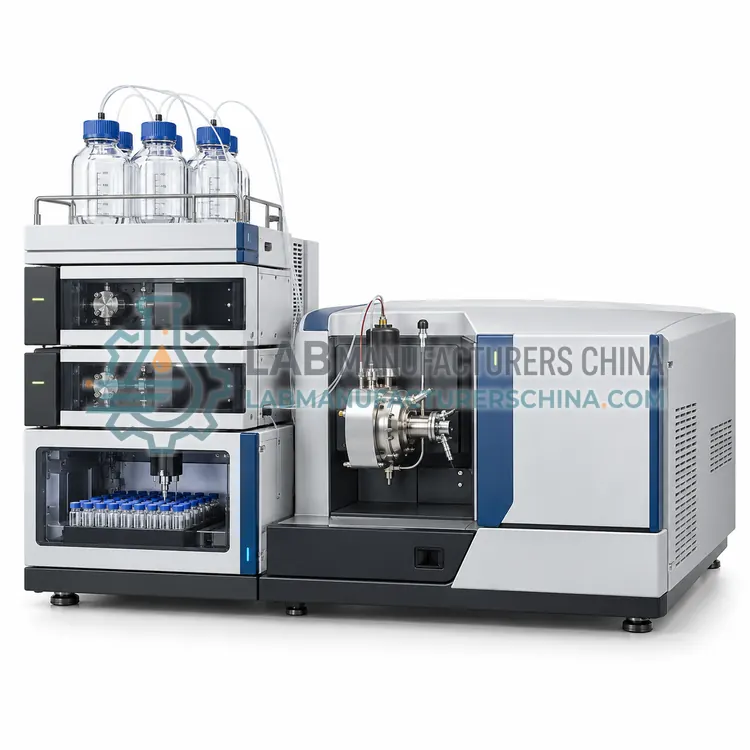
Benchtop Triple Quadrupole LC-MS/MS System for Clinical Quantitation
用于临床定量的台式三重四极杆液相色谱串联质谱系统
- CE (to be confirmed)
- +2
Welcome to Lab Manufacturers China — laboratory instruments direct from a Chinese manufacturer
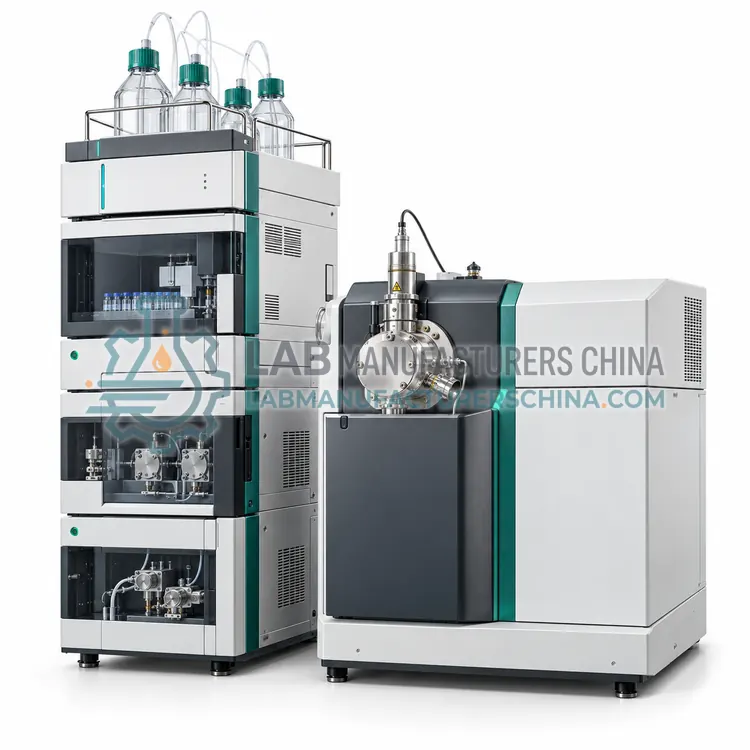
用于生物分析的高灵敏度三重四极杆液相色谱串联质谱仪
Price on request — FOB / CIF quoted per order
Prices depend on configuration, quantity and destination port.
| Mass range | m/z 2–2000 |
|---|---|
| Scan speed | up to 20,000 Da/s |
| Minimum dwell time | ≤ 1 ms |
| Polarity switching time | ≤ 5 ms |
| Sensitivity (reserpine, m/z 609→195) | S/N > 10,000:1 for 1 pg on column |
| MRM transitions per second | up to 500 |
By Lab Manufacturers China Technical TeamLast reviewed Standards: ICH M10, FDA Bioanalytical Method Validation Guidance, EU Commission Decision 2002/657/EC
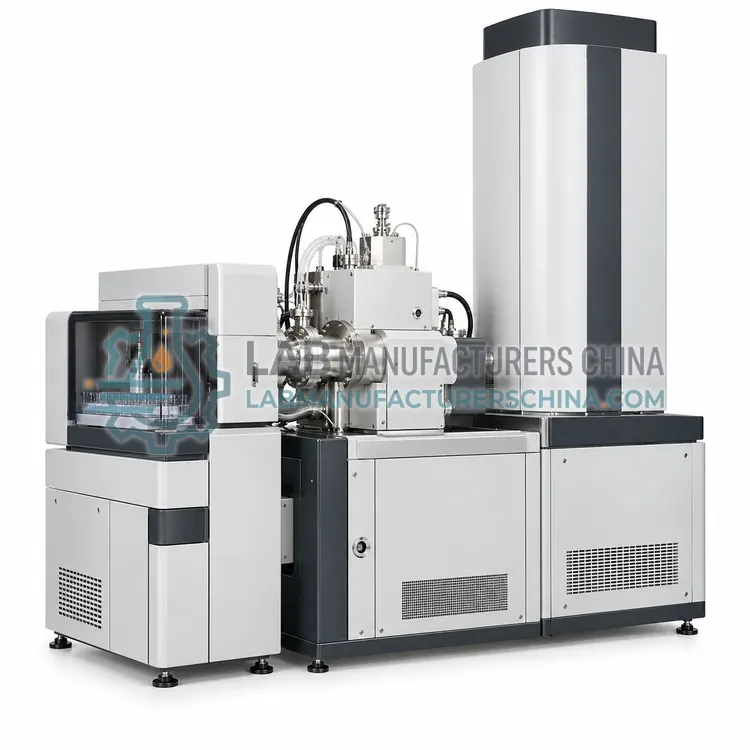
A high-sensitivity triple quadrupole LC-MS/MS system with enhanced ion transmission and fast MRM for regulated bioanalysis, pharmacokinetics and peptide or oligonucleotide quantitation. It targets sub-picogram limits in plasma, serum, urine and tissue extracts.
A high-sensitivity triple quadrupole LC-MS/MS system with enhanced ion transmission and fast MRM for regulated bioanalysis, pharmacokinetics and peptide or oligonucleotide quantitation. It targets sub-picogram limits in plasma, serum, urine and tissue extracts.
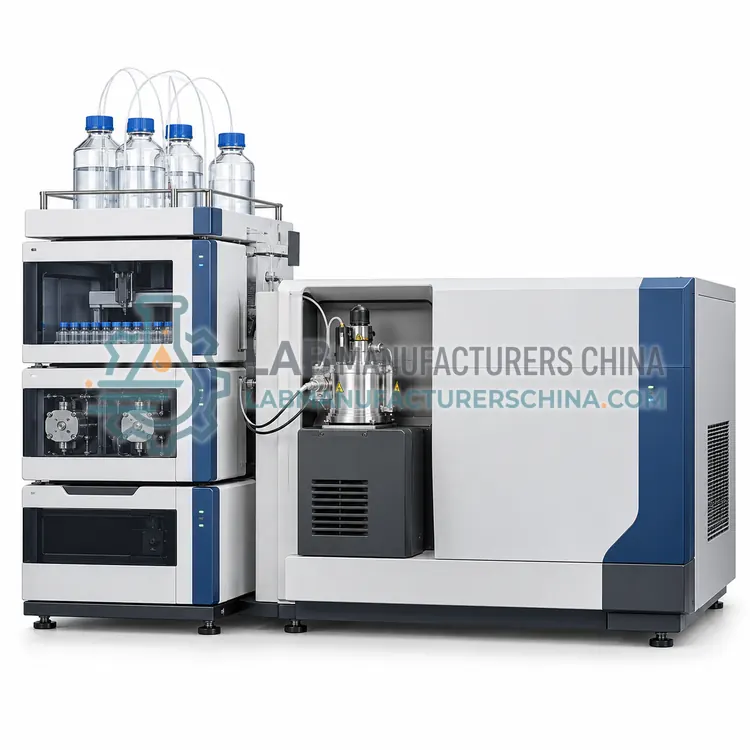
This variant uses an optimized ion path with heated ion guides, a high-flow desolvation source and a high-transmission collision cell to push sensitivity toward the femtogram range on column. It is typically combined with a UHPLC stack rated to 1000 bar or more, so peak widths of 2 to 4 s are common and acquisition must be fast. Minimum dwell times below 1 ms and polarity switching under 5 ms allow several hundred scheduled MRM transitions in one injection. The dynamic range often reaches five to six orders of magnitude, reducing repeat analyses when concentrations span a wide range. Software supports audit trails, electronic signatures and validated data processing for work under GLP and ICH M10. Higher cost, pump capacity and service needs are the trade-off compared with benchtop systems.
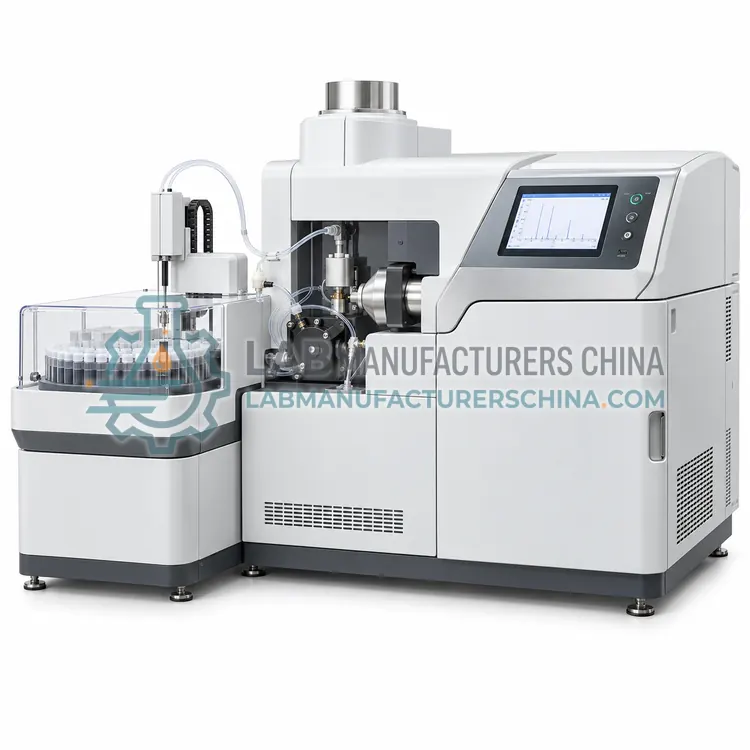
A triple quadrupole has three sections in series. The first quadrupole (Q1) transmits only ions of a chosen mass-to-charge ratio. The second section (q2) is a collision cell filled with nitrogen or argon at low pressure, where the selected precursor ions are accelerated and fragmented by collision-induced dissociation. The third quadrupole (Q3) then transmits only chosen product ions to the detector, usually an electron multiplier. Operating Q1 and Q3 at fixed masses gives multiple reaction monitoring (MRM), which filters out most chemical noise and gives very selective quantitation. Other scan modes include product-ion scan, precursor-ion scan and neutral-loss scan. The instrument is normally coupled to a liquid chromatograph through an electrospray or APCI source, or to a gas chromatograph through an electron-ionization source. Ion guides, a vacuum system with turbomolecular pumps and a data system for scheduled MRM complete the design.
A typical high-sensitivity triple quadrupole lc-ms/ms for bioanalysis configuration offers mass range of m/z 2–2000, scan speed of up to 20,000 Da/s, minimum dwell time of ≤ 1 ms, polarity switching time of ≤ 5 ms, sensitivity (reserpine, m/z 609→195) of S/N > 10,000:1 for 1 pg on column and MRM transitions per second of up to 500. Values are indicative of the product class; the exact figures for each configuration are confirmed on the quotation and the calibration documents supplied with the instrument.
The High-Sensitivity Triple Quadrupole LC-MS/MS for Bioanalysis is used in regulated pharmacokinetic studies, peptide and protein quantitation, oligonucleotide bioanalysis, biomarker panels in plasma and drug metabolism and DMPK screening. Across the wider Triple Quadrupole MS class, laboratories also deploy it for clinical and therapeutic drug monitoring, pharmacokinetic and bioanalytical studies and pesticide and veterinary drug residue testing.
Relevant standards and methods include ICH M10, FDA Bioanalytical Method Validation Guidance, EU Commission Decision 2002/657/EC, SANTE/11312/2021, ISO 17025 and CLSI C62. Certification candidates for this model are CE, IEC 61010-1 safety and ISO 9001 manufacturing; each is to be confirmed for the specific configuration before shipment, and certificates are supplied only where they have been issued.
Install the system in a temperature-stable room with clean, stable power and adequate floor loading for the instrument and its rotary or dry backing pumps. Supply nitrogen of sufficient purity and flow for the source and collision gas, and high-purity argon where required. Exhaust from the source and pumps must be vented safely. Perform mass calibration and tuning on a routine schedule, and run system suitability injections before each batch. Source cleaning, ion-guide maintenance and pump-oil or seal changes are the main preventive tasks. Laboratories working under regulated frameworks should plan installation, operational and performance qualification, audit-trail review and method validation according to ICH M10 or equivalent guidance.
Choose this variant for regulated bioanalysis, low-dose pharmacokinetics or peptide work where sub-picogram limits and wide dynamic range are required. A benchtop system is usually sufficient if limits are in the nanogram-per-milliliter range. In an RFQ specify target LLOQ in matrix, number of analytes, UHPLC pressure class, compliance software requirements and expected daily throughput.
Start with the sample introduction technique, because it decides the source and the chromatograph: LC-MS/MS for polar, non-volatile or thermally labile analytes, GC-MS/MS for volatile and semi-volatile compounds, and ICP-MS/MS for elemental analysis. Next define the required limit of quantitation in the final matrix, not the instrument sensitivity on a neat standard, and the number of MRM transitions per run, since a fast scheduled method needs dwell times of a few milliseconds and rapid polarity switching. Consider the dynamic range needed, typically four to six orders of magnitude, and the robustness of the source and ion optics under dirty matrices. Check the vendor's regulated-data software features if the laboratory works under GLP, GMP or 21 CFR Part 11 expectations. Finally compare the total cost of ownership, including vacuum pumps, nitrogen generator demand, service and column consumption.
| Mass range | m/z 2–2000 |
|---|---|
| Scan speed | up to 20,000 Da/s |
| Minimum dwell time | ≤ 1 ms |
| Polarity switching time | ≤ 5 ms |
| Sensitivity (reserpine, m/z 609→195) | S/N > 10,000:1 for 1 pg on column |
| MRM transitions per second | up to 500 |
| Linear dynamic range | 5–6 orders of magnitude |
| Source flow range | 1 µL/min–2 mL/min |
| Carryover (chlorhexidine) | < 0.002% |
| Collision cell | Linear-accelerating, N2 or Ar |
Indicative values for this product class. Final specifications are confirmed on the quotation and in the calibration documents supplied with the instrument.
Typical specifications quote a signal-to-noise ratio above 10,000:1 for 1 pg of reserpine on column, and femtogram-level detection limits for well-ionizing analytes on neat standards. In biological matrix, practical LLOQs are higher and depend on extraction cleanup, ion suppression and the analyte.
It can, provided the data software offers audit trails, user access levels and electronic signatures, and the laboratory completes qualification and validation. Compliance is a property of the whole system and procedures, not the instrument alone, and should be verified against your quality requirements.
A UHPLC rated to at least 1000 bar with low dispersion and low dwell volume is recommended, because narrow peaks of 2 to 4 seconds need fast acquisition. Autosampler carryover below 0.005% is also important for the wide dynamic range of the detector.
It measures selected precursor-to-product ion transitions, typically in multiple reaction monitoring mode. Because both the parent ion and a characteristic fragment must match, the instrument can quantify target compounds at trace levels in complex samples such as plasma, food extracts or soil with low interference.
A single quadrupole measures intact ions in one mass filter and is used for simple screening and confirmation. A triple quadrupole adds fragmentation and a second filter, giving much higher selectivity and lower detection limits for quantitation in complex matrices, at higher cost and method development effort.
Modern instruments with dwell times of 1 to 5 ms and scheduled acquisition can monitor several hundred transitions in one run, sometimes above 500 with fast polarity switching. The practical limit depends on chromatographic peak width, required points per peak and the desired sensitivity for each analyte.
用于临床定量的台式三重四极杆液相色谱串联质谱系统
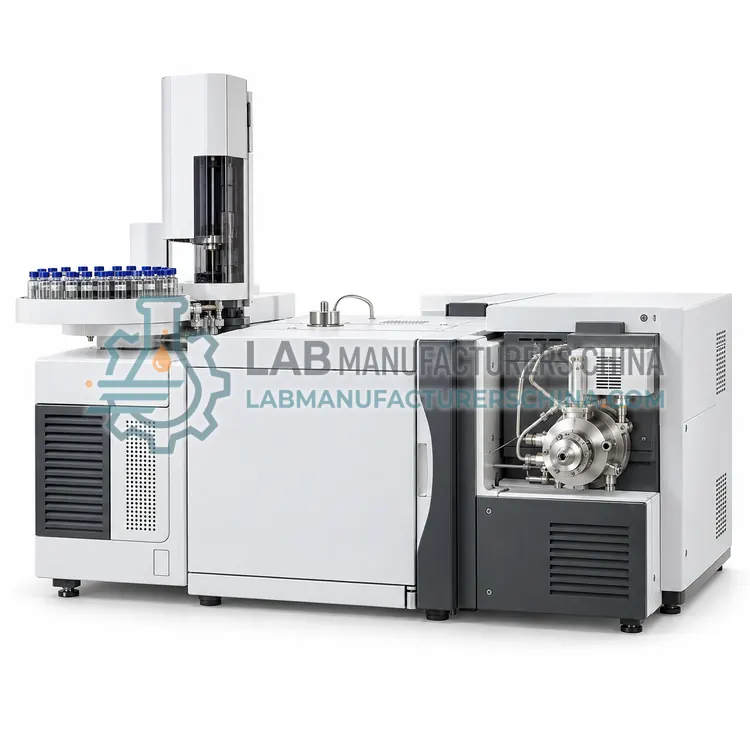
用于食品安全和残留分析的三重四极杆液相色谱串联质谱系统