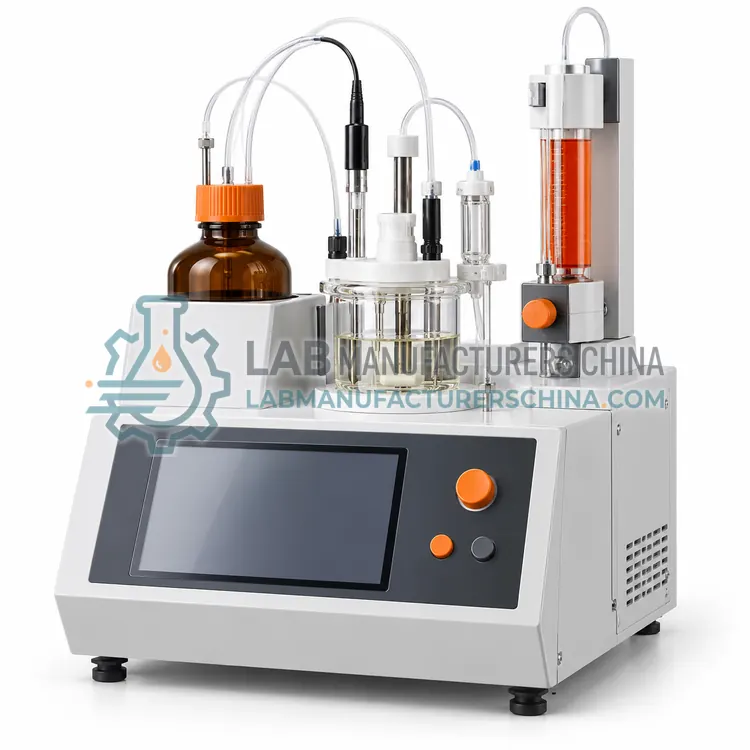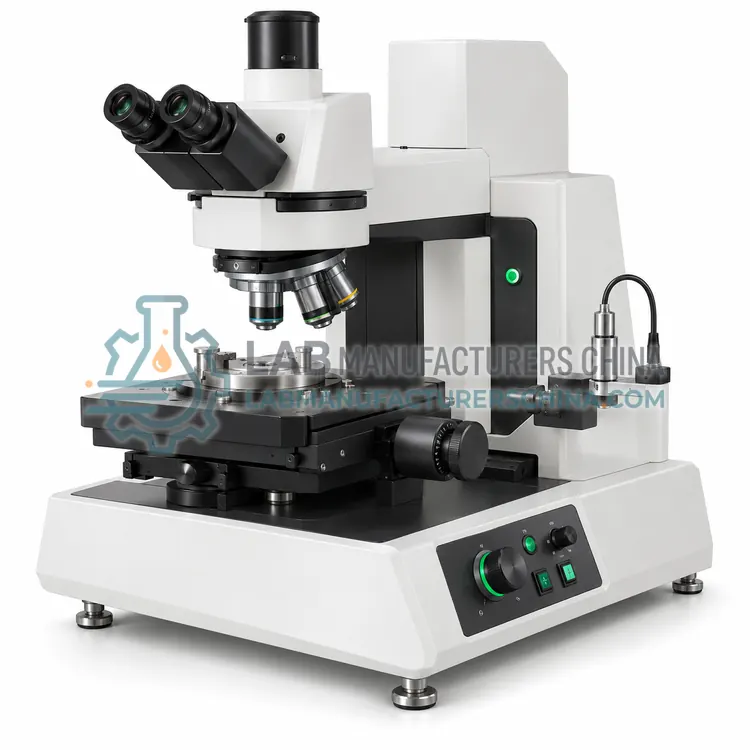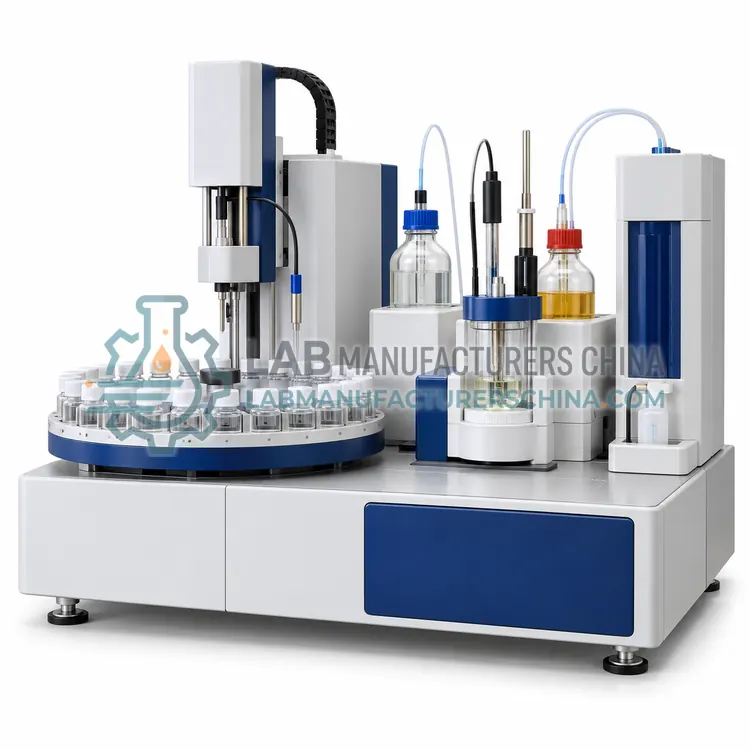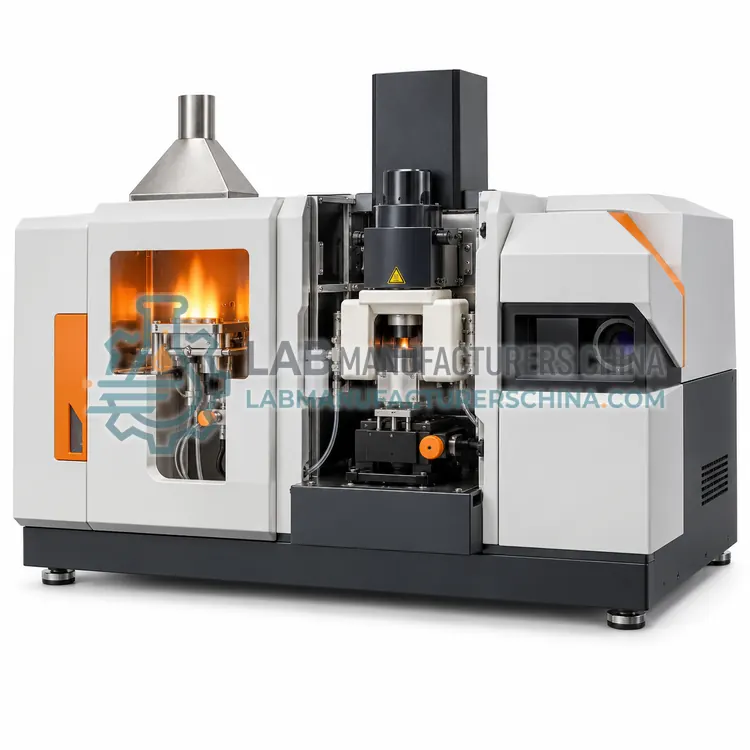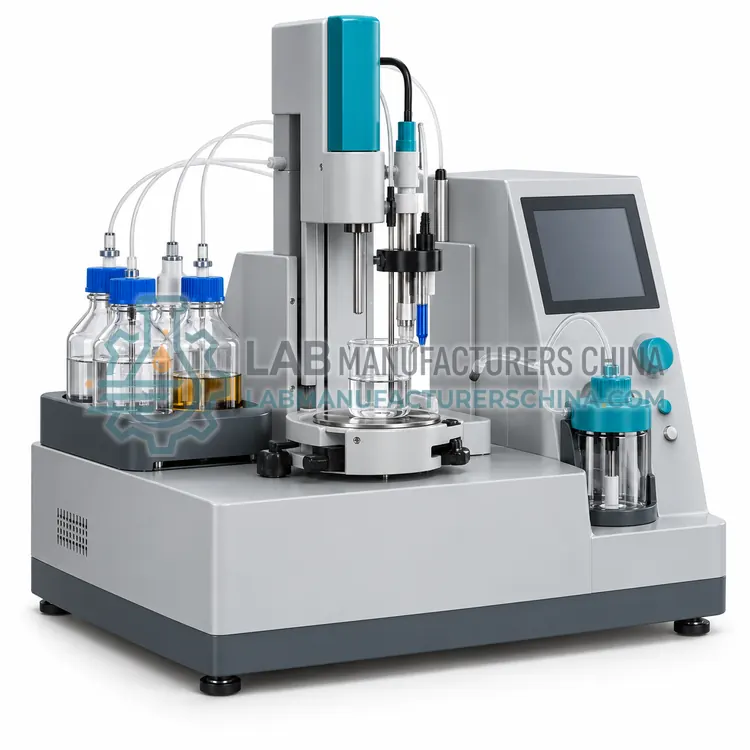
Coulometric Karl Fischer Titrator
库仑法卡尔费休水分滴定仪
- SKU TIT-0002
- Titrators
- CE (to be confirmed)
- ISO 9001 manufacturing (to be confirmed)
- RoHS (to be confirmed)
Price on request — FOB / CIF quoted per order
Prices depend on configuration, quantity and destination port.
Key specifications
| Measuring range | 1 ppm to 5% water (10 µg–100 mg) |
|---|---|
| Resolution | 0.1 µg water |
| Precision (1 mg water) | RSD ≤ 3% |
| Precision (above 1 mg water) | RSD ≤ 1% |
| Maximum generator current | 400 mA |
| Titration rate | Up to 2.4 mg water/min |
Request a quote Download brochure · to be provided
By Lab Manufacturers China Technical TeamLast reviewed Standards: ASTM D664, ASTM D974, ASTM D6304
What is the Coulometric Karl Fischer Titrator?
A coulometric Karl Fischer titrator generates iodine electrochemically in a sealed cell and calculates water mass from the charge passed. It is the right choice for trace moisture from about 1 ppm to a few percent in oils, solvents, lithium-ion battery materials and pharmaceutical powders.
What is the Coulometric Karl Fischer Titrator?
A coulometric Karl Fischer titrator generates iodine electrochemically in a sealed cell and calculates water mass from the charge passed. It is the right choice for trace moisture from about 1 ppm to a few percent in oils, solvents, lithium-ion battery materials and pharmaceutical powders.
Overview
In this design, a generator electrode in the anolyte produces iodine in proportion to the current, and a double platinum detector electrode signals when excess iodine appears at the endpoint. Because water mass follows directly from Faraday's law, no titrant standardization is needed, although periodic verification with a certified water standard is good practice. Diaphragm and diaphragm-free cells are both used, with the latter favored for ketones and low-maintenance operation. Low drift of a few micrograms per minute allows reliable measurement down to 10 µg of water. Oven attachments heat solid samples and carry released moisture to the cell by dry carrier gas, which suits insoluble or reactive materials such as plastics granules and battery electrode powders.
How does it work?
A titrator combines a precision burette or coulometric generator electrode, a stirred titration vessel, a sensor and a control unit. In volumetric titration, a motor-driven piston burette dispenses titrant while a sensor, usually a pH glass electrode, redox platinum electrode or photometric probe, tracks the solution. The endpoint is identified as a preset potential or the inflection point of the titration curve, and the result is calculated from titrant volume, concentration and stoichiometry. In coulometric Karl Fischer titration, iodine is generated electrochemically at a generator electrode and the charge passed, according to Faraday's law, gives the mass of water directly without a burette. Dynamic dosing slows addition near the endpoint to improve accuracy, and automatic sample changers allow unattended series.
What are the key features?
- Generator electrode with or without diaphragm for different sample chemistries
- Drift compensation with typical background drift below 10 µg water per minute
- Absolute calibration through Faraday's law with no titrant standardization
- Optional oven sample processor for insoluble, solid or reactive samples
- Endpoint sensitivity set by double platinum detector electrode current control
- Sealed cell with molecular sieve drying tube against atmospheric moisture
What are the technical specifications?
A typical coulometric karl fischer titrator configuration offers measuring range of 1 ppm to 5% water (10 µg–100 mg), resolution of 0.1 µg water, precision (1 mg water) of RSD ≤ 3%, precision (above 1 mg water) of RSD ≤ 1%, maximum generator current of 400 mA and titration rate of Up to 2.4 mg water/min. Values are indicative of the product class; the exact figures for each configuration are confirmed on the quotation and the calibration documents supplied with the instrument.
Which applications is it used for?
The Coulometric Karl Fischer Titrator is used in trace water in transformer and lubricating oils, moisture in lithium-ion battery electrolytes and electrodes, water in pharmaceutical powders via oven technique, residual moisture in organic solvents and water in plastics granules. Across the wider Titrators class, laboratories also deploy it for water determination in oils and solvents, acid and base number of petroleum products and chloride and salt content in food and water.
Which standards and certifications apply?
Relevant standards and methods include ASTM D664, ASTM D974, ASTM D6304, ASTM E203, ISO 760, USP <921> and IEC 61010-1. Certification candidates for this model are CE, ISO 9001 manufacturing and RoHS; each is to be confirmed for the specific configuration before shipment, and certificates are supplied only where they have been issued.
Place the titrator on a vibration-free bench away from drafts and direct sunlight. Standardize titrants regularly against a primary standard such as potassium hydrogen phthalate or sodium oxalate, and record the titer. Verify electrodes with buffers and check the burette volume gravimetrically at defined intervals. For Karl Fischer work, replace desiccant, keep the cell sealed, check drift before each series and verify with a certified water standard. Rinse tubing when changing titrants to avoid cross-contamination, and inspect piston seals and valves as part of preventive maintenance. Dispose of reagents, particularly pyridine-free Karl Fischer solutions and organic solvents, according to local waste rules.
How do I select the right Coulometric Karl Fischer Titrator?
Select this variant for samples expected below about 0.1% water, for ppm-level specifications or where titrant handling should be avoided. For high-water samples choose the volumetric model to avoid exhausting the anolyte. In an RFQ, state expected water range, sample matrix, diaphragm preference, oven requirement and the governing method, for example ASTM D6304 or ISO 12937.
How does it compare with other Titrators variants?
The decisive choice is the titration chemistry. Water in oils, solvents and solids calls for Karl Fischer, volumetric above about 0.1% water and coulometric below it. Acid and base number in petroleum products and general acid-base, redox, argentometric and complexometric titrations call for a potentiometric titrator. Consider sample throughput, because an automatic sample changer is justified beyond roughly 20 samples per day. Check burette resolution, available sensors and whether the software supports the standard methods you run, such as ASTM D664 or ASTM D6304. Also weigh solvent consumption and waste handling, reagent storage for moisture-sensitive titrants, and whether audit-trail and user management features are required for accredited or regulated work.
Full specifications
| Measuring range | 1 ppm to 5% water (10 µg–100 mg) |
|---|---|
| Resolution | 0.1 µg water |
| Precision (1 mg water) | RSD ≤ 3% |
| Precision (above 1 mg water) | RSD ≤ 1% |
| Maximum generator current | 400 mA |
| Titration rate | Up to 2.4 mg water/min |
| Background drift | < 10 µg/min typical |
| Oven temperature range | 50–300 °C (optional) |
| Cell volume | 100–150 mL |
| Power supply | 100–240 V AC, 50/60 Hz |
Indicative values for this product class. Final specifications are confirmed on the quotation and in the calibration documents supplied with the instrument.
Applications
- Trace water in transformer and lubricating oils
- Moisture in lithium-ion battery electrolytes and electrodes
- Water in pharmaceutical powders via oven technique
- Residual moisture in organic solvents
- Water in plastics granules
Key features
- Generator electrode with or without diaphragm for different sample chemistries
- Drift compensation with typical background drift below 10 µg water per minute
- Absolute calibration through Faraday's law with no titrant standardization
- Optional oven sample processor for insoluble, solid or reactive samples
- Endpoint sensitivity set by double platinum detector electrode current control
- Sealed cell with molecular sieve drying tube against atmospheric moisture
Frequently asked questions about Coulometric Karl Fischer Titrator
Iodine is generated in precise, tiny increments by electric charge rather than dispensed as liquid, and charge can be measured to very high resolution. This allows detection of microgram amounts of water, where burette volume resolution would become the limiting factor.
An oven is needed when the sample does not dissolve in the anolyte, reacts with Karl Fischer reagents, or releases water slowly. The sample is heated in a vial and dry carrier gas transports only the evaporated water to the cell, protecting the reagent.
Reagent capacity is typically about 1 mg water per mL of anolyte, so a 100 mL cell handles roughly 100 mg of water in total. Replace reagent when drift stays high, titration becomes slow, or the cumulative water limit is reached.
Volumetric Karl Fischer adds iodine-containing titrant from a burette and suits samples above roughly 0.1% water. Coulometric Karl Fischer generates iodine electrochemically and suits trace water from about 1 ppm to 5%, because it uses no burette and has lower detection limits.
The titrator monitors a sensor signal such as potential, pH or light transmission during titrant addition. The endpoint is either a preset signal value or the inflection point of the titration curve found by first or second derivative evaluation, which is more robust for weak acids or unknown samples.
Standardize titrants whenever a new batch is prepared and then at intervals set by stability, commonly weekly for sodium hydroxide and every few days for Karl Fischer titrant. Record the titer and investigate any drift, since titer errors transfer directly into every result.