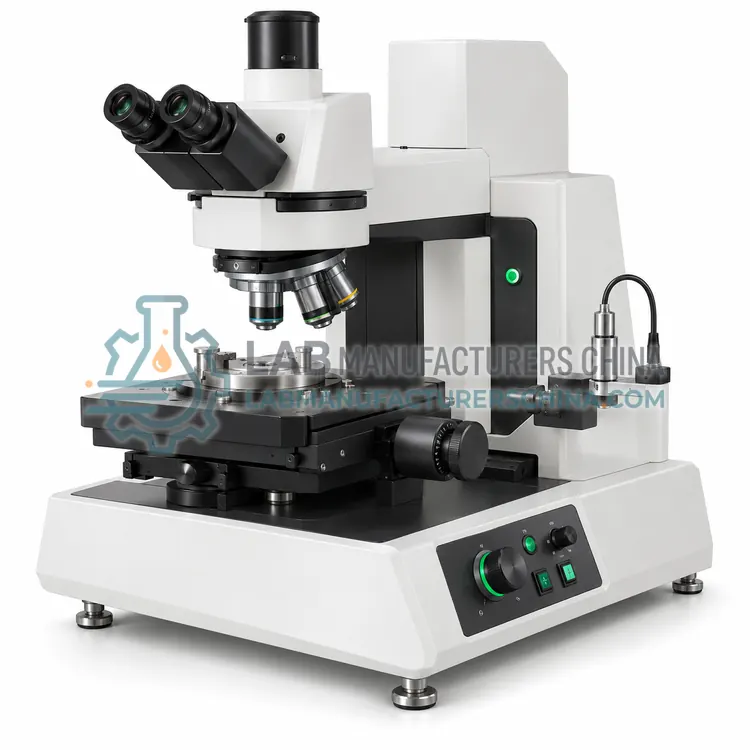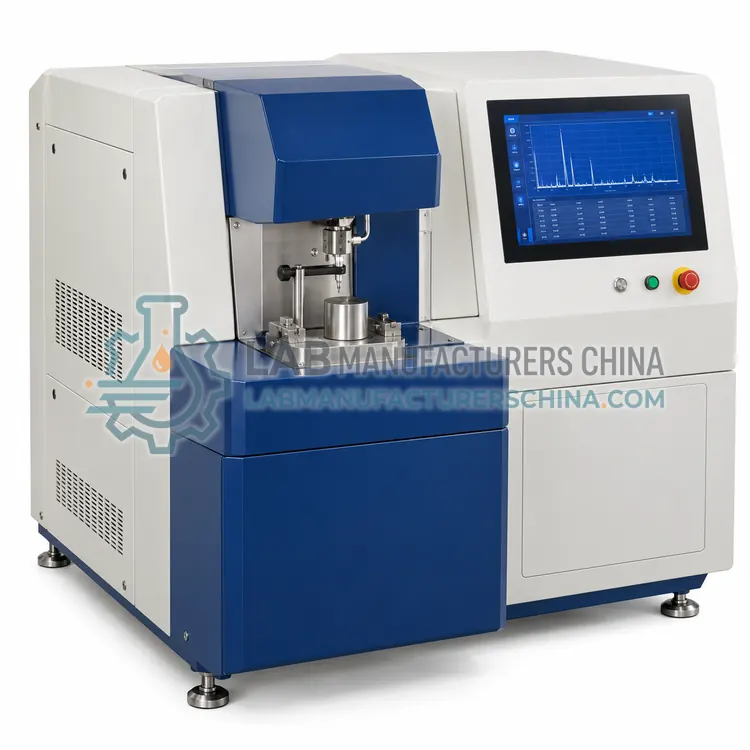
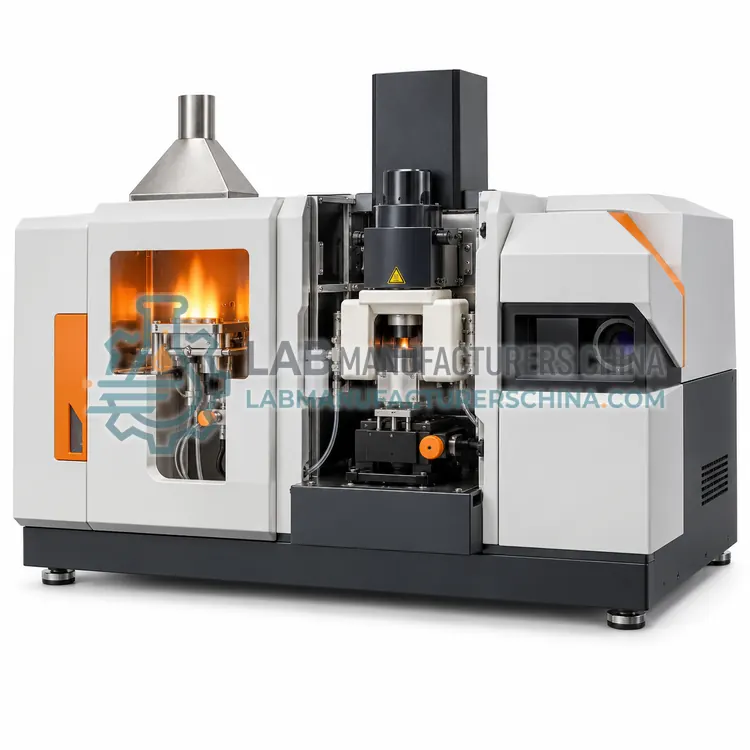
Flame and Graphite Furnace Atomic Absorption Spectrometer
火焰与石墨炉原子吸收光谱仪
- SKU SPO-0003
- Spectrometers
- CE (to be confirmed)
- ISO 9001 manufacturing (to be confirmed)
- RoHS (to be confirmed)
Price on request — FOB / CIF quoted per order
Prices depend on configuration, quantity and destination port.
Key specifications
| Wavelength range | 190–900 nm |
|---|---|
| Spectral bandwidth | 0.2, 0.4, 0.7, 1.3 nm |
| Lamp positions | 4 to 8 (turret) |
| Background correction | Deuterium lamp / Zeeman |
| Flame types | Air–acetylene, N2O–acetylene |
| Flame detection limit (Cu) | ≤ 0.01 mg/L |
Request a quote Download brochure · to be provided
By Lab Manufacturers China Technical TeamLast reviewed Standards: ASTM E415, ASTM E1019, ISO 15350
What is the Flame and Graphite Furnace Atomic Absorption Spectrometer?
An atomic absorption spectrometer measures how much light of an element-specific hollow cathode lamp is absorbed by ground-state atoms in a flame or graphite tube. It is an economical choice for determining one or a few metals in water, soil, food and industrial samples.
What is the Flame and Graphite Furnace Atomic Absorption Spectrometer?
An atomic absorption spectrometer measures how much light of an element-specific hollow cathode lamp is absorbed by ground-state atoms in a flame or graphite tube. It is an economical choice for determining one or a few metals in water, soil, food and industrial samples.
Overview
Flame AAS nebulizes solution into an air-acetylene or nitrous oxide-acetylene flame at 2300–2800 °C, reaching detection limits around 0.01–1 mg/L for most metals with high throughput. Graphite furnace AAS electrothermally dries, ashes and atomizes 10–50 µL aliquots in a tube, reaching 0.01–1 µg/L with longitudinal or transverse Zeeman background correction. Deuterium lamp or Zeeman correction compensates background absorption. Most benchtop systems offer a single-lamp turret or multi-lamp holder and switch between elements in a method. Since measurement is sequential, analysis of ten elements takes considerably longer than ICP-OES, but instrument and operating costs are lower, and acetylene and air are the main gas needs. Hollow cathode or electrodeless discharge lamps must be stocked for each element and replaced as their emission intensity declines.
How does it work?
Atomic spectrometry relies on the fact that each element emits, absorbs or fluoresces radiation at characteristic wavelengths or energies. In optical emission, an arc, spark or argon plasma excites atoms, and a grating disperses the emitted light onto photomultiplier tubes or CCD/CMOS detectors. In atomic absorption, a hollow cathode lamp passes light through an atomized sample, and absorbance follows Beer–Lambert behavior. In X-ray fluorescence, a primary X-ray beam ejects inner-shell electrons, and the characteristic X-rays emitted as outer electrons fill the vacancies are measured by energy-dispersive or wavelength-dispersive detection. Quantification requires calibration with certified reference materials and correction for matrix effects and spectral interferences, handled by the instrument software.
What are the key features?
- Air-acetylene and nitrous oxide-acetylene burner with flame safety interlocks
- Graphite furnace with programmable temperature stages and autosampler
- Deuterium or Zeeman background correction for complex matrices
- Four to eight lamp turret with automatic wavelength and lamp alignment
- Double-beam optics improving baseline stability during long series
- Flame and furnace operation on one platform in combined configurations
What are the technical specifications?
A typical flame and graphite furnace atomic absorption spectrometer configuration offers wavelength range of 190–900 nm, spectral bandwidth of 0.2, 0.4, 0.7, 1.3 nm, lamp positions of 4 to 8 (turret), background correction of Deuterium lamp / Zeeman, flame types of Air–acetylene, N2O–acetylene and flame detection limit (Cu) of ≤ 0.01 mg/L. Values are indicative of the product class; the exact figures for each configuration are confirmed on the quotation and the calibration documents supplied with the instrument.
Which applications is it used for?
The Flame and Graphite Furnace Atomic Absorption Spectrometer is used in lead, cadmium and arsenic in water and food, copper, zinc and iron in mining solutions, trace metals in fertilizer and soil extracts, sodium and potassium in industrial brines and metals in electroplating baths. Across the wider Spectrometers class, laboratories also deploy it for alloy grade verification in foundries and steel mills, sulfur in fuels and oils and wear metals in used lubricating oil.
Which standards and certifications apply?
Relevant standards and methods include ASTM E415, ASTM E1019, ISO 15350, ASTM D4294, ISO 8754, ASTM D5185, ISO 11885 and IEC 61010-1. Certification candidates for this model are CE, ISO 9001 manufacturing and RoHS; each is to be confirmed for the specific configuration before shipment, and certificates are supplied only where they have been issued.
Install spectrometers in a temperature-stable room, typically 18–25 °C with controlled humidity, on a stable bench with adequate exhaust for plasma or spark gases. Argon supply of suitable purity is needed for spark OES and ICP. XRF systems require radiation safety registration under local regulations and periodic leak checks. Calibrate with certified reference materials, then monitor drift with control samples and apply type standardization or recalibration at defined intervals. Keep sample surfaces consistent, since grinding finish and pellet density affect results. Replace spark stand electrodes, nebulizers, lamps and windows as maintenance schedules dictate, and document validation in line with ISO/IEC 17025.
How do I select the right Flame and Graphite Furnace Atomic Absorption Spectrometer?
Select this variant for laboratories analyzing a small set of metals repeatedly and needing low capital cost, with furnace capability for ppb-level limits on small volumes. For more than five elements per sample, ICP-OES is usually more efficient. In an RFQ, list elements and ranges, flame or furnace or both, background correction type, autosampler, and the exhaust and gas safety requirements.
How does it compare with other Spectrometers variants?
Sample form and required detection limit narrow the choice quickly. Solid metals for production control suit spark OES, which reads major and trace alloying elements within seconds. Liquids and digested solids measured to ppb levels suit ICP-OES for multi-element work or atomic absorption for one or two elements at lower capital cost. Powders, liquids and solids needing minimal preparation suit XRF, with energy-dispersive models for sulfur in fuels and screening, and wavelength-dispersive models for higher resolution in ore and cement. Consider elements of interest, since light elements such as carbon and boron are difficult by XRF. Also weigh argon consumption, sample preparation effort, operator skill and available reference materials matching your matrix.
Full specifications
| Wavelength range | 190–900 nm |
|---|---|
| Spectral bandwidth | 0.2, 0.4, 0.7, 1.3 nm |
| Lamp positions | 4 to 8 (turret) |
| Background correction | Deuterium lamp / Zeeman |
| Flame types | Air–acetylene, N2O–acetylene |
| Flame detection limit (Cu) | ≤ 0.01 mg/L |
| Furnace detection limit (Cd) | ≤ 0.002 µg/L |
| Furnace temperature | Ambient to 3000 °C |
| Furnace sample volume | 5–50 µL |
| Precision | RSD ≤ 1% (flame), ≤ 3% (furnace) |
Indicative values for this product class. Final specifications are confirmed on the quotation and in the calibration documents supplied with the instrument.
Applications
- Lead, cadmium and arsenic in water and food
- Copper, zinc and iron in mining solutions
- Trace metals in fertilizer and soil extracts
- Sodium and potassium in industrial brines
- Metals in electroplating baths
Key features
- Air-acetylene and nitrous oxide-acetylene burner with flame safety interlocks
- Graphite furnace with programmable temperature stages and autosampler
- Deuterium or Zeeman background correction for complex matrices
- Four to eight lamp turret with automatic wavelength and lamp alignment
- Double-beam optics improving baseline stability during long series
- Flame and furnace operation on one platform in combined configurations
Frequently asked questions about Flame and Graphite Furnace Atomic Absorption Spectrometer
Use graphite furnace when concentrations fall below roughly 0.1 mg/L or when sample volume is limited to tens of microliters. It gives 100–1000 times lower detection limits than flame, though with longer analysis time per sample and greater matrix-modifier demands.
Acetylene requires leak-tested regulators, flashback arrestors and flame-out interlocks, with cylinders secured and stored away from oxidizers. Exhaust venting of combustion products is essential, and nitrous oxide-acetylene flames require a dedicated burner and gas protection.
Zeeman correction applies a magnetic field to the atomizer, splitting absorption lines so the instrument can separate atomic absorption from broadband background absorption at the same wavelength. It handles structured background better than a deuterium lamp, especially in furnace work.
ICP-OES measures many elements simultaneously with a wide linear range from ppb to percent, while atomic absorption measures one element at a time using a dedicated lamp. Flame AAS has lower capital cost, and graphite furnace AAS reaches ppb detection with very small sample volumes.
A spark optical emission spectrometer is the standard for solid metal alloys, giving results for major, minor and trace elements including carbon, sulfur and phosphorus in steel within about 30 seconds. XRF is used when non-destructive or portable analysis is preferred.
Standard XRF has poor sensitivity below sodium because low-energy X-rays are absorbed in air and sample. Wavelength-dispersive systems under vacuum can measure elements down to beryllium or boron, but carbon in steel is determined by spark OES or combustion analysis instead.
Related models
UV-Fluorescence Total Sulfur and Chemiluminescence Nitrogen Analyzer
紫外荧光总硫与化学发光总氮分析仪
- CE (to be confirmed)
- +2