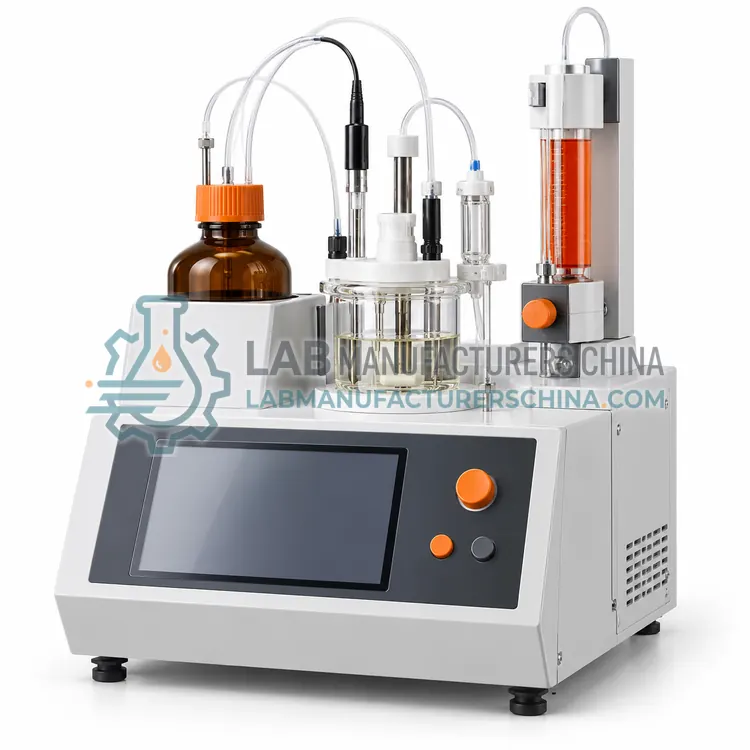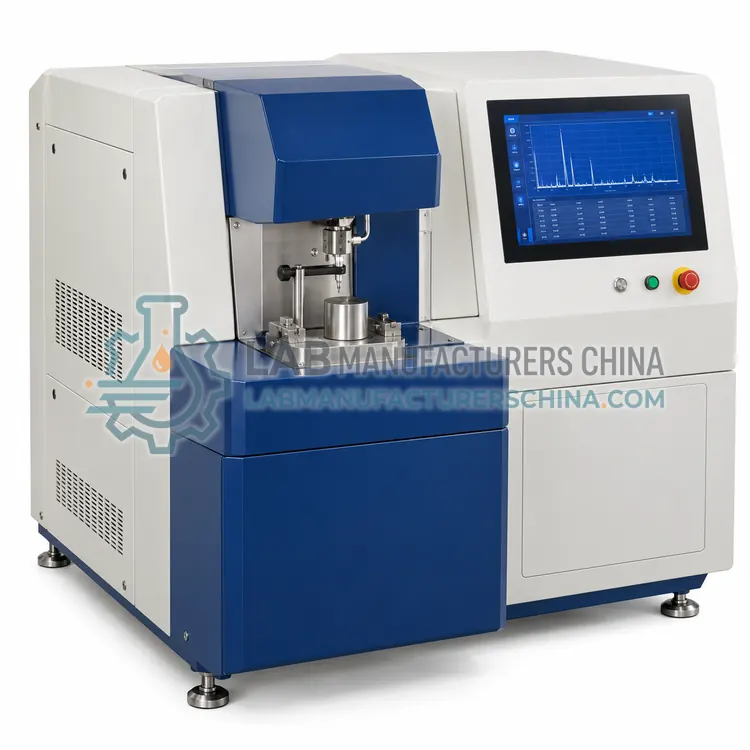
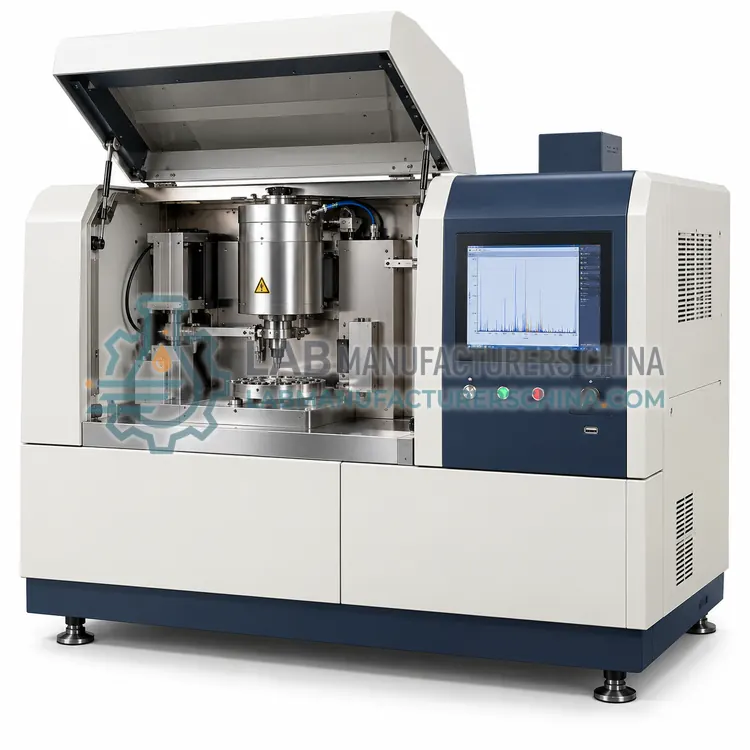
ICP-OES Spectrometer for Trace Metal and Ore Analysis
痕量金属和矿石分析 ICP-OES 光谱仪
- SKU SPO-0002
- Spectrometers
- CE (to be confirmed)
- ISO 9001 manufacturing (to be confirmed)
- RoHS (to be confirmed)
Price on request — FOB / CIF quoted per order
Prices depend on configuration, quantity and destination port.
Key specifications
| Wavelength range | 165–900 nm |
|---|---|
| Optical resolution | ≤ 0.009 nm at 200 nm |
| RF generator frequency | 27.12 or 40.68 MHz |
| RF power | 700–1600 W adjustable |
| Plasma view | Axial, radial or dual |
| Detector | CCD or CID solid-state |
Request a quote Download brochure · to be provided
By Lab Manufacturers China Technical TeamLast reviewed Standards: ASTM E415, ASTM E1019, ISO 15350
What is the ICP-OES Spectrometer for Trace Metal and Ore Analysis?
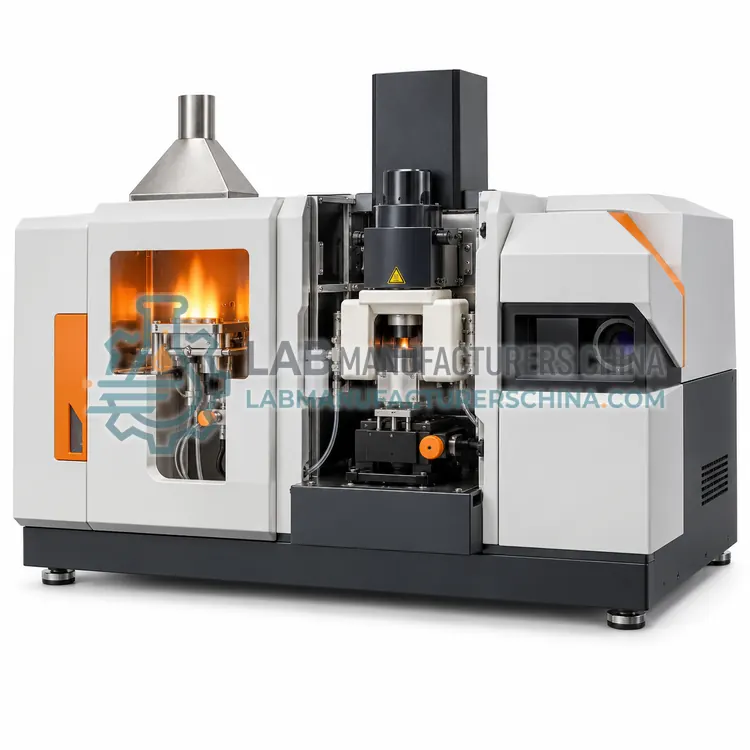
An ICP-OES spectrometer measures the atomic emission of elements in an argon plasma at about 6000–10000 K. It determines up to 70 elements simultaneously in digested ores, wear-metal oils, water and chemicals from ppb to percent levels, and is a workhorse of assay and environmental laboratories.
What is the ICP-OES Spectrometer for Trace Metal and Ore Analysis?
An ICP-OES spectrometer measures the atomic emission of elements in an argon plasma at about 6000–10000 K. It determines up to 70 elements simultaneously in digested ores, wear-metal oils, water and chemicals from ppb to percent levels, and is a workhorse of assay and environmental laboratories.
Overview
Liquid sample is nebulized into a spray chamber and carried by argon into an inductively coupled plasma sustained by a 27 or 40 MHz radio-frequency generator. Emission is viewed radially for high matrix tolerance or axially for lower detection limits, and many instruments offer dual view. An echelle optic with a solid-state detector gives simultaneous measurement across roughly 165–900 nm. Ore and mineral samples are digested in mixed acid or fused and dissolved before analysis, and oils are diluted in kerosene with organic-compatible torches. Typical detection limits are 0.1–10 µg/L for most elements, with linear range over four to six orders of magnitude. Argon consumption of 12–18 L/min is the main running cost.
How does it work?
Atomic spectrometry relies on the fact that each element emits, absorbs or fluoresces radiation at characteristic wavelengths or energies. In optical emission, an arc, spark or argon plasma excites atoms, and a grating disperses the emitted light onto photomultiplier tubes or CCD/CMOS detectors. In atomic absorption, a hollow cathode lamp passes light through an atomized sample, and absorbance follows Beer–Lambert behavior. In X-ray fluorescence, a primary X-ray beam ejects inner-shell electrons, and the characteristic X-rays emitted as outer electrons fill the vacancies are measured by energy-dispersive or wavelength-dispersive detection. Quantification requires calibration with certified reference materials and correction for matrix effects and spectral interferences, handled by the instrument software.
What are the key features?
- Echelle optics with solid-state detector for simultaneous full-spectrum measurement
- Dual view plasma combining radial robustness with axial sensitivity
- Solid-state RF generator at 27 or 40 MHz with automatic plasma ignition
- Organic-compatible torch and oxygen addition option for oil and solvent samples
- Autosampler with 60–240 positions for unattended multi-element series
- Software interference correction and internal standard compensation
What are the technical specifications?
A typical icp-oes spectrometer for trace metal and ore analysis configuration offers wavelength range of 165–900 nm, optical resolution of ≤ 0.009 nm at 200 nm, RF generator frequency of 27.12 or 40.68 MHz, RF power of 700–1600 W adjustable, plasma view of Axial, radial or dual and detector of CCD or CID solid-state. Values are indicative of the product class; the exact figures for each configuration are confirmed on the quotation and the calibration documents supplied with the instrument.
Which applications is it used for?
The ICP-OES Spectrometer for Trace Metal and Ore Analysis is used in multi-element ore and concentrate assay after digestion, wear metals in used oil per ASTM D5185, heavy metals in drinking water and wastewater, fertilizer and soil extracts and trace impurities in chemicals and battery materials. Across the wider Spectrometers class, laboratories also deploy it for alloy grade verification in foundries and steel mills, sulfur in fuels and oils and wear metals in used lubricating oil.
Which standards and certifications apply?
Relevant standards and methods include ASTM E415, ASTM E1019, ISO 15350, ASTM D4294, ISO 8754, ASTM D5185, ISO 11885 and IEC 61010-1. Certification candidates for this model are CE, ISO 9001 manufacturing and RoHS; each is to be confirmed for the specific configuration before shipment, and certificates are supplied only where they have been issued.
Install spectrometers in a temperature-stable room, typically 18–25 °C with controlled humidity, on a stable bench with adequate exhaust for plasma or spark gases. Argon supply of suitable purity is needed for spark OES and ICP. XRF systems require radiation safety registration under local regulations and periodic leak checks. Calibrate with certified reference materials, then monitor drift with control samples and apply type standardization or recalibration at defined intervals. Keep sample surfaces consistent, since grinding finish and pellet density affect results. Replace spark stand electrodes, nebulizers, lamps and windows as maintenance schedules dictate, and document validation in line with ISO/IEC 17025.
How do I select the right ICP-OES Spectrometer for Trace Metal and Ore Analysis?
Select this variant for multi-element liquid analysis from ppb to percent levels and for laboratories with varied sample types. Choose atomic absorption for one or two elements at lower capital cost, or ICP-MS for sub-ppb limits. In an RFQ, specify elements and ranges, matrices including organics, required view mode, autosampler size and argon supply, and methods such as ISO 11885 or ASTM D5185.
How does it compare with other Spectrometers variants?
Sample form and required detection limit narrow the choice quickly. Solid metals for production control suit spark OES, which reads major and trace alloying elements within seconds. Liquids and digested solids measured to ppb levels suit ICP-OES for multi-element work or atomic absorption for one or two elements at lower capital cost. Powders, liquids and solids needing minimal preparation suit XRF, with energy-dispersive models for sulfur in fuels and screening, and wavelength-dispersive models for higher resolution in ore and cement. Consider elements of interest, since light elements such as carbon and boron are difficult by XRF. Also weigh argon consumption, sample preparation effort, operator skill and available reference materials matching your matrix.
Full specifications
| Wavelength range | 165–900 nm |
|---|---|
| Optical resolution | ≤ 0.009 nm at 200 nm |
| RF generator frequency | 27.12 or 40.68 MHz |
| RF power | 700–1600 W adjustable |
| Plasma view | Axial, radial or dual |
| Detector | CCD or CID solid-state |
| Typical detection limit | 0.1–10 µg/L (axial) |
| Argon consumption | 12–18 L/min |
| Short-term precision | RSD ≤ 1% |
| Autosampler capacity | 60–240 tubes |
Indicative values for this product class. Final specifications are confirmed on the quotation and in the calibration documents supplied with the instrument.
Applications
- Multi-element ore and concentrate assay after digestion
- Wear metals in used oil per ASTM D5185
- Heavy metals in drinking water and wastewater
- Fertilizer and soil extracts
- Trace impurities in chemicals and battery materials
Key features
- Echelle optics with solid-state detector for simultaneous full-spectrum measurement
- Dual view plasma combining radial robustness with axial sensitivity
- Solid-state RF generator at 27 or 40 MHz with automatic plasma ignition
- Organic-compatible torch and oxygen addition option for oil and solvent samples
- Autosampler with 60–240 positions for unattended multi-element series
- Software interference correction and internal standard compensation
Frequently asked questions about ICP-OES Spectrometer for Trace Metal and Ore Analysis
Axial viewing gives about 5–10 times lower detection limits and suits trace analysis of clean solutions. Radial viewing tolerates high dissolved solids and easily ionized elements, so it suits high-matrix samples. Dual-view instruments provide both in one method.
Typical consumption is 12–18 L/min during operation, from plasma, auxiliary and nebulizer flows, which is approximately 0.7–1.1 m³ per hour. A liquid argon dewar is usually more economical than cylinders for laboratories running daily.
Yes. Oils are diluted 1:10 or so in kerosene or xylene, and the instrument uses an organic-compatible torch, lower nebulizer flow and sometimes oxygen addition. Oil-based standards are prepared to match viscosity, as in ASTM D5185.
ICP-OES measures many elements simultaneously with a wide linear range from ppb to percent, while atomic absorption measures one element at a time using a dedicated lamp. Flame AAS has lower capital cost, and graphite furnace AAS reaches ppb detection with very small sample volumes.
A spark optical emission spectrometer is the standard for solid metal alloys, giving results for major, minor and trace elements including carbon, sulfur and phosphorus in steel within about 30 seconds. XRF is used when non-destructive or portable analysis is preferred.
Standard XRF has poor sensitivity below sodium because low-energy X-rays are absorbed in air and sample. Wavelength-dispersive systems under vacuum can measure elements down to beryllium or boron, but carbon in steel is determined by spark OES or combustion analysis instead.
Related models