
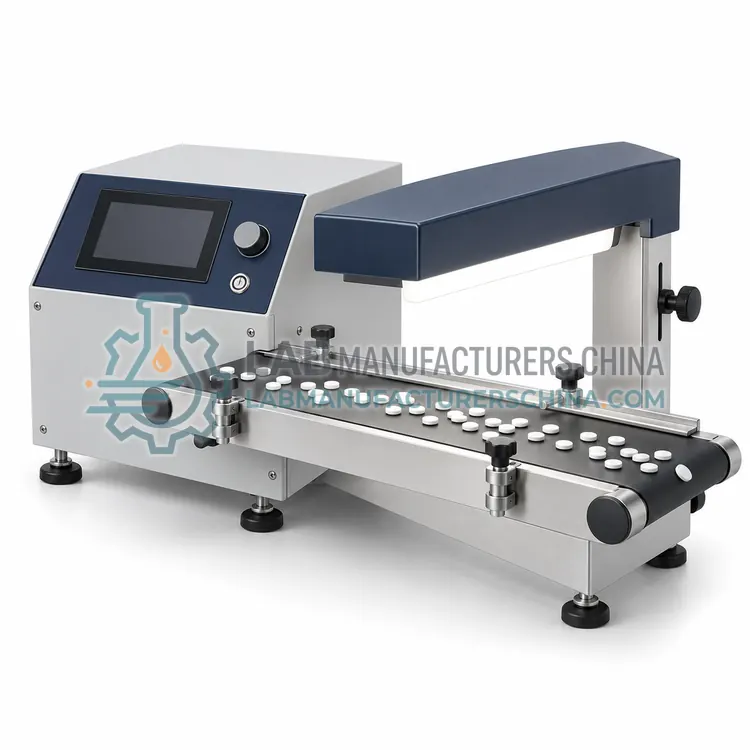
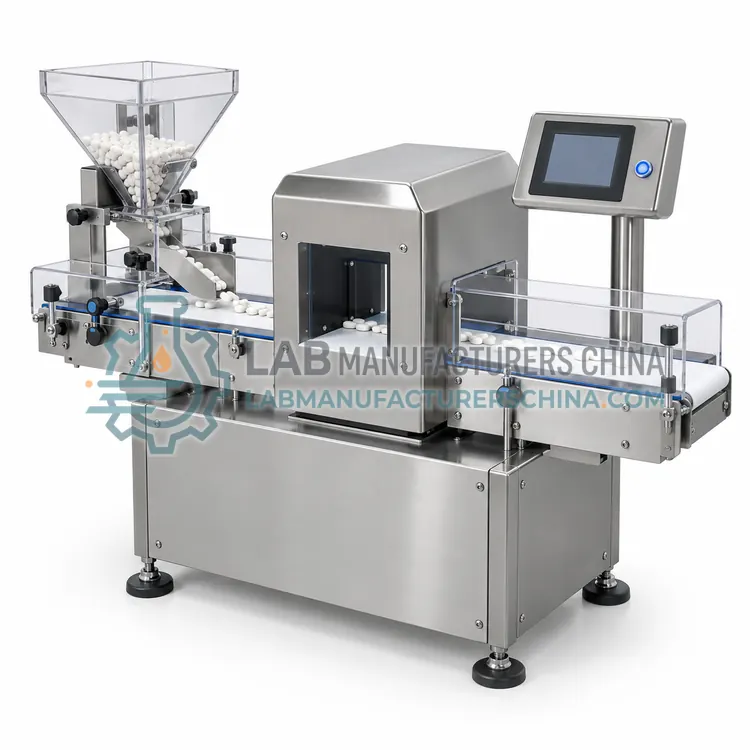
Tablet and Capsule Metal Detector
片剂和胶囊金属探测器
- SKU TAI-0003
- Tablet Inspection
- CE (to be confirmed)
- ISO 9001 manufacturing (to be confirmed)
Price on request — FOB / CIF quoted per order
Prices depend on configuration, quantity and destination port.
Key specifications
| Aperture diameter | 10–40 mm |
|---|---|
| Ferrous sensitivity | 0.3–0.5 mm sphere |
| Non-ferrous sensitivity | 0.5–0.8 mm sphere |
| Stainless steel sensitivity | 0.6–1.0 mm sphere |
| Throughput | Up to 500,000 tablets/h |
| Operating frequency | Multi-frequency 100–800 kHz |
Request a quote Download brochure · to be provided
By Lab Manufacturers China Technical TeamLast reviewed Standards: USP <1>, Ph. Eur. 2.9.40, ISO 9001
What is the Tablet and Capsule Metal Detector?
A tablet and capsule metal detector passes product through a balanced coil aperture to find ferrous, non-ferrous and stainless steel particles. It is used near the end of the production line to protect against metallic contamination.
What is the Tablet and Capsule Metal Detector?
A tablet and capsule metal detector passes product through a balanced coil aperture to find ferrous, non-ferrous and stainless steel particles. It is used near the end of the production line to protect against metallic contamination.
Overview
A metal detector generates a balanced high-frequency electromagnetic field in a coil system. When a metal particle passes through the aperture it disturbs the field, and the receiver coils detect the imbalance and signal a reject. Free-fall designs use a small-bore tube so that tablets fall through the aperture, giving high sensitivity, typically detecting ferrous spheres of 0.3 to 0.5 mm and stainless steel of 0.6 to 1.0 mm depending on aperture. The reject mechanism is a diverter flap or air jet. Sensitivity depends on aperture size, product effect, frequency and environmental interference from nearby metal or vibration. Product effect can be significant for moist or salty products, but is low for dry tablets. Regular challenge testing with certified test spheres demonstrates that the detector is working properly.
How does it work?
Tablet inspection combines several physical principles. Vision systems illuminate tablets with controlled light and capture images with area or line-scan cameras, and software compares shape, color, surface texture and printing with a learned reference to detect chips, cracks, spots, capping and double-pressed units. Metal detectors use a balanced coil system that produces an electromagnetic field, and a disturbance caused by ferrous or non-ferrous metal triggers a reject. Checkweighers measure mass as tablets pass over a load cell or electromagnetic force restoration cell, and reject units outside set limits. Manual inspection tables use lighting and a moving belt so that trained inspectors can view both sides of the tablet. Rejection is typically by an air jet or diverter gate, and data are logged for trend analysis.
What are the key features?
- Balanced coil system with free-fall tube for tablets and capsules
- Detects ferrous, non-ferrous and stainless steel metals
- Automatic product-effect compensation for stable operation
- Air-jet or flap reject with confirmation sensor
- Test-piece challenge routine with logged results
What are the technical specifications?
A typical tablet and capsule metal detector configuration offers aperture diameter of 10–40 mm, ferrous sensitivity of 0.3–0.5 mm sphere, non-ferrous sensitivity of 0.5–0.8 mm sphere, stainless steel sensitivity of 0.6–1.0 mm sphere, throughput of Up to 500,000 tablets/h and operating frequency of Multi-frequency 100–800 kHz. Values are indicative of the product class; the exact figures for each configuration are confirmed on the quotation and the calibration documents supplied with the instrument.
Which applications is it used for?
The Tablet and Capsule Metal Detector is used in final check before tablet packaging, capsule filling lines, nutraceutical tablet lines and contamination risk control. Across the wider Tablet Inspection class, laboratories also deploy it for visual defect detection in tablet production, foreign-matter control and weight control of finished tablets.
Which standards and certifications apply?
Relevant standards and methods include USP <1>, Ph. Eur. 2.9.40, ISO 9001, IEC 61010-1 and EN 60529. Certification candidates for this model are CE and ISO 9001 manufacturing; each is to be confirmed for the specific configuration before shipment, and certificates are supplied only where they have been issued.
Install inspection equipment on a stable, vibration-free surface with controlled lighting, because ambient light and vibration affect vision and weighing accuracy. Validate detection sensitivity with certified test pieces, for example ferrous, non-ferrous and stainless steel spheres for metal detectors, and with known defect samples for vision systems. Perform challenge tests at start-up, at set intervals and after changeover. Keep optics, belts and chutes clean and protect metal detector coils from nearby metal and electrical interference. Maintain calibration records for checkweighers with traceable test weights. Under GMP, document qualification, control reject handling and ensure rejected tablets are segregated and investigated.
How do I select the right Tablet and Capsule Metal Detector?
Choose a metal detector when contamination from machinery wear is a concern. It does not find non-metallic defects, so combine it with vision inspection. In an RFQ, state aperture size, required sensitivity per metal type, throughput, reject method and ingress protection rating.
How does it compare with other Tablet Inspection variants?
Match the inspection method to the defect you need to catch. Vision inspection addresses appearance, chips, cracks, color and print, while metal detection addresses contamination from machinery wear, and checkweighing addresses fill weight. Manual inspection is flexible and low cost but subjective and slower. Consider throughput, expressed in tablets per minute, and ensure the system can keep pace with the press or packaging line. Check the size range and shapes supported, as oblong, biconvex and scored tablets are more difficult to image. Sensitivity specification, for example the smallest detectable ferrous sphere, should be stated. Regulated users should verify reject confirmation, audit trails and challenge testing procedures, and consider whether the system must integrate with upstream or downstream equipment.
Full specifications
| Aperture diameter | 10–40 mm |
|---|---|
| Ferrous sensitivity | 0.3–0.5 mm sphere |
| Non-ferrous sensitivity | 0.5–0.8 mm sphere |
| Stainless steel sensitivity | 0.6–1.0 mm sphere |
| Throughput | Up to 500,000 tablets/h |
| Operating frequency | Multi-frequency 100–800 kHz |
| Reject method | Air jet or flap |
| Enclosure | IP65 |
| Data output | Ethernet / USB |
| Power supply | 220 V, 50/60 Hz |
Indicative values for this product class. Final specifications are confirmed on the quotation and in the calibration documents supplied with the instrument.
Applications
- Final check before tablet packaging
- Capsule filling lines
- Nutraceutical tablet lines
- Contamination risk control
Key features
- Balanced coil system with free-fall tube for tablets and capsules
- Detects ferrous, non-ferrous and stainless steel metals
- Automatic product-effect compensation for stable operation
- Air-jet or flap reject with confirmation sensor
- Test-piece challenge routine with logged results
Frequently asked questions about Tablet and Capsule Metal Detector
Detectors find ferrous, non-ferrous and stainless steel particles. Sensitivity is highest for ferrous metal and lowest for stainless steel, so sensitivity should be specified for each type.
Product effect is the detector's response to the product itself, usually from moisture or salt content. Dry tablets have low product effect, which allows higher sensitivity settings than with conductive products.
Test at start-up, at set intervals during production, after changeovers and after any repair, using certified test spheres for each metal type. Results should be recorded and out-of-tolerance findings investigated.
Tablet inspection equipment detects defects in tablets before packaging. It includes vision systems for appearance, metal detectors for contamination, and checkweighers for mass, and it automatically rejects units that fall outside preset criteria.
Vision systems detect chips, cracks, capping, spots, discoloration, double-pressed tablets, missing or misprinted marks, and wrong size or shape. Detection performance depends on lighting, tablet color, resolution and the learned reference.
Machinery wear, broken screens or punch fragments can introduce metal particles. A tablet metal detector identifies ferrous, non-ferrous and stainless steel contaminants that other methods cannot see, protecting patients and downstream equipment.
Related models
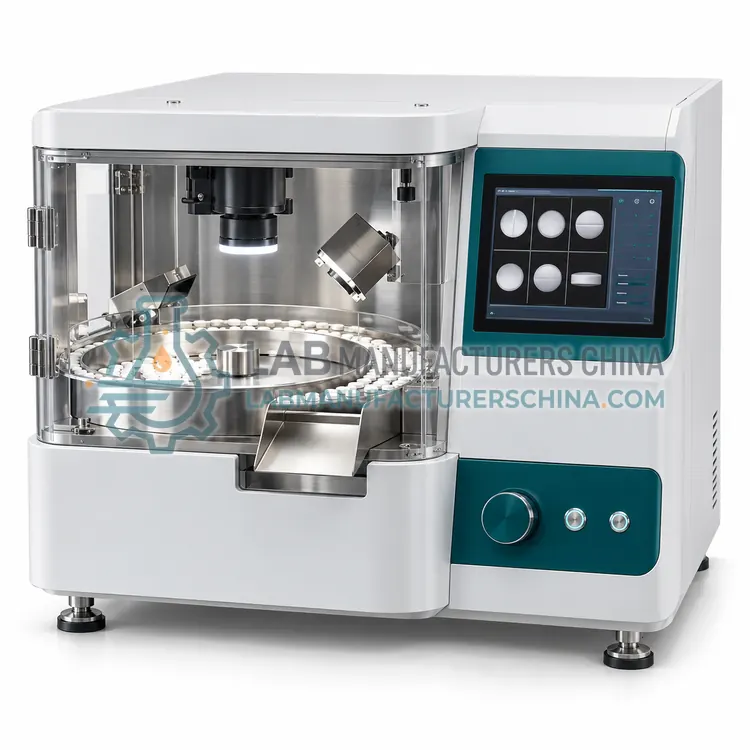
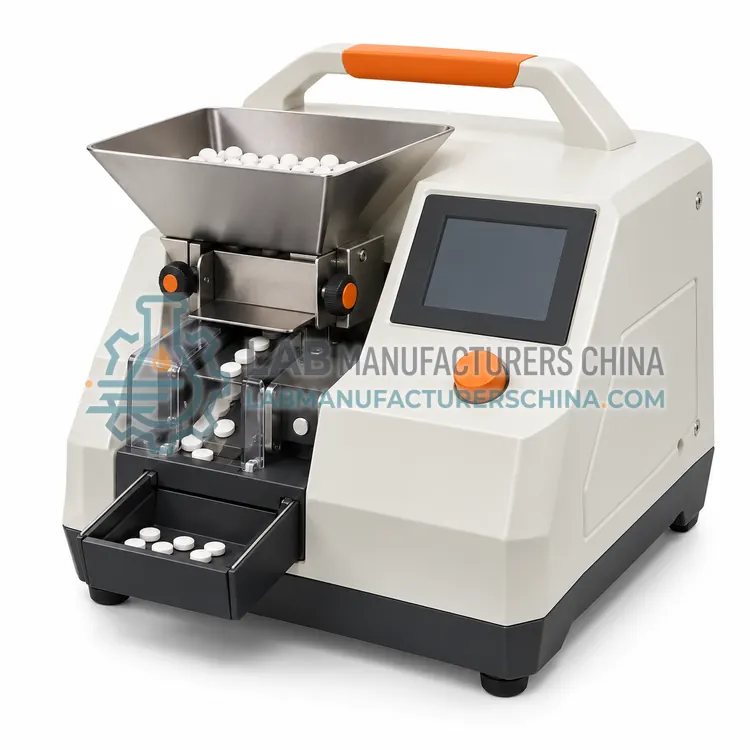
Multi-Parameter Tablet Tester for Thickness, Diameter and Weight
片剂厚度、直径及重量多参数测试仪
- CE (to be confirmed)
- +1