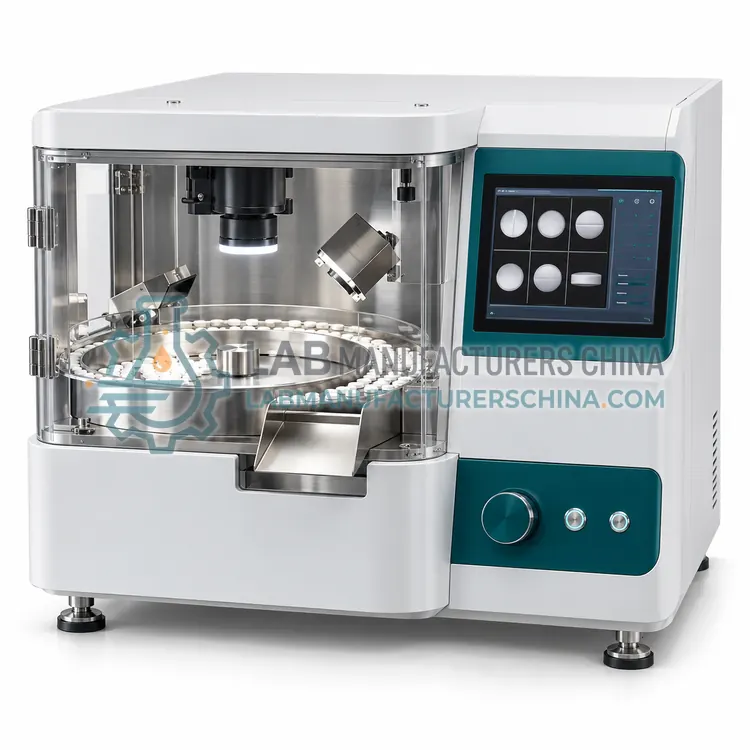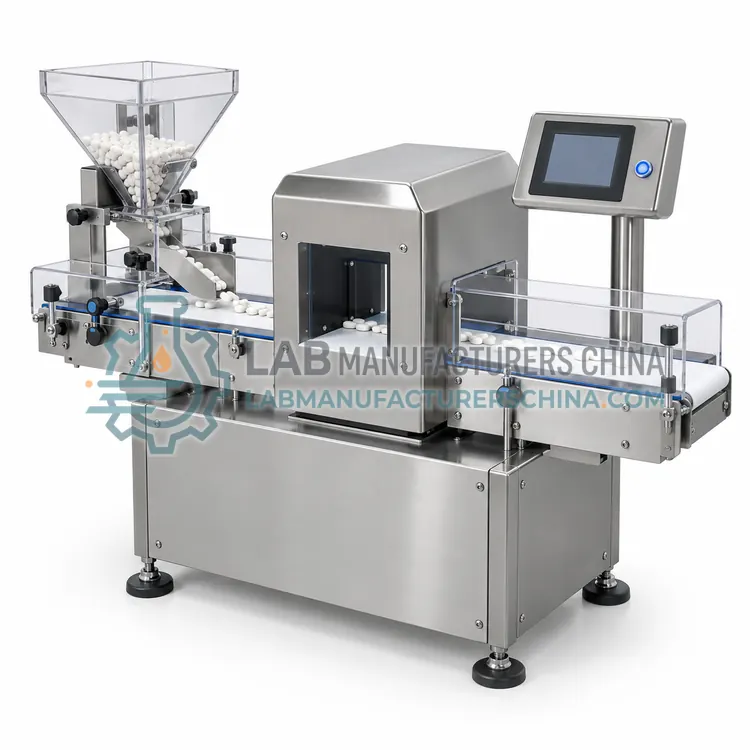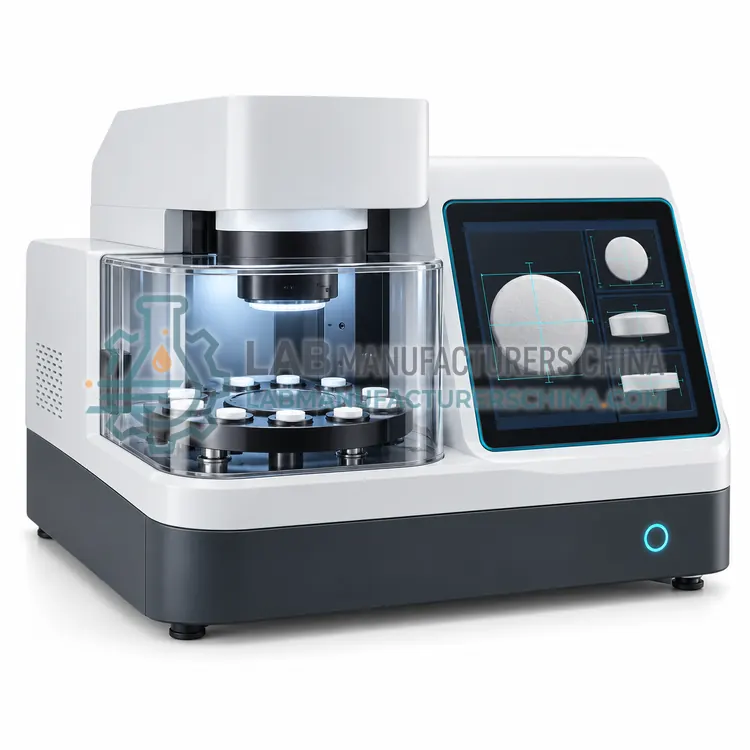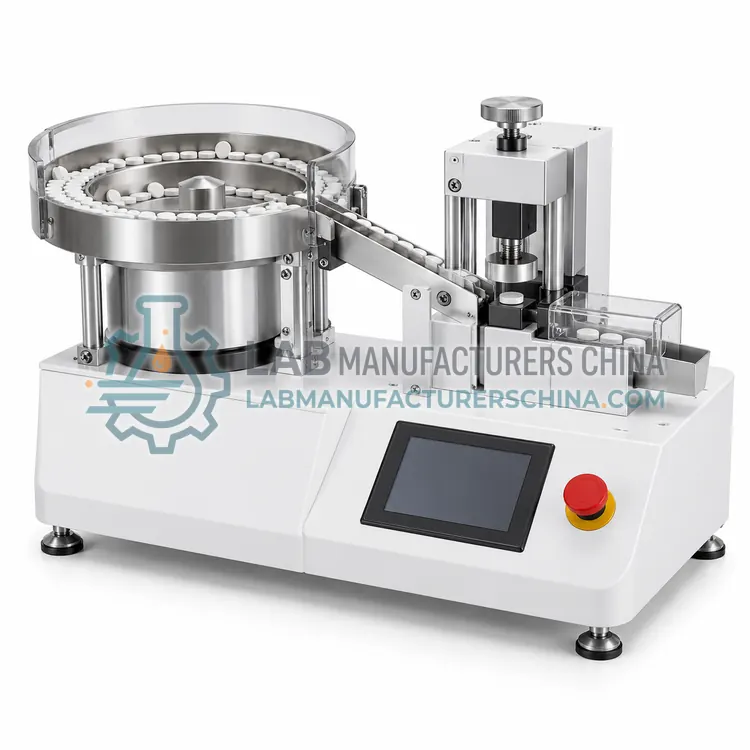
Tablet Checkweigher
片剂重量检测机
- SKU TAI-0004
- Tablet Inspection
- CE (to be confirmed)
- ISO 9001 manufacturing (to be confirmed)
Price on request — FOB / CIF quoted per order
Prices depend on configuration, quantity and destination port.
Key specifications
| Weighing range | 10 mg–5 g |
|---|---|
| Resolution | 0.1–1 mg |
| Accuracy (dynamic) | ± 1–3 mg (1 SD) |
| Throughput | 100–300 tablets/min per lane |
| Number of lanes | 1–4 |
| Reject method | Air jet / diverter |
Request a quote Download brochure · to be provided
By Lab Manufacturers China Technical TeamLast reviewed Standards: USP <1>, Ph. Eur. 2.9.40, ISO 9001
What is the Tablet Checkweigher?
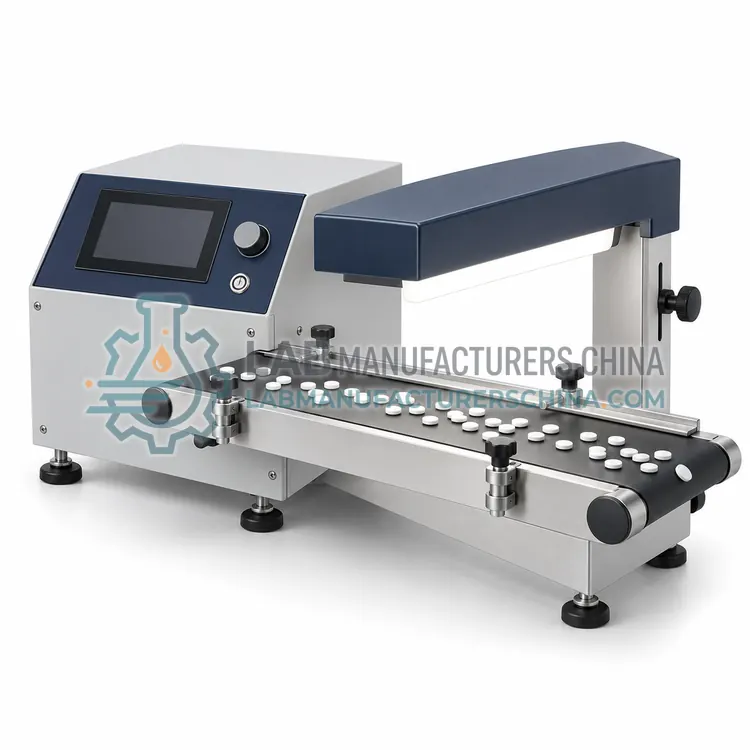
A tablet checkweigher weighs each tablet dynamically and rejects units outside upper and lower mass limits. It is used to control compression weight and to provide 100 percent weight verification at production speed.
What is the Tablet Checkweigher?
A tablet checkweigher weighs each tablet dynamically and rejects units outside upper and lower mass limits. It is used to control compression weight and to provide 100 percent weight verification at production speed.
Overview
A tablet checkweigher transports individual tablets across a high-speed weighing cell, typically an electromagnetic force restoration (EMFR) sensor with milligram-level resolution. A star-wheel or vibratory feeder separates tablets into single file, the weighing cell measures mass in milliseconds, and the controller compares the result to preset limits. Out-of-limit tablets are ejected by an air jet or diverter. Statistical outputs include mean, standard deviation and trend charts that can feed back to the tablet press to adjust fill depth. Typical capacity is 100 to 300 tablets per minute per lane. Accuracy depends on vibration isolation, air drafts and the cleanliness of the weighing cell, and calibration with certified test weights is needed. Dynamic weighing is less accurate than static weighing on a laboratory balance.
How does it work?
Tablet inspection combines several physical principles. Vision systems illuminate tablets with controlled light and capture images with area or line-scan cameras, and software compares shape, color, surface texture and printing with a learned reference to detect chips, cracks, spots, capping and double-pressed units. Metal detectors use a balanced coil system that produces an electromagnetic field, and a disturbance caused by ferrous or non-ferrous metal triggers a reject. Checkweighers measure mass as tablets pass over a load cell or electromagnetic force restoration cell, and reject units outside set limits. Manual inspection tables use lighting and a moving belt so that trained inspectors can view both sides of the tablet. Rejection is typically by an air jet or diverter gate, and data are logged for trend analysis.
What are the key features?
- High-speed electromagnetic weighing cell with mg resolution
- Automatic rejection of under- and over-weight tablets
- Statistical output with trend charts for press control
- Star-wheel or vibratory feeder for single-file presentation
- Test-weight calibration routine with logged results
What are the technical specifications?
A typical tablet checkweigher configuration offers weighing range of 10 mg–5 g, resolution of 0.1–1 mg, accuracy (dynamic) of ± 1–3 mg (1 SD), throughput of 100–300 tablets/min per lane, number of lanes of 1–4 and reject method of Air jet / diverter. Values are indicative of the product class; the exact figures for each configuration are confirmed on the quotation and the calibration documents supplied with the instrument.
Which applications is it used for?
The Tablet Checkweigher is used in compression weight control, 100 % weight verification, press feedback and trending and capsule weight checks. Across the wider Tablet Inspection class, laboratories also deploy it for visual defect detection in tablet production, foreign-matter control and weight control of finished tablets.
Which standards and certifications apply?
Relevant standards and methods include USP <1>, Ph. Eur. 2.9.40, ISO 9001, IEC 61010-1 and EN 60529. Certification candidates for this model are CE and ISO 9001 manufacturing; each is to be confirmed for the specific configuration before shipment, and certificates are supplied only where they have been issued.
Install inspection equipment on a stable, vibration-free surface with controlled lighting, because ambient light and vibration affect vision and weighing accuracy. Validate detection sensitivity with certified test pieces, for example ferrous, non-ferrous and stainless steel spheres for metal detectors, and with known defect samples for vision systems. Perform challenge tests at start-up, at set intervals and after changeover. Keep optics, belts and chutes clean and protect metal detector coils from nearby metal and electrical interference. Maintain calibration records for checkweighers with traceable test weights. Under GMP, document qualification, control reject handling and ensure rejected tablets are segregated and investigated.
How do I select the right Tablet Checkweigher?
Select a checkweigher when weight variation is the main quality risk and verification at production speed is needed. A laboratory balance is sufficient for sampling plans. In an RFQ, state weight range, resolution, throughput, number of lanes, feeder and reject type, and statistical outputs.
How does it compare with other Tablet Inspection variants?
Match the inspection method to the defect you need to catch. Vision inspection addresses appearance, chips, cracks, color and print, while metal detection addresses contamination from machinery wear, and checkweighing addresses fill weight. Manual inspection is flexible and low cost but subjective and slower. Consider throughput, expressed in tablets per minute, and ensure the system can keep pace with the press or packaging line. Check the size range and shapes supported, as oblong, biconvex and scored tablets are more difficult to image. Sensitivity specification, for example the smallest detectable ferrous sphere, should be stated. Regulated users should verify reject confirmation, audit trails and challenge testing procedures, and consider whether the system must integrate with upstream or downstream equipment.
Full specifications
| Weighing range | 10 mg–5 g |
|---|---|
| Resolution | 0.1–1 mg |
| Accuracy (dynamic) | ± 1–3 mg (1 SD) |
| Throughput | 100–300 tablets/min per lane |
| Number of lanes | 1–4 |
| Reject method | Air jet / diverter |
| Feeder | Star wheel or vibratory |
| Statistics | Mean, SD, trend |
| Data output | Ethernet / USB |
| Power supply | 220 V, 50/60 Hz |
Indicative values for this product class. Final specifications are confirmed on the quotation and in the calibration documents supplied with the instrument.
Applications
- Compression weight control
- 100 % weight verification
- Press feedback and trending
- Capsule weight checks
Key features
- High-speed electromagnetic weighing cell with mg resolution
- Automatic rejection of under- and over-weight tablets
- Statistical output with trend charts for press control
- Star-wheel or vibratory feeder for single-file presentation
- Test-weight calibration routine with logged results
Frequently asked questions about Tablet Checkweigher
Dynamic accuracy is typically in the range of ±1 to ±3 mg for small tablets, which is lower than static laboratory balances. Accuracy depends on speed, vibration and cell condition.
Some systems send mean weight trends to the press controller to adjust fill depth. Integration requires compatible interfaces and validation of the control loop.
Floor vibration, air drafts, electrostatic charge and powder build-up on the weighing cell all affect stability. Good installation, regular cleaning and calibration limit these effects.
Tablet inspection equipment detects defects in tablets before packaging. It includes vision systems for appearance, metal detectors for contamination, and checkweighers for mass, and it automatically rejects units that fall outside preset criteria.
Vision systems detect chips, cracks, capping, spots, discoloration, double-pressed tablets, missing or misprinted marks, and wrong size or shape. Detection performance depends on lighting, tablet color, resolution and the learned reference.
Machinery wear, broken screens or punch fragments can introduce metal particles. A tablet metal detector identifies ferrous, non-ferrous and stainless steel contaminants that other methods cannot see, protecting patients and downstream equipment.