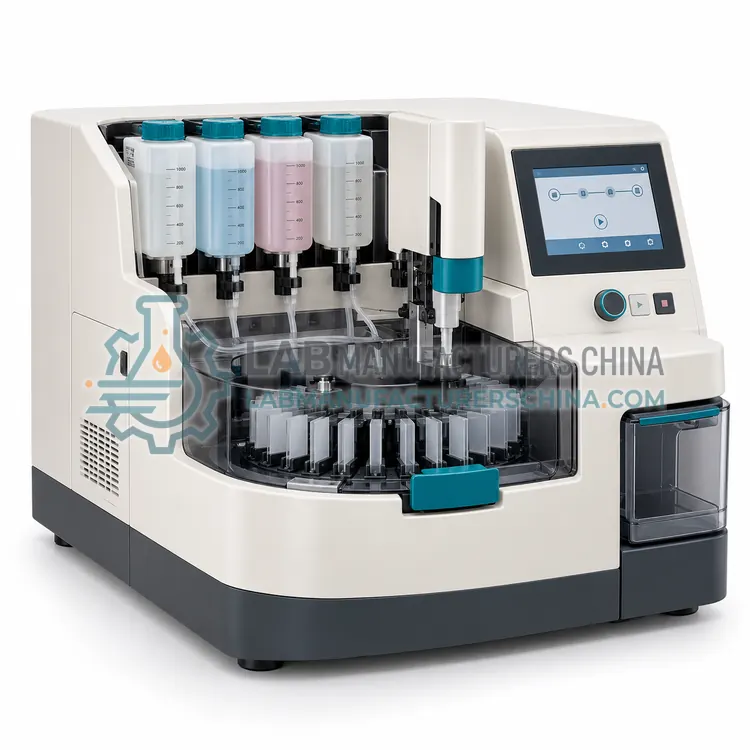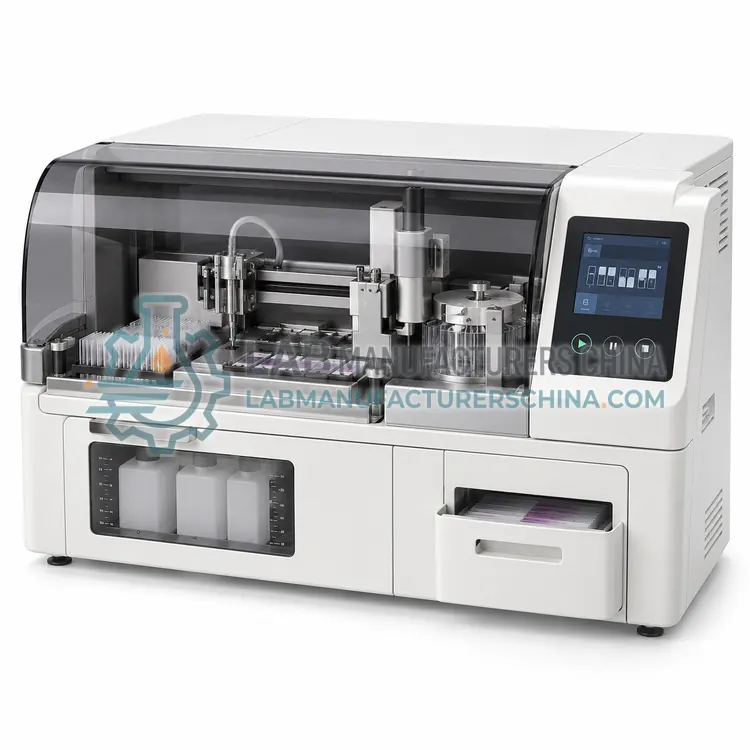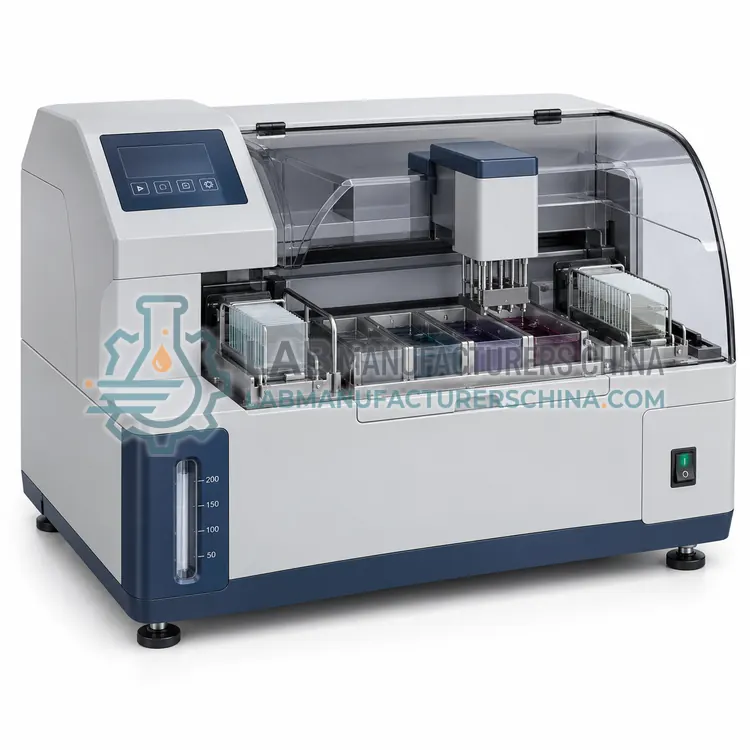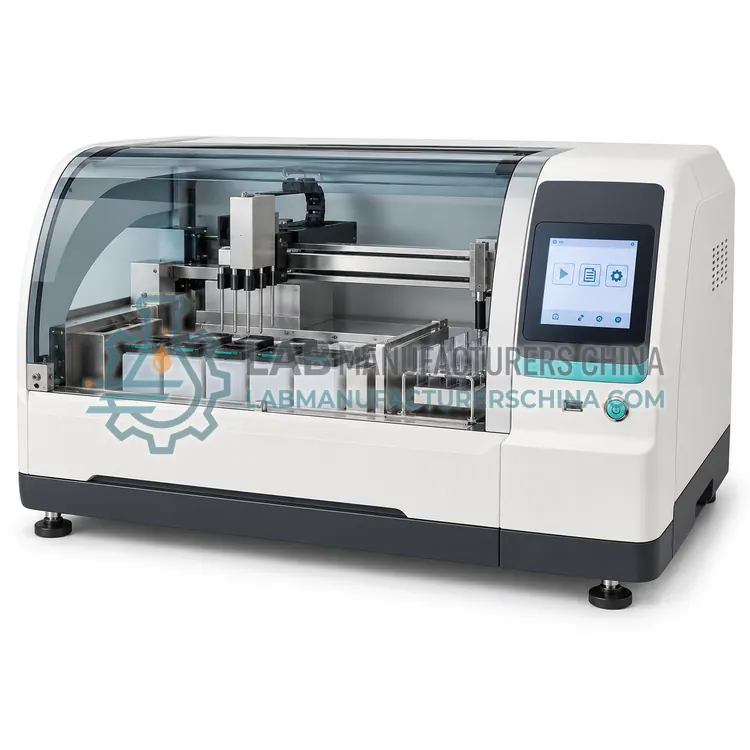
Semi-Automated Slide Preparation System
半自动制片系统
- SKU SPS-0002
- Slide Preparation Systems
- CE (to be confirmed)
- IEC 61010-1 compliance (to be confirmed)
- ISO 13485 manufacturing (to be confirmed)
Price on request — FOB / CIF quoted per order
Prices depend on configuration, quantity and destination port.
Key specifications
| Samples per run | 1–12 slides |
|---|---|
| Spot diameter | about 10–18 mm |
| Deposition volume | 0.1–1 mL, adjustable |
| Drying temperature | ambient to 60 °C |
| Cycle time | about 10–30 min |
| Traceability | Manual labels, optional barcode |
Request a quote Download brochure · to be provided
By Lab Manufacturers China Technical TeamLast reviewed Standards: IEC 61010-1, IEC 61010-2-101, IEC 61326-1
What is the Semi-Automated Slide Preparation System?
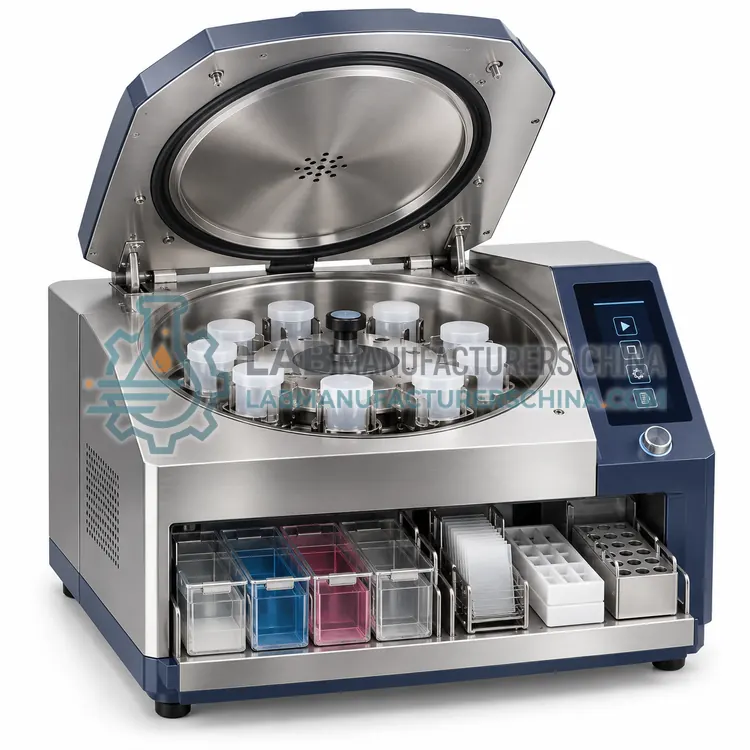
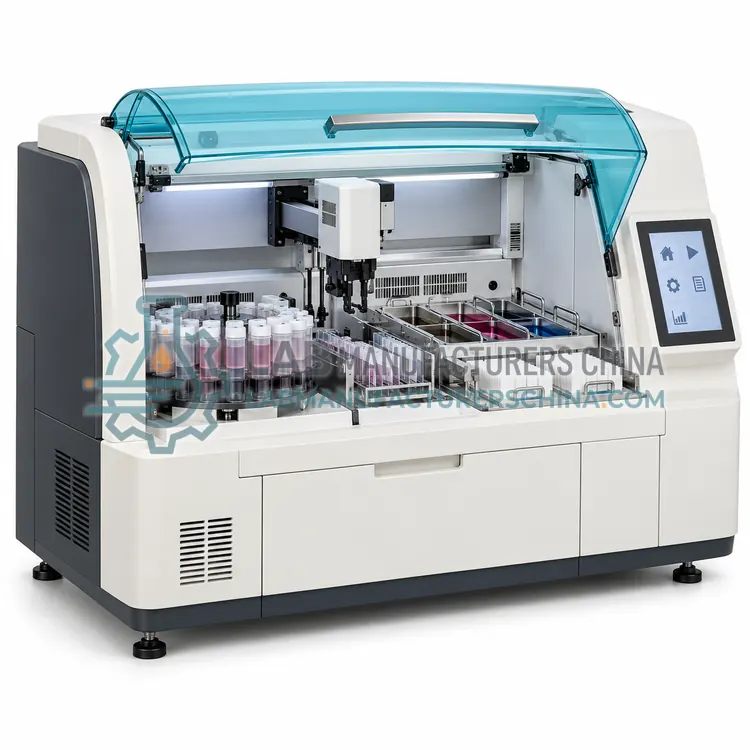
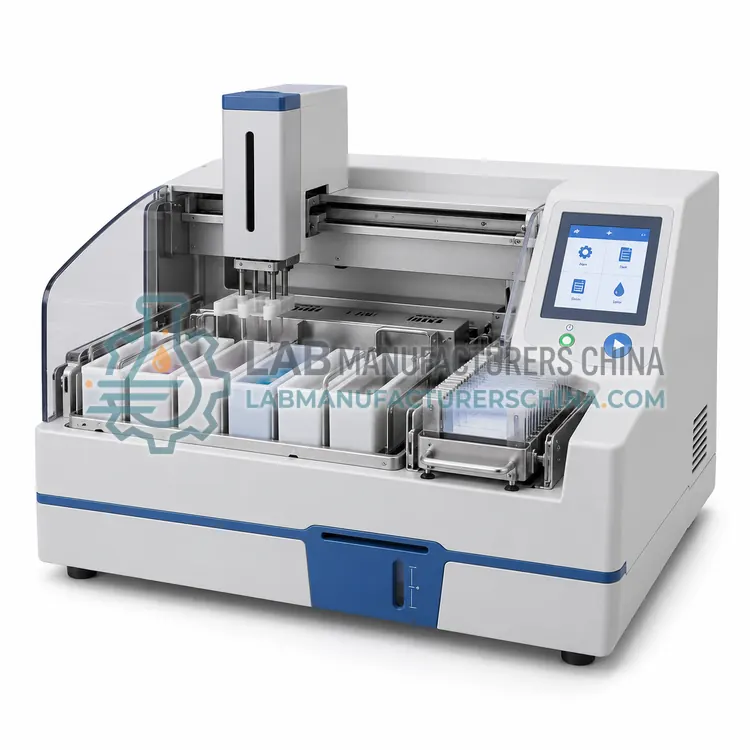
A semi-automated slide preparation system automates deposition and drying while the operator selects and loads samples. It suits moderate-volume laboratories that want control over which samples are prepared and a lower purchase cost.
What is the Semi-Automated Slide Preparation System?
A semi-automated slide preparation system automates deposition and drying while the operator selects and loads samples. It suits moderate-volume laboratories that want control over which samples are prepared and a lower purchase cost.
Overview
The semi-automated system concentrates on the mechanical steps that benefit most from automation, namely measured deposition and controlled drying, while leaving sample triage to the operator. A technician decides which samples need preparation, loads them into the instrument, and the system then deposits cells onto slides at a set volume and drying temperature. This division suits laboratories where sample adequacy varies, where the number of preparations per day is moderate, or where specialised samples need individual attention. Cost, bench space and maintenance are lower than for a fully integrated platform, and troubleshooting is simpler because fewer steps are hidden inside the instrument. Spot area, deposition volume and drying temperature are the parameters that most affect the preparation, and barcode reading may be available as an option.
How does it work?
A slide preparation system combines sample handling with deposition and, often, downstream slide processing. Depending on the design, it may dilute and mix the sample, deposit a measured volume onto a slide, spread or settle cells into a defined area, dry the slide, transfer it to a stainer and finally apply a coverslip. Many systems use barcode tracking so each sample, slide and reagent event is linked in a record. Motors, syringes or peristaltic pumps move fluid, and heated or ventilated zones control drying. Consistency comes from fixed volumes, timings and motions, which reduce operator-dependent variation. The quality of the output depends on correct sample collection, adequate cell numbers and complete reagent removal, because residual fluid or fixative causes uneven staining and poor adhesion.
What are the key features?
- Automated deposition at a set volume
- Controlled drying temperature and time
- Operator selects samples to be prepared
- Lower cost and smaller footprint than full automation
- Simpler maintenance and troubleshooting
- Optional barcode reading
What are the technical specifications?
A typical semi-automated slide preparation system configuration offers samples per run of 1–12 slides, spot diameter of about 10–18 mm, deposition volume of 0.1–1 mL, adjustable, drying temperature of ambient to 60 °C, cycle time of about 10–30 min and traceability of Manual labels, optional barcode. Values are indicative of the product class; the exact figures for each configuration are confirmed on the quotation and the calibration documents supplied with the instrument.
Which applications is it used for?
The Semi-Automated Slide Preparation System is used in moderate-volume cytology laboratories, specialised and research samples, small hospitals and teaching laboratories. Across the wider Slide Preparation Systems class, laboratories also deploy it for cytology slide preparation, cervical screening programmes and body fluid cytology.
Which standards and certifications apply?
Relevant standards and methods include IEC 61010-1, IEC 61010-2-101, IEC 61326-1, ISO 15189 and CLSI GP41. Certification candidates for this model are CE, IEC 61010-1 compliance and ISO 13485 manufacturing; each is to be confirmed for the specific configuration before shipment, and certificates are supplied only where they have been issued.
Install the system on a stable bench with power and, if required, a drain, and keep the working area organised so tubes and slides cannot be mismatched. Follow the specified reagent volumes and timings, since too little fixative causes poor adhesion and too much leaves residue. Clean fluid lines and nozzles on schedule to prevent blockage and carryover, and check that barcodes are readable so records remain complete. Verify performance with control samples and record reagent lot numbers and run conditions. Train staff in safe handling of preservative fluids and in recognising preparation faults, and keep maintenance and quality records for accreditation.
How do I select the right Semi-Automated Slide Preparation System?
Choose a semi-automated system when volume is moderate, sample selection requires judgement, or budget and bench space are limited. Confirm deposition volume range, spot size, drying temperature control and whether barcode reading is available. Plan to link preparations to specimens with careful labelling.
How does it compare with other Slide Preparation Systems variants?
Choose a preparation system by the level of automation you need and the output you must produce. A semi-automated system suits laboratories that want control over sample selection while automating deposition. A fully automated system gives standardised monolayers at throughput, often with integrated staining and coverslipping. Liquid-based systems define the reagent and consumable architecture, while cell block systems target ancillary testing. Compare samples per run, cycle time, spot size, barcode and record capability, consumable cost and compatibility with existing stainers. Check whether the system is open to third-party reagents, and confirm validation, training and service support before committing to a platform.
Full specifications
| Samples per run | 1–12 slides |
|---|---|
| Spot diameter | about 10–18 mm |
| Deposition volume | 0.1–1 mL, adjustable |
| Drying temperature | ambient to 60 °C |
| Cycle time | about 10–30 min |
| Traceability | Manual labels, optional barcode |
| Slide format | 25 × 75 mm standard |
| Power supply | 220 V, 50 Hz, about 0.3 kW |
Indicative values for this product class. Final specifications are confirmed on the quotation and in the calibration documents supplied with the instrument.
Applications
- Moderate-volume cytology laboratories
- Specialised and research samples
- Small hospitals
- Teaching laboratories
Key features
- Automated deposition at a set volume
- Controlled drying temperature and time
- Operator selects samples to be prepared
- Lower cost and smaller footprint than full automation
- Simpler maintenance and troubleshooting
- Optional barcode reading
Frequently asked questions about Semi-Automated Slide Preparation System
The operator chooses which samples to prepare and loads them individually, while the instrument handles deposition and drying. Full automation also manages dilution, staining, coverslipping and traceability across a whole batch without intervention.
Yes, deposition volume is usually adjustable over a range such as 0.1 to 1 mL, so dilute urine and concentrated body fluids can both be prepared. Larger volumes need longer drying or a higher cell concentration.
It requires discipline. Label slides and vials identically, work one sample at a time where practical, and record the run in a log. If your accreditation demands full traceability, consider a system with barcode reading.
It automates fluid handling and cell deposition, and often drying, staining and coverslipping. Sample dilution, mixing, measured deposition and barcode tracking are typical functions, so the output is a standardised, traceable slide ready for microscopy.
Only if daily volume is high or standardisation is critical. Semi-automated systems that automate deposition while leaving sample selection to the operator often suit moderate volumes and cost considerably less, with simpler maintenance.
Through barcoded sample vials and slides linked in the instrument software, so every preparation step is recorded against the correct specimen. Manual systems rely on labels and written logs, which are more error-prone at high volume.