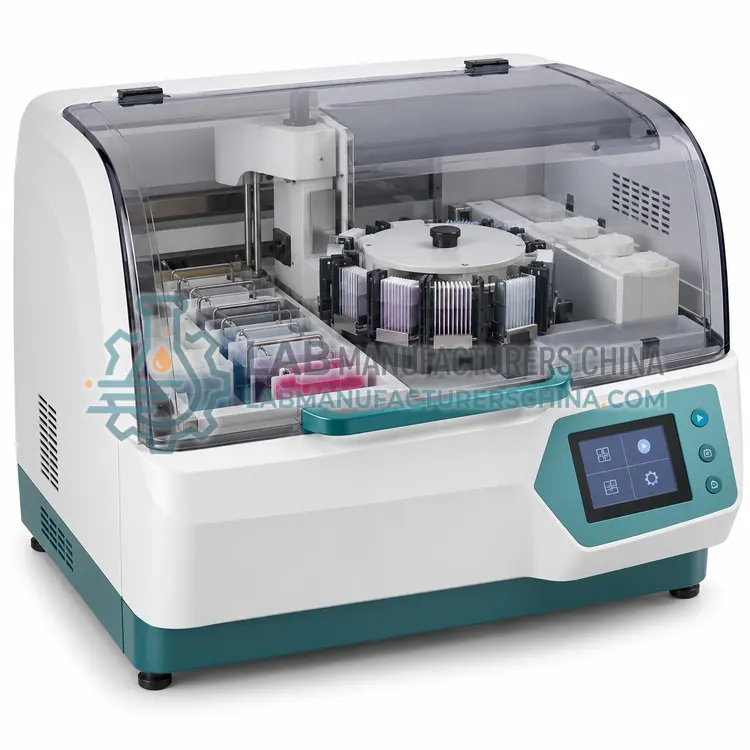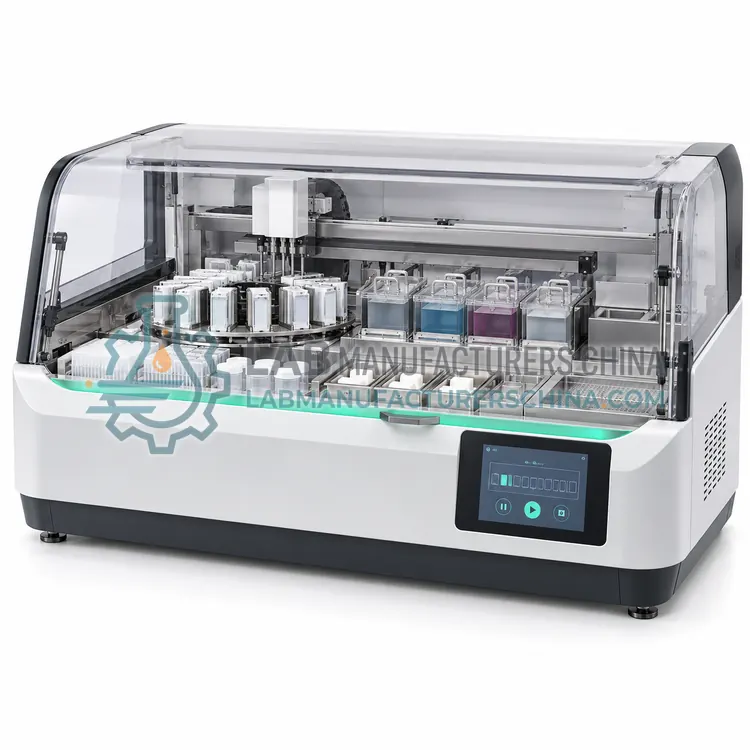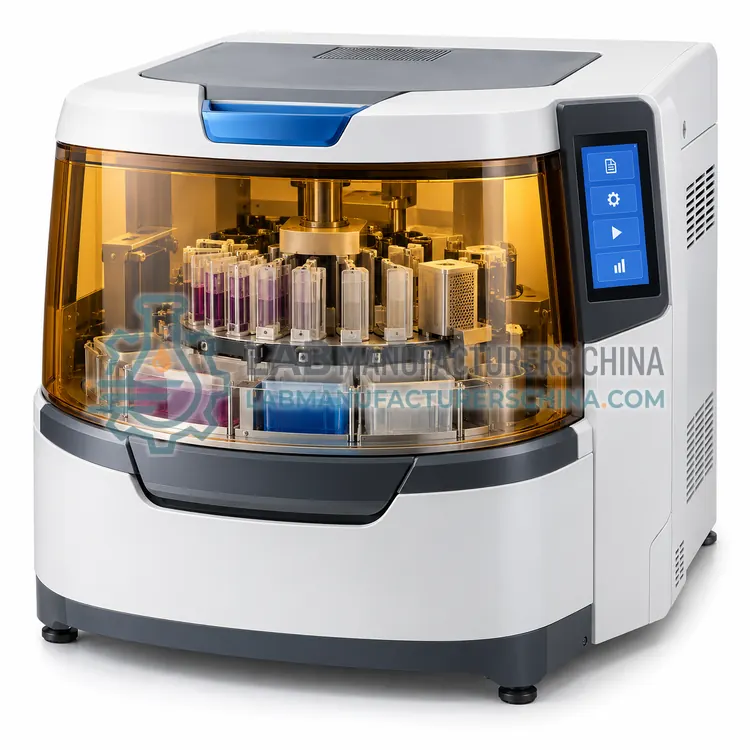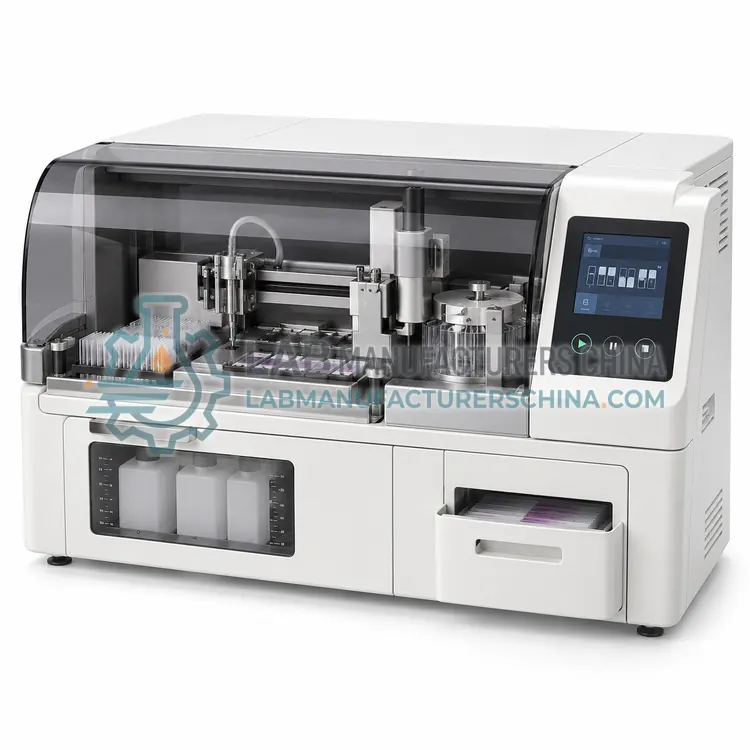
Filter-Based Cytology Processor
滤膜法细胞学处理机
- SKU CYP-0003
- Cytology Processors
- CE (to be confirmed)
- IEC 61010-1 compliance (to be confirmed)
- ISO 13485 manufacturing (to be confirmed)
Price on request — FOB / CIF quoted per order
Prices depend on configuration, quantity and destination port.
Key specifications
| Membrane pore size | 5–8 µm |
|---|---|
| Samples per run | 1–12 |
| Spot diameter | about 10–18 mm |
| Sample volume | 1–20 mL diluted |
| Vacuum control | Adjustable |
| Filter type | Disposable membrane or cartridge |
Request a quote Download brochure · to be provided
By Lab Manufacturers China Technical TeamLast reviewed Standards: IEC 61010-1, IEC 61010-2-101, IEC 61326-1
What is the Filter-Based Cytology Processor?
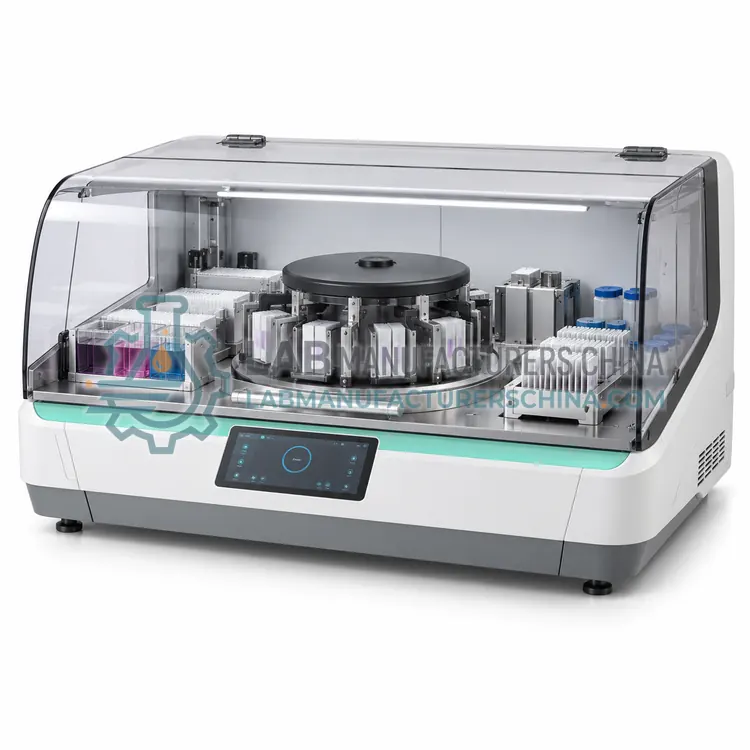
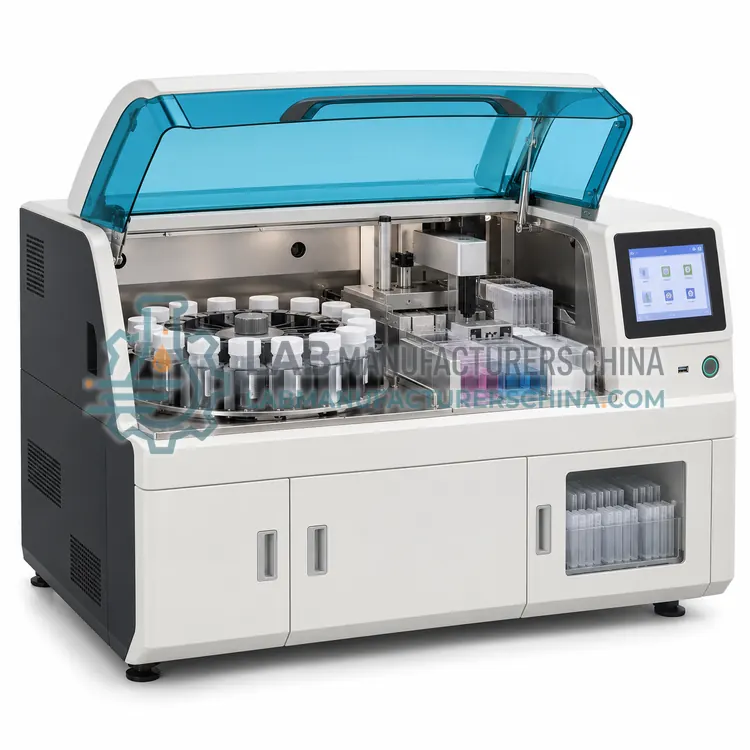
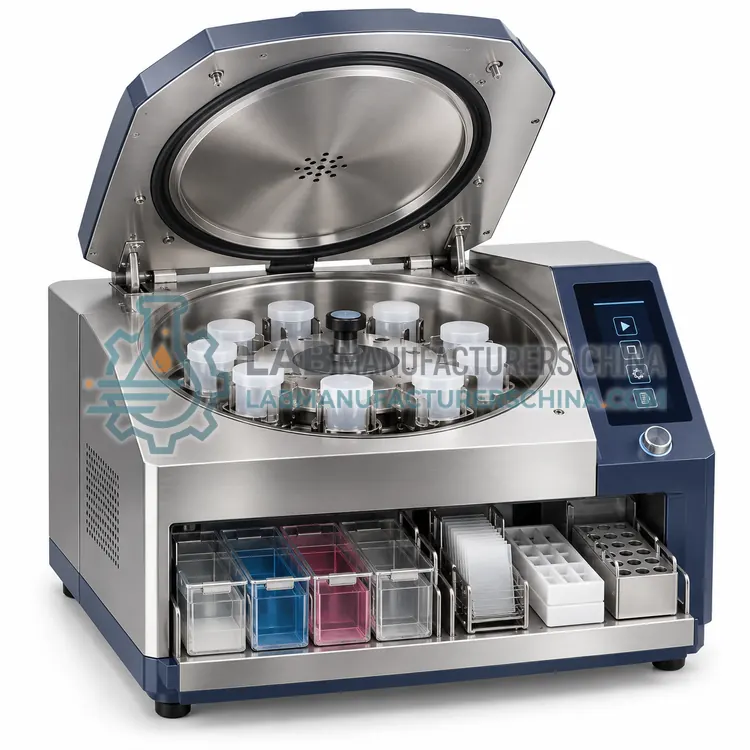
A filter-based cytology processor traps cells on a membrane of defined pore size and transfers them to a slide. It is chosen for clean preparations from urine, body fluids and mucoid samples with abundant debris.
What is the Filter-Based Cytology Processor?
A filter-based cytology processor traps cells on a membrane of defined pore size and transfers them to a slide. It is chosen for clean preparations from urine, body fluids and mucoid samples with abundant debris.
Overview
Filter-based preparation passes a diluted cell suspension through a membrane whose pore size, often 5 to 8 µm, is chosen to retain cells while letting fluid, erythrocytes and small debris pass. Cells collected on the membrane are then transferred to a slide, either by pressing or by a controlled vacuum-assisted deposit, giving a clean, evenly spread preparation with reduced background. The method is particularly useful for mucoid and blood-rich samples, such as urine and respiratory specimens, where more cells can be recovered than by simple centrifugation. Filter clogging is the main limitation, so samples are diluted and the membrane is designed with a large effective area. Some systems use a reusable filter assembly with disposable membranes, while others use single-use filter cartridges. Cell recovery and membrane pore size are the key specifications.
How does it work?
A cytology processor starts with a sample collected into a preservative solution, which fixes cells and lyses red blood cells. The instrument then separates diagnostically useful cells from mucus, blood and inflammatory debris using one of several approaches. Density gradient or centrifugation methods layer the sample over a reagent so cells of interest band at a known density. Filtration and membrane methods trap cells on a surface with a defined pore size, then transfer them to a slide. Some platforms use an adhesive or charged coating to capture cells while washing away the rest. The result is a thin, evenly distributed preparation with cells concentrated in a defined area, which improves screening speed and reduces obscuring material. Cell recovery, spot area and carryover control determine performance.
What are the key features?
- Membrane filtration with defined pore size
- Transfer of trapped cells to a glass slide
- Effective for mucoid and blood-rich samples
- Cleaner background than direct smearing
- Large effective membrane area limits clogging
- Disposable or reusable filter assemblies
What are the technical specifications?
A typical filter-based cytology processor configuration offers membrane pore size of 5–8 µm, samples per run of 1–12, spot diameter of about 10–18 mm, sample volume of 1–20 mL diluted, vacuum control of Adjustable and filter type of Disposable membrane or cartridge. Values are indicative of the product class; the exact figures for each configuration are confirmed on the quotation and the calibration documents supplied with the instrument.
Which applications is it used for?
The Filter-Based Cytology Processor is used in urine cytology, respiratory specimen cytology, mucoid body fluid samples and blood-rich effusion preparation. Across the wider Cytology Processors class, laboratories also deploy it for cervical cancer screening, urine cytology and body fluid cytology.
Which standards and certifications apply?
Relevant standards and methods include IEC 61010-1, IEC 61010-2-101, IEC 61326-1, ISO 15189 and CLSI GP41. Certification candidates for this model are CE, IEC 61010-1 compliance and ISO 13485 manufacturing; each is to be confirmed for the specific configuration before shipment, and certificates are supplied only where they have been issued.
Place the processor on a stable bench near a drain and power outlet, and keep the working area free of clutter so sample tubes can be tracked. Follow the specified reagent volumes and incubation or centrifugation conditions, because under-processing leaves debris while over-processing loses cells. Change reagents and clean fluid paths on schedule to prevent contamination and biofilm. Verify performance with control samples and record reagent lot numbers, run dates and results. Train staff in safe handling of preservative fluids, which may contain methanol or other hazardous substances, and dispose of waste according to local regulations.
How do I select the right Filter-Based Cytology Processor?
Choose filter-based preparation for samples with abundant mucus, blood or debris where centrifugation gives poor recovery or heavy background. Confirm membrane pore size, effective filter area, vacuum control and whether filters are single-use. Check cell recovery with your own sample types during evaluation.
How does it compare with other Cytology Processors variants?
Choose a processor by sample type, throughput and whether the laboratory prefers an open or closed reagent system. For high-volume cervical screening, a liquid-based processor with automated staining and coverslipping gives the most consistent results. For body fluids and fine-needle aspirates, a centrifugation or filter-based method often yields better cell recovery from scant samples. Cell block processors support immunohistochemistry and molecular testing on residual cells. Compare samples per run, reagent consumption, carryover prevention, consumable cost and whether the platform accepts third-party reagents. Confirm validation, training and service support, and check that the output format fits existing stainers and coverslippers.
Full specifications
| Membrane pore size | 5–8 µm |
|---|---|
| Samples per run | 1–12 |
| Spot diameter | about 10–18 mm |
| Sample volume | 1–20 mL diluted |
| Vacuum control | Adjustable |
| Filter type | Disposable membrane or cartridge |
| Slide format | 25 × 75 mm standard |
| Power supply | 220 V, 50 Hz, about 0.3 kW |
Indicative values for this product class. Final specifications are confirmed on the quotation and in the calibration documents supplied with the instrument.
Applications
- Urine cytology
- Respiratory specimen cytology
- Mucoid body fluid samples
- Blood-rich effusion preparation
Key features
- Membrane filtration with defined pore size
- Transfer of trapped cells to a glass slide
- Effective for mucoid and blood-rich samples
- Cleaner background than direct smearing
- Large effective membrane area limits clogging
- Disposable or reusable filter assemblies
Frequently asked questions about Filter-Based Cytology Processor
Mucoid and blood-rich samples such as urine, sputum and some effusions, where filtration recovers more cells and produces a cleaner background than centrifugation. Very cellular samples can clog the membrane and may need dilution first.
Typically 5 to 8 µm, which retains nucleated cells and most larger cells while allowing fluid, erythrocytes and small debris to pass. Pore size affects both recovery and flow rate, so it should be matched to the sample type.
By diluting the sample, using a membrane with a large effective area, controlling vacuum so cells are not forced into the pores, and pre-treating viscous samples where the protocol allows. Clogging shows up as slow flow and uneven cell distribution.
It prepares a cell sample from liquid suspension into a slide-ready monolayer. It removes mucus, blood and debris, concentrates diagnostically useful cells and deposits them in a defined area so the microscopist can screen the slide quickly and reliably.
The sample is rinsed into a preservative fluid rather than smeared directly onto a slide. The processor then removes debris and deposits a representative cell population as a thin monolayer, which usually improves cell distribution and reduces obscuring blood and mucus.
Filter methods trap cells on a membrane with a defined pore size and transfer them to a slide, while centrifugation methods concentrate cells by density. Filtration generally gives cleaner preparations, and centrifugation often recovers more cells from very scant samples.