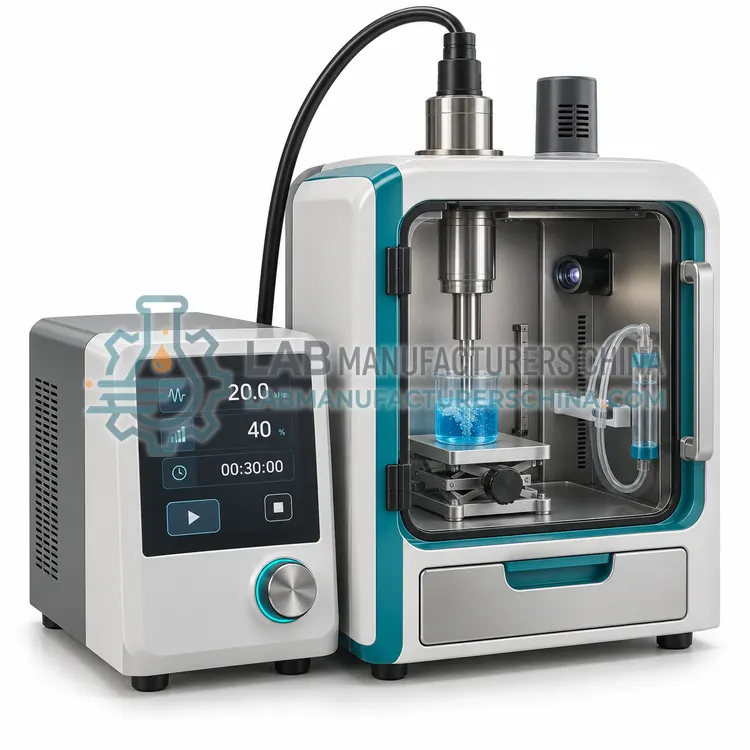
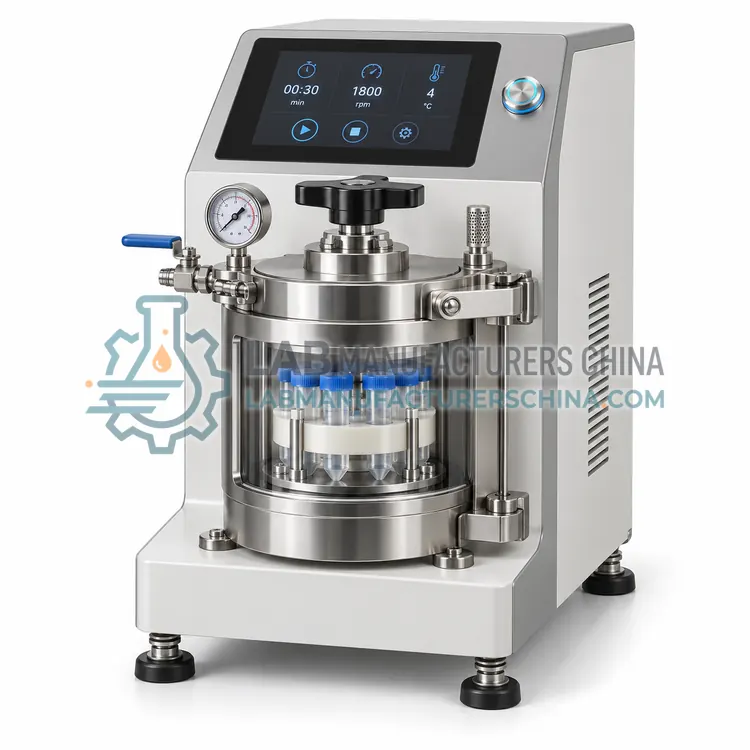
Bead Mill Tissue Homogenizer
珠磨组织匀浆仪
- SKU SAP-0001
- Sample Processing
- CE (to be confirmed)
- ISO 9001 manufacturing (to be confirmed)
Price on request — FOB / CIF quoted per order
Prices depend on configuration, quantity and destination port.
Key specifications
| Shaking frequency | 1,000–6,500 rpm (typical) |
|---|---|
| Tube capacity | 24–48 × 2 mL tubes |
| Sample volume per tube | up to 1.5 mL (2 mL tube) |
| Run time | 10 s–99 min, programmable |
| Cooling option | Liquid nitrogen vapor or Peltier, to about −20 °C |
| Program memory | 10–99 user programs |
Request a quote Download brochure · to be provided
By Lab Manufacturers China Technical TeamLast reviewed Standards: IEC 61010-1, IEC 61010-2-020, IEC 61326-1
What is the Bead Mill Tissue Homogenizer?
A bead mill tissue homogenizer shakes sealed tubes containing grinding beads at high frequency to disrupt tissue, plant material, spores and bacteria. It is the right choice for multi-sample RNA, DNA or protein extraction where closed tubes limit cross-contamination and aerosol exposure.
What is the Bead Mill Tissue Homogenizer?
A bead mill tissue homogenizer shakes sealed tubes containing grinding beads at high frequency to disrupt tissue, plant material, spores and bacteria. It is the right choice for multi-sample RNA, DNA or protein extraction where closed tubes limit cross-contamination and aerosol exposure.
Overview
Bead mill homogenizers use a horizontal or orbital shaking motion to accelerate grinding beads inside sealed 1.5 to 2 mL or 7 to 15 mL tubes. Impact and shear against the beads rupture cell walls within seconds to minutes, depending on matrix and bead material. Because each sample stays in its own tube, there is no probe to wash between samples, which reduces carry-over. Most models offer programmable speed, cycle time and pause intervals, and some add cryo-cooling with liquid nitrogen vapor or Peltier cooling to protect RNA. Typical capacity is 24 to 48 tubes per run. Bead material, such as 0.1 mm zirconia for bacteria or 2.8 mm ceramic for tissue, must be matched to the sample.
How does it work?
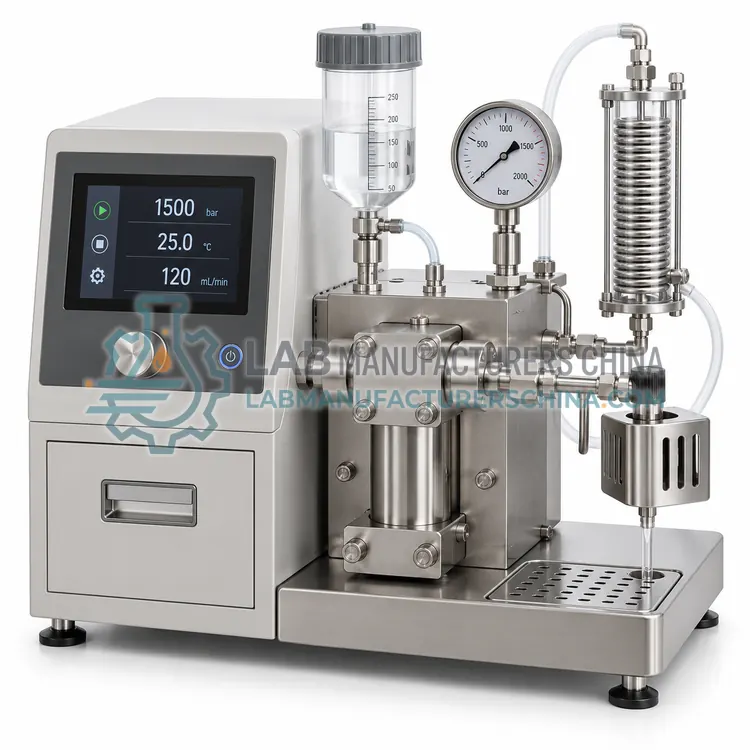
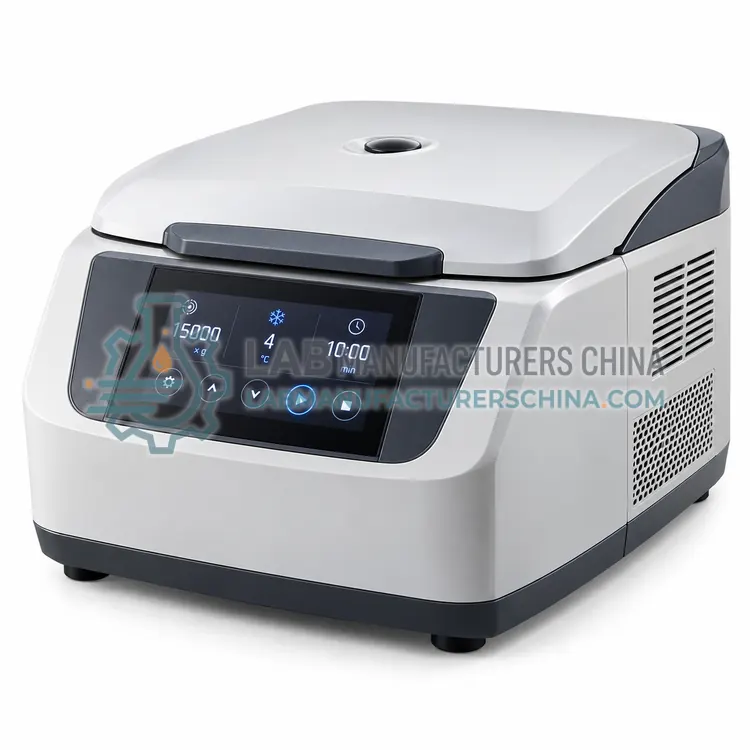
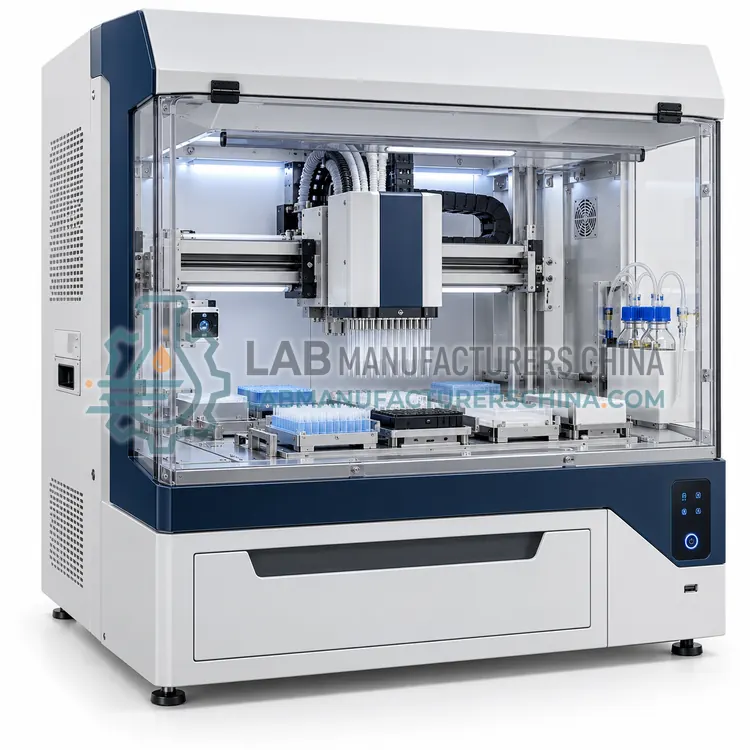
Sample processing instruments apply controlled energy to break down biological structures and then separate the components of interest. Bead mills shake tubes containing ceramic, glass or steel beads at several meters per second so that impact and shear rupture cells and tissue. Ultrasonic disruptors drive a titanium probe at about 20 kHz, and cavitation bubble collapse lyses cells. High-pressure disruptors force suspensions through a narrow valve at 500 to 2,000 bar, generating shear and pressure drop. Centrifuges separate particles by sedimentation in a centrifugal field expressed as relative centrifugal force (RCF), with refrigeration to protect labile molecules. Automated liquid handlers use air-displacement or positive-displacement pipetting channels and deck-mounted labware to transfer, dilute and plate samples reproducibly.
What are the key features?
- Sealed-tube processing limits cross-contamination and aerosol release.
- Programmable speed, run time and pause cycles for reproducible protocols.
- Holds 24 to 48 tubes per run for medium throughput.
- Optional cryo or Peltier cooling reduces RNA degradation.
- Interchangeable tube adapters for 1.5 mL, 2 mL and 15 mL tubes.
- Sound-damped enclosure with safety interlock on the lid.
What are the technical specifications?
A typical bead mill tissue homogenizer configuration offers shaking frequency of 1,000–6,500 rpm (typical), tube capacity of 24–48 × 2 mL tubes, sample volume per tube of up to 1.5 mL (2 mL tube), run time of 10 s–99 min, programmable, cooling option of Liquid nitrogen vapor or Peltier, to about −20 °C and program memory of 10–99 user programs. Values are indicative of the product class; the exact figures for each configuration are confirmed on the quotation and the calibration documents supplied with the instrument.
Which applications is it used for?
The Bead Mill Tissue Homogenizer is used in RNA and DNA extraction from tissue, plant and fungal cell disruption, bacterial and spore lysis and protein extraction for proteomics. Across the wider Sample Processing class, laboratories also deploy it for tissue homogenization for RNA extraction, bacterial and yeast cell lysis and protein extraction for Western blot.
Which standards and certifications apply?
Relevant standards and methods include IEC 61010-1, IEC 61010-2-020, IEC 61326-1, ISO 8655 and IEC 61010-2-010. Certification candidates for this model are CE and ISO 9001 manufacturing; each is to be confirmed for the specific configuration before shipment, and certificates are supplied only where they have been issued.
Place heavy instruments such as centrifuges on a level, vibration-free bench and allow ventilation clearance. Check rotors and buckets for wear, and log run hours against manufacturer limits. Probe sonicators and bead mills need sound enclosures and hearing protection. Calibrate pipetting channels periodically, typically with gravimetric or photometric checks per ISO 8655, and verify centrifuge speed with a tachometer. Clean between samples to avoid carry-over, using nuclease-free consumables for RNA work. Aerosol-generating steps involving infectious material should be performed in a biosafety cabinet or sealed rotors, following local biosafety rules.
How do I select the right Bead Mill Tissue Homogenizer?
Select a bead mill when you process many tough samples in small tubes and want closed-tube handling. Specify tube sizes, tubes per run, required cooling and bead materials. A rotor-stator or ultrasonic unit is better for larger volumes or when you need to process a single sample in an open vessel. Ask for validated programs for your sample types.
How does it compare with other Sample Processing variants?
Select by sample type first. Tough or fibrous tissue, plant material and spores need bead beating or rotor-stator shear, while soft tissue and cultured cells can be lysed by sonication or detergent-assisted methods. Consider batch size: bead mills handle 24 to 48 tubes at once, whereas probe sonicators process one sample at a time. Match the instrument to the downstream target, since heat and shear damage RNA and intact proteins, making cooling and pulse control important. For separation, choose rotor capacity and maximum RCF for your tube formats, and confirm refrigeration down to 4 °C or lower. For automation, define the number of deck positions, tip formats and volume range, and confirm that scripting software supports your protocol.
Full specifications
| Shaking frequency | 1,000–6,500 rpm (typical) |
|---|---|
| Tube capacity | 24–48 × 2 mL tubes |
| Sample volume per tube | up to 1.5 mL (2 mL tube) |
| Run time | 10 s–99 min, programmable |
| Cooling option | Liquid nitrogen vapor or Peltier, to about −20 °C |
| Program memory | 10–99 user programs |
| Display | Color touchscreen |
| Noise level | below 75 dB(A) with enclosure |
| Power supply | 100–240 V, 50/60 Hz |
| Dimensions (W×D×H) | approx. 340 × 400 × 320 mm |
Indicative values for this product class. Final specifications are confirmed on the quotation and in the calibration documents supplied with the instrument.
Applications
- RNA and DNA extraction from tissue
- Plant and fungal cell disruption
- Bacterial and spore lysis
- Protein extraction for proteomics
Key features
- Sealed-tube processing limits cross-contamination and aerosol release.
- Programmable speed, run time and pause cycles for reproducible protocols.
- Holds 24 to 48 tubes per run for medium throughput.
- Optional cryo or Peltier cooling reduces RNA degradation.
- Interchangeable tube adapters for 1.5 mL, 2 mL and 15 mL tubes.
- Sound-damped enclosure with safety interlock on the lid.
Frequently asked questions about Bead Mill Tissue Homogenizer
Use 0.1 mm beads for bacteria and small cells, 0.5 mm for yeast, and 1.4 to 2.8 mm for animal tissue and plant material. Mixed beads are common. Bead volume is typically one third of the tube, and the optimum should be verified by yield and integrity testing.
Prolonged or overly aggressive beating shears genomic DNA into smaller fragments and heats the sample. For short-read PCR this is usually acceptable, but for long-read sequencing use shorter cycles, gentler beads and cooling to preserve fragment length.
Some models accept deep-well plate adapters for 96-well formats using small beads, but energy transfer differs from tube-based runs. Plate processing suits bacteria and soft matrices better than tough tissue, so verify performance on your sample before adopting it.
It is the group of instruments that disrupt, homogenize, separate and dispense biological samples before analysis. Examples include bead mills, sonicators, high-pressure disruptors, refrigerated centrifuges and automated liquid handlers that prepare lysates, extracts and assay plates for PCR, proteomics and cell-based work.
Keep samples cold, use short pulses or chilled bead-mill blocks, add a denaturing lysis buffer immediately, and use nuclease-free tubes and beads. Limit processing time, because heat and prolonged shear increase RNase activity and fragmentation. Verify integrity afterwards using an RNA integrity number or electrophoresis.
RPM is rotor rotational speed, whereas RCF expresses the actual force on the sample and depends on rotor radius. RCF equals 1.118 × 10⁻⁵ × radius in cm × RPM². Protocols should specify RCF so results remain reproducible across different centrifuge and rotor models.
Related models