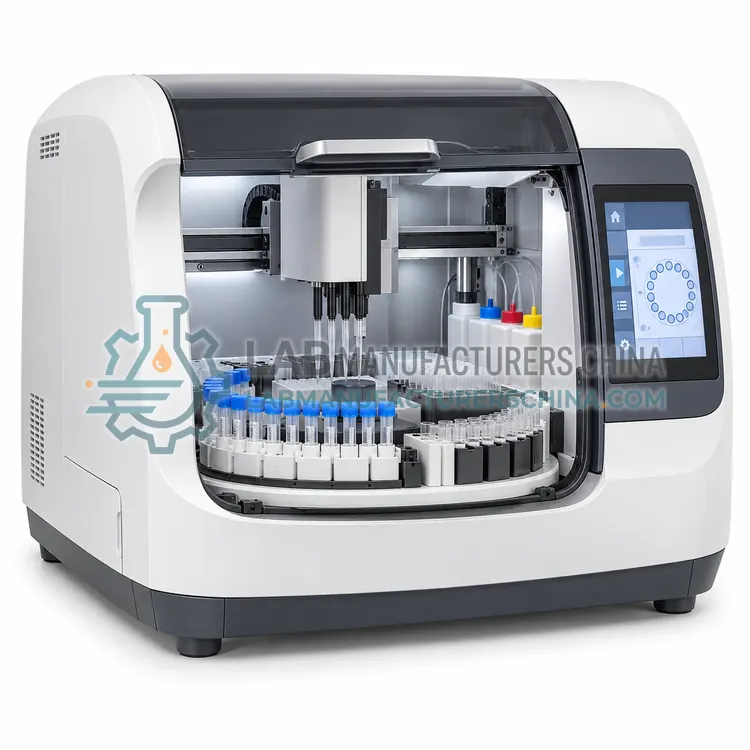
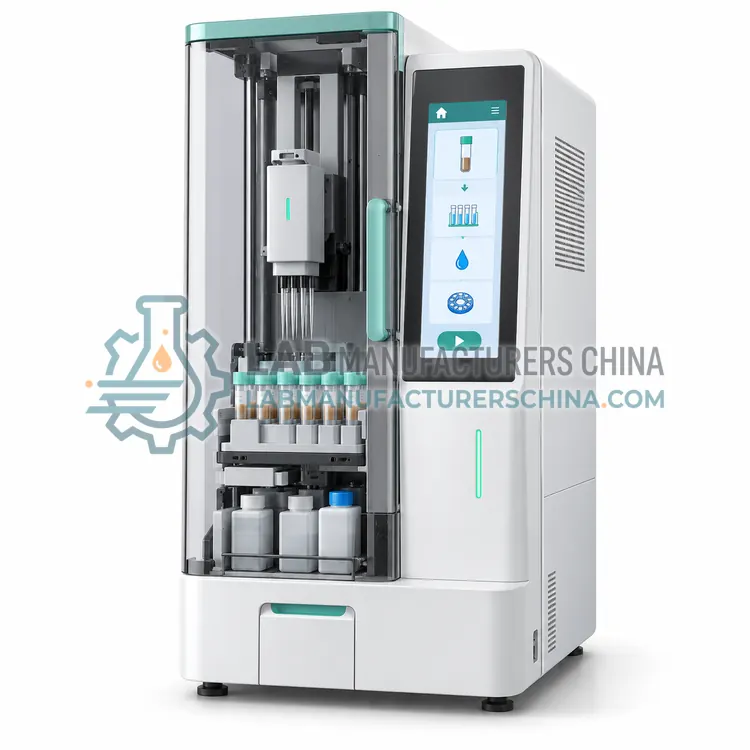
Automated Fecal Sample Preparation System
粪便样本自动前处理系统
- SKU SAM-0004
- Sample Preparation
- CE (to be confirmed)
- ISO 13485 manufacturing (to be confirmed)
- NMPA class II registration (to be confirmed)
Price on request — FOB / CIF quoted per order
Prices depend on configuration, quantity and destination port.
Key specifications
| Sample mass | 10–50 mg per collection with calibrated probe |
|---|---|
| Buffer volume | 1–10 mL programmable |
| Dilution factor | Fixed per device geometry, typically 1:50 to 1:200 |
| Mixing | Orbital or vortex mixing for 5–60 s |
| Throughput | 20–60 samples/h |
| Sample mass accuracy | ±10 % with the specified collection device |
Request a quote Download brochure · to be provided
By Lab Manufacturers China Technical TeamLast reviewed Standards: ISO 15189, ISO 15190, CLSI GP16
What is the Automated Fecal Sample Preparation System?
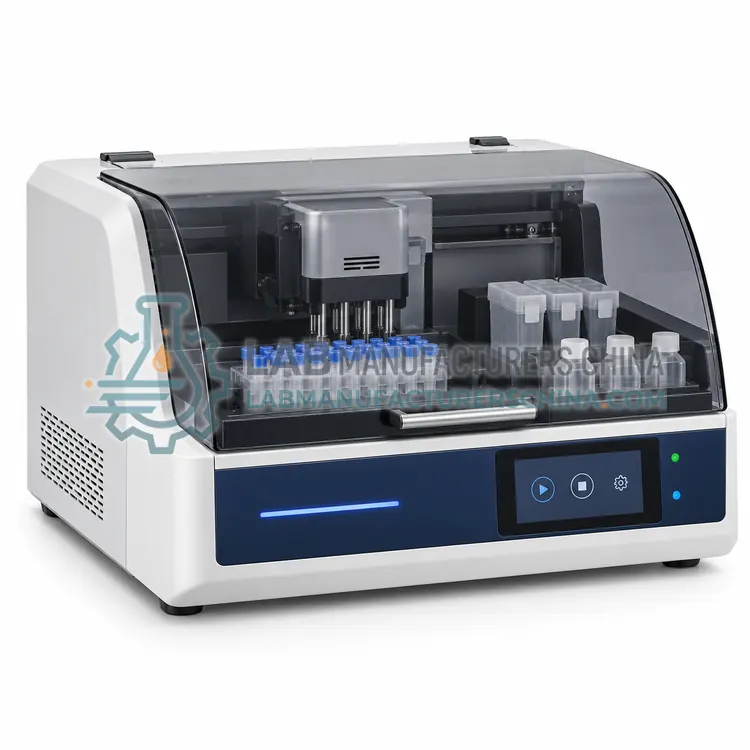
This system prepares stool specimens for quantitative fecal tests by sampling a defined mass, mixing it with buffer and delivering the extract to a test device or tube. It suits laboratories performing fecal immunochemical or calprotectin testing where sample mass must be reproducible.
What is the Automated Fecal Sample Preparation System?
This system prepares stool specimens for quantitative fecal tests by sampling a defined mass, mixing it with buffer and delivering the extract to a test device or tube. It suits laboratories performing fecal immunochemical or calprotectin testing where sample mass must be reproducible.
Overview
Stool collection devices usually include a probe that collects a defined mass of specimen when inserted into the sample. The preparation system then transfers the collected sample into a buffer tube, mixes it, and in some configurations filters or aliquots the extract for the analytical instrument. Reproducible sample mass matters because results for fecal immunochemical tests and calprotectin are expressed per gram of stool, so the device geometry and the buffer volume determine the dilution factor. Programs may include mixing time, temperature and homogenisation intensity, and the system records the specimen identifier with each extraction. Because stool handling generates aerosols and odours, working areas should be ventilated and surfaces cleaned after each batch.
How does it work?
Diagnostic sample preparation changes a specimen so that a downstream assay can measure it reliably. Serum and plasma are separated from cells by centrifugation and then aliquoted into labelled tubes, which reduces thaw cycles and cross-contamination during archiving. Some serology and molecular workflows require heat inactivation, typically at 56 degrees Celsius for thirty minutes, to reduce infectivity before handling. Solid or viscous specimens such as stool, sputum, swabs and tissue must be homogenised, liquefied or extracted into a buffer so that target organisms or analytes are released uniformly. Fecal immunochemical tests need a defined sample mass mixed with buffer, and blood film preparation requires a controlled spread and stain so that cells can be examined morphologically. Each step influences the analytical result, so volume accuracy, temperature control and traceability matter as much as in the analytical instrument itself.
What are the key features?
- Defined sample mass collection with a calibrated device probe
- Buffer addition and mixing with reproducible dilution factor
- Optional filtration or aliquoting of the extract
- Programmable mixing time and intensity
- Specimen identifier recorded with each extraction
- Contained handling to limit aerosol and odour exposure
What are the technical specifications?
A typical automated fecal sample preparation system configuration offers sample mass of 10–50 mg per collection with calibrated probe, buffer volume of 1–10 mL programmable, dilution factor of Fixed per device geometry, typically 1:50 to 1:200, mixing of Orbital or vortex mixing for 5–60 s, throughput of 20–60 samples/h and sample mass accuracy of ±10 % with the specified collection device. Values are indicative of the product class; the exact figures for each configuration are confirmed on the quotation and the calibration documents supplied with the instrument.
Which applications is it used for?
The Automated Fecal Sample Preparation System is used in fecal immunochemical testing for colorectal cancer screening, fecal calprotectin measurement, parasitology sample preparation and microbiome specimen homogenisation. Across the wider Sample Preparation class, laboratories also deploy it for serum and plasma aliquotting for serology and molecular testing, heat inactivation of serum before batch serology and stool and sputum processing for infectious disease testing.
Which standards and certifications apply?
Relevant standards and methods include ISO 15189, ISO 15190, CLSI GP16, CLSI M29, CLSI EP05, IEC 61010-1 and IEC 61010-2-101. Certification candidates for this model are CE, ISO 13485 manufacturing and NMPA class II registration; each is to be confirmed for the specific configuration before shipment, and certificates are supplied only where they have been issued.
Verify each device at installation with gravimetric volume checks, temperature mapping and, where relevant, recovery or uniformity studies using spiked specimens. Write procedures that define specimen acceptance, batch size, temperature and time limits, and the identification of each aliquot, because traceability between the primary tube and derived aliquots is frequently examined during accreditation. Clean and decontaminate surfaces, rotors and homogenisation chambers after each batch, and use sealed or disposable components where aerosols are a risk. Record maintenance, calibration and validation data, and review temperature records for heat inactivation and incubation steps. Treat all specimens, consumables and waste as potentially infectious.
How do I select the right Automated Fecal Sample Preparation System?
Specify this system when quantitative fecal tests are reported and sample mass reproducibility determines the validity of the result. In the RFQ confirm the collection device and its mass specification, the dilution factor, whether filtration is included, and whether the extract is compatible with your analyzer's sample cup format.
How does it compare with other Sample Preparation variants?
Start from the specimen types you receive and the assays that follow, since a device is only useful if its process matches the downstream kit requirements. For aliquotting, check the number of tubes per primary sample, the dead volume, the liquid class accuracy for viscous specimens and the labelling method. For heat inactivation, confirm the temperature uniformity across the bath or block, the capacity per batch and whether a lid is needed to limit evaporation. For homogenisation, choose between bead milling, rotor-stator and paddle systems according to specimen hardness and the need to keep analytes intact. For fecal and blood smear preparation, confirm the sample mass or film quality specification. In all cases, ask for process validation data and confirm that consumables are available locally.
Full specifications
| Sample mass | 10–50 mg per collection with calibrated probe |
|---|---|
| Buffer volume | 1–10 mL programmable |
| Dilution factor | Fixed per device geometry, typically 1:50 to 1:200 |
| Mixing | Orbital or vortex mixing for 5–60 s |
| Throughput | 20–60 samples/h |
| Sample mass accuracy | ±10 % with the specified collection device |
| Filtration | Optional filter to remove particulate matter |
| Data records | Specimen identifier, mass class and buffer volume logged |
| Power supply | AC 100–240 V, 50/60 Hz |
Indicative values for this product class. Final specifications are confirmed on the quotation and in the calibration documents supplied with the instrument.
Applications
- Fecal immunochemical testing for colorectal cancer screening
- Fecal calprotectin measurement
- Parasitology sample preparation
- Microbiome specimen homogenisation
Key features
- Defined sample mass collection with a calibrated device probe
- Buffer addition and mixing with reproducible dilution factor
- Optional filtration or aliquoting of the extract
- Programmable mixing time and intensity
- Specimen identifier recorded with each extraction
- Contained handling to limit aerosol and odour exposure
Frequently asked questions about Automated Fecal Sample Preparation System
Quantitative results are expressed per gram of stool, so a device that collects ten percent more or less specimen changes the reported concentration by a similar amount. The collection probe geometry and the buffer volume together define the dilution, and both must match the kit instructions exactly.
Most devices accept both, but liquid specimens may need a different collection method because the probe can slip or collect inconsistent mass. Laboratories should follow the kit instructions for specimen consistency and record the type received.
Extracts are usually analysed within a few hours, or stored refrigerated for a defined period if the kit allows, because analyte and microbial composition can change. Laboratories should define the acceptable delay and document it in the procedure.
Stool may contain enteric pathogens, so preparation should be performed with gloves, in a ventilated area and with containment of aerosols, and surfaces should be disinfected after each batch. Waste is treated as infectious and disposed of according to local rules.
Heat inactivation at 56 degrees Celsius for about thirty minutes reduces the infectivity of serum and plasma before they are handled in batches or outside a biosafety cabinet, which lowers the risk to staff. It must be validated for each assay, because heating can degrade some analytes and enzymes.
It depends on the primary tube volume, the dead volume of the pipetting system, and the volume required per test. Laboratories usually plan two to four aliquots per serum tube to limit thaw cycles, and the pipetting station should be specified with the minimum deliverable volume that remains accurate.
Bead milling with stainless steel or ceramic beads suits fibrous tissue and tough specimens, while rotor-stator homogenisers handle larger volumes of sputum and tissue quickly. Chemical liquefaction with a reducing agent such as dithiothreitol is often combined with mechanical processing for sputum in mycobacteriology.
Related models