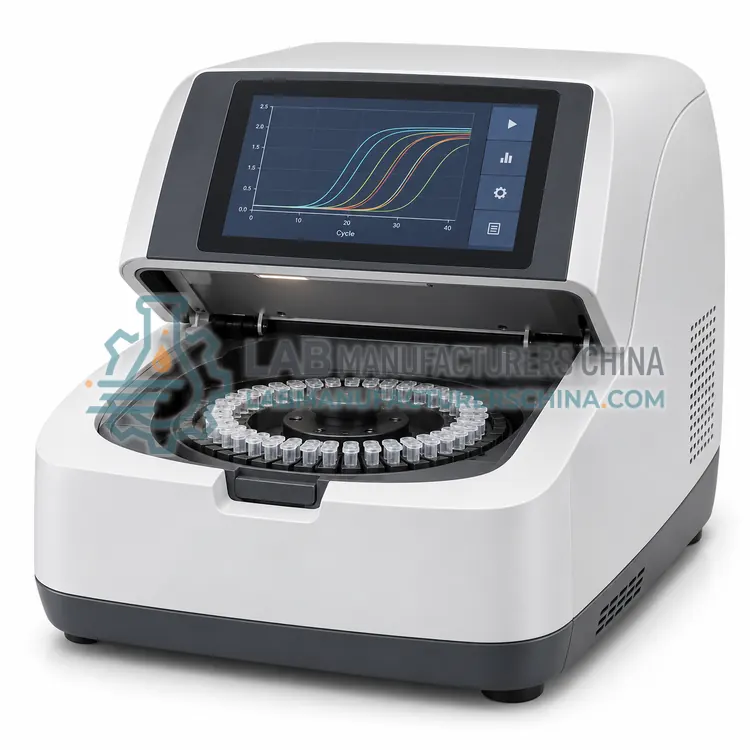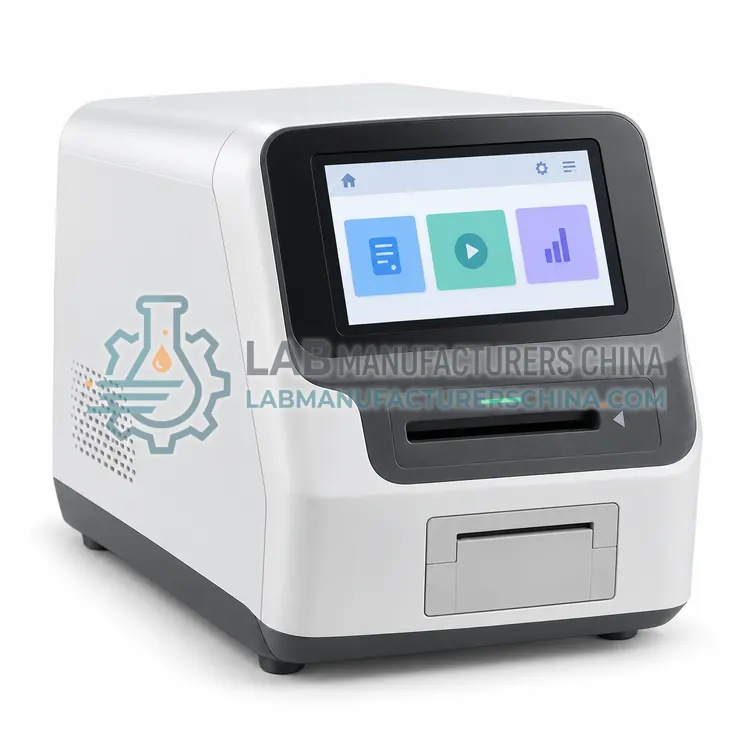
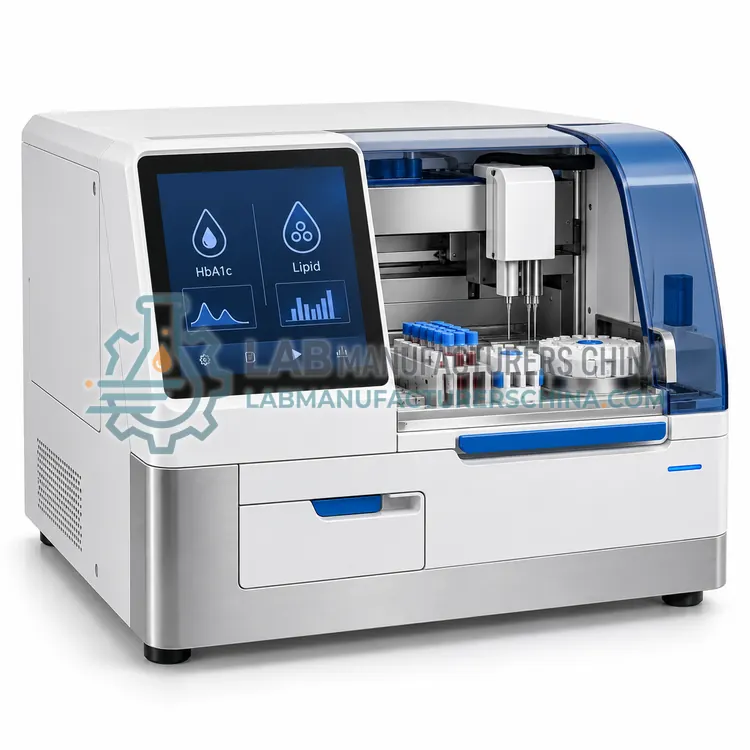
Point-of-Care HbA1c and Lipid Analyzer
床旁糖化血红蛋白和血脂分析仪
- SKU PCD-0005
- Point-of-Care Diagnostics
- CE (to be confirmed)
- NGSP certification (to be confirmed)
- ISO 13485 quality system (to be confirmed)
Price on request — FOB / CIF quoted per order
Prices depend on configuration, quantity and destination port.
Key specifications
| HbA1c sample volume | ≈ 1–5 µL |
|---|---|
| Lipid sample volume | ≈ 35 µL |
| Time to result | 3–6 min |
| HbA1c range | 4.0–14.0% (NGSP) |
| Total cholesterol range | 100–500 mg/dL (2.6–13 mmol/L) |
| Triglycerides range | 45–650 mg/dL (0.5–7.3 mmol/L) |
Request a quote Download brochure · to be provided
By Lab Manufacturers China Technical TeamLast reviewed Standards: ISO 22870, ISO 15197, ISO 15189
What is the Point-of-Care HbA1c and Lipid Analyzer?
A point-of-care HbA1c and lipid analyzer measures glycated hemoglobin and lipid panels from a capillary blood sample in minutes using cartridges or strips. It supports diabetes and cardiovascular risk management in clinics, pharmacies and screening programs where the result can guide the same-visit decision.
What is the Point-of-Care HbA1c and Lipid Analyzer?
A point-of-care HbA1c and lipid analyzer measures glycated hemoglobin and lipid panels from a capillary blood sample in minutes using cartridges or strips. It supports diabetes and cardiovascular risk management in clinics, pharmacies and screening programs where the result can guide the same-visit decision.
Overview
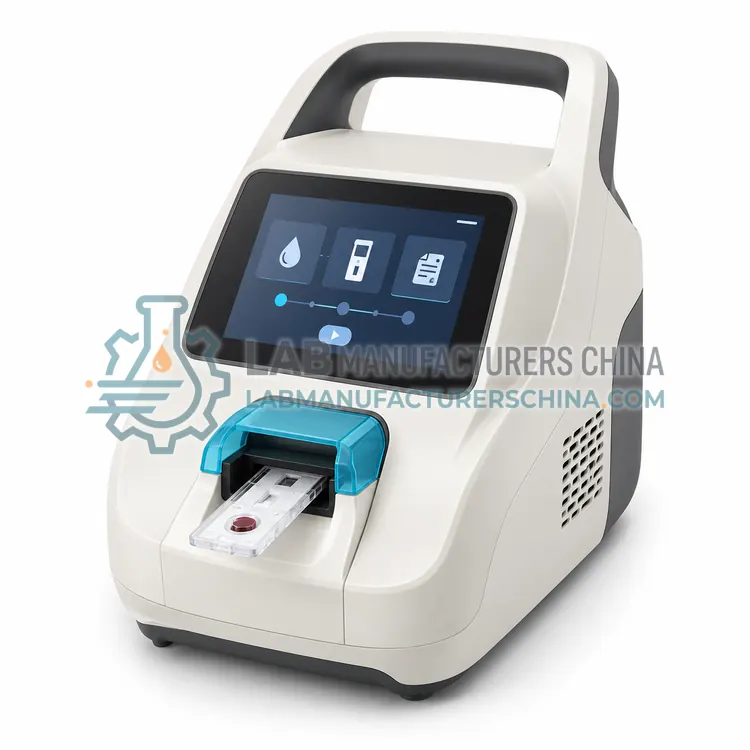
This variant is a compact analyzer that measures HbA1c by boronate affinity or immunoassay methods and lipids, including total cholesterol, HDL cholesterol, triglycerides and calculated LDL, by reflectance photometry on dry chemistry strips. Sample volume is about 5 microliters for HbA1c and 35 microliters for lipids, with results in 3 to 6 minutes. HbA1c systems should be certified to NGSP and traceable to IFCC, and lipid systems should meet accepted total error targets. Devices include a color touchscreen, memory, printer or connectivity, and quality control options. Because of higher imprecision than central analyzers, point-of-care HbA1c is best used for monitoring, and diagnosis may need laboratory confirmation according to local guidelines.
How does it work?
Point-of-care devices miniaturize laboratory methods into compact instruments and single-use test formats. Lateral flow immunoassays wick the sample along a membrane where labeled antibodies form visible or fluorescent lines at capture zones, and a reader quantifies line intensity. Electrochemical biosensors measure current or potential produced by enzymatic reactions on printed electrodes, as in glucose and lactate testing. Cartridge analyzers combine microfluidics with ion-selective electrodes or optical detection for blood gases and chemistry. Coagulation meters detect clot formation by impedance or light scattering changes. Compact hematology analyzers use impedance counting and colorimetric hemoglobin measurement. Built-in quality checks, lot calibration and connectivity support reliable use by non-laboratory operators.
What are the key features?
- HbA1c measurement by boronate affinity or immunoassay cartridges
- Lipid panel with total cholesterol, HDL, triglycerides and calculated LDL
- Results in 3–6 minutes from a capillary fingerstick sample
- NGSP certification and IFCC traceability for HbA1c systems
- Color touchscreen with result storage and printing
- Quality control options and connectivity to record systems
What are the technical specifications?
A typical point-of-care hba1c and lipid analyzer configuration offers hbA1c sample volume of ≈ 1–5 µL, lipid sample volume of ≈ 35 µL, time to result of 3–6 min, hbA1c range of 4.0–14.0% (NGSP), total cholesterol range of 100–500 mg/dL (2.6–13 mmol/L) and triglycerides range of 45–650 mg/dL (0.5–7.3 mmol/L). Values are indicative of the product class; the exact figures for each configuration are confirmed on the quotation and the calibration documents supplied with the instrument.
Which applications is it used for?
The Point-of-Care HbA1c and Lipid Analyzer is used in diabetes clinic monitoring, cardiovascular risk screening, pharmacy health checks and community and workplace screening. Across the wider Point-of-Care Diagnostics class, laboratories also deploy it for emergency department rapid testing, primary care clinic testing and anticoagulation monitoring.
Which standards and certifications apply?
Relevant standards and methods include ISO 22870, ISO 15197, ISO 15189, IEC 61010-2-101, CLSI POCT12, CLSI POCT14, ISO 13485 and EN 13532. Certification candidates for this model are CE, NGSP certification and ISO 13485 quality system; each is to be confirmed for the specific configuration before shipment, and certificates are supplied only where they have been issued.
Point-of-care testing is often performed by non-laboratory staff, so governance is essential. Establish a program covering operator training, competency assessment, quality control schedules, external quality assessment and documentation, with oversight from a laboratory. Store strips and cartridges within labeled temperature ranges and check expiry dates. Keep meters clean and disinfected between patients with approved disinfectants, since contamination with blood is a risk. Understand known interferences such as hematocrit, oxygen or medications for each device. Ensure results are transmitted to patient records, and confirm critical or unexpected values with laboratory methods. Comply with local regulations on device use, waste handling and data protection.
How do I select the right Point-of-Care HbA1c and Lipid Analyzer?
Select a point-of-care HbA1c and lipid analyzer for same-visit management of diabetes and cardiovascular risk. Specify NGSP status, parameters, sample volume, quality control, connectivity, operator training and reagent storage in the RFQ, and verify performance against your laboratory method.
How does it compare with other Point-of-Care Diagnostics variants?
Select by clinical need, operator skill and connectivity. Define the tests needed at the point of care and their required turnaround, then check the analytical performance against laboratory methods for the intended population. Consider sample type and volume, ease of use, cartridge or strip storage, calibration and quality control requirements, and operator lockout and certification features. Connectivity to hospital or laboratory information systems matters for record keeping and oversight. Compare cost per test, including consumables and quality control, with central laboratory testing. Confirm regulatory status for intended use, and arrange training, competency assessment and oversight by the laboratory, following ISO 22870 where applicable. Verify the supplier's ability to maintain consumable supply.
Full specifications
| HbA1c sample volume | ≈ 1–5 µL |
|---|---|
| Lipid sample volume | ≈ 35 µL |
| Time to result | 3–6 min |
| HbA1c range | 4.0–14.0% (NGSP) |
| Total cholesterol range | 100–500 mg/dL (2.6–13 mmol/L) |
| Triglycerides range | 45–650 mg/dL (0.5–7.3 mmol/L) |
| HbA1c precision (CV) | ≤ 3–4% |
| Memory | ≥ 1,000 results |
| Operating temperature | 15–32 °C |
| Power supply | 100–240 V AC adapter or battery |
Indicative values for this product class. Final specifications are confirmed on the quotation and in the calibration documents supplied with the instrument.
Applications
- Diabetes clinic monitoring
- Cardiovascular risk screening
- Pharmacy health checks
- Community and workplace screening
Key features
- HbA1c measurement by boronate affinity or immunoassay cartridges
- Lipid panel with total cholesterol, HDL, triglycerides and calculated LDL
- Results in 3–6 minutes from a capillary fingerstick sample
- NGSP certification and IFCC traceability for HbA1c systems
- Color touchscreen with result storage and printing
- Quality control options and connectivity to record systems
Frequently asked questions about Point-of-Care HbA1c and Lipid Analyzer
Guidelines differ: some accept NGSP-certified point-of-care HbA1c for diagnosis when devices meet strict performance criteria and quality control, while others recommend laboratory confirmation. Confirm local guidance and device certification before using it diagnostically.
Total cholesterol and HDL do not require fasting, but triglycerides and calculated LDL are better assessed after a fast of 9 to 12 hours. Device instructions and local guidelines define when non-fasting results are acceptable.
Hemoglobin variants, anemia, recent blood loss, altered red cell lifespan and some medications can affect HbA1c regardless of method. Boronate affinity and immunoassay methods differ in their sensitivity to variants, so check the manufacturer's interference list.
Point-of-care testing is diagnostic testing performed at or near the patient, such as in a clinic, emergency department or home, using compact devices that give results in minutes. It supports faster clinical decisions compared with sending samples to a central laboratory.
Many point-of-care devices correlate well with laboratory methods for their intended use, but precision is often lower and some have specific interferences. Laboratories verify performance locally, run quality control and confirm critical or unexpected results with a central method.
Devices are designed for nurses, physicians and trained non-laboratory staff, with simple interfaces and operator lockout requiring certification. Some, such as glucose meters, are used by patients. A laboratory or quality manager typically oversees training and quality control.