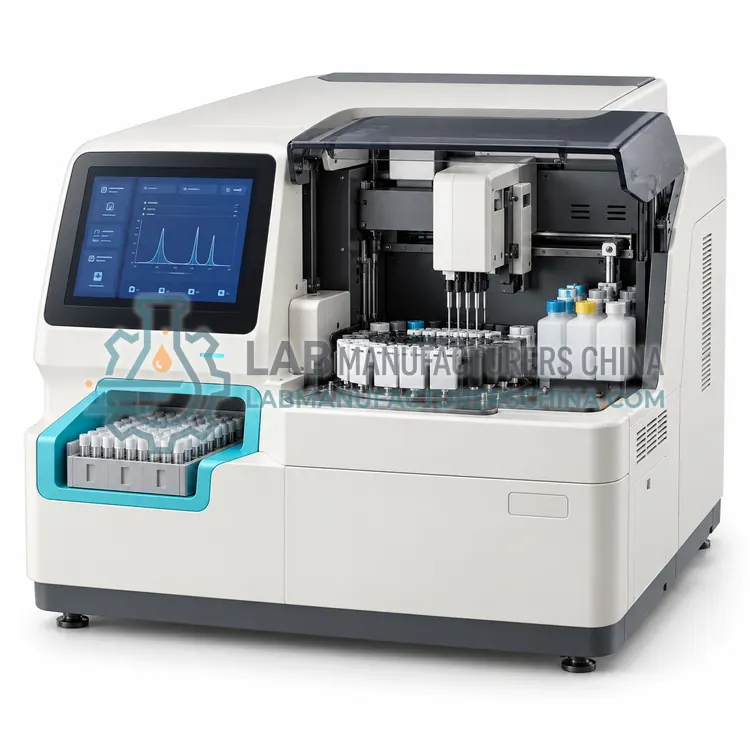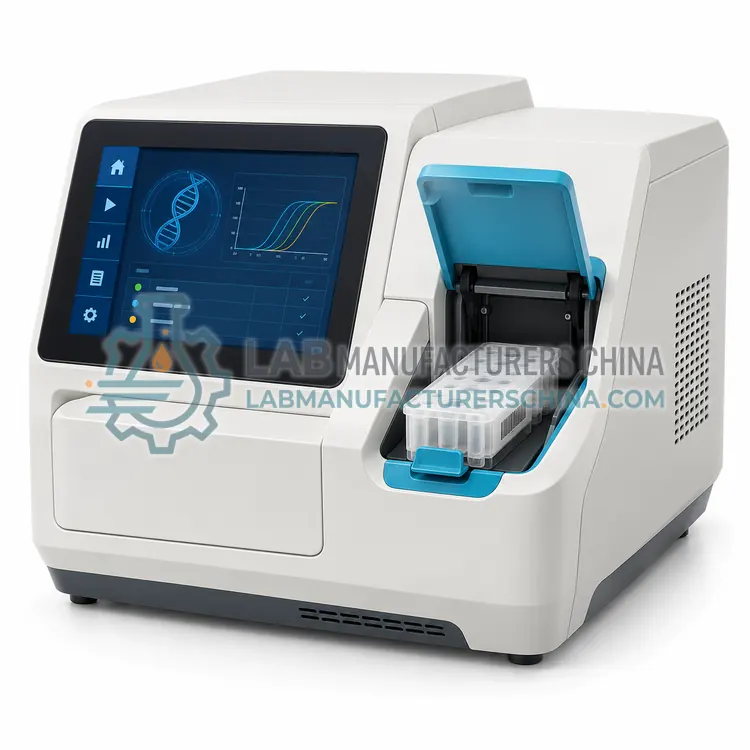
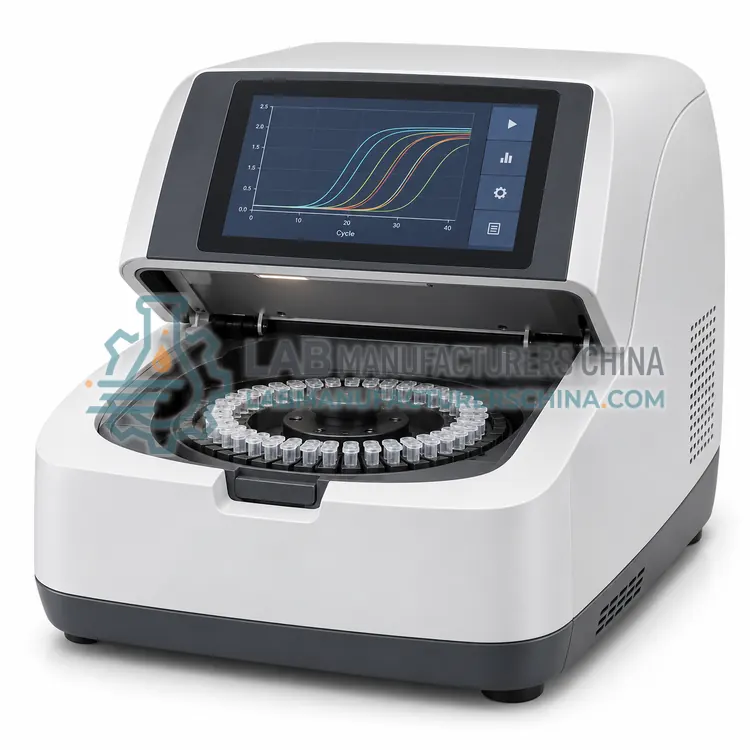
Real-Time Fluorescent PCR Detection System
实时荧光定量 PCR 检测系统
- SKU MOD-0001
- Molecular Diagnostics
- CE (to be confirmed)
- ISO 13485 quality system (to be confirmed)
- NMPA registration (to be confirmed)
Price on request — FOB / CIF quoted per order
Prices depend on configuration, quantity and destination port.
Key specifications
| Sample format | 96-well or 384-well plates, 0.2 mL tubes |
|---|---|
| Reaction volume | 10–50 µL |
| Fluorescence channels | 4–6 |
| Temperature range | 4–99 °C |
| Block uniformity | ≤ ±0.3 °C |
| Maximum ramp rate | 4–6 °C/s |
Request a quote Download brochure · to be provided
By Lab Manufacturers China Technical TeamLast reviewed Standards: ISO 15189, IEC 61010-2-101, CLSI MM03
What is the Real-Time Fluorescent PCR Detection System?
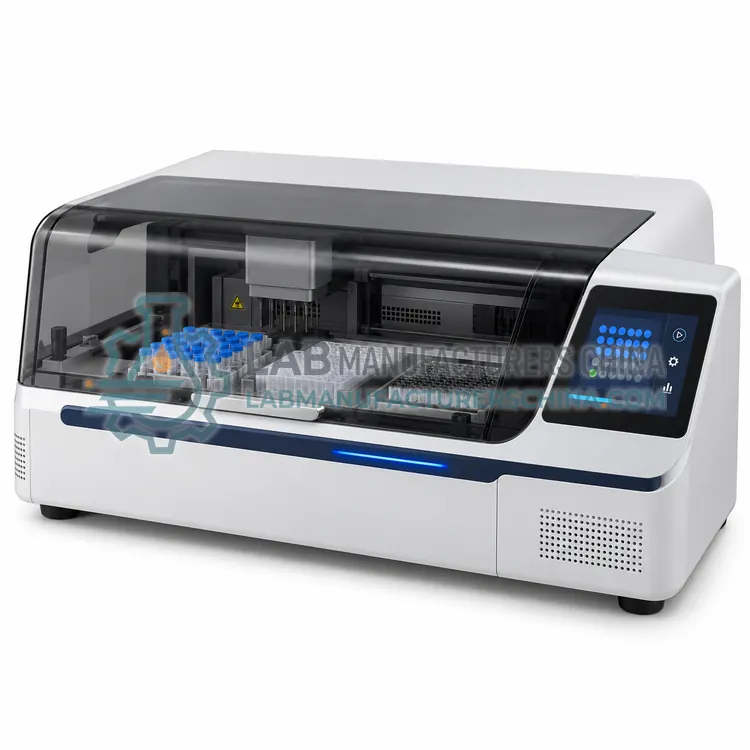
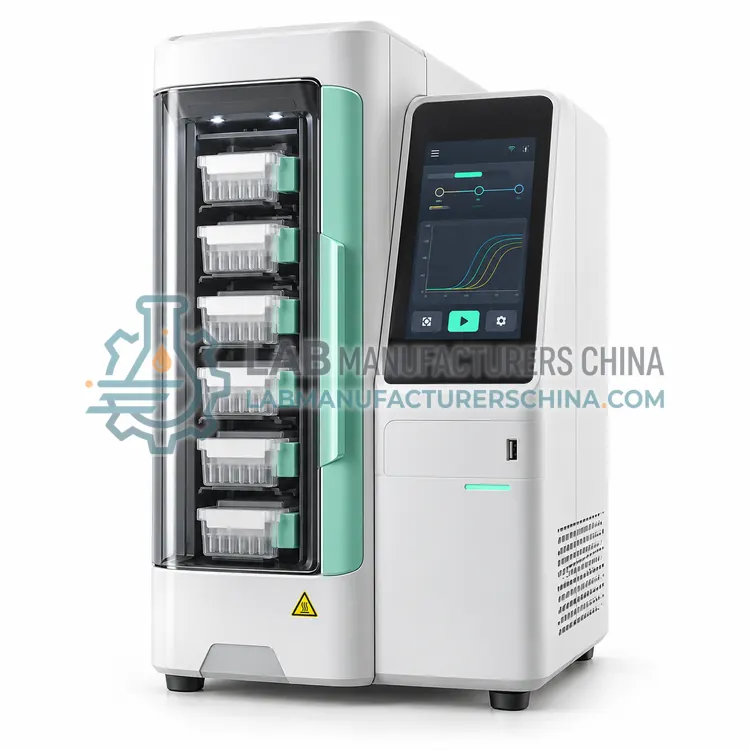
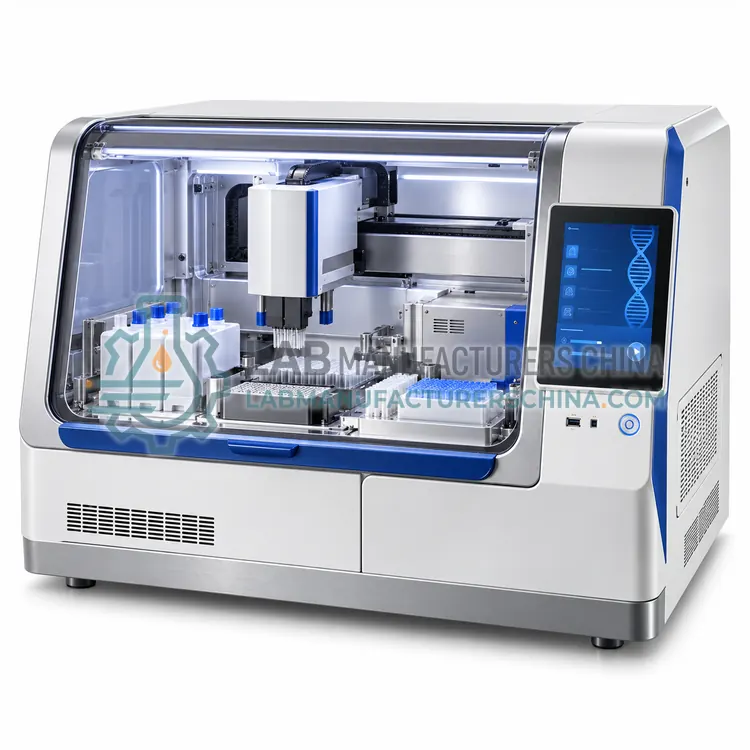
A real-time fluorescent PCR detection system thermal cycles reactions in a 96- or 384-well block while measuring fluorescence from multiple channels each cycle. It is the standard choice for clinical laboratories running batch nucleic acid testing for infectious disease, viral load and genetic targets.
What is the Real-Time Fluorescent PCR Detection System?
A real-time fluorescent PCR detection system thermal cycles reactions in a 96- or 384-well block while measuring fluorescence from multiple channels each cycle. It is the standard choice for clinical laboratories running batch nucleic acid testing for infectious disease, viral load and genetic targets.
Overview
This variant combines a Peltier thermal block, a light source such as LED or halogen, filter sets or a spectrometer, and a detector to monitor up to 4 to 6 fluorescence channels such as FAM, HEX, ROX and Cy5. Block uniformity within ±0.3 °C and ramp rates up to 4–6 °C/s support fast protocols with run times of 40 to 90 minutes. Reaction volumes are typically 10 to 50 microliters in 96-well plates, and 384-well blocks increase throughput. Software performs baseline correction, Ct calling, melt curve analysis and absolute quantification using standards. Open channels allow use of in vitro diagnostic kits and laboratory developed tests, while heated lids prevent evaporation. Regular block and optical calibration maintains accuracy.
How does it work?
Molecular diagnostics amplify a specific nucleic acid sequence so that it becomes detectable. In real-time PCR, thermal cycling denatures DNA, anneals primers and extends with a DNA polymerase, while fluorescent probes such as hydrolysis probes emit signal proportional to product accumulation, and the cycle threshold indicates starting quantity. RNA targets are first reverse-transcribed. Isothermal methods such as LAMP amplify at a constant temperature of about 60–65 °C. Digital PCR partitions a sample into thousands of droplets or wells and counts positive partitions for absolute quantification. Sequencing reads the order of bases by synthesis or nanopore detection. Controls such as internal controls and no-template controls verify extraction, amplification and contamination status in each run.
What are the key features?
- Peltier thermal block with uniformity within ±0.3 °C
- Four to six fluorescence channels for multiplex detection
- Fast ramp rates that support runs in under 90 minutes
- Software for Ct calling, melt curves and absolute quantification
- Open channel design for diagnostic kits and laboratory developed tests
- Heated lid and seal compatibility to limit evaporation
What are the technical specifications?
A typical real-time fluorescent pcr detection system configuration offers sample format of 96-well or 384-well plates, 0.2 mL tubes, reaction volume of 10–50 µL, fluorescence channels of 4–6, temperature range of 4–99 °C, block uniformity of ≤ ±0.3 °C and maximum ramp rate of 4–6 °C/s. Values are indicative of the product class; the exact figures for each configuration are confirmed on the quotation and the calibration documents supplied with the instrument.
Which applications is it used for?
The Real-Time Fluorescent PCR Detection System is used in viral load and pathogen detection, genotyping and SNP analysis, gene expression and oncology assays and public health surveillance. Across the wider Molecular Diagnostics class, laboratories also deploy it for infectious disease PCR testing, oncology mutation testing and genetic and inherited disease testing.
Which standards and certifications apply?
Relevant standards and methods include ISO 15189, IEC 61010-2-101, CLSI MM03, CLSI MM06, CLSI EP17, ISO 20395, ISO 13485 and ISO 17822. Certification candidates for this model are CE, ISO 13485 quality system and NMPA registration; each is to be confirmed for the specific configuration before shipment, and certificates are supplied only where they have been issued.
Molecular laboratories require unidirectional workflow with separate areas for reagent preparation, sample processing, amplification and post-amplification where applicable, or closed systems that reduce contamination risk. Use dedicated pipettes, filter tips, UV decontamination and routine surface cleaning. Calibrate thermal blocks and optical systems, and run positive, negative and internal controls in each run. Protect instruments from dust and vibration, use stable power, and follow reagent cold-chain requirements. Validate assays and instrument performance according to CLSI MM guidelines and laboratory procedures under ISO 15189. Manage biosafety for pathogen work and handle data with privacy controls, especially for genetic information.
How do I select the right Real-Time Fluorescent PCR Detection System?
Choose a real-time PCR system for batch testing with open assay flexibility. Specify plate format, number of fluorescence channels and dyes, ramp rate, software features such as Ct analysis and LIS integration, validation documentation, and service coverage in the RFQ, and request uniformity and sensitivity data.
How does it compare with other Molecular Diagnostics variants?
Choose by assay type, volume and laboratory skill level. Real-time PCR suits high-volume batch testing with open or closed assays. Sample-to-answer cartridge systems offer minimal hands-on time and fast results for low-volume or urgent testing. Digital PCR suits absolute quantification, rare variant detection and minimal residual disease. Isothermal analyzers fit decentralized settings with simple instrumentation. Sequencers suit broad genetic, oncology and pathogen genomics panels. Compare channels, throughput, sample volume, limit of detection, workflow steps, contamination control, and software for result interpretation. Verify assay availability and registration in your market, open channel versatility, LIS connectivity and service support, and plan laboratory zoning and staff training.
Full specifications
| Sample format | 96-well or 384-well plates, 0.2 mL tubes |
|---|---|
| Reaction volume | 10–50 µL |
| Fluorescence channels | 4–6 |
| Temperature range | 4–99 °C |
| Block uniformity | ≤ ±0.3 °C |
| Maximum ramp rate | 4–6 °C/s |
| Excitation source | LED or halogen lamp |
| Dynamic range | ≥ 9 orders of magnitude |
| Run time | 40–90 min |
| Power supply | 100–240 V AC, 50/60 Hz |
Indicative values for this product class. Final specifications are confirmed on the quotation and in the calibration documents supplied with the instrument.
Applications
- Viral load and pathogen detection
- Genotyping and SNP analysis
- Gene expression and oncology assays
- Public health surveillance
Key features
- Peltier thermal block with uniformity within ±0.3 °C
- Four to six fluorescence channels for multiplex detection
- Fast ramp rates that support runs in under 90 minutes
- Software for Ct calling, melt curves and absolute quantification
- Open channel design for diagnostic kits and laboratory developed tests
- Heated lid and seal compatibility to limit evaporation
Frequently asked questions about Real-Time Fluorescent PCR Detection System
Four channels suit most multiplex infectious disease assays, which use one channel per target plus an internal control. Six channels support larger multiplex panels and assays with reference dyes, but require careful dye selection and color compensation.
Laboratories check block temperature uniformity, optical calibration with dye plates and assay performance with controls at intervals recommended by the manufacturer. Sensitivity and reproducibility are confirmed by running dilution series and replicates during validation.
Yes, one-step RT-PCR kits include a reverse transcription step at about 50 °C before cycling, which the software supports. The instrument itself is identical, so RNA testing depends on the reagents and on proper RNA extraction and handling.
It is the group of instruments that detect or quantify DNA and RNA in clinical specimens, typically by amplification such as PCR or by sequencing. Applications include infectious disease testing, oncology mutations, genetic disorders and viral load monitoring.
Real-time PCR estimates starting quantity from the cycle at which fluorescence crosses a threshold and needs a standard curve. Digital PCR partitions the sample and counts positive partitions for absolute quantification without a curve, which improves detection of rare variants.
Laboratories use separated pre- and post-amplification areas, unidirectional workflow, filter tips, UV decontamination and no-template controls. Closed cartridge systems and uracil-N-glycosylase in reagent mixes further reduce the risk of amplicon carryover.
Related models