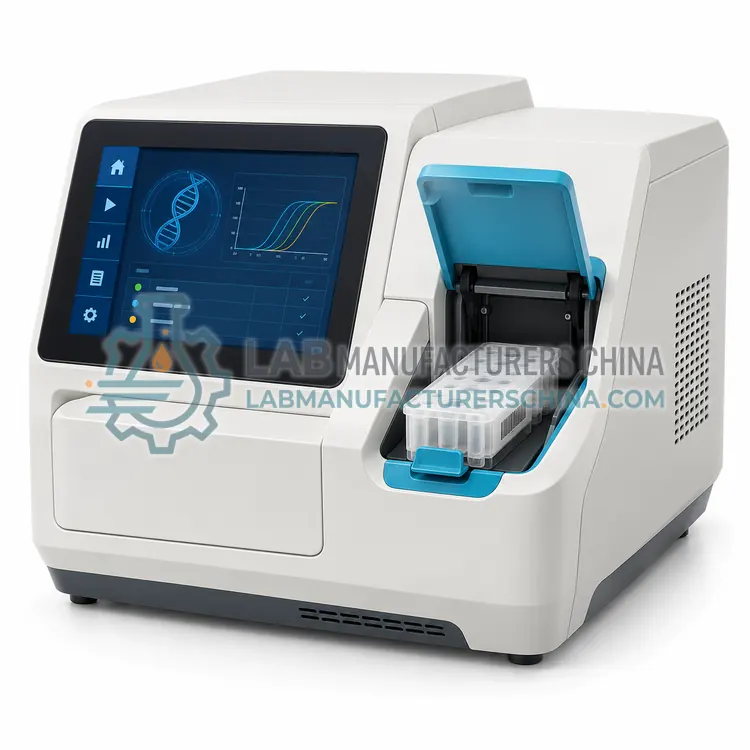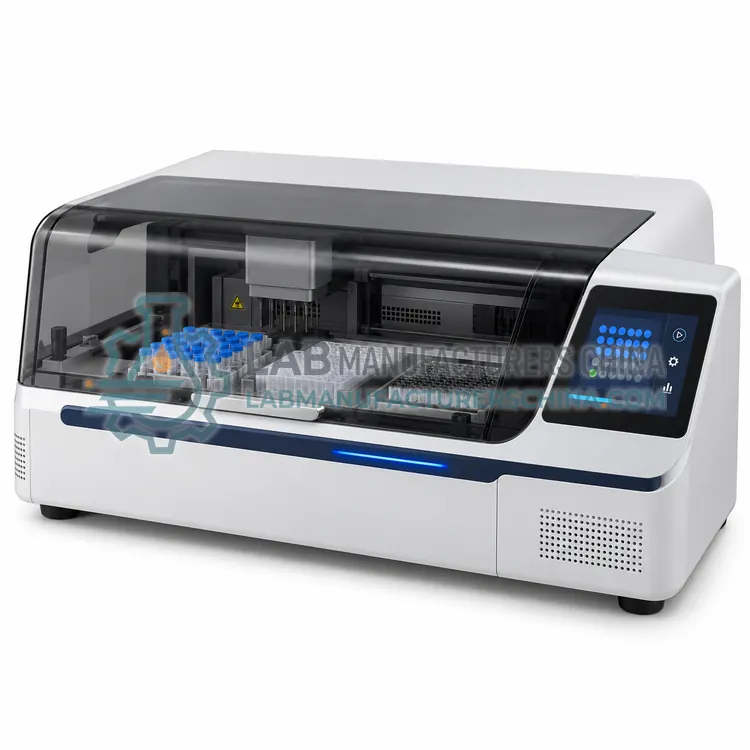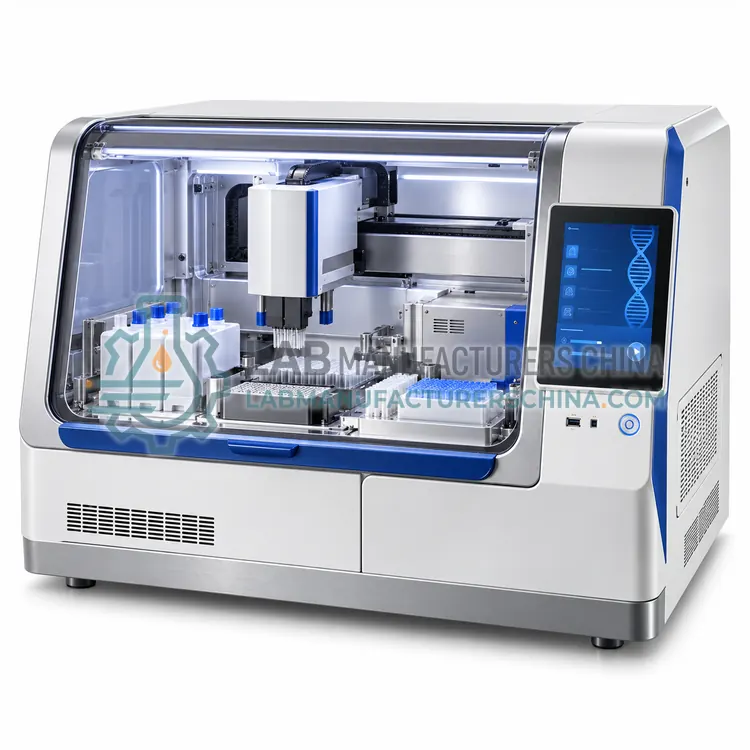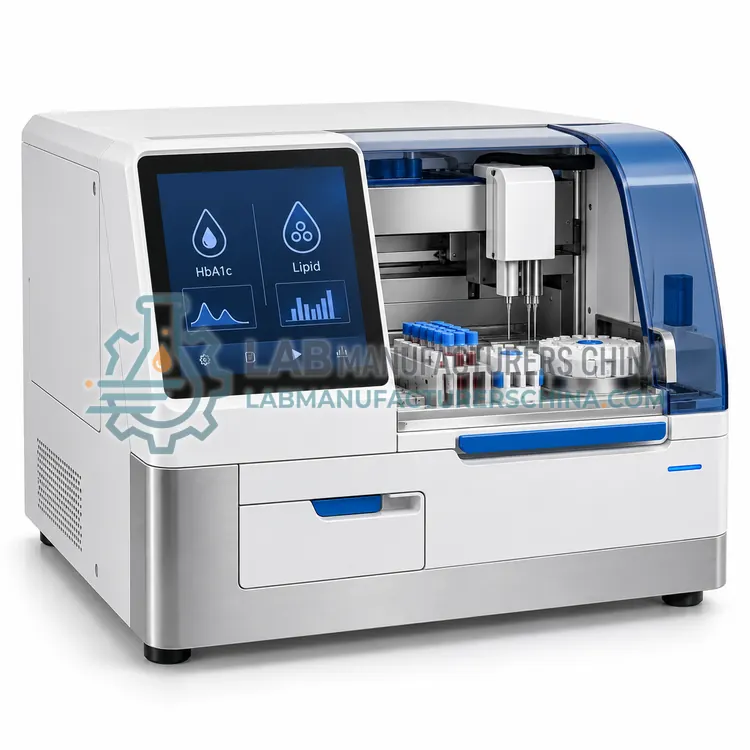
Isothermal Nucleic Acid Amplification Analyzer
等温核酸扩增分析仪
- SKU MOD-0004
- Molecular Diagnostics
- CE (to be confirmed)
- ISO 13485 quality system (to be confirmed)
- ISO 9001 manufacturing (to be confirmed)
Price on request — FOB / CIF quoted per order
Prices depend on configuration, quantity and destination port.
Key specifications
| Operating temperature | 37–65 °C |
|---|---|
| Temperature stability | ≤ ±0.3 °C |
| Detection method | Real-time fluorescence or turbidity |
| Fluorescence channels | 1–4 |
| Reaction capacity | 8–96 reactions |
| Reaction volume | 10–25 µL |
Request a quote Download brochure · to be provided
By Lab Manufacturers China Technical TeamLast reviewed Standards: ISO 15189, IEC 61010-2-101, CLSI MM03
What is the Isothermal Nucleic Acid Amplification Analyzer?
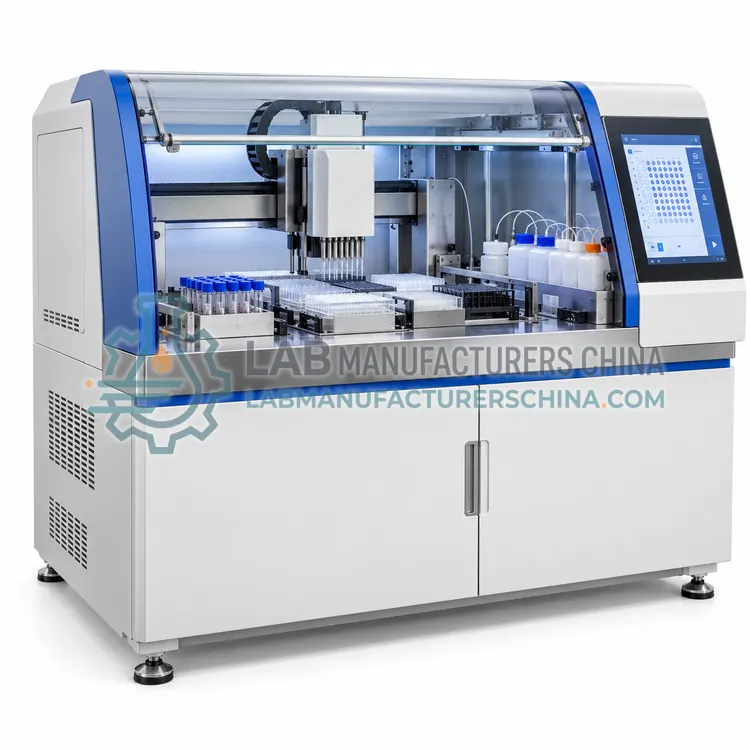
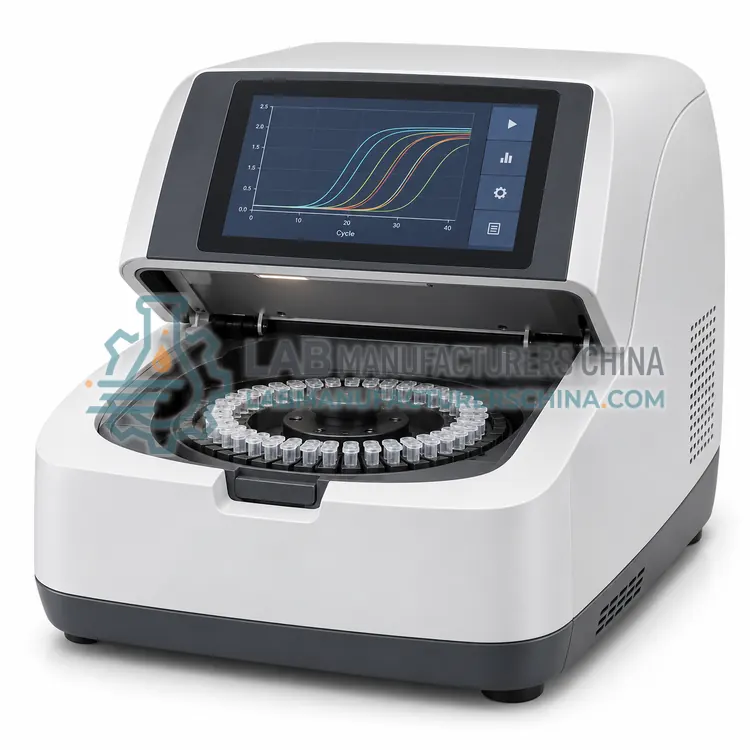
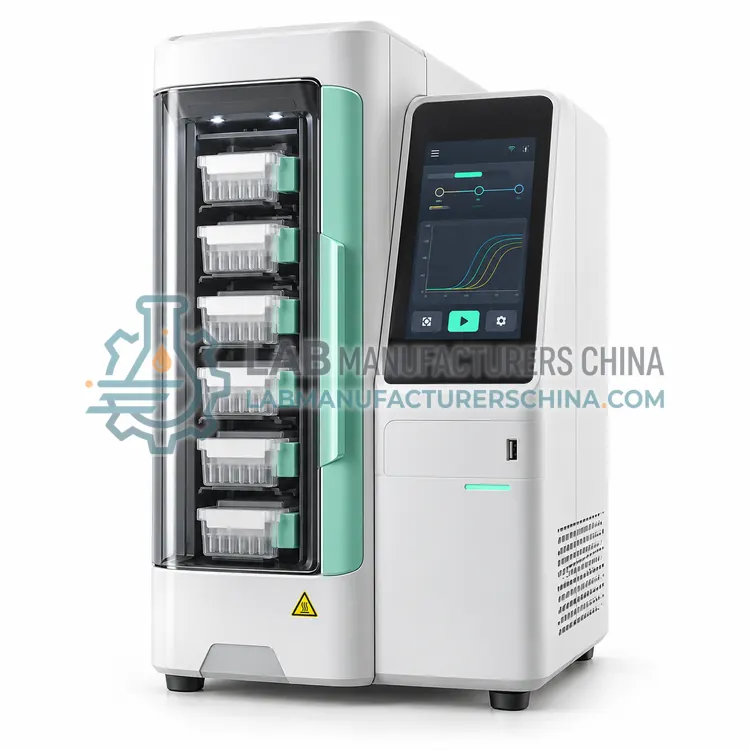
An isothermal nucleic acid amplification analyzer runs LAMP, RPA or similar assays at a constant temperature and detects products by real-time fluorescence or turbidity. It is chosen for simple, compact, rapid nucleic acid testing in decentralized laboratories and field settings.
What is the Isothermal Nucleic Acid Amplification Analyzer?
An isothermal nucleic acid amplification analyzer runs LAMP, RPA or similar assays at a constant temperature and detects products by real-time fluorescence or turbidity. It is chosen for simple, compact, rapid nucleic acid testing in decentralized laboratories and field settings.
Overview
This variant avoids thermal cycling by using strand-displacing polymerases that amplify at a constant 37 to 65 °C, depending on method. Loop-mediated isothermal amplification typically runs at 60 to 65 °C for 20 to 40 minutes, while recombinase polymerase amplification runs at about 37 to 42 °C in 10 to 20 minutes. The instrument needs only a stable heating block and an optical unit, so it is smaller, lighter and lower in power than a thermal cycler. Real-time fluorescence detection with one to four channels or turbidity measurement shows amplification curves. Typical capacity is 8 to 96 reactions per run. Primer design is complex and assays are prone to non-specific amplification, so validated kits and strict contamination control remain critical.
How does it work?
Molecular diagnostics amplify a specific nucleic acid sequence so that it becomes detectable. In real-time PCR, thermal cycling denatures DNA, anneals primers and extends with a DNA polymerase, while fluorescent probes such as hydrolysis probes emit signal proportional to product accumulation, and the cycle threshold indicates starting quantity. RNA targets are first reverse-transcribed. Isothermal methods such as LAMP amplify at a constant temperature of about 60–65 °C. Digital PCR partitions a sample into thousands of droplets or wells and counts positive partitions for absolute quantification. Sequencing reads the order of bases by synthesis or nanopore detection. Controls such as internal controls and no-template controls verify extraction, amplification and contamination status in each run.
What are the key features?
- Constant-temperature heating block from 37 to 65 °C
- Real-time fluorescence or turbidity detection of amplification
- Compact, lightweight body suitable for decentralized laboratories
- Run time of 10–40 minutes depending on assay chemistry
- Capacity of 8 to 96 reactions per run
- Battery or vehicle power options in portable models
What are the technical specifications?
A typical isothermal nucleic acid amplification analyzer configuration offers operating temperature of 37–65 °C, temperature stability of ≤ ±0.3 °C, detection method of Real-time fluorescence or turbidity, fluorescence channels of 1–4, reaction capacity of 8–96 reactions and reaction volume of 10–25 µL. Values are indicative of the product class; the exact figures for each configuration are confirmed on the quotation and the calibration documents supplied with the instrument.
Which applications is it used for?
The Isothermal Nucleic Acid Amplification Analyzer is used in point-of-need pathogen screening, field outbreak investigation, food and water pathogen testing and clinic nucleic acid testing. Across the wider Molecular Diagnostics class, laboratories also deploy it for infectious disease PCR testing, oncology mutation testing and genetic and inherited disease testing.
Which standards and certifications apply?
Relevant standards and methods include ISO 15189, IEC 61010-2-101, CLSI MM03, CLSI MM06, CLSI EP17, ISO 20395, ISO 13485 and ISO 17822. Certification candidates for this model are CE, ISO 13485 quality system and ISO 9001 manufacturing; each is to be confirmed for the specific configuration before shipment, and certificates are supplied only where they have been issued.
Molecular laboratories require unidirectional workflow with separate areas for reagent preparation, sample processing, amplification and post-amplification where applicable, or closed systems that reduce contamination risk. Use dedicated pipettes, filter tips, UV decontamination and routine surface cleaning. Calibrate thermal blocks and optical systems, and run positive, negative and internal controls in each run. Protect instruments from dust and vibration, use stable power, and follow reagent cold-chain requirements. Validate assays and instrument performance according to CLSI MM guidelines and laboratory procedures under ISO 15189. Manage biosafety for pathogen work and handle data with privacy controls, especially for genetic information.
How do I select the right Isothermal Nucleic Acid Amplification Analyzer?
Choose isothermal analyzers for simple, rapid nucleic acid tests where infrastructure is limited. Specify assay chemistry such as LAMP or RPA, channels, reaction capacity, portability and power, kit availability and registration, and contamination control requirements in the RFQ.
How does it compare with other Molecular Diagnostics variants?
Choose by assay type, volume and laboratory skill level. Real-time PCR suits high-volume batch testing with open or closed assays. Sample-to-answer cartridge systems offer minimal hands-on time and fast results for low-volume or urgent testing. Digital PCR suits absolute quantification, rare variant detection and minimal residual disease. Isothermal analyzers fit decentralized settings with simple instrumentation. Sequencers suit broad genetic, oncology and pathogen genomics panels. Compare channels, throughput, sample volume, limit of detection, workflow steps, contamination control, and software for result interpretation. Verify assay availability and registration in your market, open channel versatility, LIS connectivity and service support, and plan laboratory zoning and staff training.
Full specifications
| Operating temperature | 37–65 °C |
|---|---|
| Temperature stability | ≤ ±0.3 °C |
| Detection method | Real-time fluorescence or turbidity |
| Fluorescence channels | 1–4 |
| Reaction capacity | 8–96 reactions |
| Reaction volume | 10–25 µL |
| Run time | 10–40 min |
| Weight | 2–8 kg |
| Display | Touchscreen with USB/Wi-Fi export |
| Power supply | 100–240 V AC or 12 V DC/battery |
Indicative values for this product class. Final specifications are confirmed on the quotation and in the calibration documents supplied with the instrument.
Applications
- Point-of-need pathogen screening
- Field outbreak investigation
- Food and water pathogen testing
- Clinic nucleic acid testing
Key features
- Constant-temperature heating block from 37 to 65 °C
- Real-time fluorescence or turbidity detection of amplification
- Compact, lightweight body suitable for decentralized laboratories
- Run time of 10–40 minutes depending on assay chemistry
- Capacity of 8 to 96 reactions per run
- Battery or vehicle power options in portable models
Frequently asked questions about Isothermal Nucleic Acid Amplification Analyzer
Loop-mediated isothermal amplification uses four to six primers and a strand-displacing polymerase to amplify DNA at a constant temperature near 65 °C, typically in under 40 minutes. Products can be detected by fluorescence, turbidity or color change.
Well-designed isothermal assays can reach sensitivity comparable to PCR for many targets, but performance depends strongly on primer design and sample quality. Non-specific amplification and amplicon contamination need careful control, so kits should be validated for the intended use.
Portable isothermal analyzers can run on battery or vehicle power and are used in field investigations and remote clinics. Sample preparation and contamination control still need attention, so a simple extraction or lysis step and a clean workspace are recommended.
It is the group of instruments that detect or quantify DNA and RNA in clinical specimens, typically by amplification such as PCR or by sequencing. Applications include infectious disease testing, oncology mutations, genetic disorders and viral load monitoring.
Real-time PCR estimates starting quantity from the cycle at which fluorescence crosses a threshold and needs a standard curve. Digital PCR partitions the sample and counts positive partitions for absolute quantification without a curve, which improves detection of rare variants.
Laboratories use separated pre- and post-amplification areas, unidirectional workflow, filter tips, UV decontamination and no-template controls. Closed cartridge systems and uracil-N-glycosylase in reagent mixes further reduce the risk of amplicon carryover.