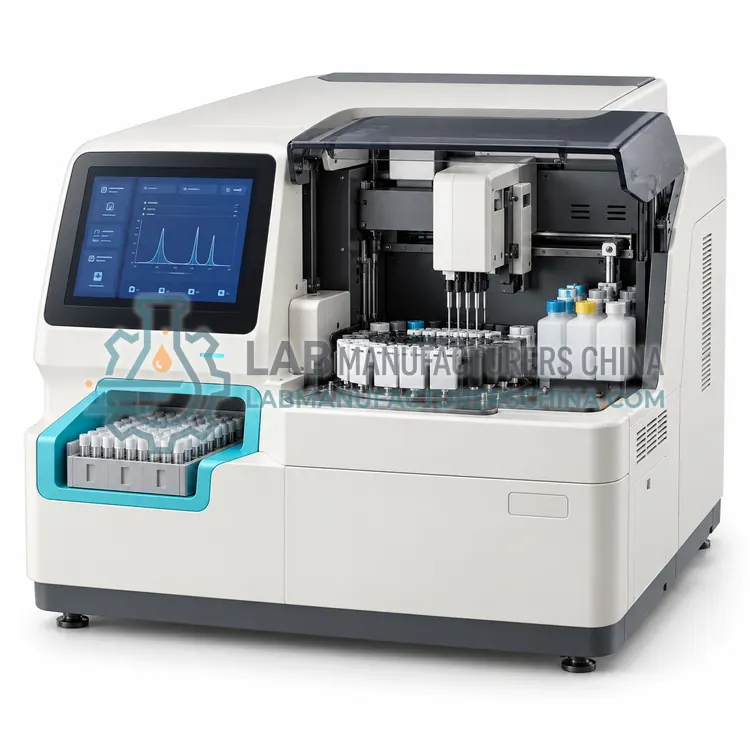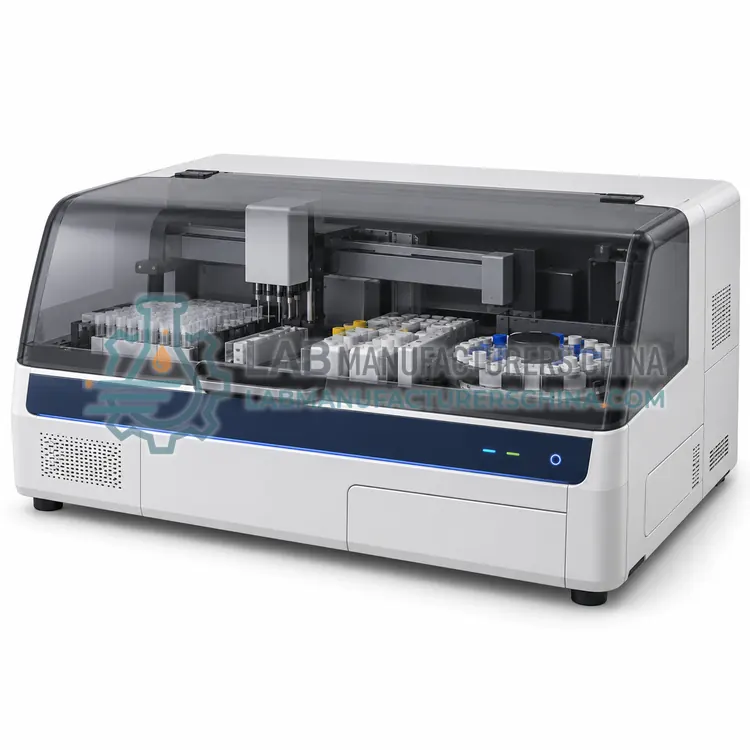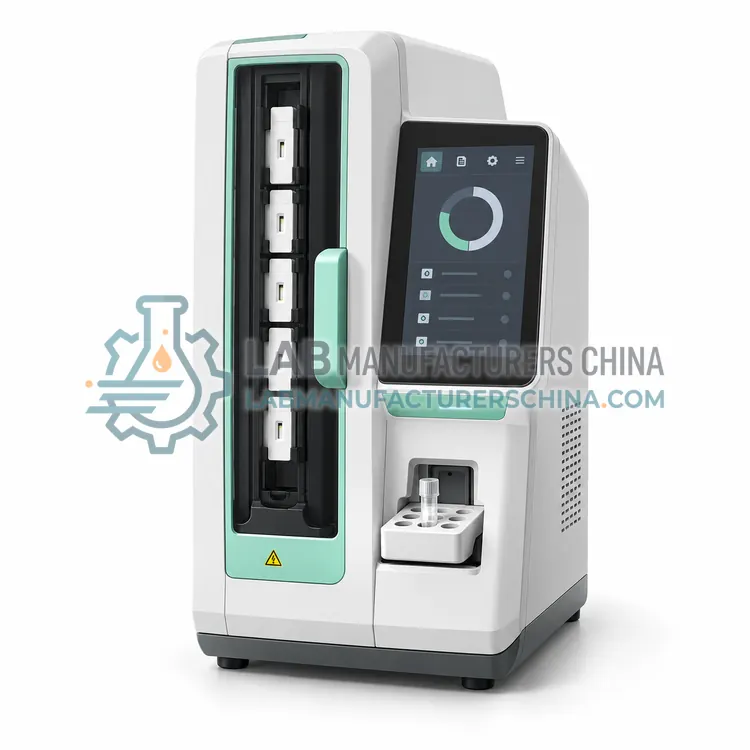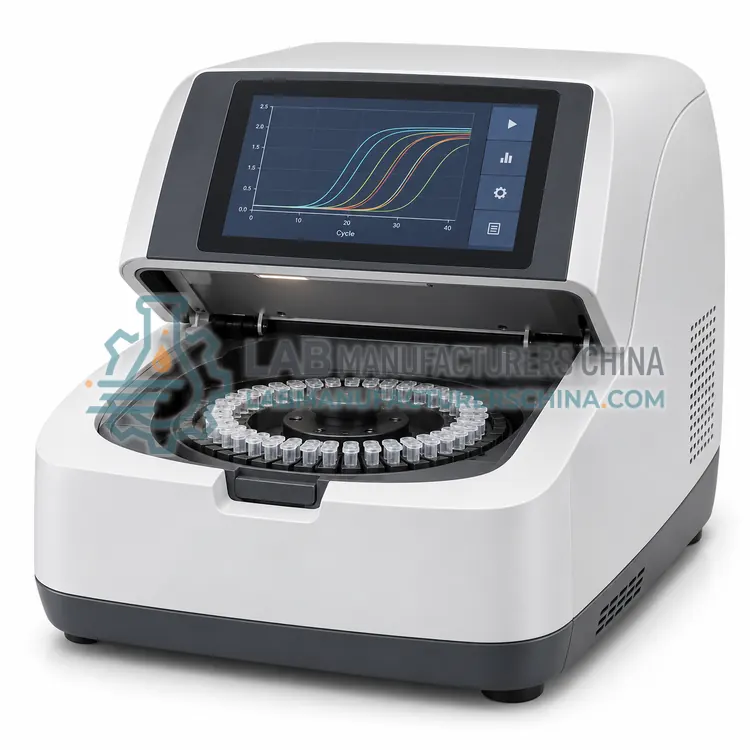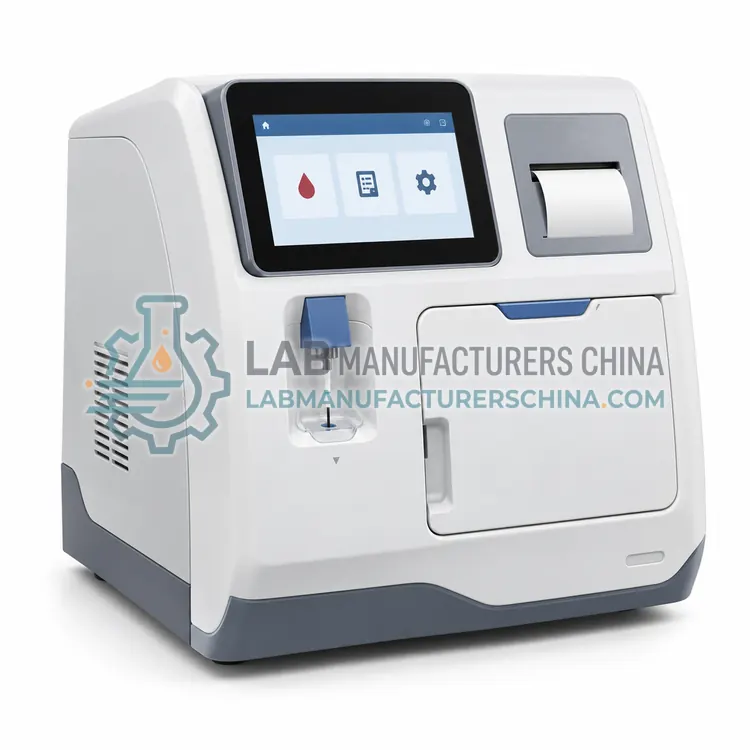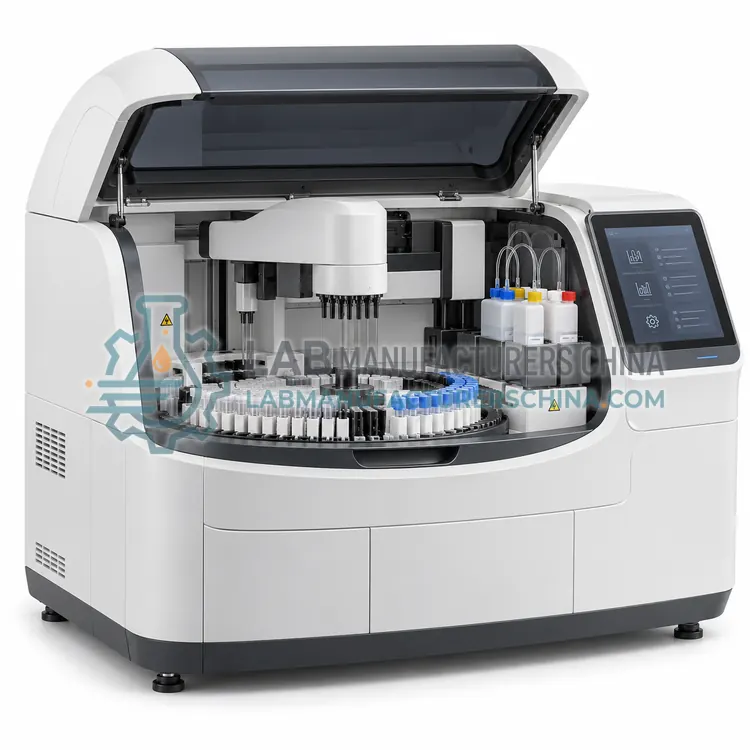
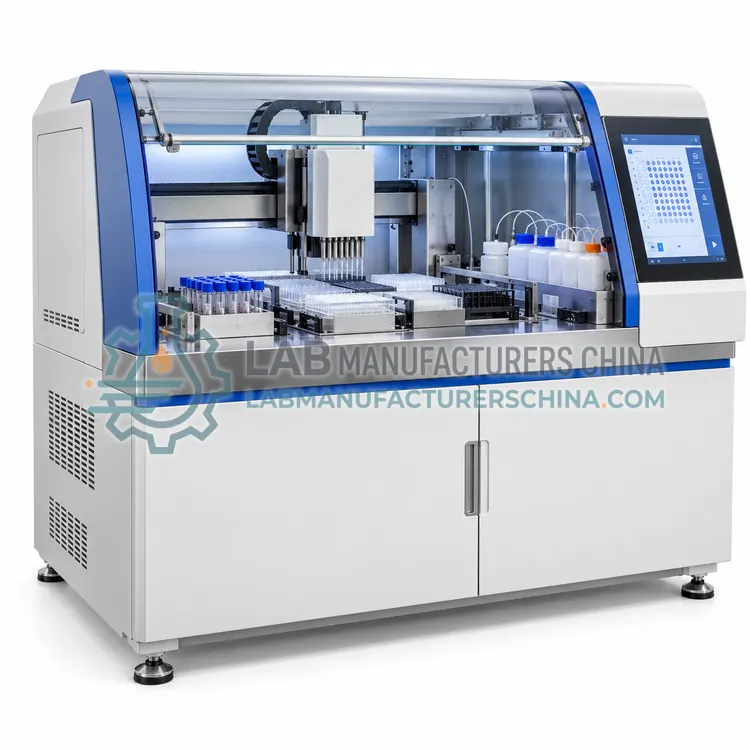
Automated ELISA Processing System
全自动酶联免疫检测处理系统
- SKU IMM-0005
- Immunodiagnostics
- CE (to be confirmed)
- ISO 13485 quality system (to be confirmed)
- NMPA registration (to be confirmed)
Price on request — FOB / CIF quoted per order
Prices depend on configuration, quantity and destination port.
Key specifications
| Plate capacity | 2–8 plates per run |
|---|---|
| Sample capacity | 180–700 samples per run |
| Pipetting volume | 5–1,000 µL |
| Incubators | 2–4 shaker incubators, ambient to 50 °C |
| Wash residual volume | < 2 µL per well |
| Reader wavelength | 405–650 nm (filters) |
Request a quote Download brochure · to be provided
By Lab Manufacturers China Technical TeamLast reviewed Standards: ISO 15189, IEC 61010-2-101, ISO 18113-1
What is the Automated ELISA Processing System?
An automated ELISA processing system performs sample pipetting, incubation, washing, substrate addition and absorbance reading on microplates without operator intervention. It is the right choice for blood banks, public health laboratories and reference laboratories running batch serology with flexible, economical reagents.
What is the Automated ELISA Processing System?
An automated ELISA processing system performs sample pipetting, incubation, washing, substrate addition and absorbance reading on microplates without operator intervention. It is the right choice for blood banks, public health laboratories and reference laboratories running batch serology with flexible, economical reagents.
Overview
This variant integrates a pipetting station, plate handler, incubator-shakers, washer, reagent dispensers and a microplate photometer, all controlled by one software package. The operator loads samples, reagent kits and plates, selects assay protocols, and the system runs the protocol including incubation times and temperatures. Typical capacity is 2 to 8 plates per run, or roughly 180 to 700 samples, with open protocols allowing kits from several manufacturers. The photometer reads 405 to 650 nm with filters, and software applies cut-off calculations, controls validation and flags invalid plates. Barcode reading and audit trail support traceability. Compared with chemiluminescence, it is less sensitive and slower per sample, but flexible and cost-effective for screening programs.
How does it work?
Immunodiagnostic platforms exploit the specific binding of an antibody to its antigen. In a sandwich assay, a capture antibody on a solid phase such as a magnetic microparticle or microplate binds the analyte, and a labeled detection antibody forms a complex whose signal is proportional to concentration. In competitive assays, labeled and sample antigens compete for limited antibody sites and signal falls as concentration rises. Labels include enzymes such as horseradish peroxidase or alkaline phosphatase, acridinium esters or ruthenium complexes for luminescence, and lanthanide chelates or fluorophores. After incubation and washing to remove unbound label, a photomultiplier, fluorometer or photometer measures the signal, and a calibration curve converts it to concentration. Automation handles pipetting, incubation, washing and result calculation.
What are the key features?
- Integrated pipetting, incubation, washing and absorbance reading
- Open protocol design accepting ELISA kits from multiple manufacturers
- Automatic cut-off calculation and control validity checks
- Barcode reading of samples and plates with audit trail
- Capacity of several plates per run for batch screening
- Liquid-level detection and sample tracking to reduce errors
What are the technical specifications?
A typical automated elisa processing system configuration offers plate capacity of 2–8 plates per run, sample capacity of 180–700 samples per run, pipetting volume of 5–1,000 µL, incubators of 2–4 shaker incubators, ambient to 50 °C, wash residual volume of < 2 µL per well and reader wavelength of 405–650 nm (filters). Values are indicative of the product class; the exact figures for each configuration are confirmed on the quotation and the calibration documents supplied with the instrument.
Which applications is it used for?
The Automated ELISA Processing System is used in blood donor screening, hepatitis and HIV serology, public health surveillance and autoimmune and allergy panels. Across the wider Immunodiagnostics class, laboratories also deploy it for infectious disease serology screening, thyroid and reproductive hormone testing and tumor marker monitoring.
Which standards and certifications apply?
Relevant standards and methods include ISO 15189, IEC 61010-2-101, ISO 18113-1, CLSI EP05, CLSI EP07, CLSI EP17, CLSI I/LA23 and ISO 13485. Certification candidates for this model are CE, ISO 13485 quality system and NMPA registration; each is to be confirmed for the specific configuration before shipment, and certificates are supplied only where they have been issued.
Place analyzers on a stable bench with temperature and humidity within the stated range, away from direct sunlight, and provide purified water, waste drainage and stable power where required. Follow maintenance schedules for washing systems, probes and optics, and run daily controls at several levels. Verify new lots and calibration according to laboratory procedures, and monitor for interferences such as biotin, heterophilic antibodies or the hook effect. Store reagents at 2–8 °C and observe onboard stability. Handle specimens as potentially infectious, dispose of liquid waste according to biosafety rules, and document maintenance, calibration and operator competence under ISO 15189. Plan service coverage and reagent logistics for the market.
How do I select the right Automated ELISA Processing System?
Select an automated ELISA system when batch screening with open kits is required. Specify plates per run, sample throughput, kits used, washer performance, incubator count, barcode and LIS requirements, and validation documentation in the RFQ, together with service terms.
How does it compare with other Immunodiagnostics variants?
Match the platform to menu and volume. Chemiluminescence and electrochemiluminescence systems offer wide dynamic range and high sensitivity for hormones, tumor markers and infectious disease serology at medium to high volume. Time-resolved fluorescence suits low-concentration analytes such as newborn screening and fertility hormones. Dry fluorescence readers with cartridges serve small laboratories and emergency testing for cardiac markers. ELISA remains flexible and economical for batch testing and blood screening. Compare reagent menu, closed or open status, onboard reagent stability, sample volume, calibration interval, throughput in tests per hour, and LIS connectivity. Confirm reagent registration in your market, supply reliability and cost per reportable result.
Full specifications
| Plate capacity | 2–8 plates per run |
|---|---|
| Sample capacity | 180–700 samples per run |
| Pipetting volume | 5–1,000 µL |
| Incubators | 2–4 shaker incubators, ambient to 50 °C |
| Wash residual volume | < 2 µL per well |
| Reader wavelength | 405–650 nm (filters) |
| Absorbance range | 0–4.0 OD |
| Read time per plate | < 10 s |
| Plate format | 96-well, flat bottom |
| Power supply | 220 V, 50/60 Hz |
Indicative values for this product class. Final specifications are confirmed on the quotation and in the calibration documents supplied with the instrument.
Applications
- Blood donor screening
- Hepatitis and HIV serology
- Public health surveillance
- Autoimmune and allergy panels
Key features
- Integrated pipetting, incubation, washing and absorbance reading
- Open protocol design accepting ELISA kits from multiple manufacturers
- Automatic cut-off calculation and control validity checks
- Barcode reading of samples and plates with audit trail
- Capacity of several plates per run for batch screening
- Liquid-level detection and sample tracking to reduce errors
Frequently asked questions about Automated ELISA Processing System
Open systems allow users to program protocols for different kits, but each kit's procedure must be validated on the instrument. Regulatory status may apply to the combination of kit and instrument, so confirm compatibility with the kit manufacturer.
Laboratories check residual volume, dispense accuracy and cross-contamination with dye tests and verify washer performance during routine maintenance. Poor washing raises background and reduces precision, so daily priming and needle cleaning matter.
A typical system processes 180 to 700 samples per run, taking about 2 to 4 hours for a full run depending on the assay incubations. Throughput in tests per hour is lower than random-access chemiluminescence but adequate for scheduled batch screening.
It is used to detect and quantify proteins, hormones, antibodies and antigens in blood and other specimens. Typical tests include hepatitis and HIV serology, thyroid and fertility hormones, tumor markers, cardiac troponin and allergy or autoimmune markers.
Both use antibody binding, but ELISA reads a colored enzyme product by absorbance, while CLIA reads emitted light, giving higher sensitivity and wider dynamic range. CLIA analyzers are usually fully automated with random access, whereas ELISA is often run in batches on microplates.
The hook effect is a falsely low result that occurs when an analyte concentration is so high that it saturates both capture and detection antibodies separately, preventing sandwich formation. Laboratories manage it by sample dilution or analyzers with antigen-excess checks, particularly for hCG, prolactin and tumor markers.
Related models