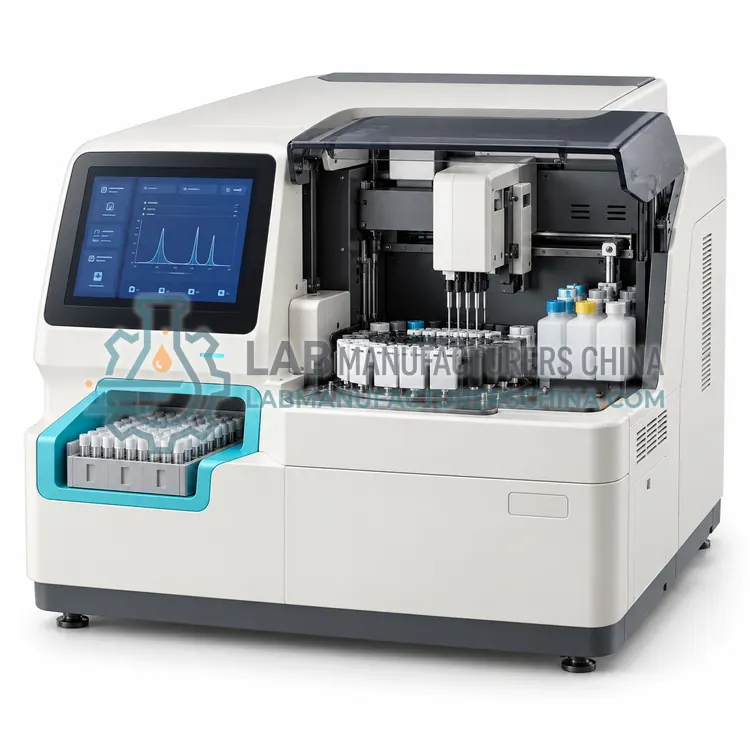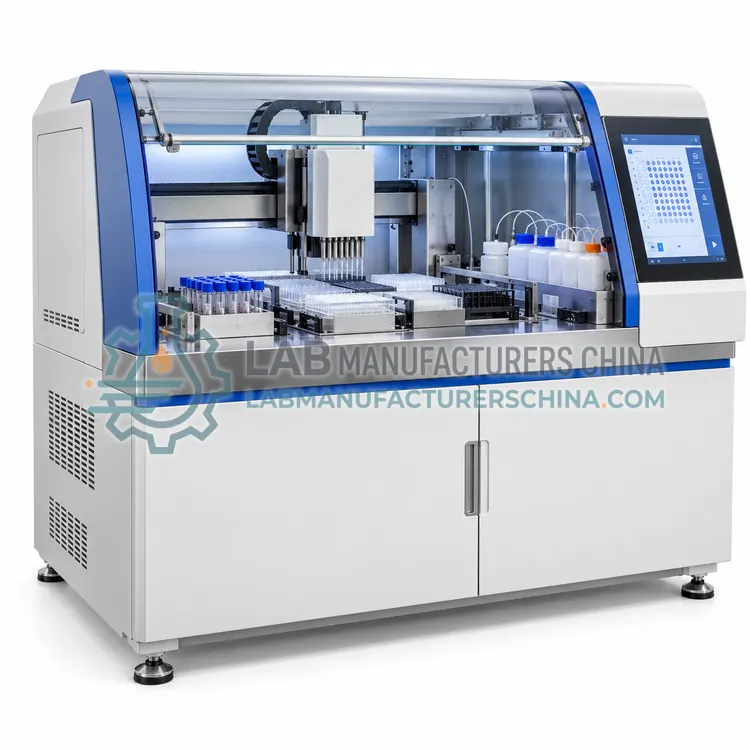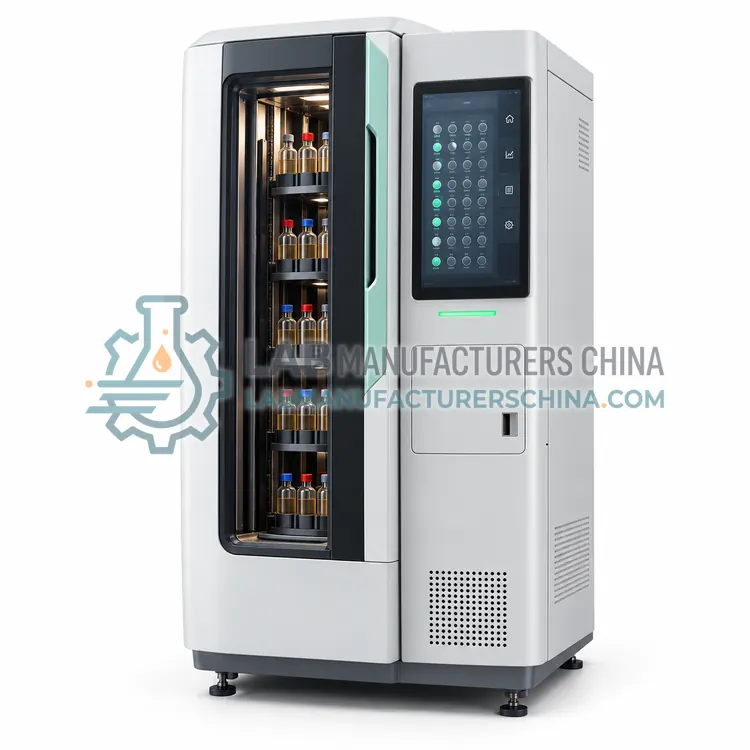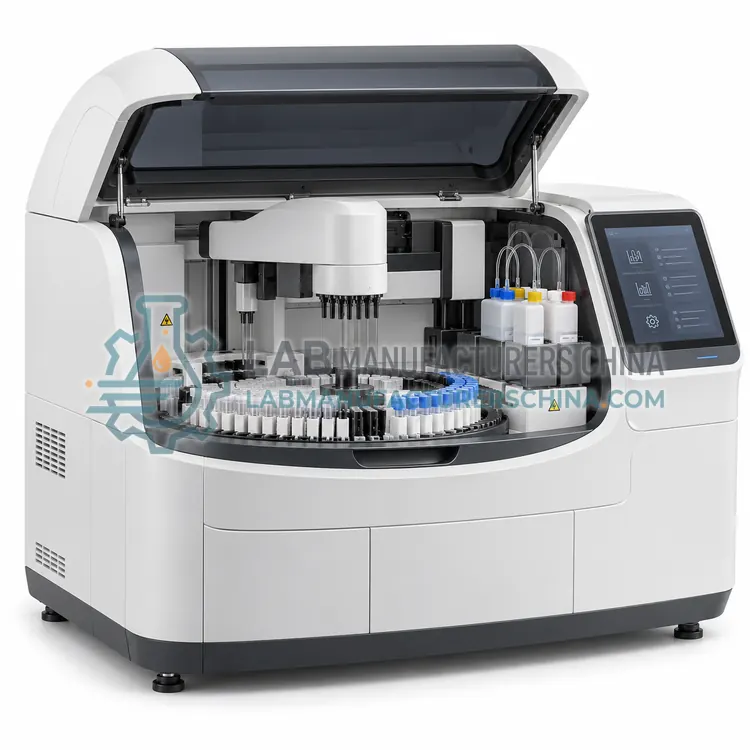
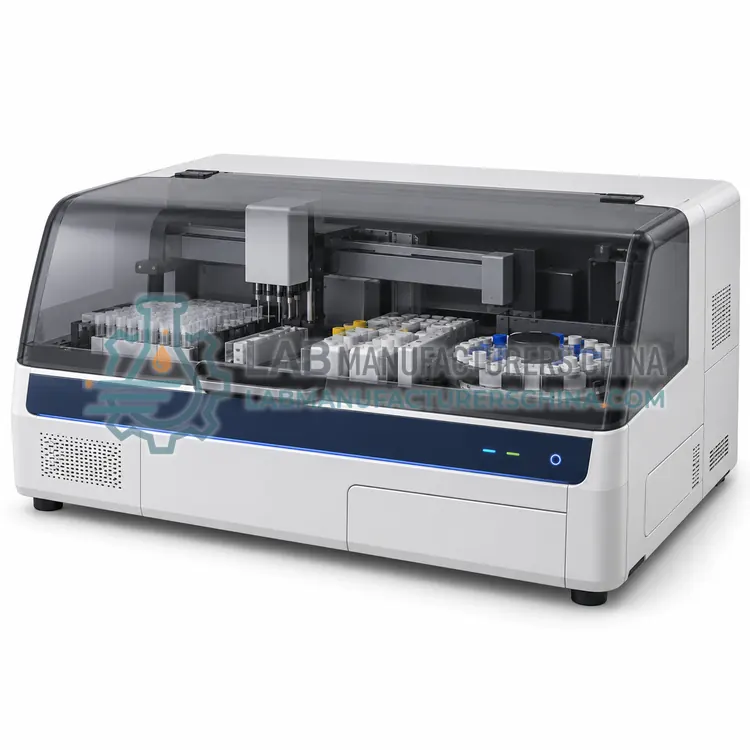
Time-Resolved Fluorescence Immunoassay Analyzer
时间分辨荧光免疫分析仪
- SKU IMM-0003
- Immunodiagnostics
- CE (to be confirmed)
- ISO 13485 quality system (to be confirmed)
- NMPA registration (to be confirmed)
Price on request — FOB / CIF quoted per order
Prices depend on configuration, quantity and destination port.
Key specifications
| Label | Europium / samarium chelate |
|---|---|
| Excitation wavelength | ≈ 340 nm |
| Emission wavelength | ≈ 615 nm (Eu) |
| Delay time | ≈ 400 µs |
| Plate format | 96-well microplates and strips |
| Batch capacity | 100–400 samples |
Request a quote Download brochure · to be provided
By Lab Manufacturers China Technical TeamLast reviewed Standards: ISO 15189, IEC 61010-2-101, ISO 18113-1
What is the Time-Resolved Fluorescence Immunoassay Analyzer?
A time-resolved fluorescence immunoassay analyzer uses lanthanide chelate labels, such as europium, whose long-lived fluorescence is measured after background decay. It is the right choice for sensitive assays such as newborn screening, fertility and thyroid hormones and other low-concentration analytes.
What is the Time-Resolved Fluorescence Immunoassay Analyzer?
A time-resolved fluorescence immunoassay analyzer uses lanthanide chelate labels, such as europium, whose long-lived fluorescence is measured after background decay. It is the right choice for sensitive assays such as newborn screening, fertility and thyroid hormones and other low-concentration analytes.
Overview
This variant relies on lanthanide chelates with fluorescence lifetimes of hundreds of microseconds, far longer than background fluorescence from proteins and plastics. A pulsed xenon lamp or laser excites the label, and the detector waits a delay of about 400 microseconds before counting photons for a short window, which removes background and provides very low detection limits. Assays are commonly run in 96-well microplates or strips with automated incubation, washing and reading. Readers can process 100 to 400 samples per batch, and open-format platforms allow flexible reagent choices. Stable labels and low background provide wide dynamic range and good precision. Typical applications include dried blood spot newborn screening for TSH and 17-OHP, plus hormones and infectious disease markers.
How does it work?
Immunodiagnostic platforms exploit the specific binding of an antibody to its antigen. In a sandwich assay, a capture antibody on a solid phase such as a magnetic microparticle or microplate binds the analyte, and a labeled detection antibody forms a complex whose signal is proportional to concentration. In competitive assays, labeled and sample antigens compete for limited antibody sites and signal falls as concentration rises. Labels include enzymes such as horseradish peroxidase or alkaline phosphatase, acridinium esters or ruthenium complexes for luminescence, and lanthanide chelates or fluorophores. After incubation and washing to remove unbound label, a photomultiplier, fluorometer or photometer measures the signal, and a calibration curve converts it to concentration. Automation handles pipetting, incubation, washing and result calculation.
What are the key features?
- Europium or other lanthanide chelate labels with long fluorescence lifetime
- Time-gated detection that removes short-lived background fluorescence
- Microplate format with automated incubation, washing and reading
- Suitable for dried blood spot and low-volume serum samples
- Wide dynamic range with low detection limits for small analytes
- Batch processing with data management and result export
What are the technical specifications?
A typical time-resolved fluorescence immunoassay analyzer configuration offers label of Europium / samarium chelate, excitation wavelength of ≈ 340 nm, emission wavelength of ≈ 615 nm (Eu), delay time of ≈ 400 µs, plate format of 96-well microplates and strips and batch capacity of 100–400 samples. Values are indicative of the product class; the exact figures for each configuration are confirmed on the quotation and the calibration documents supplied with the instrument.
Which applications is it used for?
The Time-Resolved Fluorescence Immunoassay Analyzer is used in newborn screening, fertility and thyroid hormones, tumor marker testing and infectious disease screening. Across the wider Immunodiagnostics class, laboratories also deploy it for infectious disease serology screening, thyroid and reproductive hormone testing and tumor marker monitoring.
Which standards and certifications apply?
Relevant standards and methods include ISO 15189, IEC 61010-2-101, ISO 18113-1, CLSI EP05, CLSI EP07, CLSI EP17, CLSI I/LA23 and ISO 13485. Certification candidates for this model are CE, ISO 13485 quality system and NMPA registration; each is to be confirmed for the specific configuration before shipment, and certificates are supplied only where they have been issued.
Place analyzers on a stable bench with temperature and humidity within the stated range, away from direct sunlight, and provide purified water, waste drainage and stable power where required. Follow maintenance schedules for washing systems, probes and optics, and run daily controls at several levels. Verify new lots and calibration according to laboratory procedures, and monitor for interferences such as biotin, heterophilic antibodies or the hook effect. Store reagents at 2–8 °C and observe onboard stability. Handle specimens as potentially infectious, dispose of liquid waste according to biosafety rules, and document maintenance, calibration and operator competence under ISO 15189. Plan service coverage and reagent logistics for the market.
How do I select the right Time-Resolved Fluorescence Immunoassay Analyzer?
Select time-resolved fluorescence when background-free sensitivity and dried blood spot testing matter. Specify sample types, daily batch size, assay menu, open or closed reagents, plate washer integration, LIS interface and screening program requirements in the RFQ.
How does it compare with other Immunodiagnostics variants?
Match the platform to menu and volume. Chemiluminescence and electrochemiluminescence systems offer wide dynamic range and high sensitivity for hormones, tumor markers and infectious disease serology at medium to high volume. Time-resolved fluorescence suits low-concentration analytes such as newborn screening and fertility hormones. Dry fluorescence readers with cartridges serve small laboratories and emergency testing for cardiac markers. ELISA remains flexible and economical for batch testing and blood screening. Compare reagent menu, closed or open status, onboard reagent stability, sample volume, calibration interval, throughput in tests per hour, and LIS connectivity. Confirm reagent registration in your market, supply reliability and cost per reportable result.
Full specifications
| Label | Europium / samarium chelate |
|---|---|
| Excitation wavelength | ≈ 340 nm |
| Emission wavelength | ≈ 615 nm (Eu) |
| Delay time | ≈ 400 µs |
| Plate format | 96-well microplates and strips |
| Batch capacity | 100–400 samples |
| Read time per plate | ≈ 1–3 min |
| Dynamic range | ≥ 5 orders of magnitude |
| Incubation temperature | Ambient to 37 °C |
| Power supply | 220 V, 50/60 Hz |
Indicative values for this product class. Final specifications are confirmed on the quotation and in the calibration documents supplied with the instrument.
Applications
- Newborn screening
- Fertility and thyroid hormones
- Tumor marker testing
- Infectious disease screening
Key features
- Europium or other lanthanide chelate labels with long fluorescence lifetime
- Time-gated detection that removes short-lived background fluorescence
- Microplate format with automated incubation, washing and reading
- Suitable for dried blood spot and low-volume serum samples
- Wide dynamic range with low detection limits for small analytes
- Batch processing with data management and result export
Frequently asked questions about Time-Resolved Fluorescence Immunoassay Analyzer
The lanthanide label fluoresces for hundreds of microseconds after excitation, so measurement begins after short-lived background has decayed. This improves signal-to-noise ratio compared with conventional fluorescence and enables detection limits comparable to, or better than, many luminescence methods.
Yes, time-resolved fluorescence is widely used for newborn screening on dried blood spot punches, including TSH and 17-hydroxyprogesterone, because it offers high sensitivity from tiny sample volumes. Punchers, plate washers and readers are typically used together.
Microplate formats need an efficient washer to remove unbound label, and performance depends on wash accuracy and residual volume. Some analyzers integrate washing, while others use stand-alone washers that must be validated and maintained regularly.
It is used to detect and quantify proteins, hormones, antibodies and antigens in blood and other specimens. Typical tests include hepatitis and HIV serology, thyroid and fertility hormones, tumor markers, cardiac troponin and allergy or autoimmune markers.
Both use antibody binding, but ELISA reads a colored enzyme product by absorbance, while CLIA reads emitted light, giving higher sensitivity and wider dynamic range. CLIA analyzers are usually fully automated with random access, whereas ELISA is often run in batches on microplates.
The hook effect is a falsely low result that occurs when an analyte concentration is so high that it saturates both capture and detection antibodies separately, preventing sandwich formation. Laboratories manage it by sample dilution or analyzers with antigen-excess checks, particularly for hCG, prolactin and tumor markers.
Related models