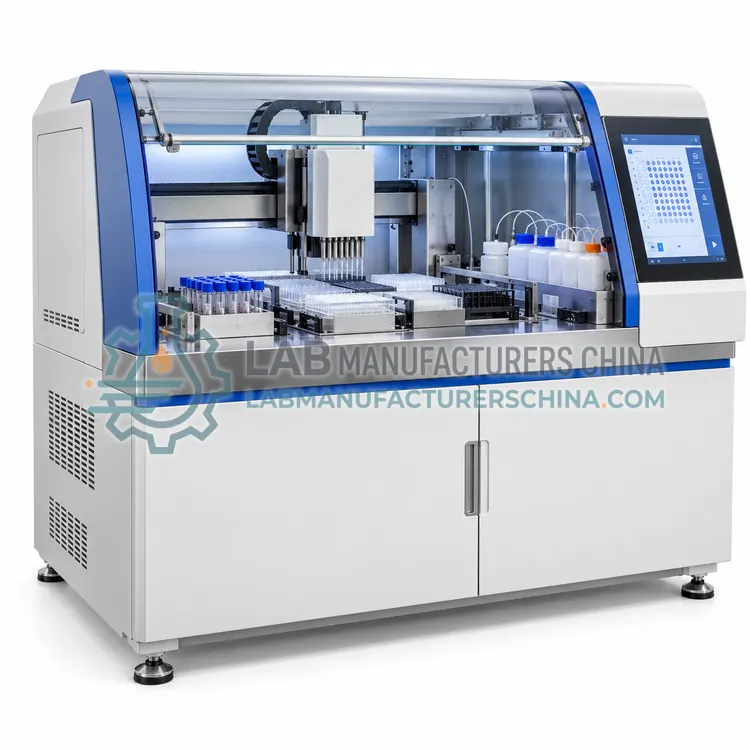
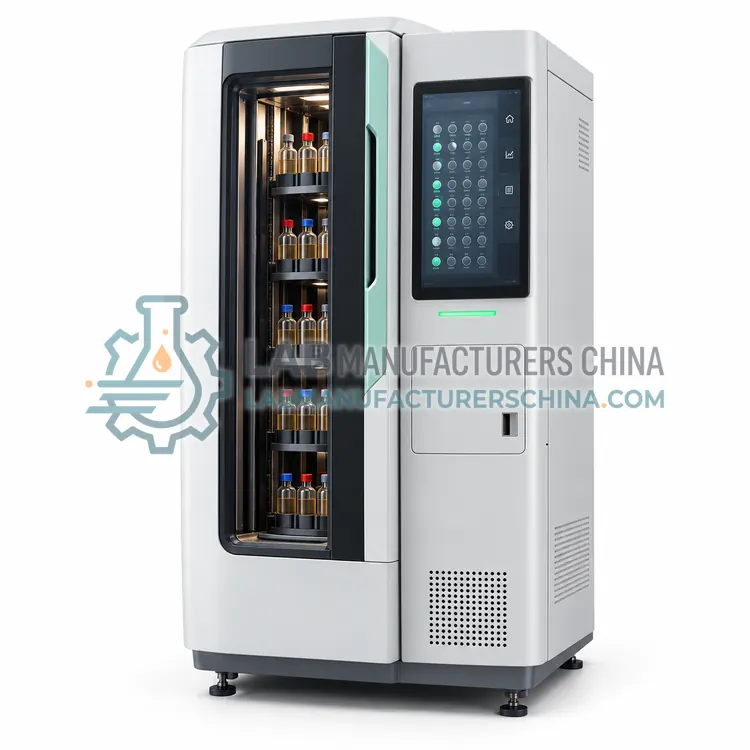
Automated Blood Culture System
全自动血培养系统
- SKU DIA-0004
- Diagnostic Analyzers
- CE (to be confirmed)
- ISO 13485 quality system (to be confirmed)
- NMPA registration (to be confirmed)
Price on request — FOB / CIF quoted per order
Prices depend on configuration, quantity and destination port.
Key specifications
| Bottle capacity | 50–400+ bottles |
|---|---|
| Incubation temperature | 35 ± 1.5 °C |
| Detection method | Colorimetric or fluorescent CO2 sensor |
| Reading interval | 10 min |
| Test protocol | 5 days (up to 14 days optional) |
| Bottle volume | 40 mL medium, up to 10 mL blood |
Request a quote Download brochure · to be provided
By Lab Manufacturers China Technical TeamLast reviewed Standards: ISO 15189, IEC 61010-2-101, CLSI C46
What is the Automated Blood Culture System?
An automated blood culture system incubates blood culture bottles and continuously monitors them for microbial growth using CO2-sensitive sensors, flagging positive bottles for Gram stain and subculture. It is selected by hospital microbiology laboratories investigating bloodstream infection and sepsis.
What is the Automated Blood Culture System?
An automated blood culture system incubates blood culture bottles and continuously monitors them for microbial growth using CO2-sensitive sensors, flagging positive bottles for Gram stain and subculture. It is selected by hospital microbiology laboratories investigating bloodstream infection and sepsis.
Overview
This variant holds bottles in temperature-controlled incubation drawers at 35 ± 1.5 °C with agitation to promote growth. Each bottle contains a sensor at its base that changes color or fluorescence as microorganisms produce carbon dioxide, and a photodetector reads every 10 minutes. Algorithms compare growth patterns to a baseline to signal positivity, typically within 12 to 48 hours for common bacteria, and five days is the usual protocol length. Bottle types include aerobic, anaerobic, pediatric and resin-containing media for patients on antibiotics. Capacity ranges from 50 to over 400 bottles per instrument. Positive bottles trigger audible and visual alarms and are reported to the laboratory information system so that Gram stain and rapid identification can start without delay.
How does it work?
Diagnostic analyzers combine a sample handling system, a reaction or sensing chamber and a detector specific to the measurand. Blood gas analyzers use ion-selective, Clark-type oxygen and Severinghaus-type carbon dioxide electrodes. HbA1c analyzers separate hemoglobin fractions by cation-exchange HPLC and detect them at 415 nm. Specific protein analyzers measure light scattering or turbidity produced when antibody-coated particles bind a protein, using nephelometry or immunoturbidimetry. Blood culture systems monitor carbon dioxide production by colorimetric or fluorescent sensors inside bottles to flag microbial growth. Identification and susceptibility systems measure turbidity and growth kinetics in panels containing substrates or antibiotics. Calibration with standards and periodic quality control ensure that results remain traceable and within acceptance limits.
What are the key features?
- Continuous monitoring of each bottle every 10 minutes
- Incubation at 35 ± 1.5 °C with agitation for growth promotion
- Aerobic, anaerobic, pediatric and resin media bottles supported
- Audible and visual alarm for positive bottles with LIS reporting
- Modular drawer design from 50 to over 400 bottle positions
- Growth curve display to support interpretation of signals
What are the technical specifications?
A typical automated blood culture system configuration offers bottle capacity of 50–400+ bottles, incubation temperature of 35 ± 1.5 °C, detection method of Colorimetric or fluorescent CO2 sensor, reading interval of 10 min, test protocol of 5 days (up to 14 days optional) and bottle volume of 40 mL medium, up to 10 mL blood. Values are indicative of the product class; the exact figures for each configuration are confirmed on the quotation and the calibration documents supplied with the instrument.
Which applications is it used for?
The Automated Blood Culture System is used in sepsis workup, bloodstream infection diagnosis, body fluid culture and hospital microbiology laboratory. Across the wider Diagnostic Analyzers class, laboratories also deploy it for critical care blood gas monitoring, diabetes control monitoring and inflammation and immune protein testing.
Which standards and certifications apply?
Relevant standards and methods include ISO 15189, IEC 61010-2-101, CLSI C46, CLSI EP15, ISO 18113-1, ISO 15197, CLSI M47 and CLSI M07. Certification candidates for this model are CE, ISO 13485 quality system and NMPA registration; each is to be confirmed for the specific configuration before shipment, and certificates are supplied only where they have been issued.
Install analyzers on stable benches with controlled temperature, stable power and adequate ventilation. Follow manufacturer schedules for electrode or column replacement, reagent pack changes and waste handling, and treat all specimens and waste as potentially infectious. Run quality control at defined intervals, participate in external quality assessment and verify performance on installation according to CLSI EP15. Blood gas analyzers require regular membrane and electrode maintenance and proper sample handling to avoid air bubbles. Blood culture instruments need a clean, vibration-free environment. Document calibration, maintenance and training under the laboratory quality system in line with ISO 15189, and plan service and spare parts support.
How do I select the right Automated Blood Culture System?
Choose an automated system sized to annual blood culture volume with allowance for peaks. State bottle capacity, media types, detection time claims, LIS interface, unloading workflow and service response in the RFQ, and verify that bottle media are registered in your market.
How does it compare with other Diagnostic Analyzers variants?
Choose the analyzer by the measurand and the clinical setting. Blood gas analyzers for critical care should provide results in under two minutes from small sample volumes, with integrated co-oximetry and electrolytes if needed. For diabetes programs, HbA1c analyzers should demonstrate traceability to IFCC and NGSP and throughput matching the clinic. Specific protein analyzers differ in menu, sample dilution and calibration stability. Microbiology systems should match bottle capacity to blood culture volume. Compare reagent and consumable availability, maintenance demands, onboard calibration, LIS connectivity and operator training. Request evidence such as precision, interference testing and method comparison, and confirm the registration status of reagents in your market.
Full specifications
| Bottle capacity | 50–400+ bottles |
|---|---|
| Incubation temperature | 35 ± 1.5 °C |
| Detection method | Colorimetric or fluorescent CO2 sensor |
| Reading interval | 10 min |
| Test protocol | 5 days (up to 14 days optional) |
| Bottle volume | 40 mL medium, up to 10 mL blood |
| Agitation | Continuous or intermittent rocking |
| Alarm | Audible, visual and LIS message |
| Power supply | 220 V, 50/60 Hz, ≤ 600 W |
| Operating temperature | 18–30 °C |
Indicative values for this product class. Final specifications are confirmed on the quotation and in the calibration documents supplied with the instrument.
Applications
- Sepsis workup
- Bloodstream infection diagnosis
- Body fluid culture
- Hospital microbiology laboratory
Key features
- Continuous monitoring of each bottle every 10 minutes
- Incubation at 35 ± 1.5 °C with agitation for growth promotion
- Aerobic, anaerobic, pediatric and resin media bottles supported
- Audible and visual alarm for positive bottles with LIS reporting
- Modular drawer design from 50 to over 400 bottle positions
- Growth curve display to support interpretation of signals
Frequently asked questions about Automated Blood Culture System
Most laboratories incubate bottles for five days in automated systems because the majority of clinically significant organisms are detected within that time. Some protocols extend to 10 or 14 days when fastidious organisms such as endocarditis-causing bacteria are suspected.
The system alarms and identifies the bottle position. Staff remove the bottle, perform a Gram stain, subculture onto agar plates and start rapid identification or susceptibility testing, and the preliminary result is communicated to the clinician urgently.
Resin or charcoal-containing bottles neutralize many antibiotics and improve recovery from patients already on therapy. Laboratories choose media according to patient population and verify the recovery claims provided by the manufacturer for the intended organisms.
They measure defined groups of markers such as blood gases and electrolytes, HbA1c, specific plasma proteins, or microbial growth and susceptibility. Each analyzer type uses the detection method suited to its measurand, such as electrodes, HPLC, light scattering or growth sensors.
Most modern blood gas analyzers produce pH, pCO2 and pO2 results in 30 to 90 seconds from a sample of 50 to 100 microliters, and may add electrolytes, glucose and lactate. Speed matters because arterial samples change with time and exposure to air.
HbA1c results guide diabetes diagnosis and treatment, so different methods must agree. Analyzers should be traceable to IFCC reference methods and certified to NGSP criteria, so that a result of 6.5 percent means the same across laboratories and over time.
Related models
Microbial Identification and Antimicrobial Susceptibility Testing System
微生物鉴定与药敏分析系统
- CE (to be confirmed)
- +2