
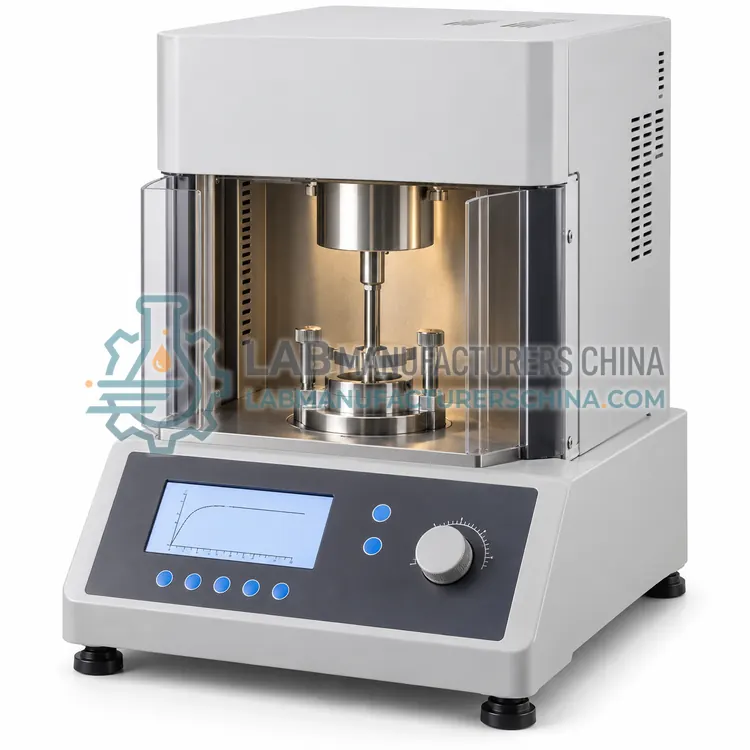
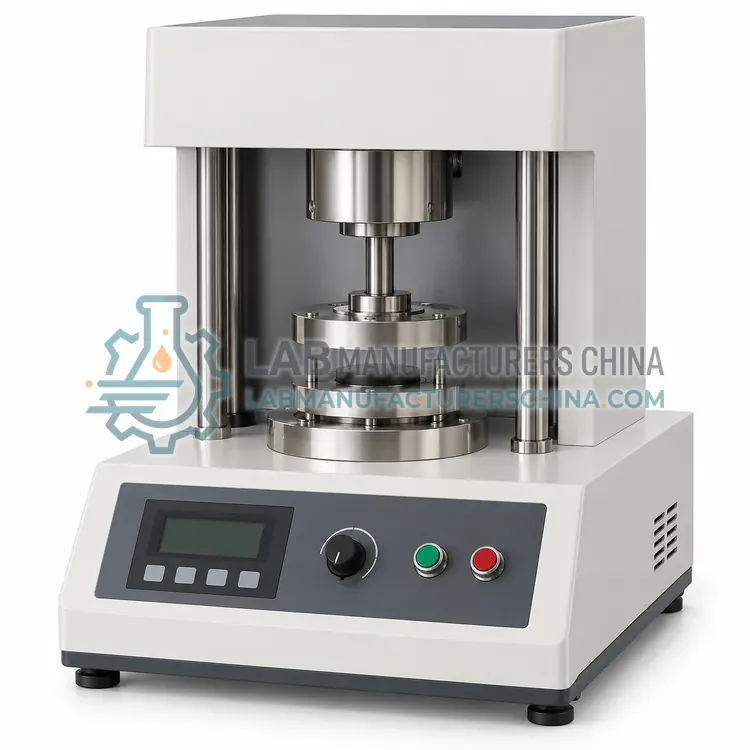
Rubber Process Analyzer for Silicone Rubber Compounds
硅橡胶胶料用橡胶加工分析仪
- SKU RPA-0004
- Rubber Process Analyzers
- CE (to be confirmed)
- ISO 9001 manufacturing (to be confirmed)
Price on request — FOB / CIF quoted per order
Prices depend on configuration, quantity and destination port.
Key specifications
| Temperature range | Ambient to 230 °C |
|---|---|
| Temperature accuracy | ±0.3 °C |
| Strain range | 0.1–50% |
| Frequency range | 0.01–20 Hz |
| Torque resolution | 0.001 dN·m |
| Cavity pressure | Monitored, controlled venting |
Request a quote Download brochure · to be provided
By Lab Manufacturers China Technical TeamLast reviewed Standards: ASTM D6204, ASTM D6601, ASTM D5289
What is the Rubber Process Analyzer for Silicone Rubber Compounds?
A process analyzer configured for silicone compounds uses higher cavity temperatures and pressure control to handle these soft, volatile-releasing materials. It characterises consistency, cure and dynamic behaviour of silicone base stocks and compounds.
What is the Rubber Process Analyzer for Silicone Rubber Compounds?
A process analyzer configured for silicone compounds uses higher cavity temperatures and pressure control to handle these soft, volatile-releasing materials. It characterises consistency, cure and dynamic behaviour of silicone base stocks and compounds.
Overview
Silicone compounds are tested at temperatures well above those used for hydrocarbon rubber, and some grades are platinum-cured, so the cavity must be clean and free of residues that can inhibit cure. Volatiles evolve during heating and raise cavity pressure, so pressure monitoring and a controlled closing force are essential to keep the specimen in a defined state. Because these compounds are soft, low-strain measurements are easier to perform than on filled hydrocarbon rubber, but the torque signal is small and temperature stability becomes the limiting factor for accuracy. The instrument is used to grade base stock consistency, to confirm that filler and oil additions are correct and to follow the progress of addition cure in compounds where a low-temperature cure state must be verified.
How does it work?
A sealed, biconical cavity contains a specimen that is sheared by oscillation of one die while the reaction torque on the other die is measured. Because strain amplitude, frequency and temperature are all programmable, the same instrument can perform a cure test at production temperature, a strain sweep to quantify filler networking and a frequency sweep to describe viscoelastic response. Dynamic properties are reported as elastic and viscous torque or as complex modulus and phase angle, so the Payne effect, the influence of silane coupling agents on silica compounds and the effect of process oils can all be observed on one specimen. Cavity pressure is monitored to exclude blowing or volatile effects, and results are used both for compound development and for on-line release decisions in mixing plants.
What are the key features?
- Cavity temperature range extended to 230 °C
- Cavity pressure monitoring and control
- Low-torque resolution for soft compounds
- Programmes for base stock consistency grading
- Cleaning procedure avoiding cure-inhibiting residue
- Reference compound verification for silicone
What are the technical specifications?
A typical rubber process analyzer for silicone rubber compounds configuration offers temperature range of Ambient to 230 °C, temperature accuracy of ±0.3 °C, strain range of 0.1–50%, frequency range of 0.01–20 Hz, torque resolution of 0.001 dN·m and cavity pressure of Monitored, controlled venting. Values are indicative of the product class; the exact figures for each configuration are confirmed on the quotation and the calibration documents supplied with the instrument.
Which applications is it used for?
The Rubber Process Analyzer for Silicone Rubber Compounds is used in silicone base stock consistency grading, addition cure progress verification, uncured silicone compound process control and verification of oil and filler addition. Across the wider Rubber Process Analyzers class, laboratories also deploy it for filler networking and coupling agent evaluation, mix quality control of silica and carbon black compounds and cure and dynamic property testing in one run.
Which standards and certifications apply?
Relevant standards and methods include ASTM D6204, ASTM D6601, ASTM D5289, ISO 6502-3, ISO 289-4 and IEC 61010-1. Certification candidates for this model are CE and ISO 9001 manufacturing; each is to be confirmed for the specific configuration before shipment, and certificates are supplied only where they have been issued.
Dose the cavity consistently, because the strain field and the measured torque depend on how completely the cavity is filled, and clean both dies after every specimen to prevent cured residue from changing the geometry. Verify cavity temperature with a calibrated probe at the test condition, and check pressure sealing before running compounds that release volatiles. Record strain, frequency, temperature and closing pressure with every curve, since results are only comparable within the same conditions. Reference compounds with known dynamic behaviour give the most meaningful periodic check, and the die surface and seal condition should be inspected at the same interval.
How do I select the right Rubber Process Analyzer for Silicone Rubber Compounds?
Specify a high-temperature, pressure-capable configuration when silicone compounds are part of the routine workload. Confirm the maximum temperature matches the cure condition you use, and agree a cleaning procedure that removes silicone residue completely, because trace residues can inhibit platinum-cure systems and produce misleading results.
How does it compare with other Rubber Process Analyzers variants?
Choose a process analyzer when cure parameters alone cannot explain observed mixing or shaping behaviour. A basic instrument with programmable strain, frequency and temperature covers most compounding laboratories; the decisive options are the maximum frequency, the strain range, the cavity pressure rating and the number of cavities. Where filled rubber networking must be followed in detail, a wide strain range and a low-frequency capability are essential. Multi-cavity instruments suit mixing plants that release many batches per shift. Instruments with high-temperature cavities and pressure control are needed for compounds containing blowing agents, and for silicone or peroxide-cured systems where volatile release matters.
Full specifications
| Temperature range | Ambient to 230 °C |
|---|---|
| Temperature accuracy | ±0.3 °C |
| Strain range | 0.1–50% |
| Frequency range | 0.01–20 Hz |
| Torque resolution | 0.001 dN·m |
| Cavity pressure | Monitored, controlled venting |
| Specimen volume | About 4.5 cm³ |
| Closing force | Adjustable for soft compounds |
Indicative values for this product class. Final specifications are confirmed on the quotation and in the calibration documents supplied with the instrument.
Applications
- Silicone base stock consistency grading
- Addition cure progress verification
- Uncured silicone compound process control
- Verification of oil and filler addition
Key features
- Cavity temperature range extended to 230 °C
- Cavity pressure monitoring and control
- Low-torque resolution for soft compounds
- Programmes for base stock consistency grading
- Cleaning procedure avoiding cure-inhibiting residue
- Reference compound verification for silicone
Frequently asked questions about Rubber Process Analyzer for Silicone Rubber Compounds
Platinum cure systems are sensitive to inhibitors such as sulfur, amines and tin compounds, which can be left in the cavity by previous specimens or by handling. Cure may then be delayed or incomplete in the test even though the compound is correct, so cavity cleanliness and specimen handling without contamination are essential.
These compounds may contain volatiles that expand at test temperature, and a sealed cavity without pressure monitoring would simply squeeze them into the specimen, creating voids that reduce the measured torque. Monitoring pressure shows whether venting is adequate and whether the dosage was correct.
It is, although the Payne effect is weak in unfilled compounds and the useful information comes more from the absolute modulus and its temperature dependence. Strain sweeps are still run to confirm that the chosen amplitude lies within the linear region before frequency testing begins.
A curemeter records torque at one fixed strain and frequency and reports cure parameters such as scorch and optimum cure time. A process analyzer adds programmable strain, frequency and in some cases pressure, so dynamic properties such as the Payne effect and viscoelastic moduli can be measured on the same specimen and related to mixing and shaping behaviour.
Compounds containing moisture, process oils or blowing agents release volatiles when heated, which can create voids and change the measured torque. Monitoring and controlling cavity pressure keeps the specimen in a well-defined state and warns when a compound is likely to blister in production.
Filler networks break down at low strains, so a range starting well below one percent, ideally from about 0.1%, is needed to capture the plateau and the subsequent fall in modulus. Instruments limited to above one percent cannot resolve the Payne effect and are unsuitable for compound development work on filled rubber.
Related models
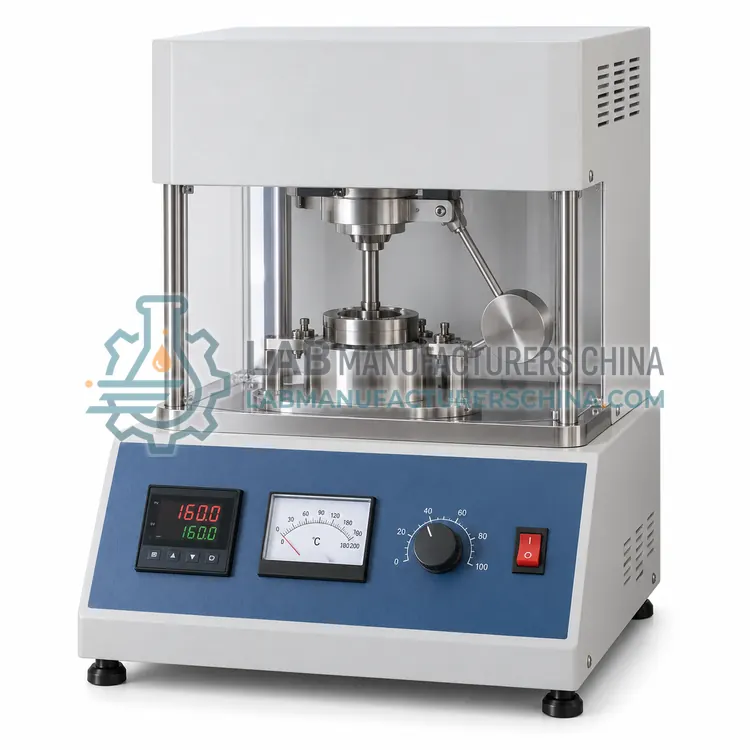
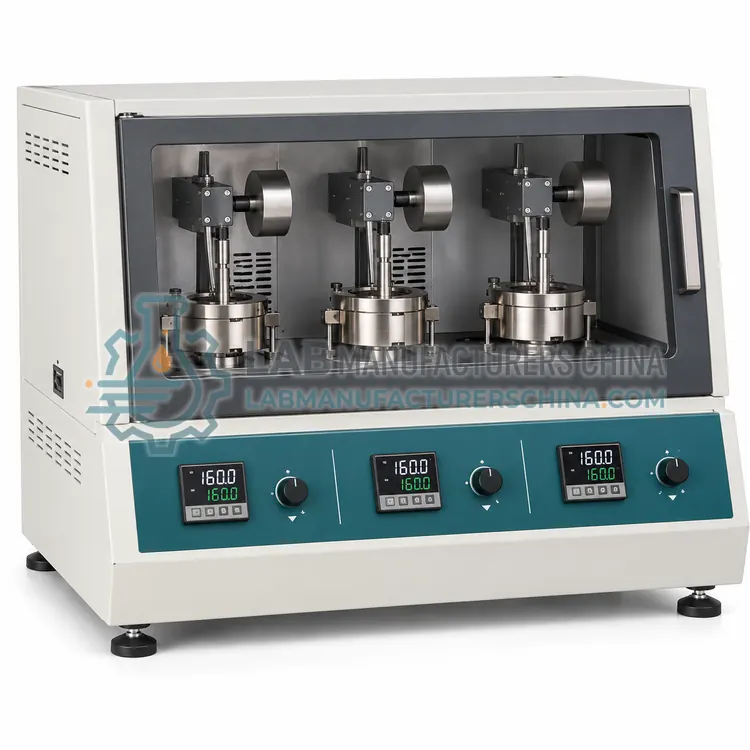
Mooney Viscometer for High-Viscosity and Highly Filled Compounds
高黏度高填充胶料用门尼黏度仪
- CE (to be confirmed)
- +1