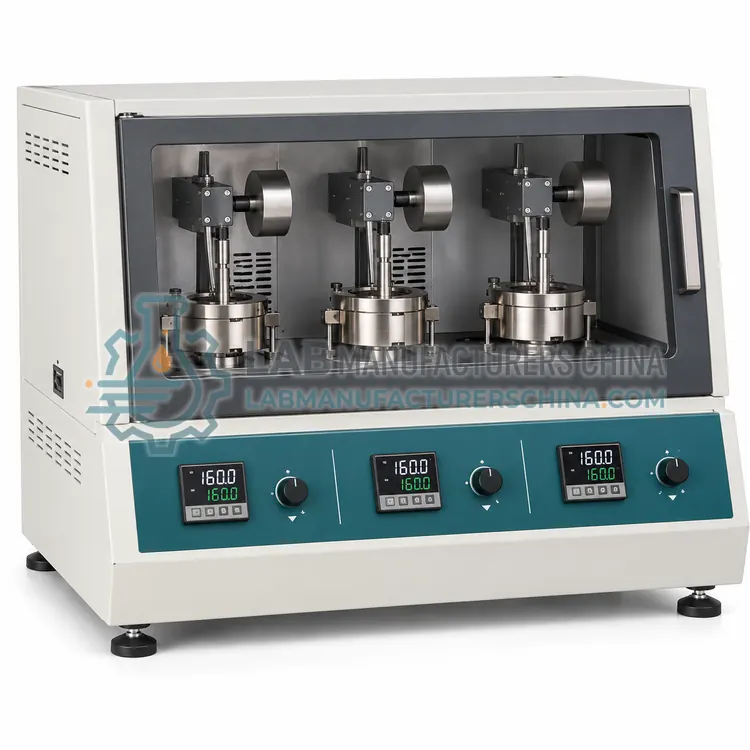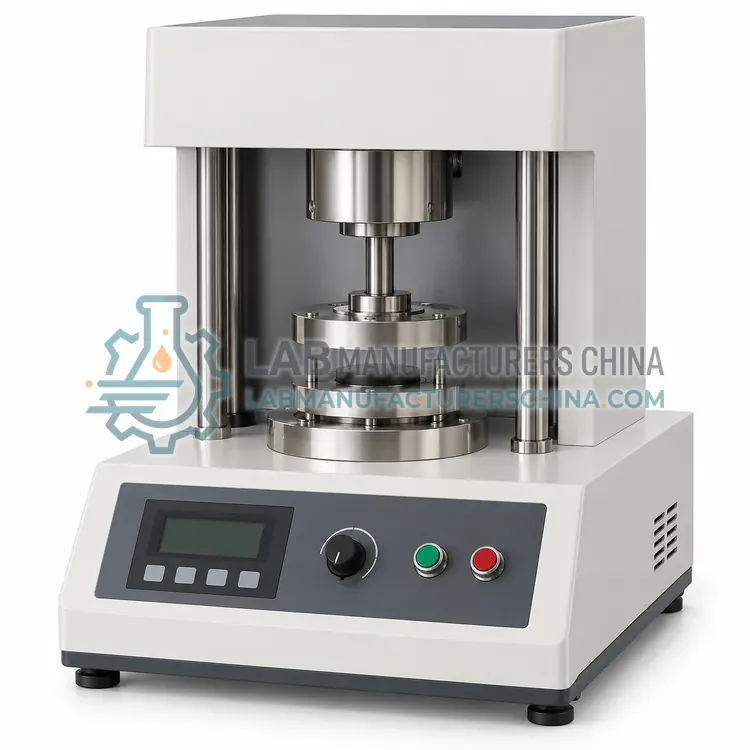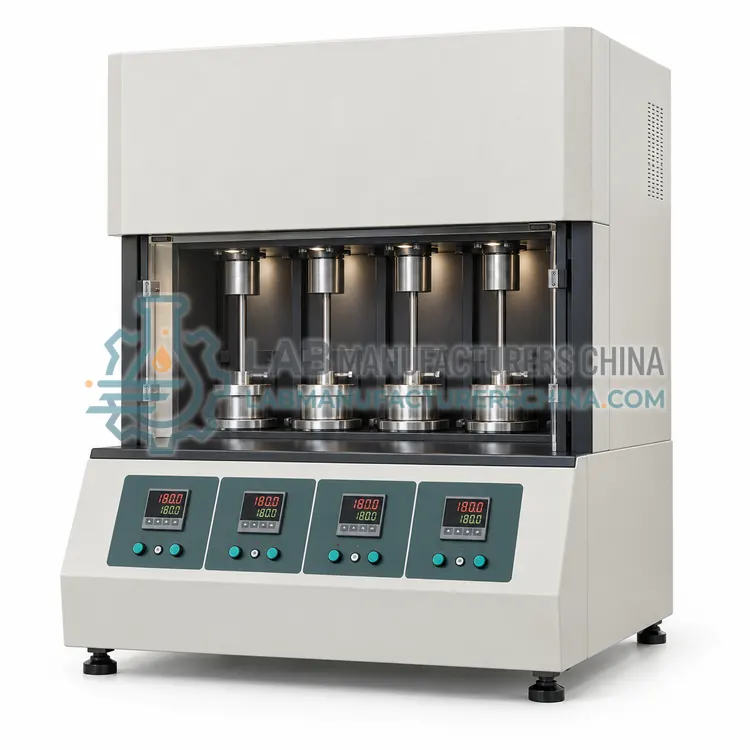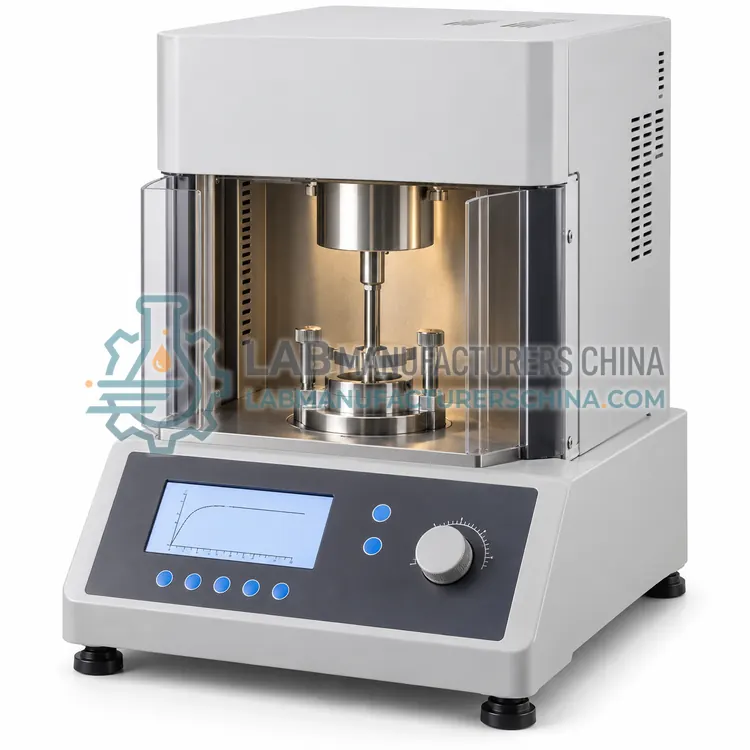
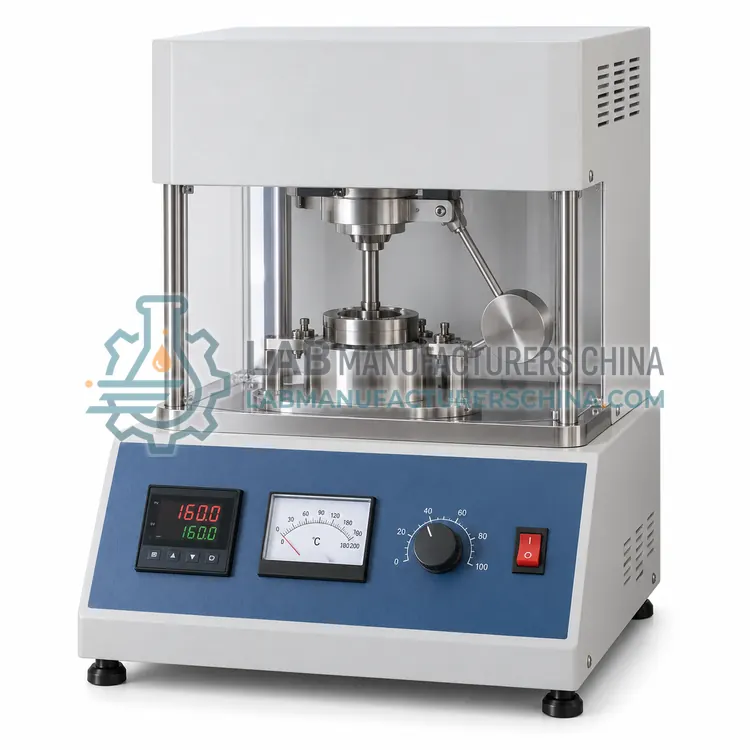
Variable-Frequency Rubber Process Analyzer
变频橡胶加工分析仪
- SKU RPA-0002
- Rubber Process Analyzers
- CE (to be confirmed)
- ISO 9001 manufacturing (to be confirmed)
Price on request — FOB / CIF quoted per order
Prices depend on configuration, quantity and destination port.
Key specifications
| Frequency range | 0.001–33 Hz |
|---|---|
| Temperature range | Ambient to 230 °C |
| Temperature accuracy | ±0.3 °C |
| Strain range | 0.07–50% |
| Torque resolution | 0.001 dN·m |
| Torque range | 0–200 dN·m |
Request a quote Download brochure · to be provided
By Lab Manufacturers China Technical TeamLast reviewed Standards: ASTM D6204, ASTM D6601, ASTM D5289
What is the Variable-Frequency Rubber Process Analyzer?
A variable-frequency process analyzer covers a wide frequency range so that viscoelastic spectra can be recorded and shifted into master curves. It is used where compound behaviour at processing or service frequencies must be predicted.
What is the Variable-Frequency Rubber Process Analyzer?
A variable-frequency process analyzer covers a wide frequency range so that viscoelastic spectra can be recorded and shifted into master curves. It is used where compound behaviour at processing or service frequencies must be predicted.
Overview
The frequency range of a process analyzer determines whether time-temperature superposition can be applied usefully. Extending the range to about 0.001 Hz at the low end and to 33 Hz or higher at the high end allows a master curve to be constructed from a set of isothermal sweeps, which predicts behaviour at frequencies that cannot be measured directly, such as those of tyre tread rolling or of high-speed shaping. Low-frequency measurement demands high torque resolution and stable temperature, because the torque signal becomes small, while high-frequency measurement needs a stiff drive and die assembly to avoid resonance. Results are reported as complex modulus and phase angle against frequency, and are correlated with extrusion, calendering and moulding conditions.
How does it work?
A sealed, biconical cavity contains a specimen that is sheared by oscillation of one die while the reaction torque on the other die is measured. Because strain amplitude, frequency and temperature are all programmable, the same instrument can perform a cure test at production temperature, a strain sweep to quantify filler networking and a frequency sweep to describe viscoelastic response. Dynamic properties are reported as elastic and viscous torque or as complex modulus and phase angle, so the Payne effect, the influence of silane coupling agents on silica compounds and the effect of process oils can all be observed on one specimen. Cavity pressure is monitored to exclude blowing or volatile effects, and results are used both for compound development and for on-line release decisions in mixing plants.
What are the key features?
- Frequency range from 0.001 to 33 Hz and above
- High torque resolution for low-frequency sweeps
- Master curve construction by superposition
- Stable temperature control during isothermal runs
- Stiff drive and die assembly for high frequencies
- Complex modulus and phase angle reporting
What are the technical specifications?
A typical variable-frequency rubber process analyzer configuration offers frequency range of 0.001–33 Hz, temperature range of Ambient to 230 °C, temperature accuracy of ±0.3 °C, strain range of 0.07–50%, torque resolution of 0.001 dN·m and torque range of 0–200 dN·m. Values are indicative of the product class; the exact figures for each configuration are confirmed on the quotation and the calibration documents supplied with the instrument.
Which applications is it used for?
The Variable-Frequency Rubber Process Analyzer is used in master curve prediction of processing behaviour, rolling resistance related compound development, comparison of polymer grades with equal viscosity and viscoelastic spectra for simulation input. Across the wider Rubber Process Analyzers class, laboratories also deploy it for filler networking and coupling agent evaluation, mix quality control of silica and carbon black compounds and cure and dynamic property testing in one run.
Which standards and certifications apply?
Relevant standards and methods include ASTM D6204, ASTM D6601, ASTM D5289, ISO 6502-3, ISO 289-4 and IEC 61010-1. Certification candidates for this model are CE and ISO 9001 manufacturing; each is to be confirmed for the specific configuration before shipment, and certificates are supplied only where they have been issued.
Dose the cavity consistently, because the strain field and the measured torque depend on how completely the cavity is filled, and clean both dies after every specimen to prevent cured residue from changing the geometry. Verify cavity temperature with a calibrated probe at the test condition, and check pressure sealing before running compounds that release volatiles. Record strain, frequency, temperature and closing pressure with every curve, since results are only comparable within the same conditions. Reference compounds with known dynamic behaviour give the most meaningful periodic check, and the die surface and seal condition should be inspected at the same interval.
How do I select the right Variable-Frequency Rubber Process Analyzer?
Specify a variable-frequency instrument when you need viscoelastic spectra or master curves, for example to compare polymers of equal Mooney viscosity, to supply data for flow simulation or to study rolling resistance. Confirm the low-frequency torque resolution, since that is what limits the master curve, and check temperature stability over long isothermal runs.
How does it compare with other Rubber Process Analyzers variants?
Choose a process analyzer when cure parameters alone cannot explain observed mixing or shaping behaviour. A basic instrument with programmable strain, frequency and temperature covers most compounding laboratories; the decisive options are the maximum frequency, the strain range, the cavity pressure rating and the number of cavities. Where filled rubber networking must be followed in detail, a wide strain range and a low-frequency capability are essential. Multi-cavity instruments suit mixing plants that release many batches per shift. Instruments with high-temperature cavities and pressure control are needed for compounds containing blowing agents, and for silicone or peroxide-cured systems where volatile release matters.
Full specifications
| Frequency range | 0.001–33 Hz |
|---|---|
| Temperature range | Ambient to 230 °C |
| Temperature accuracy | ±0.3 °C |
| Strain range | 0.07–50% |
| Torque resolution | 0.001 dN·m |
| Torque range | 0–200 dN·m |
| Specimen volume | About 4.5 cm³ |
| Data output | Frequency spectra and master curves |
Indicative values for this product class. Final specifications are confirmed on the quotation and in the calibration documents supplied with the instrument.
Applications
- Master curve prediction of processing behaviour
- Rolling resistance related compound development
- Comparison of polymer grades with equal viscosity
- Viscoelastic spectra for simulation input
Key features
- Frequency range from 0.001 to 33 Hz and above
- High torque resolution for low-frequency sweeps
- Master curve construction by superposition
- Stable temperature control during isothermal runs
- Stiff drive and die assembly for high frequencies
- Complex modulus and phase angle reporting
Frequently asked questions about Variable-Frequency Rubber Process Analyzer
Isothermal frequency sweeps are recorded at several temperatures, and each curve is shifted horizontally along the frequency axis so that they overlap into a single continuous curve. The shift factors follow a temperature dependence that can be fitted, so behaviour at frequencies outside the measured window can be predicted.
The torque signal at low frequency is small and varies strongly with temperature, so a drift of a few tenths of a degree during a long sweep distorts the spectrum and the shift factors. Cavities are therefore held isothermally for long periods, and the temperature record is stored with the curve.
They are conceptually similar but measured on different specimen states and geometries. Process analyzer data describe the unvulcanised or curing compound, while dynamic mechanical analysis usually describes vulcanised rubber. Trends correspond, but absolute values should not be transferred between the two techniques.
A curemeter records torque at one fixed strain and frequency and reports cure parameters such as scorch and optimum cure time. A process analyzer adds programmable strain, frequency and in some cases pressure, so dynamic properties such as the Payne effect and viscoelastic moduli can be measured on the same specimen and related to mixing and shaping behaviour.
Compounds containing moisture, process oils or blowing agents release volatiles when heated, which can create voids and change the measured torque. Monitoring and controlling cavity pressure keeps the specimen in a well-defined state and warns when a compound is likely to blister in production.
Filler networks break down at low strains, so a range starting well below one percent, ideally from about 0.1%, is needed to capture the plateau and the subsequent fall in modulus. Instruments limited to above one percent cannot resolve the Payne effect and are unsuitable for compound development work on filled rubber.
Related models