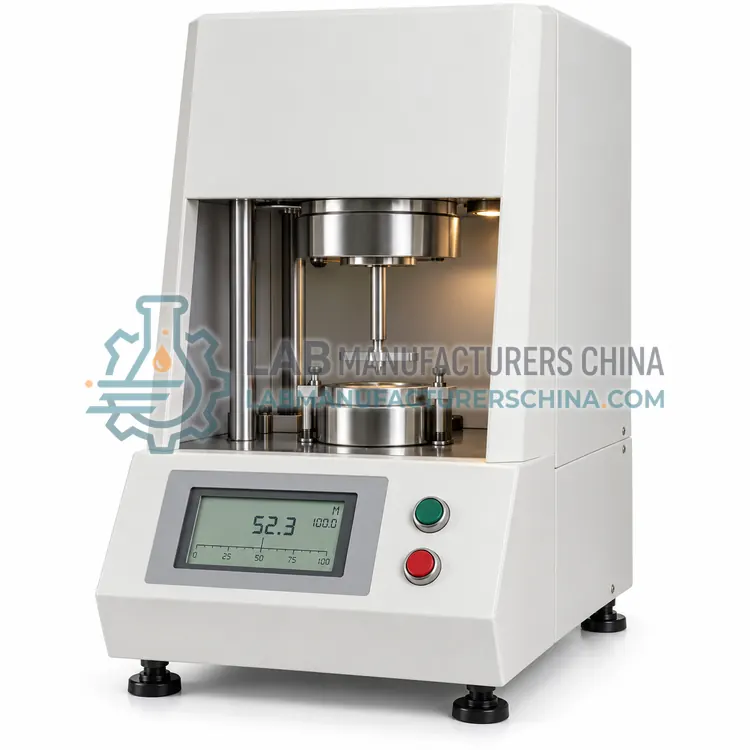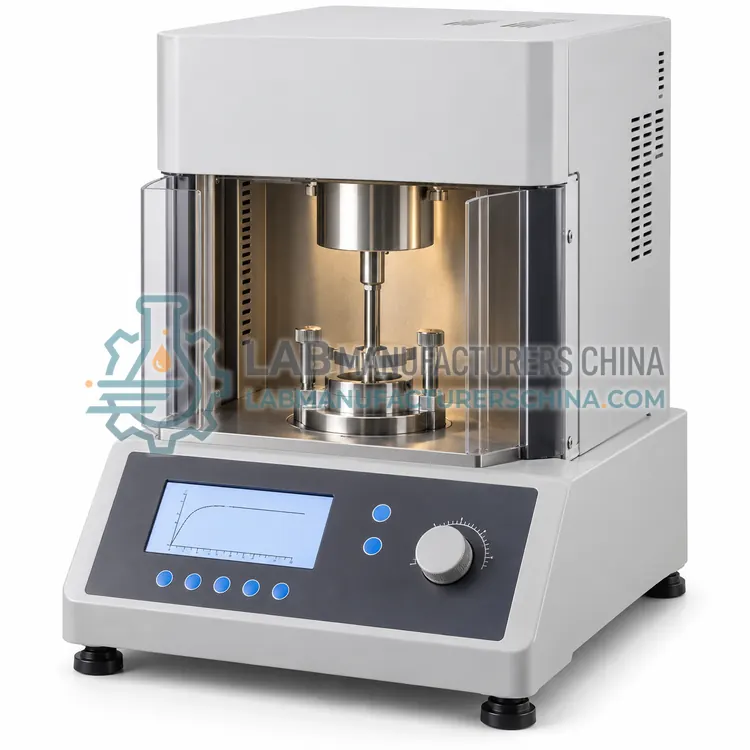
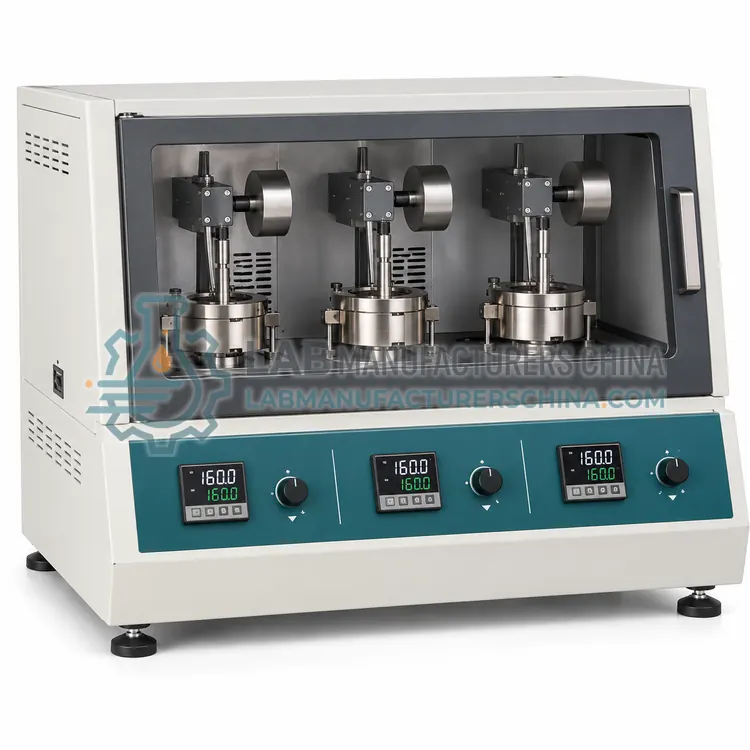
Multi-Station Rubber Process Analyzer for Production QC
生产质控用多工位橡胶加工分析仪
- SKU RPA-0003
- Rubber Process Analyzers
- CE (to be confirmed)
- ISO 9001 manufacturing (to be confirmed)
Price on request — FOB / CIF quoted per order
Prices depend on configuration, quantity and destination port.
Key specifications
| Number of stations | 2–4 |
|---|---|
| Temperature range | Ambient to 200 °C per station |
| Temperature accuracy | ±0.3 °C |
| Strain range | 0.1–50% |
| Frequency range | 0.01–20 Hz |
| Specimen volume | About 4.5 cm³ per cavity |
Request a quote Download brochure · to be provided
By Lab Manufacturers China Technical TeamLast reviewed Standards: ASTM D6204, ASTM D6601, ASTM D5289
What is the Multi-Station Rubber Process Analyzer for Production QC?
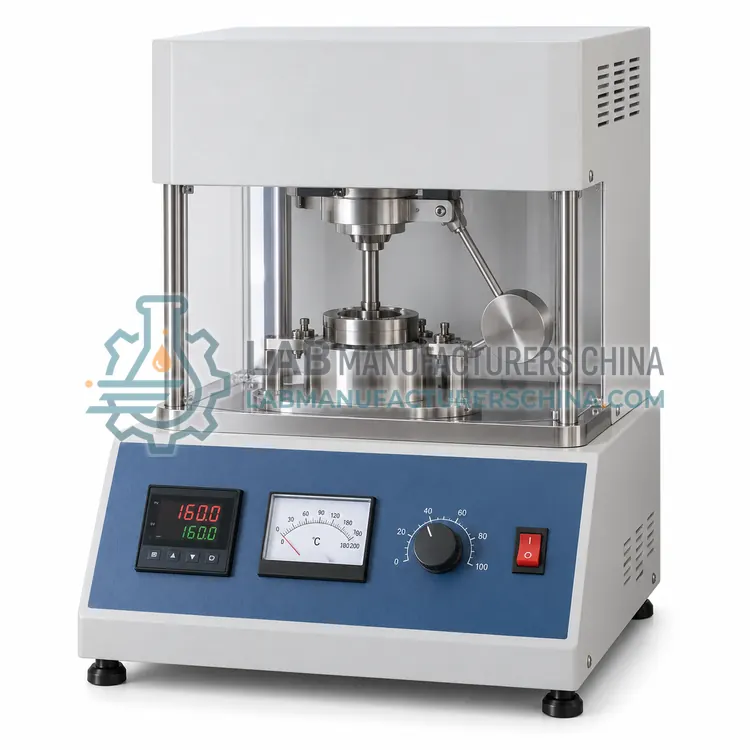
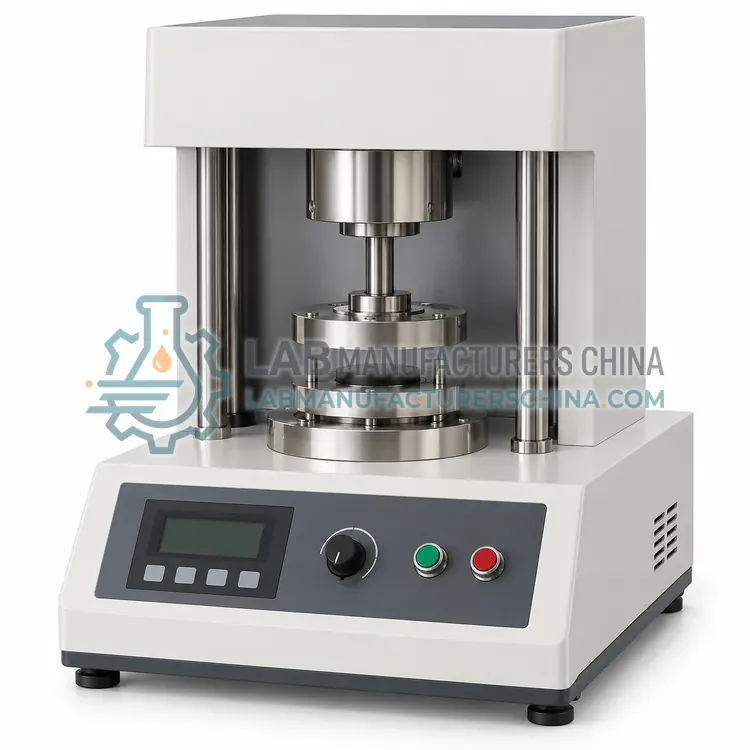
A multi-station process analyzer runs several sealed cavities in parallel, so cure and dynamic tests on different compounds proceed simultaneously. It is used by mixing plants that release many batches per shift.
What is the Multi-Station Rubber Process Analyzer for Production QC?
A multi-station process analyzer runs several sealed cavities in parallel, so cure and dynamic tests on different compounds proceed simultaneously. It is used by mixing plants that release many batches per shift.
Overview
Each station has its own dies, drive and temperature loop, while a single interface schedules tests and collects results. Staggered scheduling means that while one station is at curing temperature another can be running a low-temperature strain sweep, so the frame is in productive use continuously. Common applications are release testing of mixed batches, comparison of several compounds in one run and accumulation of statistical data for process control charts. Because each cavity is an independent measurement system, the dies, seals and temperature sensors must be verified per station, and results should be reported with station identification so that a developing drift can be attributed correctly rather than being mistaken for a material change.
How does it work?
A sealed, biconical cavity contains a specimen that is sheared by oscillation of one die while the reaction torque on the other die is measured. Because strain amplitude, frequency and temperature are all programmable, the same instrument can perform a cure test at production temperature, a strain sweep to quantify filler networking and a frequency sweep to describe viscoelastic response. Dynamic properties are reported as elastic and viscous torque or as complex modulus and phase angle, so the Payne effect, the influence of silane coupling agents on silica compounds and the effect of process oils can all be observed on one specimen. Cavity pressure is monitored to exclude blowing or volatile effects, and results are used both for compound development and for on-line release decisions in mixing plants.
What are the key features?
- Two to four independently controlled cavities
- Staggered scheduling for continuous use
- Shared interface with per-station results
- Cure and dynamic tests on separate stations
- Automatic statistical data export
- Per-station reference compound verification
What are the technical specifications?
A typical multi-station rubber process analyzer for production qc configuration offers number of stations of 2–4, temperature range of Ambient to 200 °C per station, temperature accuracy of ±0.3 °C, strain range of 0.1–50%, frequency range of 0.01–20 Hz and specimen volume of About 4.5 cm³ per cavity. Values are indicative of the product class; the exact figures for each configuration are confirmed on the quotation and the calibration documents supplied with the instrument.
Which applications is it used for?
The Multi-Station Rubber Process Analyzer for Production QC is used in high-volume batch release at mixing plants, simultaneous comparison of multiple compounds, process control chart data generation and raw material change verification. Across the wider Rubber Process Analyzers class, laboratories also deploy it for filler networking and coupling agent evaluation, mix quality control of silica and carbon black compounds and cure and dynamic property testing in one run.
Which standards and certifications apply?
Relevant standards and methods include ASTM D6204, ASTM D6601, ASTM D5289, ISO 6502-3, ISO 289-4 and IEC 61010-1. Certification candidates for this model are CE and ISO 9001 manufacturing; each is to be confirmed for the specific configuration before shipment, and certificates are supplied only where they have been issued.
Dose the cavity consistently, because the strain field and the measured torque depend on how completely the cavity is filled, and clean both dies after every specimen to prevent cured residue from changing the geometry. Verify cavity temperature with a calibrated probe at the test condition, and check pressure sealing before running compounds that release volatiles. Record strain, frequency, temperature and closing pressure with every curve, since results are only comparable within the same conditions. Reference compounds with known dynamic behaviour give the most meaningful periodic check, and the die surface and seal condition should be inspected at the same interval.
How do I select the right Multi-Station Rubber Process Analyzer for Production QC?
Choose a multi-station instrument when sample throughput is limited by cavity availability rather than by staff time. Confirm each station has independent temperature and drive control, and require per-station verification with a reference compound at acceptance, since cavity-to-cavity differences are the main risk in multi-station operation.
How does it compare with other Rubber Process Analyzers variants?
Choose a process analyzer when cure parameters alone cannot explain observed mixing or shaping behaviour. A basic instrument with programmable strain, frequency and temperature covers most compounding laboratories; the decisive options are the maximum frequency, the strain range, the cavity pressure rating and the number of cavities. Where filled rubber networking must be followed in detail, a wide strain range and a low-frequency capability are essential. Multi-cavity instruments suit mixing plants that release many batches per shift. Instruments with high-temperature cavities and pressure control are needed for compounds containing blowing agents, and for silicone or peroxide-cured systems where volatile release matters.
Full specifications
| Number of stations | 2–4 |
|---|---|
| Temperature range | Ambient to 200 °C per station |
| Temperature accuracy | ±0.3 °C |
| Strain range | 0.1–50% |
| Frequency range | 0.01–20 Hz |
| Specimen volume | About 4.5 cm³ per cavity |
| Throughput | Up to 4 tests in parallel |
| Data output | Combined table with station number and curves |
Indicative values for this product class. Final specifications are confirmed on the quotation and in the calibration documents supplied with the instrument.
Applications
- High-volume batch release at mixing plants
- Simultaneous comparison of multiple compounds
- Process control chart data generation
- Raw material change verification
Key features
- Two to four independently controlled cavities
- Staggered scheduling for continuous use
- Shared interface with per-station results
- Cure and dynamic tests on separate stations
- Automatic statistical data export
- Per-station reference compound verification
Frequently asked questions about Multi-Station Rubber Process Analyzer for Production QC
A reference compound is tested on every station at defined intervals and the results compared with the assigned value. Differences within the stated repeatability are acceptable; a persistent offset on one station points to die condition, seal wear or a temperature offset on that station rather than to the material.
Yes, because each station has its own drive and temperature loop. A low-strain frequency sweep at room temperature can proceed on one station while a cure test runs at curing temperature on another, and the software schedules and reports each independently.
Dies, seals and sensors must be inspected and cleaned per station, and a station that is used less often can quietly drift. Keeping a per-station log of cleanings, seal replacements and verification results is the practical way to maintain confidence in the data.
A curemeter records torque at one fixed strain and frequency and reports cure parameters such as scorch and optimum cure time. A process analyzer adds programmable strain, frequency and in some cases pressure, so dynamic properties such as the Payne effect and viscoelastic moduli can be measured on the same specimen and related to mixing and shaping behaviour.
Compounds containing moisture, process oils or blowing agents release volatiles when heated, which can create voids and change the measured torque. Monitoring and controlling cavity pressure keeps the specimen in a well-defined state and warns when a compound is likely to blister in production.
Filler networks break down at low strains, so a range starting well below one percent, ideally from about 0.1%, is needed to capture the plateau and the subsequent fall in modulus. Instruments limited to above one percent cannot resolve the Payne effect and are unsuitable for compound development work on filled rubber.
Related models