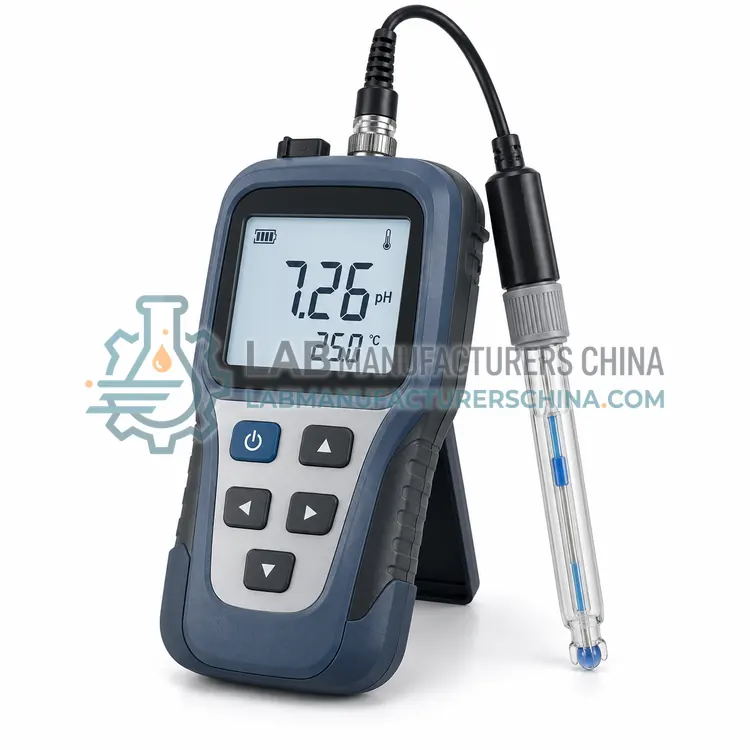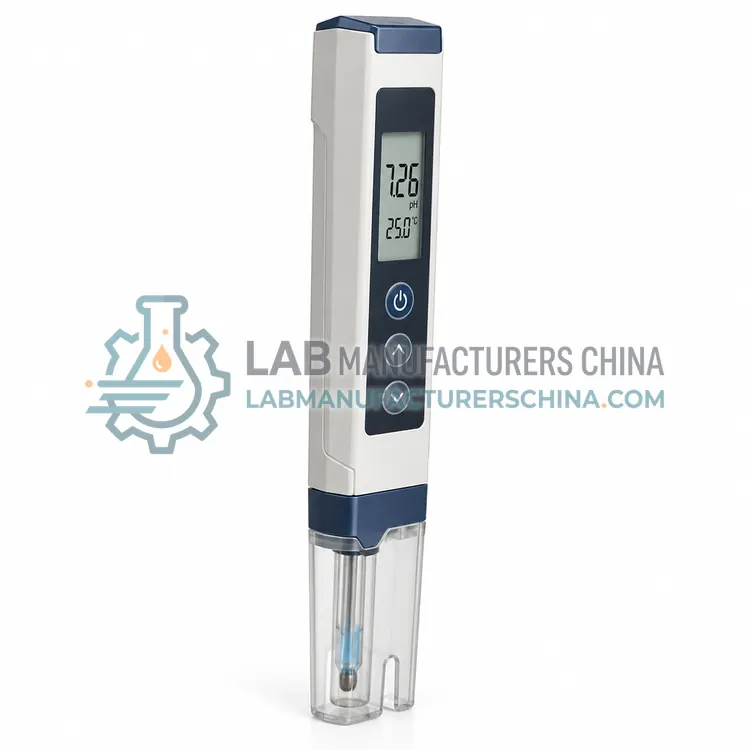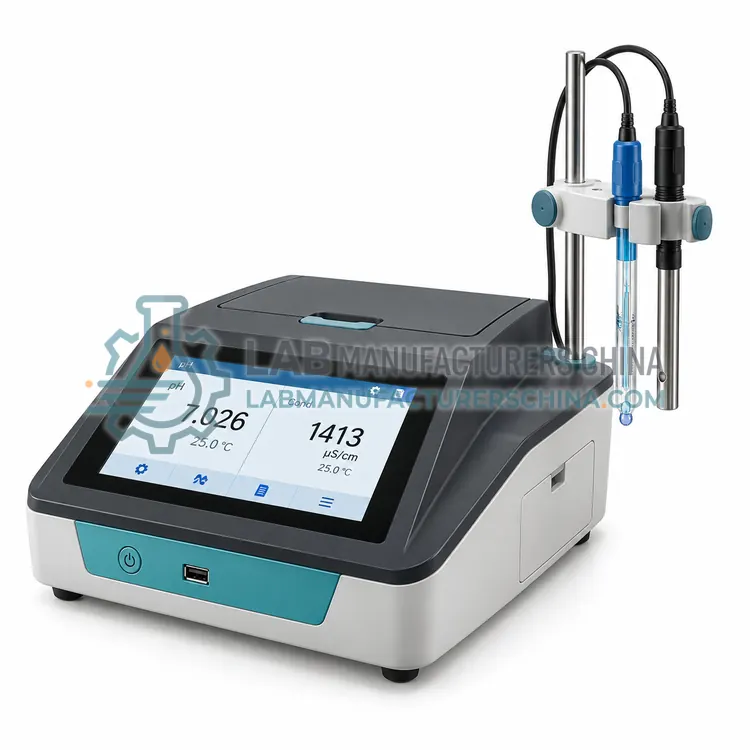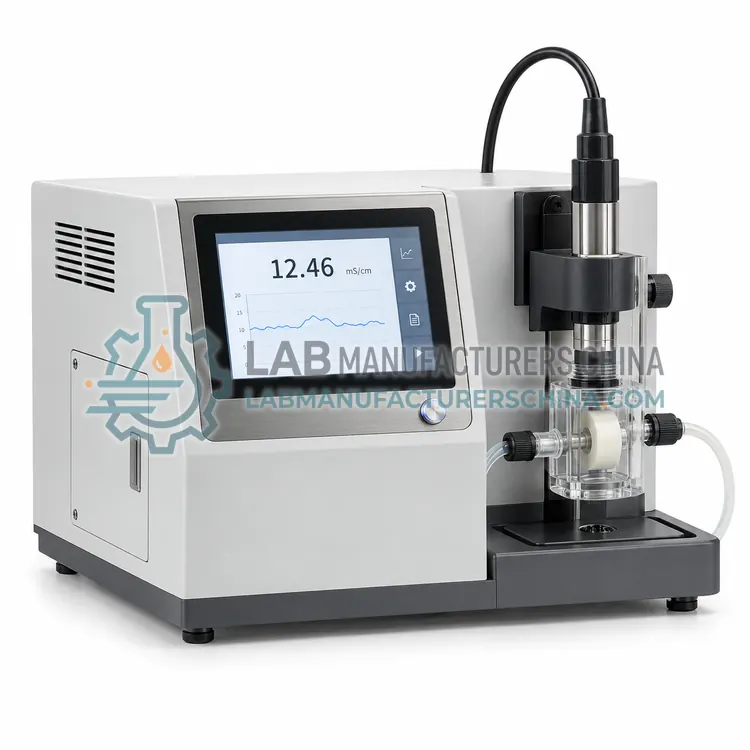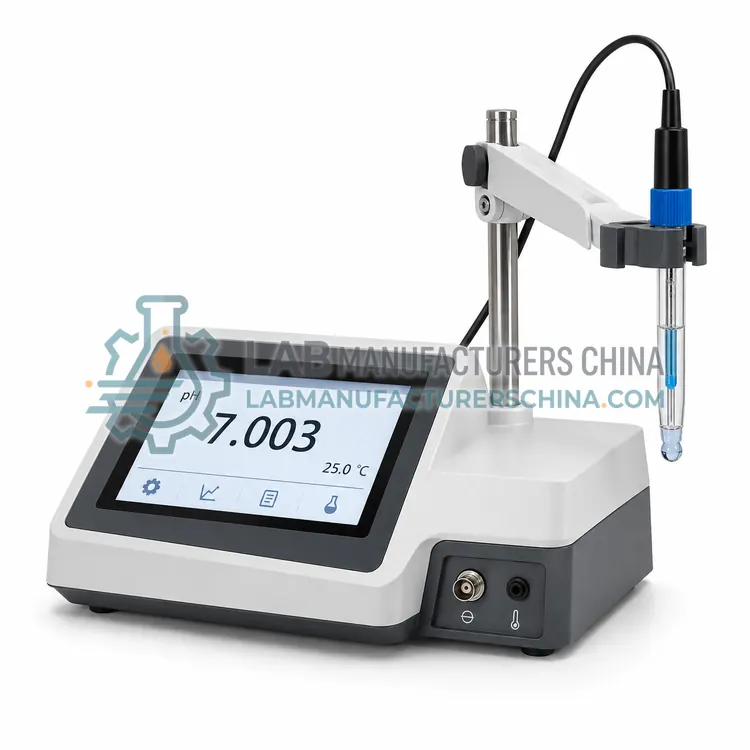
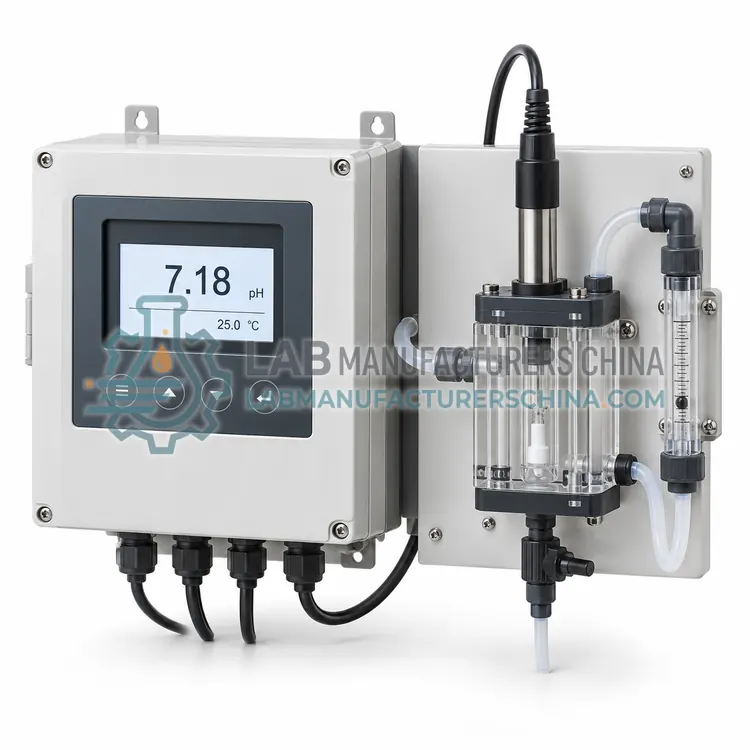
Online Process pH Analyzer
在线工艺 pH 分析仪
- SKU PHM-0004
- pH Meters
- CE (to be confirmed)
- IEC 61010-1 safety (to be confirmed)
- ISO 9001 manufacturing (to be confirmed)
Price on request — FOB / CIF quoted per order
Prices depend on configuration, quantity and destination port.
Key specifications
| pH range | 0–14 pH |
|---|---|
| Accuracy | ±0.05 to ±0.1 pH |
| Resolution | 0.01 pH |
| Process temperature | 0–100 °C (up to 130 °C option) |
| Process pressure | up to 6–10 bar |
| Analog output | 1–2 × 4–20 mA |
Request a quote Download brochure · to be provided
By Lab Manufacturers China Technical TeamLast reviewed Standards: USP <791>, Ph. Eur. 2.2.3, ASTM E70
What is the Online Process pH Analyzer?
An online process pH analyzer continuously monitors pH in pipes, tanks or flow cells using an installed sensor and a transmitter with 4–20 mA, relay and digital outputs. It supports process control, dosing and compliance monitoring in water treatment, chemical and food plants.
What is the Online Process pH Analyzer?
An online process pH analyzer continuously monitors pH in pipes, tanks or flow cells using an installed sensor and a transmitter with 4–20 mA, relay and digital outputs. It supports process control, dosing and compliance monitoring in water treatment, chemical and food plants.
Overview
An online pH analyzer consists of a process electrode, often with a double-junction reference, a holder or flow cell, and a transmitter. Sensors are made from chemically resistant materials such as PPS, PVDF or stainless steel, and support pressures up to 6 to 10 bar and temperatures up to 100 to 130 degrees Celsius. The transmitter provides 4–20 mA outputs, relays for alarm or dosing, PID control and digital interfaces such as Modbus or HART. Automatic cleaning with air, water or chemicals and self-diagnostics reduce maintenance, while digital sensors store calibration data and can be calibrated in the lab and swapped in the field. Typical accuracy is ±0.05 to ±0.1 pH, with stability affected by fouling and reference poisoning. Installation options include immersion, insertion, retractable assemblies and flow-through cells, and the layout must allow safe sensor removal and calibration.
How does it work?
A pH meter is a high-impedance voltmeter connected to a measuring electrode and a reference electrode, often combined in one probe. The glass membrane at the electrode tip develops a potential that depends on the hydrogen ion activity difference between the internal fill solution and the sample, described by the Nernst equation. At 25 degrees Celsius the ideal slope is 59.16 mV per pH unit. The reference electrode, usually silver/silver chloride in potassium chloride electrolyte, supplies a stable potential through a porous junction. The meter amplifies the millivolt signal with input impedance above 10¹² ohms, applies temperature compensation from a thermistor or Pt1000 sensor, and uses a two- to five-point calibration with buffers to correct offset and slope. Modern meters store calibration data, check electrode slope and offset, and export results with date, time and operator identification for good laboratory practice.
What are the key features?
- Chemically resistant process electrode with double-junction reference for harsh media
- Transmitter with 4–20 mA, relay outputs, PID control and Modbus or HART interface
- Automatic cleaning options using air, water or chemicals to limit fouling
- Digital sensor option storing calibration data for lab calibration and field swap
- Immersion, insertion, retractable and flow-through mounting options
- Diagnostic alarms for electrode impedance, slope and reference condition
What are the technical specifications?
A typical online process ph analyzer configuration offers pH range of 0–14 pH, accuracy of ±0.05 to ±0.1 pH, resolution of 0.01 pH, process temperature of 0–100 °C (up to 130 °C option), process pressure of up to 6–10 bar and analog output of 1–2 × 4–20 mA. Values are indicative of the product class; the exact figures for each configuration are confirmed on the quotation and the calibration documents supplied with the instrument.
Which applications is it used for?
The Online Process pH Analyzer is used in wastewater neutralization control, drinking water treatment, chemical dosing in process plants, cooling tower water control and food and beverage production lines. Across the wider pH Meters class, laboratories also deploy it for pharmaceutical QC and buffer preparation, drinking water and wastewater testing and food and beverage production control.
Which standards and certifications apply?
Relevant standards and methods include USP <791>, Ph. Eur. 2.2.3, ASTM E70, ASTM D1293, ISO 10523, GB/T 6920 and IEC 60746-2. Certification candidates for this model are CE, IEC 61010-1 safety and ISO 9001 manufacturing; each is to be confirmed for the specific configuration before shipment, and certificates are supplied only where they have been issued.
Store electrodes in the recommended storage solution and never in deionized water. Calibrate with fresh, traceable buffers bracketing the sample pH, verify slope between 95 and 105 percent, and record the offset. Rinse the electrode between samples and clean it periodically with protein or inorganic cleaning solutions. Keep the meter away from strong electromagnetic fields and ensure samples are at a stable temperature or use automatic compensation. Replace electrodes when response slows or slope drops. Regulated laboratories should schedule calibration verification, document maintenance in the equipment log and follow USP <791> or Ph. Eur. 2.2.3 requirements. Use appropriate chemical-resistant bench space and handle buffers according to local safety rules.
How do I select the right Online Process pH Analyzer?
Choose an online analyzer for continuous measurement and closed-loop control. If only periodic checks are needed, a portable meter is cheaper. In an RFQ specify process temperature and pressure, media composition, mounting type, output signals, cleaning needs, hazardous-area rating and sensor maintenance plan.
How does it compare with other pH Meters variants?
The decisive parameters are accuracy and resolution, portability, sample type and compliance needs. Benchtop meters give resolution of 0.001 pH and accuracy of about ±0.002 pH, suitable for pharmacopoeial work. Portable meters trade some resolution for ruggedness, IP-rated housings and battery operation for field and plant use. Pen testers suit quick checks at ±0.1 pH. Online analyzers add continuous measurement, cleaning and control outputs for processes. Also consider the electrode, since glass composition, junction type and body material must suit the sample: Tris buffers, low-ionic-strength water, viscous samples, emulsions and semi-solids each need a specific design. For regulated laboratories, check GLP data handling, calibration reminders, password control and compatibility with USP <791>. Include electrode replacement and buffer costs in ownership estimates.
Full specifications
| pH range | 0–14 pH |
|---|---|
| Accuracy | ±0.05 to ±0.1 pH |
| Resolution | 0.01 pH |
| Process temperature | 0–100 °C (up to 130 °C option) |
| Process pressure | up to 6–10 bar |
| Analog output | 1–2 × 4–20 mA |
| Relay outputs | 2–4 relays |
| Digital interface | Modbus RTU / HART |
| Ingress protection (transmitter) | IP65–IP67 |
| Supply voltage | 24 V DC or 100–240 V AC |
Indicative values for this product class. Final specifications are confirmed on the quotation and in the calibration documents supplied with the instrument.
Applications
- Wastewater neutralization control
- Drinking water treatment
- Chemical dosing in process plants
- Cooling tower water control
- Food and beverage production lines
Key features
- Chemically resistant process electrode with double-junction reference for harsh media
- Transmitter with 4–20 mA, relay outputs, PID control and Modbus or HART interface
- Automatic cleaning options using air, water or chemicals to limit fouling
- Digital sensor option storing calibration data for lab calibration and field swap
- Immersion, insertion, retractable and flow-through mounting options
- Diagnostic alarms for electrode impedance, slope and reference condition
Frequently asked questions about Online Process pH Analyzer
Intervals range from weekly to quarterly depending on fouling, temperature and accuracy needs. A common approach is to verify against a grab sample or buffer regularly, recalibrate when deviation exceeds tolerance and replace the sensor when slope or response time degrade.
Typical causes include coating or fouling on the glass or junction, reference poisoning by sulfides or heavy metals, temperature changes and aging of the membrane. Automated cleaning, double-junction references and suitable sensor materials reduce the effect.
Yes, if the transmitter and sensor are certified for the relevant zone, for example with intrinsically safe barriers or explosion-proof housings. Certification depends on the model and region, so the required rating must be stated in the enquiry and confirmed.
A pH meter measures the activity of hydrogen ions in a solution by reading the potential of a glass electrode against a reference electrode. The value is reported on a scale usually from 0 to 14, indicating acidity below 7 and alkalinity above 7 at 25 degrees Celsius.
Use at least two buffers that bracket the expected sample pH, such as 4.01 and 7.00 for acidic samples or 7.00 and 10.01 for alkaline ones. Three-point calibration improves accuracy across a wider range, and pharmacopoeial work often requires it.
Common causes are a clogged or dry reference junction, an aging glass membrane, low-ionic-strength samples, air bubbles, electrical interference or temperature differences. Cleaning the electrode, refilling the electrolyte, recalibrating and using a suitable electrode usually resolve the drift.
Related models