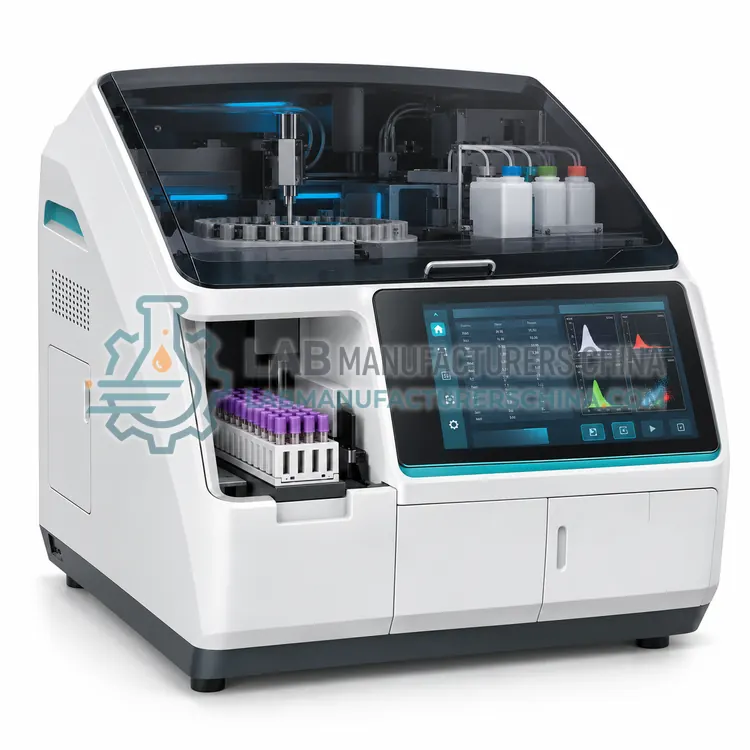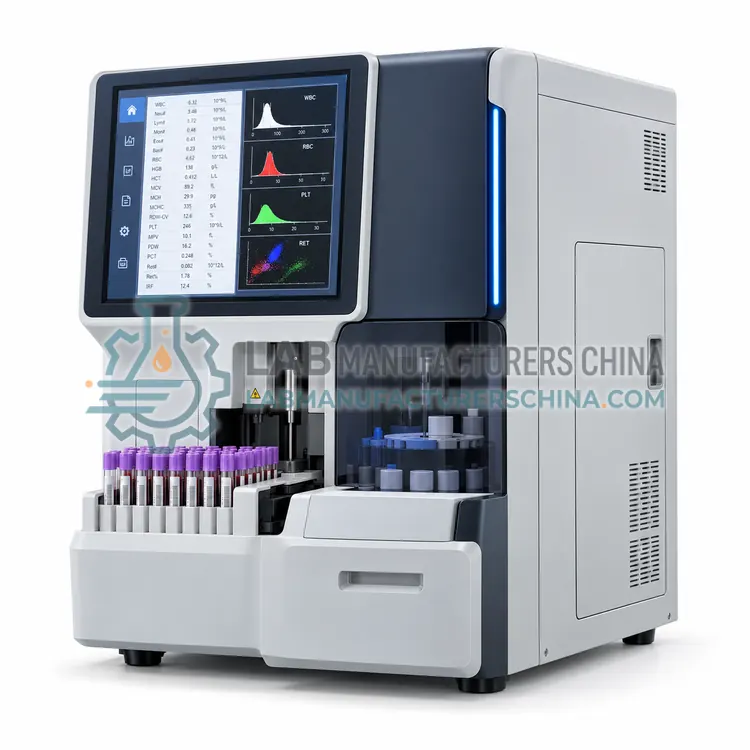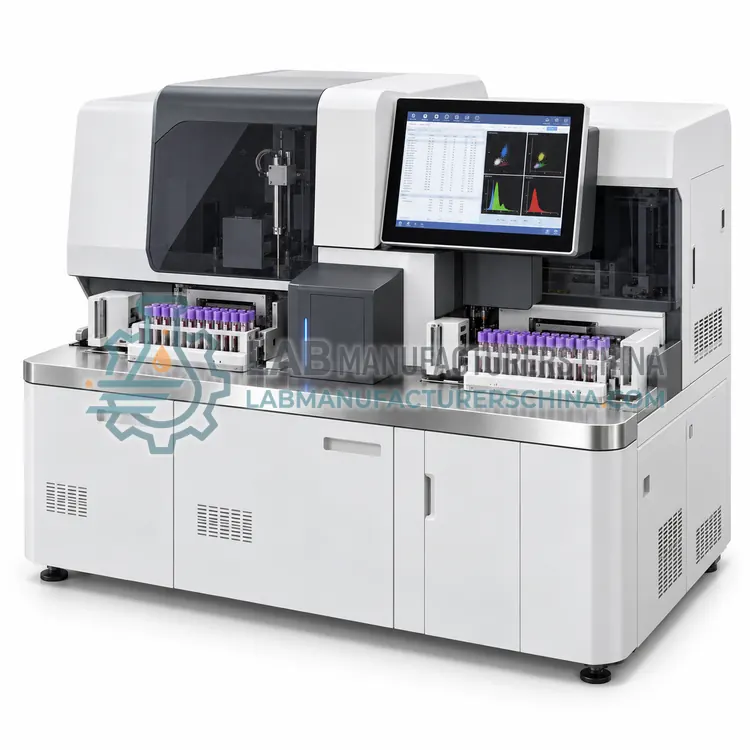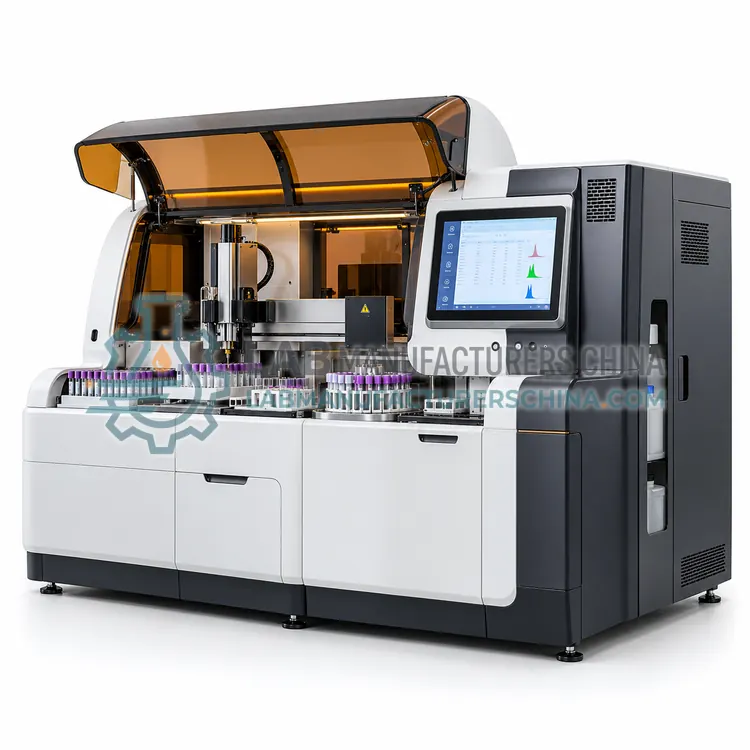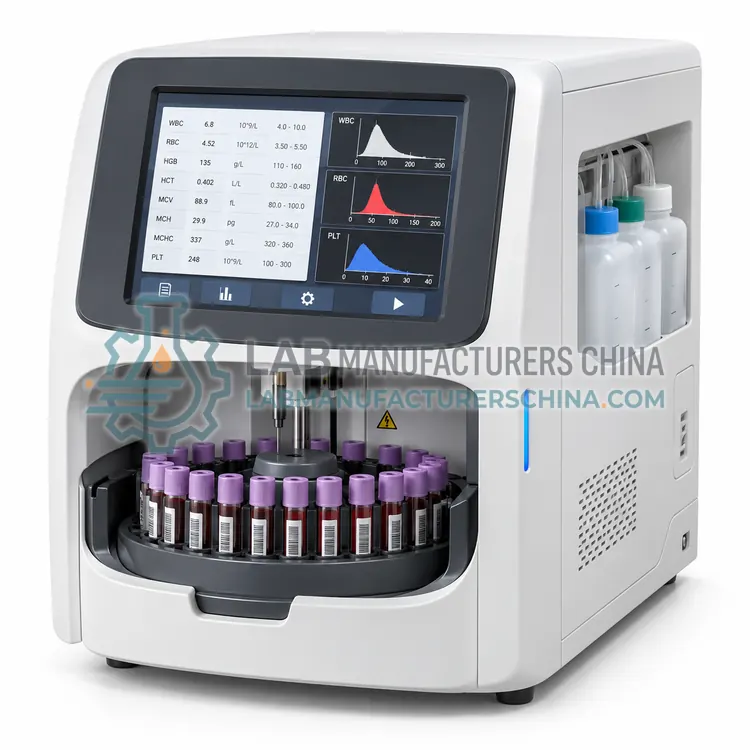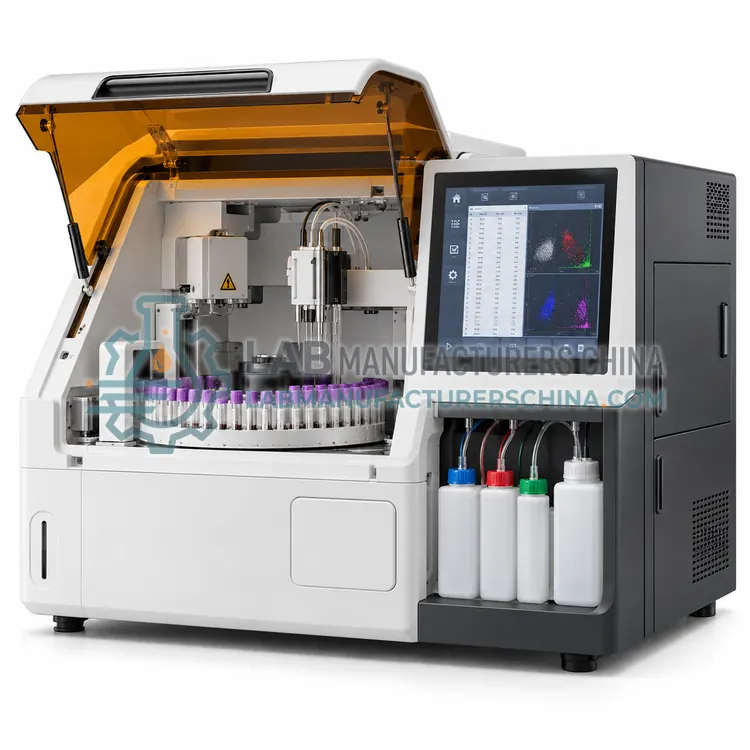
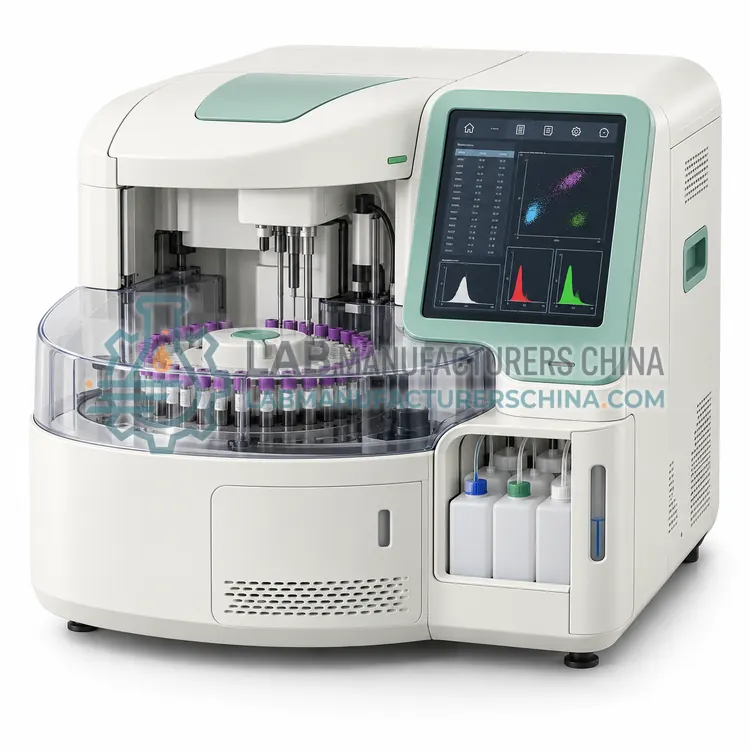
Veterinary 5-Part Hematology Analyzer
兽用五分类血液分析仪
- SKU PAR-0005
- 5-Part Analyzers
- CE (to be confirmed)
- ISO 13485 manufacturing (to be confirmed)
- Veterinary device registration (to be confirmed)
Price on request — FOB / CIF quoted per order
Prices depend on configuration, quantity and destination port.
Key specifications
| Throughput | 60–90 samples/h |
|---|---|
| Species profiles | Dog, cat, horse, cattle, ferret, rodent presets |
| Reportable parameters | 26 parameters plus 5-part differential |
| Sample volume | 25 µL standard; 12 µL small-mammal mode |
| Anticoagulant | EDTA-K2; heparin accepted in some modes |
| Platelet measurement | Impedance and optical with species-specific thresholds |
Request a quote Download brochure · to be provided
By Lab Manufacturers China Technical TeamLast reviewed Standards: ISO 15189, CLSI H26-A2, CLSI H20-A2
What is the Veterinary 5-Part Hematology Analyzer?
A veterinary 5-part analyzer applies species-specific calibration and reference intervals to a flow cytometry platform, giving five-part differentials for dogs, cats, horses and other animals. It is intended for veterinary referral hospitals and research facilities that need leukocyte detail for animal patients.
What is the Veterinary 5-Part Hematology Analyzer?
A veterinary 5-part analyzer applies species-specific calibration and reference intervals to a flow cytometry platform, giving five-part differentials for dogs, cats, horses and other animals. It is intended for veterinary referral hospitals and research facilities that need leukocyte detail for animal patients.
Overview
The instrument platform is similar to a human 5-part analyzer, but reference intervals, flagging rules and calibration factors are defined per species. Veterinary hematology adds species-specific challenges: feline blood shows marked rouleaux formation, horse and cattle platelets are large and may overlap red cell size distributions, and some species have nucleated red cells at low numbers normally. Software therefore includes species templates, and the laboratory verifies them locally. Reported parameters include the five-part differential, reticulocyte or polychromasia indicators in some models, platelet indices and species-specific anemia flags. Sample volumes of 20 to 25 microliters of EDTA whole blood are typical, with smaller modes for rodents.
How does it work?
These analyzers combine impedance counting with a flow cytometry channel. A diluted and stained sample passes a sheath flow cell where hydrodynamic focusing aligns cells in single file. A laser beam strikes each cell, and three signals are recorded: forward scatter, which reflects cell size; side scatter, which reflects internal granularity and complexity; and fluorescence from a dye that stains nucleic acids and cell membranes. Clustering algorithms in the instrument software separate the signals into five leukocyte populations, and the same data support flags for band forms, blasts, atypical lymphocytes and nucleated red cells. Impedance channels measure red cells, platelets and a second white cell count for comparison. Hemoglobin is measured photometrically after lysis. Because the flow channel provides much more information than a size histogram, the analyzer can also report reticulocytes, immature platelet fraction and body fluid cell counts when the corresponding reagent and software options are installed.
What are the key features?
- Species templates for dog, cat, horse, cattle and small mammals
- Five-part leukocyte differential with species flagging rules
- Editable species-specific reference intervals
- Platelet indices and anemia flags adapted to species
- Small-volume mode for rodents and exotic animals
- Record keeping keyed to animal and owner identification
What are the technical specifications?
A typical veterinary 5-part hematology analyzer configuration offers throughput of 60–90 samples/h, species profiles of Dog, cat, horse, cattle, ferret, rodent presets, reportable parameters of 26 parameters plus 5-part differential, sample volume of 25 µL standard; 12 µL small-mammal mode, anticoagulant of EDTA-K2; heparin accepted in some modes and platelet measurement of Impedance and optical with species-specific thresholds. Values are indicative of the product class; the exact figures for each configuration are confirmed on the quotation and the calibration documents supplied with the instrument.
Which applications is it used for?
The Veterinary 5-Part Hematology Analyzer is used in veterinary referral hospital hematology, research animal health monitoring, equine and livestock clinical assessment and zoo and wildlife medicine. Across the wider 5-Part Analyzers class, laboratories also deploy it for hospital routine and emergency blood counts, neutropenia and chemotherapy monitoring and leukemia and lymphoma screening.
Which standards and certifications apply?
Relevant standards and methods include ISO 15189, CLSI H26-A2, CLSI H20-A2, CLSI EP05, CLSI H21, IEC 61010-1 and IEC 61010-2-101. Certification candidates for this model are CE, ISO 13485 manufacturing and Veterinary device registration; each is to be confirmed for the specific configuration before shipment, and certificates are supplied only where they have been issued.
Install the analyzer on a stable bench with a dedicated grounded outlet, controlled room temperature of about 15 to 30 degrees Celsius and low dust. Verify performance at installation with precision, carryover, linearity and method comparison studies, including a specific check of the differential against manual microscopy on abnormal samples. Run three levels of control each day, join an external quality assessment scheme, and review flag rates regularly, because an excessive flag rate increases manual reviews and delays reporting. Clean the flow cell, probes and waste lines according to the maintenance plan, protect the laser and optics from vibration, and keep sheath fluid and cleaning reagents within their expiry dates. Handle all blood samples as potentially infectious.
How do I select the right Veterinary 5-Part Hematology Analyzer?
Choose this variant for a veterinary referral hospital or research facility where leukocyte differentials on animal blood are routine. Specify the species mix, the smallest species requiring reliable counts, and whether reticulocyte or platelet indices are needed. Request validation data for each species against manual differentials, and confirm that software updates keep reference intervals current.
How does it compare with other 5-Part Analyzers variants?
Specify a 5-part analyzer when clinicians act on the differential, for example to follow neutropenia during chemotherapy, to screen for leukemia, or to manage pediatric infections. Compare throughput, which ranges from about 60 to more than 120 samples per hour, and the first-result time for emergency work. Check which optional modes are included: reticulocyte count, nucleated red cell count, immature platelet fraction and body fluid analysis all require dedicated reagents and software licences. Confirm the minimum sample volume for pediatric samples and the linearity at low white cell counts. Ask about the flagging performance for blasts, the review rules the software applies, and whether a slide maker or digital morphology review is supported. Confirm LIS connectivity, reagent openness, calibration interval of the flow channel, and local service support.
Full specifications
| Throughput | 60–90 samples/h |
|---|---|
| Species profiles | Dog, cat, horse, cattle, ferret, rodent presets |
| Reportable parameters | 26 parameters plus 5-part differential |
| Sample volume | 25 µL standard; 12 µL small-mammal mode |
| Anticoagulant | EDTA-K2; heparin accepted in some modes |
| Platelet measurement | Impedance and optical with species-specific thresholds |
| Data storage | 30,000 patient records |
| Interfaces | USB, LAN, RS-232 |
| Power supply | AC 100–240 V, 50/60 Hz |
Indicative values for this product class. Final specifications are confirmed on the quotation and in the calibration documents supplied with the instrument.
Applications
- Veterinary referral hospital hematology
- Research animal health monitoring
- Equine and livestock clinical assessment
- Zoo and wildlife medicine
Key features
- Species templates for dog, cat, horse, cattle and small mammals
- Five-part leukocyte differential with species flagging rules
- Editable species-specific reference intervals
- Platelet indices and anemia flags adapted to species
- Small-volume mode for rodents and exotic animals
- Record keeping keyed to animal and owner identification
Frequently asked questions about Veterinary 5-Part Hematology Analyzer
Most veterinary models ship with templates for dog, cat, horse and cattle, and several add ferret, rabbit, rat, mouse, pig and sheep. Templates hold species-specific calibration factors, reference intervals and flagging rules, but they still need local verification because breed and management differences affect ranges.
Feline red cells tend to form rouleaux, which can affect impedance counting and light scatter, and feline platelets are large and easily confused with small red cells. Analyzers with species-specific thresholds and a validated feline template give better platelet counts; suspicious results should be confirmed by film examination.
Yes, provided the software template matches the species and the laboratory validates reference intervals with its own colony data. Small-mammal modes reduce the aspiration volume, but imprecision increases at very low volumes, so replicate measurements are often used for rodents and other small species.
A 5-part differential reports neutrophils, lymphocytes, monocytes, eosinophils and basophils separately rather than as grouped populations. This supports monitoring of neutropenia, allergic and parasitic conditions, and abnormal white cell patterns, and the underlying flow cytometry data also allow flags for immature cell populations.
No. Analyzers flag many abnormalities, but morphological assessment of blasts, dysplastic cells, malaria parasites and red cell shape still needs a stained film and microscopy. Most laboratories review films for a defined proportion of samples or whenever specific flags appear, as part of their validation and review rules.
Reticulocyte and nucleated red cell counts are useful for anemia assessment, the immature platelet fraction helps distinguish platelet destruction from reduced production, and body fluid modes support cerebrospinal and synovial fluid cell counts. Each module needs dedicated reagent and software, so order only what the clinical service will use.
Related models