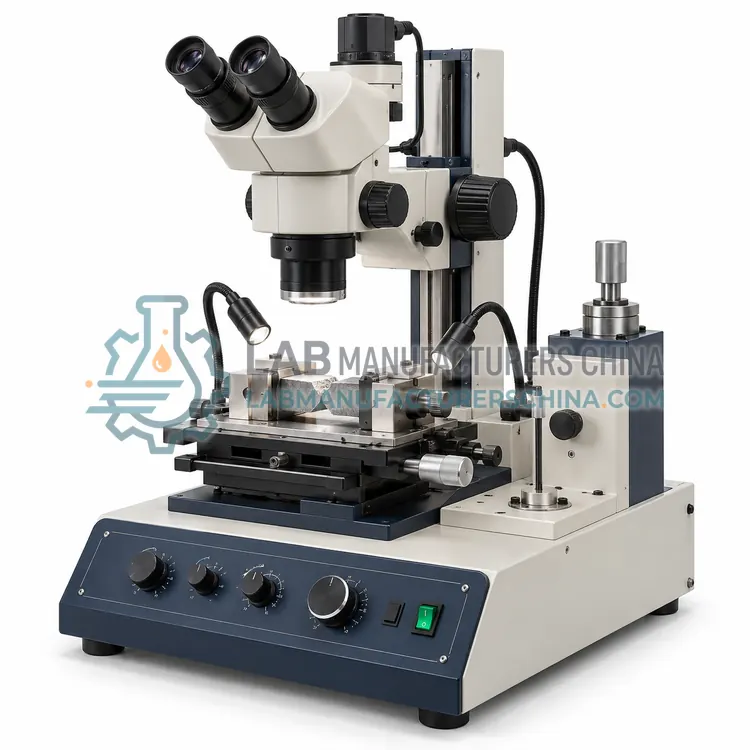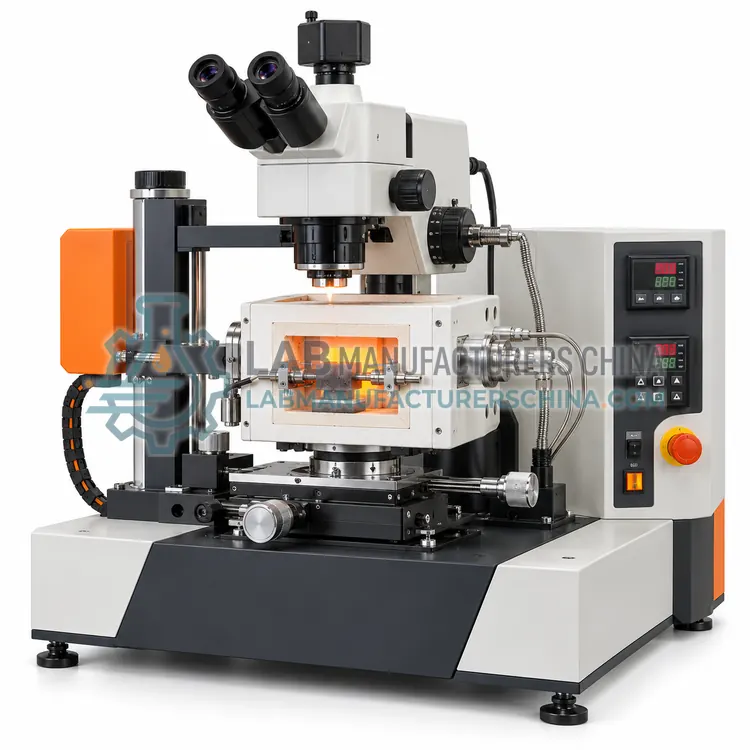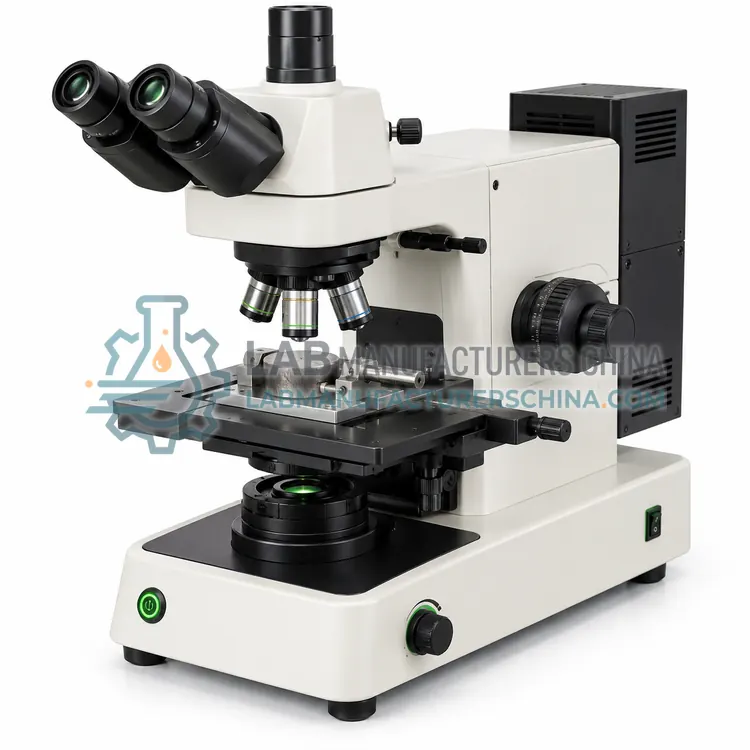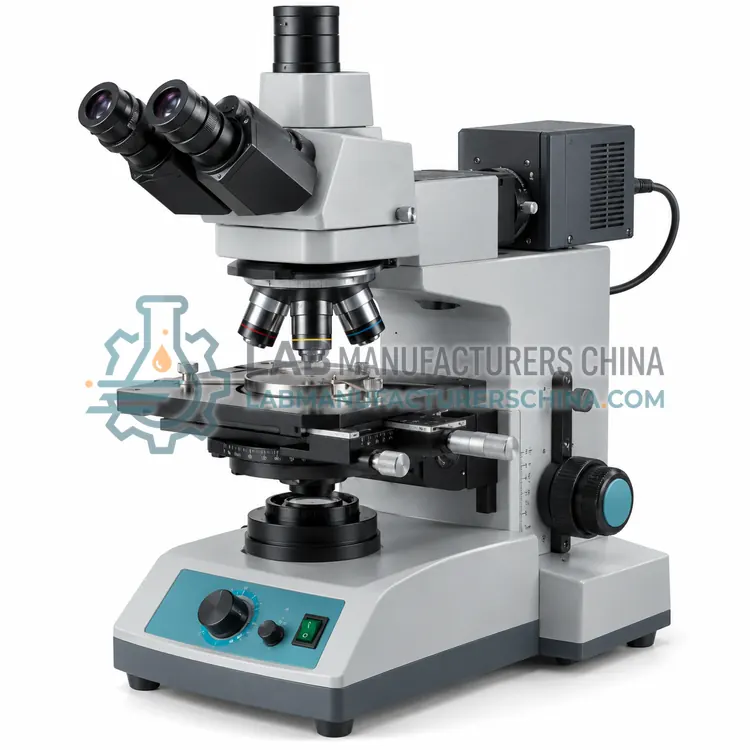
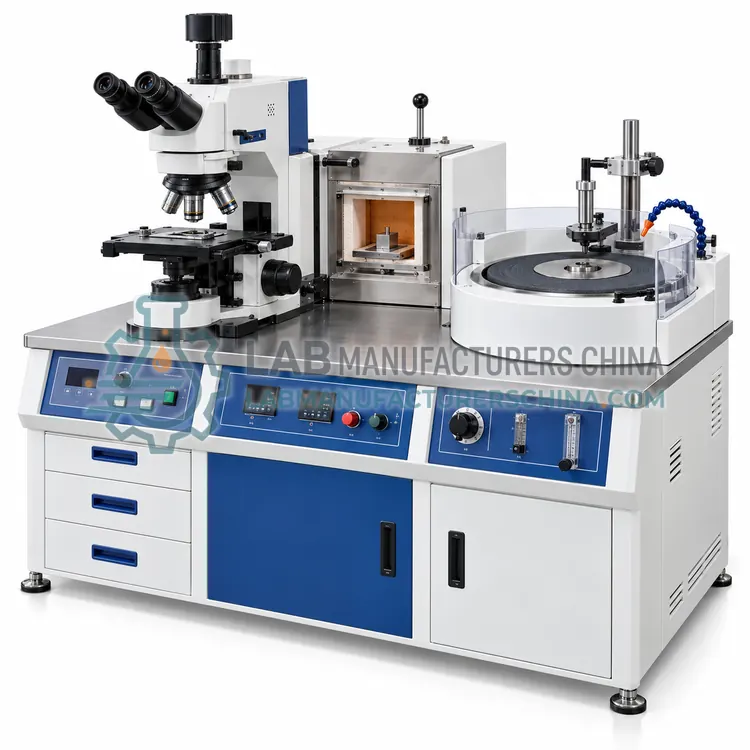
Polarizing Light Microscope for Ore and Inclusion Study
矿石与夹杂物偏光显微镜
- SKU MIP-0005
- Microscopy
- CE (to be confirmed)
- ISO 9001 manufacturing (to be confirmed)
Price on request — FOB / CIF quoted per order
Prices depend on configuration, quantity and destination port.
Key specifications
| Magnification range | 25× to 500× |
|---|---|
| Polarizers | Polarizer and analyser, crossed position |
| Rotating stage | 360° with 1° graduations |
| Illumination | Transmitted and reflected, LED or halogen |
| Accessories | Bertrand lens, gypsum plate, quartz wedge |
| Objectives | Strain free, 4× to 50× |
Request a quote Download brochure · to be provided
By Lab Manufacturers China Technical TeamLast reviewed Standards: ASTM E3, ASTM E407, ASTM E112
What is the Polarizing Light Microscope for Ore and Inclusion Study?
A polarizing light microscope uses crossed polarizers to identify transparent minerals and anisotropic phases by their optical behaviour, and to characterise non-metallic inclusions. It is used with transmitted or reflected light, depending on the sample type.
What is the Polarizing Light Microscope for Ore and Inclusion Study?
A polarizing light microscope uses crossed polarizers to identify transparent minerals and anisotropic phases by their optical behaviour, and to characterise non-metallic inclusions. It is used with transmitted or reflected light, depending on the sample type.
Overview
The instrument has a polarizer below the specimen and an analyser above, which can be crossed to produce extinction in isotropic materials while anisotropic minerals show interference colours that depend on crystal orientation and thickness. A rotating stage with an engraved scale allows extinction angles and other optical properties to be measured, and accessories such as a Bertrand lens, gypsum plate and quartz wedge support conoscopic examination and retardation measurement. In transmitted light the microscope identifies ore and gangue minerals, studies alteration and assesses the degree of liberation, while in reflected light with crossed polars coated and oxidised inclusions in steel show distinctive colours and shapes that help identify slag, spinel, sulphide and oxide types in cleanliness rating. Samples are prepared as thin sections, grain mounts or polished sections, and standards such as ASTM E3 describe preparation.
How does it work?
A metallurgical microscope illuminates the specimen from the same side as the objective, since metal is opaque, and the polished and etched surface reflects light back through the optical system. Contrast comes from differences in reflectivity between phases, from surface relief created by etching, and from scattering by inclusions and cracks. Objective numerical aperture determines resolution, and magnification should be chosen so that the features of interest occupy a reasonable fraction of the field, because empty magnification adds no detail. Illumination modes extend the range: brightfield for general structure, darkfield for inclusions and cracks, polarized light for anisotropic phases and coatings, and differential interference contrast for relief and small height differences. Stereo microscopes use separate light paths for each eye to give depth perception, which makes them suitable for fracture surfaces and weld profiles. Digital cameras and measuring software add quantitative output, such as grain size, coating thickness and defect dimensions.
What are the key features?
- Polarizer and analyser that can be crossed
- Rotating stage with engraved angle scale
- Bertrand lens for conoscopic examination
- Gypsum plate and quartz wedge accessories
- Transmitted and reflected light configurations
- Strain free objectives for polarized work
What are the technical specifications?
A typical polarizing light microscope for ore and inclusion study configuration offers magnification range of 25× to 500×, polarizers of Polarizer and analyser, crossed position, rotating stage of 360° with 1° graduations, illumination of Transmitted and reflected, LED or halogen, accessories of Bertrand lens, gypsum plate, quartz wedge and objectives of Strain free, 4× to 50×. Values are indicative of the product class; the exact figures for each configuration are confirmed on the quotation and the calibration documents supplied with the instrument.
Which applications is it used for?
The Polarizing Light Microscope for Ore and Inclusion Study is used in ore and gangue mineral identification, non-metallic inclusion characterisation in steel, slag, refractory and cement clinker mineralogy and liberation and alteration studies in mineral processing. Across the wider Microscopy class, laboratories also deploy it for grain size and inclusion rating of steels, weld and heat-affected zone examination and fracture surface and failure investigation.
Which standards and certifications apply?
Relevant standards and methods include ASTM E3, ASTM E407, ASTM E112, ASTM E45, ISO 643, ASTM E1951 and IEC 61010-1. Certification candidates for this model are CE and ISO 9001 manufacturing; each is to be confirmed for the specific configuration before shipment, and certificates are supplied only where they have been issued.
Clean lenses only with the recommended method, since immersion oils and abrasives damage coatings, and cover the instrument when not in use. Verify magnification and length calibration with a stage micrometer at each objective and after any change of camera or software, and keep a record with the results. Set illumination to a reproducible level, because contrast in reflected light depends strongly on lamp intensity and aperture settings, and note the objective and illumination mode in every report. Keep specimens clean and dry, store them in labelled containers, and use replicas rather than marking the component when examining installed parts. Service the illuminator, stage and focusing mechanism periodically, and check the camera sensor for dust that would appear as artefacts in images used for measurement, since a mistaken artefact can change a reported coating thickness.
How do I select the right Polarizing Light Microscope for Ore and Inclusion Study?
Select the polarizing microscope when mineral phases or inclusions must be identified rather than just measured, and confirm whether transmitted, reflected or both configurations are needed. Specify strain free objectives, rotating stage, accessory plates and camera for documentation.
How does it compare with other Microscopy variants?
Choose the microscope type from what must be seen. Upright reflected-light instruments with a full objective set and multiple illumination modes handle polished sections, grain size and inclusion rating. Inverted stages are better for large or unmounted specimens. Stereo microscopes are the right tool for fracture surfaces, weld profiles, corrosion damage and assembly inspection, where depth and surface shape matter more than high magnification. Digital measuring microscopes suit dimensional work on small features, such as tool edges, holes, threads and coating cross-sections, where accuracy claims need to be supported by calibration. Portable microscopes serve on-site replica examination of installed plant. In every case, match the magnification range, numerical aperture and illumination modes to the features of interest, and budget for a stage micrometer, calibration slides and a camera whose resolution genuinely exceeds the detail the optics can deliver.
Full specifications
| Magnification range | 25× to 500× |
|---|---|
| Polarizers | Polarizer and analyser, crossed position |
| Rotating stage | 360° with 1° graduations |
| Illumination | Transmitted and reflected, LED or halogen |
| Accessories | Bertrand lens, gypsum plate, quartz wedge |
| Objectives | Strain free, 4× to 50× |
| Camera port | Trinocular or C-mount |
| Power supply | 220 V, 50/60 Hz |
Indicative values for this product class. Final specifications are confirmed on the quotation and in the calibration documents supplied with the instrument.
Applications
- Ore and gangue mineral identification
- Non-metallic inclusion characterisation in steel
- Slag, refractory and cement clinker mineralogy
- Liberation and alteration studies in mineral processing
Key features
- Polarizer and analyser that can be crossed
- Rotating stage with engraved angle scale
- Bertrand lens for conoscopic examination
- Gypsum plate and quartz wedge accessories
- Transmitted and reflected light configurations
- Strain free objectives for polarized work
Frequently asked questions about Polarizing Light Microscope for Ore and Inclusion Study
Under crossed polarizers they do not extinguish completely as the stage rotates but change colour or brightness, producing interference colours and extinction positions that depend on crystal orientation and section thickness.
Measuring extinction angles, retardation and other orientation dependent properties requires the specimen to be rotated by known amounts, so the stage carries a graduated scale and the polarizers are aligned to it.
Thin sections of rock for transmitted light, grain mounts in immersion oil for loose minerals, and polished sections for reflected light work on ores, slags and steel inclusions, each prepared to published procedures.
Metals are opaque, so transmitted illumination cannot pass through a polished section. Light is directed through the objective onto the specimen and reflected back, and contrast comes from differences in reflectivity and from surface relief.
Darkfield, because inclusions and voids scatter light and appear bright against a dark background, whereas they can be nearly invisible in brightfield if their reflectivity is similar to the matrix.
For fracture surfaces, weld profiles, corrosion pits and assembled parts, where three-dimensional shape and depth are important and high magnification with a polished, flat surface is not applicable.
Related models