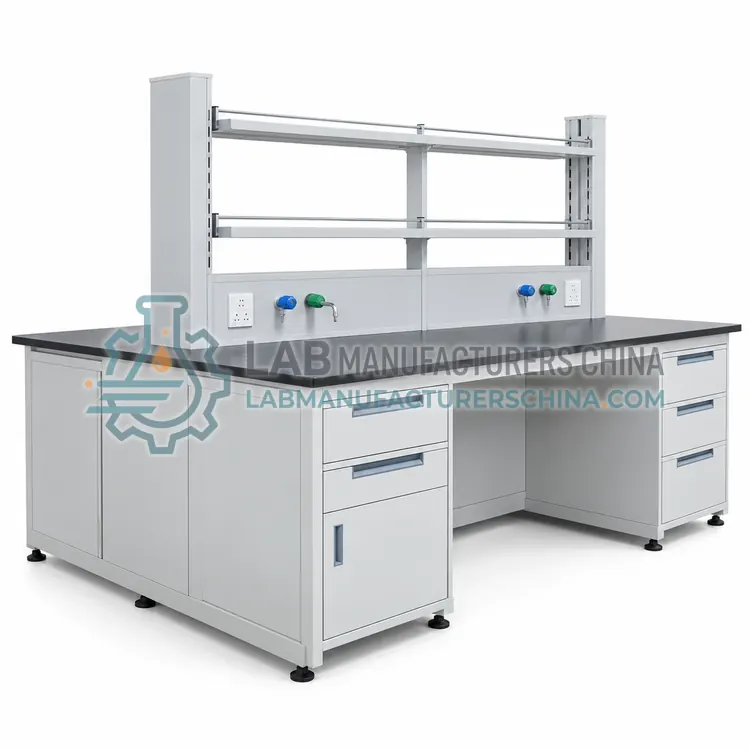
Double-Sided Island Bench with Central Service Spine
带中央管线立柱的双面中央实验台
- ISO 9001 manufacturing (to be confirmed)
- +2
Welcome to Lab Manufacturers China — laboratory instruments direct from a Chinese manufacturer
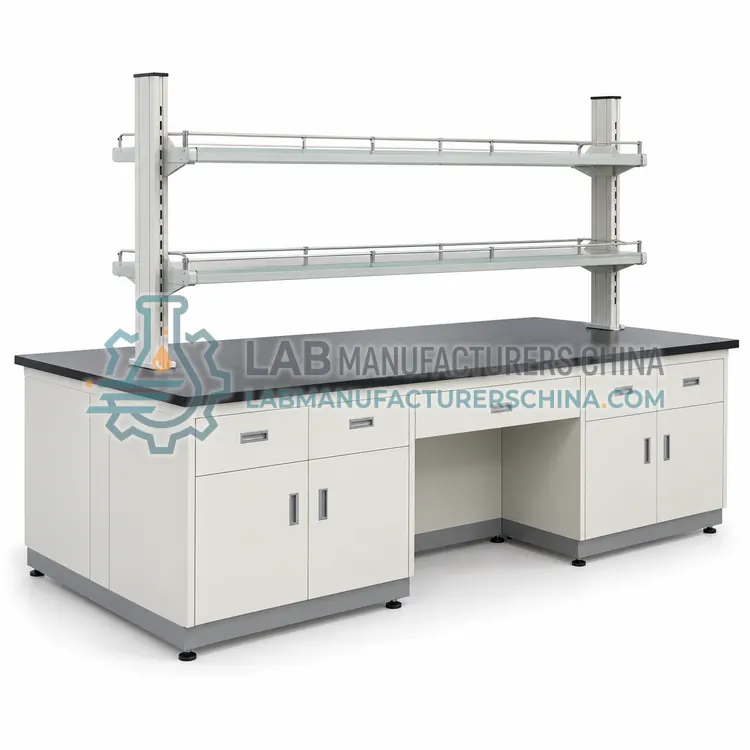
带顶部试剂架的中央实验台
Price on request — FOB / CIF quoted per order
Prices depend on configuration, quantity and destination port.
| Overall length | 1800–3600 mm |
|---|---|
| Overall width | 1500–1800 mm |
| Shelf tiers | 1 or 2 |
| Shelf load | 15–25 kg per metre |
| Maximum shelf height | ≈1500 mm from floor |
| Lighting | LED, 500–750 lux |
By Lab Manufacturers China Technical TeamLast reviewed Standards: SEFA 8 (laboratory grade casework), EN 13150 (laboratory workbenches), GB 24820 (laboratory furniture)
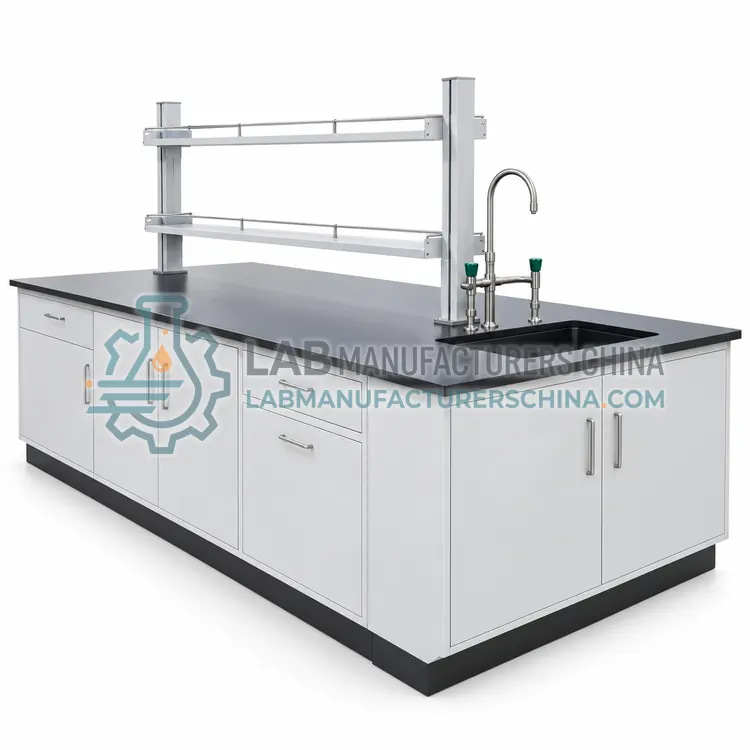
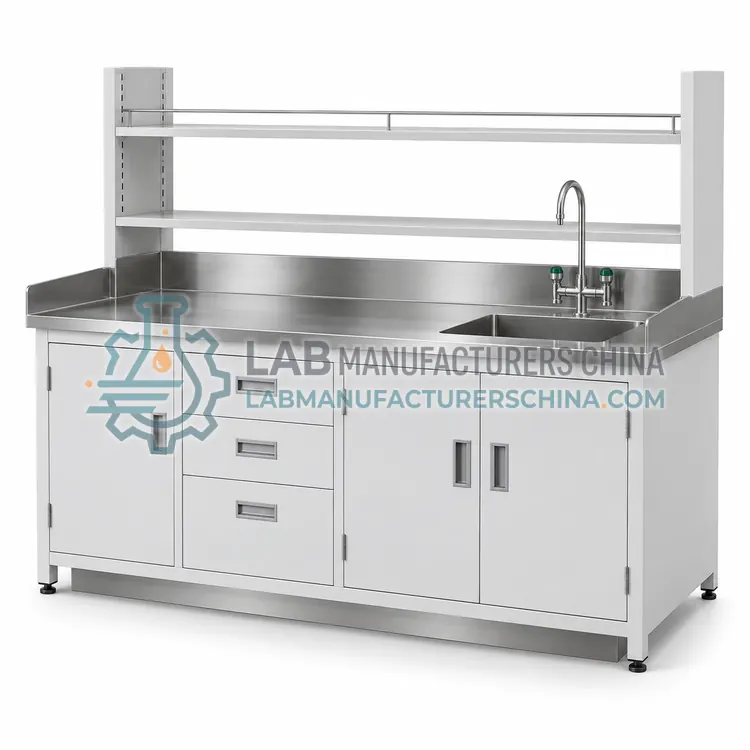
An island bench with an overhead reagent shelf adds a suspended shelf or gantry above the central service spine for reagent bottles, lighting and instrument displays, keeping the bench surface free for experiments while frequently used bottles remain within easy reach.
An island bench with an overhead reagent shelf adds a suspended shelf or gantry above the central service spine for reagent bottles, lighting and instrument displays, keeping the bench surface free for experiments while frequently used bottles remain within easy reach.
The overhead shelf system attaches to the service spine with steel uprights and carries one or two tiers of shelves, each rated 15–25 kg per metre, often in tempered glass, stainless steel or powder-coated steel with lipped edges. Integral LED lighting of 500–750 lux improves task visibility and pendants bring power and data to tabletop instruments. Because reagent bottles are at height, the shelf height is usually limited to 1500 mm above the floor, and shelf edges are fitted with retention rails. Some designs allow shelves to be removed for cleaning or to accommodate taller apparatus. The stiffness of the frame matters because an overhead load raises the center of gravity of the island.
An island bench is a freestanding frame and worktop assembly of typically 1500–3600 mm length and 1200–1800 mm width, with base cabinets or open legs on both sides. Because it has no wall behind it, utilities must come from a central service spine, ceiling service panel or floor service box. The spine carries electrical sockets, gas and water taps, data ports and reagent shelves, and it is often fitted with an overhead shelf or lighting. Worktops are commonly epoxy resin, phenolic or stainless steel. Double-sided cabinets, a sink at one end and cantilever frames for wheelchair and cleaning access are frequent options. Structural stiffness and anchoring matter because the unit is not braced by walls.
A typical island bench with overhead reagent shelf configuration offers overall length of 1800–3600 mm, overall width of 1500–1800 mm, shelf tiers of 1 or 2, shelf load of 15–25 kg per metre, maximum shelf height of ≈1500 mm from floor and lighting of LED, 500–750 lux. Values are indicative of the product class; the exact figures for each configuration are confirmed on the quotation and the calibration documents supplied with the instrument.
The Island Bench with Overhead Reagent Shelf is used in chemistry laboratories, QC reagent preparation, teaching laboratories and sample preparation. Across the wider Island Benches class, laboratories also deploy it for teaching laboratories, pharmaceutical R&D and chemistry research groups.
Relevant standards and methods include SEFA 8 (laboratory grade casework), EN 13150 (laboratory workbenches), GB 24820 (laboratory furniture), EN 14056 (laboratory furniture recommendations for design and installation) and IEC 61010-1 (electrical safety, room services). Certification candidates for this model are ISO 9001 manufacturing, SEFA 8 test report and CE (electrical services, where fitted); each is to be confirmed for the specific configuration before shipment, and certificates are supplied only where they have been issued.
Ensure the floor can carry the concentrated load and permits anchoring or provides a cast-in service box. Coordinate ceiling service panels and floor penetrations with the building design early, since relocating them later is costly. Provide RCD protection on sockets and isolate gas lines with accessible shut-off valves. Level the island precisely and seal joins between modules. Sight lines from all sides help supervision but require tidy service management. Inspect anchor points, taps and hoses every six months and clean resin tops with neutral detergent after chemical contact.
Choose this variant when reagent bottles and small apparatus need to stay within reach without occupying the work surface. Avoid heavy or flammable stock on overhead shelves. Specify shelf tiers, material, load, light level, overall height limits and any requirement for pendant power or data.
Begin with the number of users and the side access you need. Two-sided islands with a central spine suit teaching labs and group research, while peninsula units attach to a wall for one-sided supply. Decide how services arrive: a fixed service spine, ceiling pendant or floor box, since this determines flexibility and cost. Choose worktop material by chemical exposure, and cabinet type by storage and accessibility needs. Check the room layout for circulation space: aisles of at least 1.5 m between benches are common, and 1.8 m where carts or wheelchairs are used. Confirm load rating and anchoring method on the actual floor type.
| Overall length | 1800–3600 mm |
|---|---|
| Overall width | 1500–1800 mm |
| Shelf tiers | 1 or 2 |
| Shelf load | 15–25 kg per metre |
| Maximum shelf height | ≈1500 mm from floor |
| Lighting | LED, 500–750 lux |
| Shelf material | Tempered glass / stainless / steel |
| Working height | 850–900 mm |
| Load rating (worktop) | ≈300 kg per linear metre |
| Electrical protection | RCD 30 mA on all sockets |
Indicative values for this product class. Final specifications are confirmed on the quotation and in the calibration documents supplied with the instrument.
Typical shelves are rated 15–25 kg per metre of length. Keep frequently used bottles at working height, avoid heavy stock above shoulder level, and use retention rails to prevent bottles sliding during accidental impact.
Glass shelves and a spine limited to about 1500 mm above the floor preserve visibility across the room. Solid panels reduce sight lines, so specify open or glazed designs where supervision matters in teaching laboratories.
Bulk flammable solvents should not be stored on open overhead shelves. Keep small working quantities only and store stock in a ventilated flammables cabinet, following local fire regulations and the quantity limits that apply to your room.
An island bench is a freestanding laboratory work station that can be reached from all sides, installed away from walls. It is supplied with electricity, gas and water from a service spine, ceiling panel or floor box, and suits group work and teaching.
Utilities arrive through a central service spine mounted on the bench, a ceiling service panel with drop hoses, or a floor service box with flexible connections. Ceiling panels give the most layout flexibility, while spines are cheaper and more common for fixed layouts.
A clear aisle of 1.5 m between benches is common for general work, and 1.8 m or more is recommended where carts, wheelchairs or two-way traffic are expected. Follow local building and accessibility regulations for emergency egress widths.
带中央管线立柱的双面中央实验台