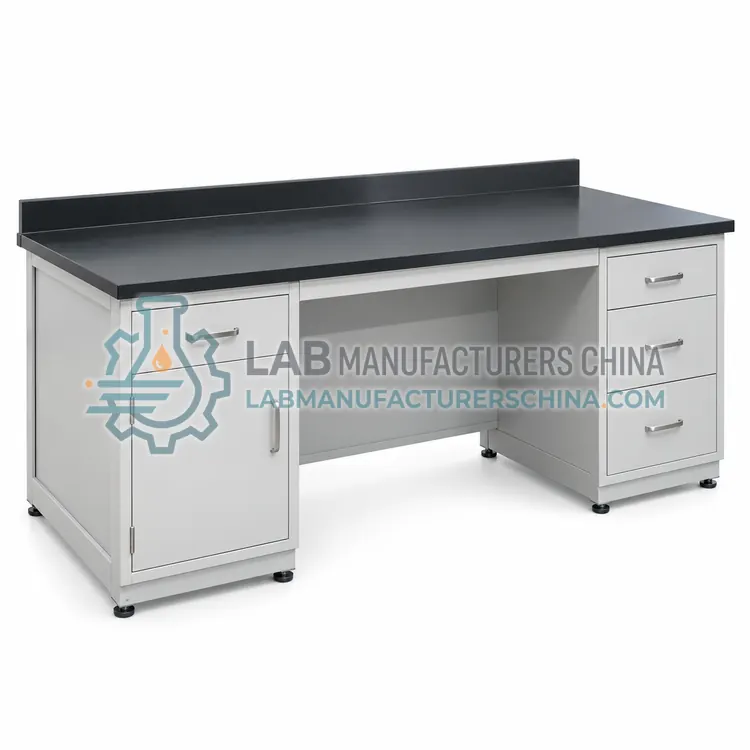
Steel-Wood Laboratory Bench with Epoxy Resin Worktop
钢木结构环氧树脂台面实验台
- ISO 9001 manufacturing (to be confirmed)
- +2
Welcome to Lab Manufacturers China — laboratory instruments direct from a Chinese manufacturer
可升降实验台
Price on request — FOB / CIF quoted per order
Prices depend on configuration, quantity and destination port.
| Height adjustment range | 650–1000 mm |
|---|---|
| Lifting capacity | 150–300 kg |
| Lift speed | ≈ 15–25 mm/s |
| Drive type | Electric linear actuator or hand crank |
| Supply voltage | 220–240 V AC, 50 Hz |
| Worktop size | 1200–1800 × 750 mm |
By Lab Manufacturers China Technical TeamLast reviewed Standards: SEFA 8 (laboratory grade casework), EN 13150 (laboratory workbenches), GB 24820 (laboratory furniture, Chinese national standard)
A height-adjustable laboratory bench uses motorized or hand-crank legs to change worktop height, typically between 650 and 1000 mm. It supports ergonomic sitting and standing work, wheelchair access and multi-user sharing, and it is usually specified for teaching laboratories and accessible research stations.
A height-adjustable laboratory bench uses motorized or hand-crank legs to change worktop height, typically between 650 and 1000 mm. It supports ergonomic sitting and standing work, wheelchair access and multi-user sharing, and it is usually specified for teaching laboratories and accessible research stations.
The bench uses telescopic steel columns driven by electric linear actuators or a hand crank, with a synchronized control unit and end-of-travel limit switches. Worktops are commonly epoxy resin, phenolic or stainless steel, supported by a reinforced frame that tolerates the added weight of the lift mechanism. Flexible service connections, such as cable chains and coiled supply lines, allow height changes without disconnection. Anti-collision sensors and overload protection stop travel when obstructed. Typical lifting capacity is 150–300 kg, lower than fixed benches, so heavy instruments may need a fixed section. Height-adjustable benches support accessibility requirements and multi-user rooms, but they need more budget and floor space and cannot carry fixed plumbed sinks without flexible hoses.
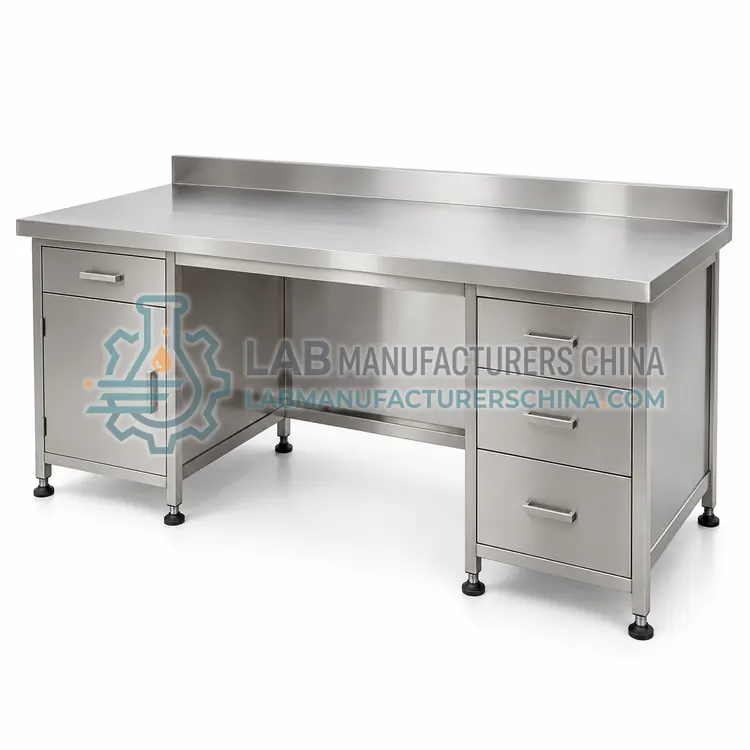
A laboratory bench consists of a structural frame, a worktop and usually base cabinets or drawers. Frames are welded or bolted steel, powder-coated or stainless, sized for distributed loads of typically 200–500 kg per linear metre. Worktops are chosen for chemical and thermal exposure: epoxy resin, phenolic resin, solid-surface, ceramic or stainless steel. Reagent shelves, service spines and pop-up sockets carry electricity, gas, vacuum and water, while drop-in sinks and fume-hood interfaces complete the wet-lab workflow. Leveling feet compensate for floor unevenness, and cantilever or modular frames allow reconfiguration. Finish durability depends on powder-coat film thickness, edge sealing and the resistance of the worktop to acids, solvents and heat per standard surface tests.
A typical height-adjustable laboratory bench configuration offers height adjustment range of 650–1000 mm, lifting capacity of 150–300 kg, lift speed of ≈ 15–25 mm/s, drive type of Electric linear actuator or hand crank, supply voltage of 220–240 V AC, 50 Hz and worktop size of 1200–1800 × 750 mm. Values are indicative of the product class; the exact figures for each configuration are confirmed on the quotation and the calibration documents supplied with the instrument.
The Height-Adjustable Laboratory Bench is used in shared teaching laboratories, accessible research workstations, electronics and assembly benches and microscopy and precision work. Across the wider Laboratory Benches class, laboratories also deploy it for chemistry teaching and research labs, pharmaceutical QC laboratories and biology and microbiology labs.
Relevant standards and methods include SEFA 8 (laboratory grade casework), EN 13150 (laboratory workbenches), GB 24820 (laboratory furniture, Chinese national standard), ANSI/BIFMA X5.5-style load testing (reference) and ISO 9001 quality management. Certification candidates for this model are ISO 9001 manufacturing, SEFA 8 test report and GREENGUARD-type low emission test; each is to be confirmed for the specific configuration before shipment, and certificates are supplied only where they have been issued.
Plan the room before ordering: floor flatness, door widths, ceiling height, service routes and fume hood positions determine which bench designs are feasible. Anchor tall benches per seismic or safety requirements and level all feet before installing worktops. Seal joints and penetrations with chemical-resistant silicone. Verify electrical safety to IEC 61010-1 room practice and keep services isolated from wet zones. Maintenance is simple: wipe spills promptly, avoid abrasive pads on resin, inspect hinges and drawer runners every six months, and re-seal edges if the coating is breached. Document material resistance charts for safety assessments.
Select this variant where multiple users, accessibility compliance or long sitting and standing periods drive ergonomics. It is not intended for heavy fixed loads or plumbed sinks. Specify the lifting capacity, height range, worktop size and material, control type, supply voltage and the mass of instruments placed on the top.
Choose by the chemicals and heat the worktop will see first: epoxy resin handles strong acids and solvents, phenolic resin suits general chemistry and teaching, stainless steel suits biology and cleanroom use, and ceramic suits high-temperature work. Then set the load rating, because balances, centrifuges and ovens need rigid frames with vibration control. Decide whether the layout is fixed, height-adjustable or mobile, and whether service spines, sinks or reagent shelves are required. Check total length, depth (typically 750 mm), height (typically 850–900 mm) and accessibility requirements. Finally, verify finish resistance data, edge sealing and manufacturer test reports against SEFA 8 or EN 13150 rather than relying on brochure claims.
| Height adjustment range | 650–1000 mm |
|---|---|
| Lifting capacity | 150–300 kg |
| Lift speed | ≈ 15–25 mm/s |
| Drive type | Electric linear actuator or hand crank |
| Supply voltage | 220–240 V AC, 50 Hz |
| Worktop size | 1200–1800 × 750 mm |
| Worktop material | Epoxy resin / phenolic / stainless |
| Control | Up/down switch with 3 memory presets |
| Safety | Anti-collision, overload cut-off |
| Noise level | ≤ 50 dB(A) |
Indicative values for this product class. Final specifications are confirmed on the quotation and in the calibration documents supplied with the instrument.
Typical lifting capacity is 150–300 kg including the worktop and instruments. Heavy equipment such as large centrifuges or ovens should be placed on fixed benches or floor-standing supports, because the lift mechanism is sized for lighter instrumentation and user tasks.
Yes, but the sink must use flexible hoses and waste connections, and the lift range must allow for them. Many laboratories keep the sink on a fixed unit beside the adjustable bench to avoid leaks and simplify plumbing maintenance.
A height-adjustable bench with lower range near 700 mm and clear knee space supports wheelchair access in principle. Confirm clearance dimensions against the accessibility regulations applicable in your country before ordering.
A laboratory bench has a welded or bolted steel frame, powder-coated or stainless, a chemically resistant worktop such as epoxy resin, phenolic resin or stainless steel, and base cabinets or drawers. Material choice depends on the chemicals, heat and loads expected at the workstation.
Epoxy resin worktops are commonly chosen for strong acids, bases and organic solvents because the solid cast material resists chemical attack through its full thickness. Request chemical resistance data for your specific reagents, and confirm thermal limits, typically around 120–150 °C for short exposure.
Standard benches are typically 750 mm deep and 850–900 mm high for standing work, with lengths in 600 mm modules. Sitting-height benches are about 750 mm, and height-adjustable designs span roughly 650–1000 mm to suit different users and accessibility needs.
钢木结构环氧树脂台面实验台