
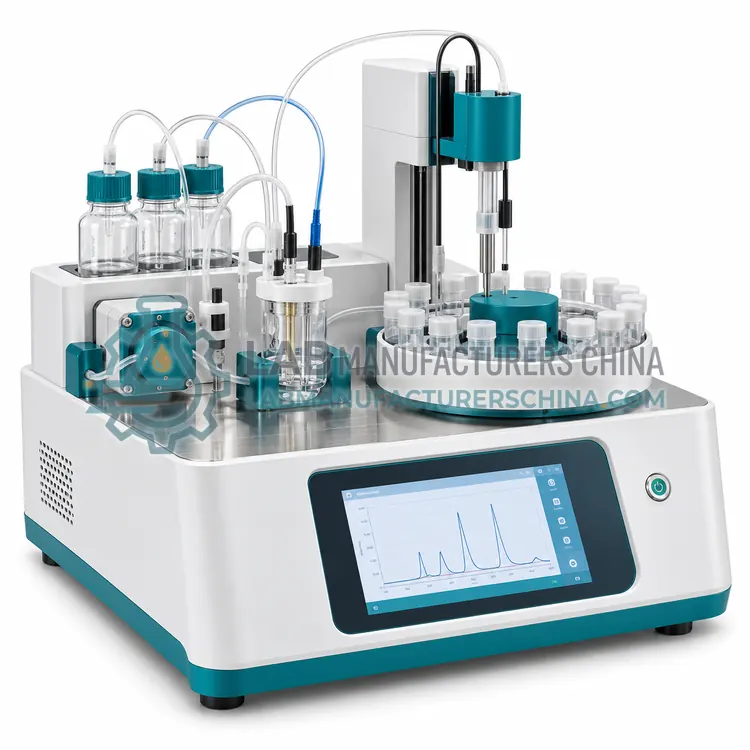
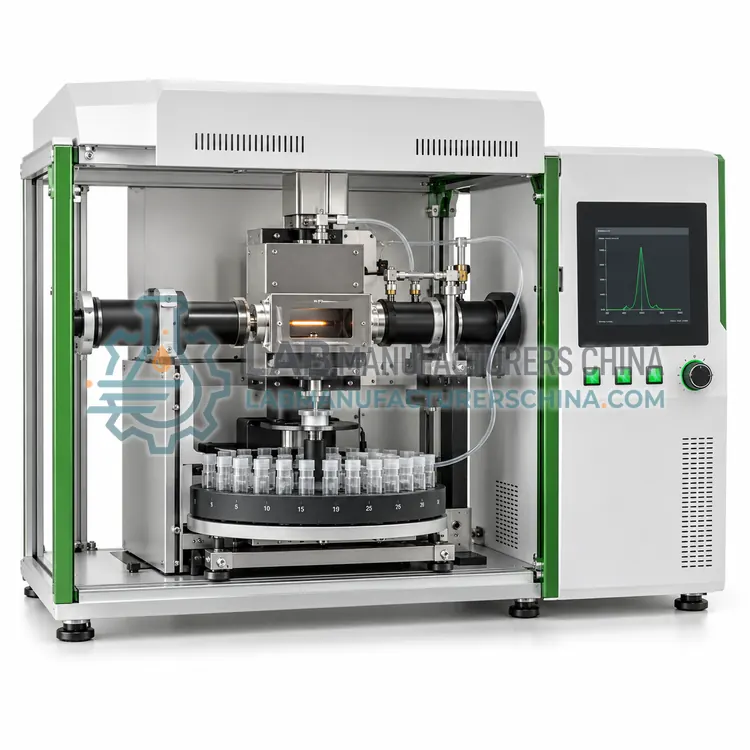
Graphite Furnace Atomic Absorption Spectrometer for Trace Metals in Water
水中痕量金属测定石墨炉原子吸收光谱仪
- SKU HMA-0004
- Heavy Metal Analyzers
- CE (to be confirmed)
- ISO 9001 manufacturing (to be confirmed)
Price on request — FOB / CIF quoted per order
Prices depend on configuration, quantity and destination port.
Key specifications
| Atomizer | Transversely heated graphite tube |
|---|---|
| Temperature range | Ambient to 2800 °C |
| Sample volume | 10–50 µL |
| Detection limit (Cd) | ≤ 0.05 µg/L |
| Detection limit (Pb) | ≤ 0.5 µg/L |
| Repeatability | RSD ≤ 3% |
Request a quote Download brochure · to be provided
By Lab Manufacturers China Technical TeamLast reviewed Standards: ISO 15586, ISO 17294-2, ISO 11885
What is the Graphite Furnace Atomic Absorption Spectrometer for Trace Metals in Water?
An electrothermal atomic absorption spectrometer with a graphite tube furnace that atomizes 10 to 50 µL samples, reaching sub-µg/L detection for lead, cadmium, chromium, nickel and arsenic. It is used when drinking water limits are below flame AAS capability.
What is the Graphite Furnace Atomic Absorption Spectrometer for Trace Metals in Water?
An electrothermal atomic absorption spectrometer with a graphite tube furnace that atomizes 10 to 50 µL samples, reaching sub-µg/L detection for lead, cadmium, chromium, nickel and arsenic. It is used when drinking water limits are below flame AAS capability.
Overview
This variant replaces the flame with an electrically heated graphite tube. A programmed sequence of drying at about 100 °C, pyrolysis up to 1200 °C, atomization at 1800–2800 °C and cleaning removes the matrix and produces a transient absorption peak measured at the element wavelength. Pyrolytic coating, platforms and chemical modifiers such as palladium-magnesium nitrate stabilize volatile elements like cadmium and lead. Zeeman background correction handles complex matrices. Detection limits reach 0.02–0.1 µg/L for cadmium, 0.1–0.5 µg/L for lead and 0.5–1 µg/L for arsenic, using only 20 µL. An autosampler with automatic dilution and modifier addition enables unattended batches, though each determination takes two to three minutes. Graphite tubes last 300 to 800 firings, and argon consumption is about 250 mL/min. Throughput is lower than flame AAS and ICP-MS, but capital cost is lower than ICP-MS.
How does it work?
Heavy metal analyzers rely on electrochemical or atomic spectroscopic principles. In anodic stripping voltammetry (ASV), metals are first deposited onto a working electrode at a negative potential, then re-oxidized by a potential sweep, and the stripping current peak at a characteristic potential is proportional to concentration. In atomic absorption spectrometry (AAS), a sample is atomized in a flame or graphite furnace and a hollow cathode lamp beam is absorbed at the metal's wavelength according to Beer–Lambert law. Atomic fluorescence spectrometry (AFS) generates mercury or arsenic hydrides by reaction with borohydride, excites the atoms with a lamp and detects the emitted fluorescence at right angles. Calibration with certified standards, matrix modification and blank correction yield concentrations in µg/L.
What are the key features?
- Transversely heated graphite tube with programmable temperature up to 2800 °C
- Zeeman background correction for wastewater and saline matrices
- Autosampler with automatic dilution and chemical modifier addition
- Detection limits of 0.02 to 0.5 µg/L for Cd, Pb, Cr and Ni in 20 µL
- Argon shield gas with gas-stop mode to increase sensitivity
- Tube life monitoring and method library for GB 5749 and ISO 15586
What are the technical specifications?
A typical graphite furnace atomic absorption spectrometer for trace metals in water configuration offers atomizer of Transversely heated graphite tube, temperature range of Ambient to 2800 °C, sample volume of 10–50 µL, detection limit (Cd) of ≤ 0.05 µg/L, detection limit (Pb) of ≤ 0.5 µg/L and repeatability of RSD ≤ 3%. Values are indicative of the product class; the exact figures for each configuration are confirmed on the quotation and the calibration documents supplied with the instrument.
Which applications is it used for?
The Graphite Furnace Atomic Absorption Spectrometer for Trace Metals in Water is used in drinking water lead, cadmium and chromium compliance, trace metals in groundwater and surface water, low-volume biological or clinical sample metals and reference laboratory confirmation of screening results. Across the wider Heavy Metal Analyzers class, laboratories also deploy it for drinking water lead, cadmium and arsenic compliance, industrial wastewater discharge metal monitoring and mercury and arsenic determination in surface water.
Which standards and certifications apply?
Relevant standards and methods include ISO 15586, ISO 17294-2, ISO 11885, ISO 17852, ISO 11969, HJ 694, HJ 700, GB/T 5750.6, ASTM D3559 and IEC 61010-1. Certification candidates for this model are CE and ISO 9001 manufacturing; each is to be confirmed for the specific configuration before shipment, and certificates are supplied only where they have been issued.
Trace metal work starts with contamination control: use acid-washed plastic containers, high-purity nitric acid and ultrapure water, and preserve samples to pH below 2. Digest samples containing particulates or organics according to the method before analysis. Calibrate with a blank and at least three standards and verify with independent check standards, spikes and duplicates each batch. AAS and AFS need compressed gases, exhaust ventilation and lamp warm-up, and mercury methods need gold-trap or cold-vapor handling. Electrodes for ASV need polishing or replacement of mercury-free film. Handle acid, mercury and arsenic waste under local hazardous waste rules. Use instruments in rooms with stable temperature and follow IEC 61010-1 safety requirements.
How do I select the right Graphite Furnace Atomic Absorption Spectrometer for Trace Metals in Water?
Select graphite furnace AAS when sub-µg/L lead, cadmium, chromium or nickel results are required from small volumes, and ICP-MS is not justified. Use flame AAS for higher concentrations. In an RFQ, specify target elements and limits, autosampler features, background correction, argon and cooling water supply, and tube type or platform preference.
How does it compare with other Heavy Metal Analyzers variants?
Match the technique to the metals, detection limits and workload. For lead, cadmium, copper and zinc screening at low cost, stripping voltammetry offers µg/L sensitivity and portability. Mercury, arsenic, selenium and antimony at sub-µg/L are best served by atomic fluorescence with hydride generation. Flame AAS handles mg/L to high µg/L levels of common metals such as copper, zinc, iron and chromium quickly and economically. Graphite furnace AAS reaches sub-µg/L for cadmium, lead and chromium with tiny sample volumes but at lower throughput. If you must analyze many elements simultaneously at ng/L levels, ICP-MS is a different class of instrument. Consider the regulatory limit, sample numbers, digestion needs, gases required, operator skill and whether results must follow a named method such as HJ 694 or ISO 15586.
Full specifications
| Atomizer | Transversely heated graphite tube |
|---|---|
| Temperature range | Ambient to 2800 °C |
| Sample volume | 10–50 µL |
| Detection limit (Cd) | ≤ 0.05 µg/L |
| Detection limit (Pb) | ≤ 0.5 µg/L |
| Repeatability | RSD ≤ 3% |
| Background correction | Zeeman |
| Analysis time | 2–3 min per determination |
| Argon consumption | ≈ 250 mL/min |
| Cooling water | 1.5–2 L/min, recirculating chiller |
Indicative values for this product class. Final specifications are confirmed on the quotation and in the calibration documents supplied with the instrument.
Applications
- Drinking water lead, cadmium and chromium compliance
- Trace metals in groundwater and surface water
- Low-volume biological or clinical sample metals
- Reference laboratory confirmation of screening results
Key features
- Transversely heated graphite tube with programmable temperature up to 2800 °C
- Zeeman background correction for wastewater and saline matrices
- Autosampler with automatic dilution and chemical modifier addition
- Detection limits of 0.02 to 0.5 µg/L for Cd, Pb, Cr and Ni in 20 µL
- Argon shield gas with gas-stop mode to increase sensitivity
- Tube life monitoring and method library for GB 5749 and ISO 15586
Frequently asked questions about Graphite Furnace Atomic Absorption Spectrometer for Trace Metals in Water
Modifiers such as palladium with magnesium nitrate stabilize volatile analytes like cadmium, lead and arsenic so higher pyrolysis temperatures can remove matrix salts without losing the analyte, improving accuracy and reducing interferences.
Each determination takes two to three minutes including drying, pyrolysis and atomization, so throughput is about 20 to 30 injections per hour per element. Multi-element sequential runs are slower than flame AAS or ICP-MS.
Pyrolytically coated tubes typically last 300 to 800 firings, less for high atomization temperatures or aggressive matrices such as high-acid samples. Loss of sensitivity, peak shape changes or rising blanks indicate that the tube should be replaced.
Common regulated metals include lead, cadmium, mercury, arsenic, chromium (VI), copper, iron, manganese and zinc. GB 5749 limits include 0.01 mg/L for lead and arsenic, 0.005 mg/L for cadmium and 0.001 mg/L for mercury. Confirm the standard applicable to your jurisdiction.
AAS measures light absorbed by ground-state atoms, while AFS measures fluorescence re-emitted by excited atoms. AFS with hydride generation is more sensitive for mercury, arsenic, selenium and antimony, and needs less gas. AAS covers more elements, including metals like copper, zinc and lead.
Anodic stripping voltammetry offers comparable sensitivity for lead, cadmium, copper and zinc at low cost and supports field use, but it covers fewer elements and is sensitive to organics. Regulatory compliance usually requires the specified atomic spectroscopy or ICP method.
Related models
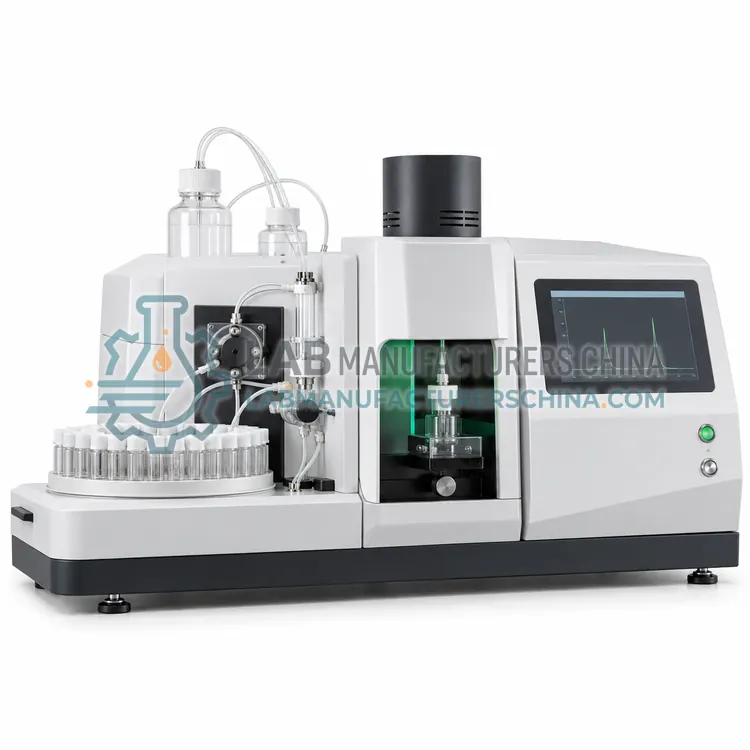
Atomic Fluorescence Spectrometer for Mercury and Arsenic in Water
水中汞砷测定原子荧光光谱仪
- CE (to be confirmed)
- +1
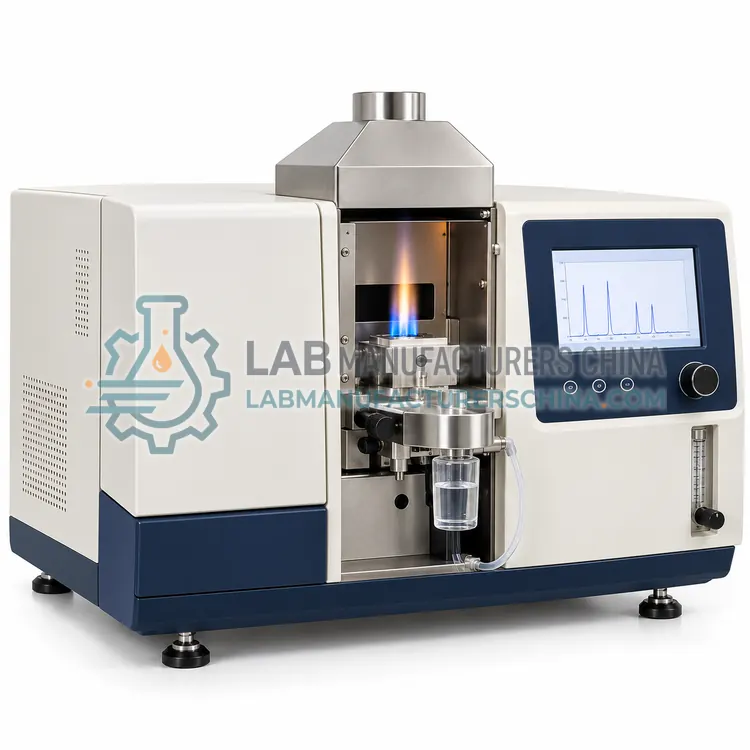
Online Multi-Parameter Water Quality Analyzer for Treatment Plants
水处理厂在线多参数水质分析仪
- CE (to be confirmed)
- +2