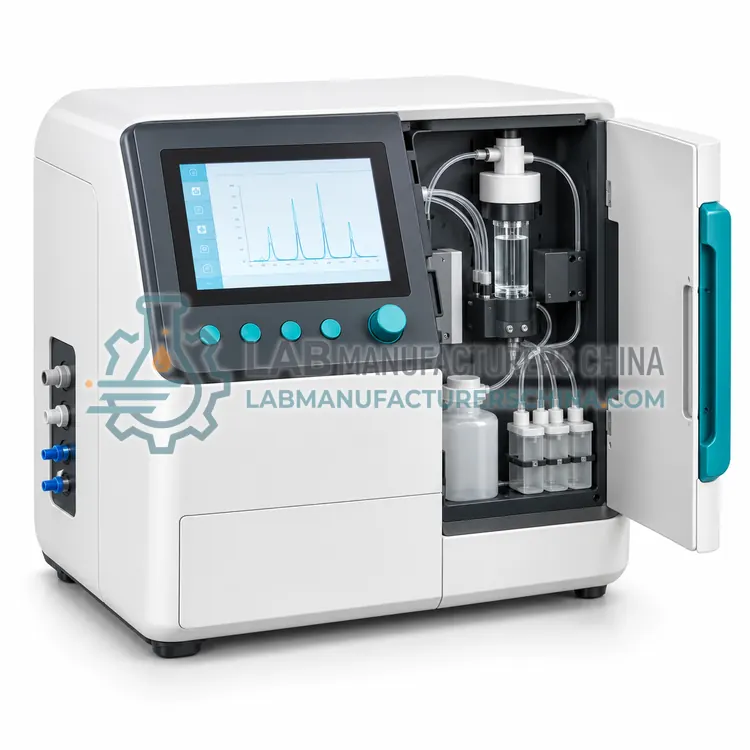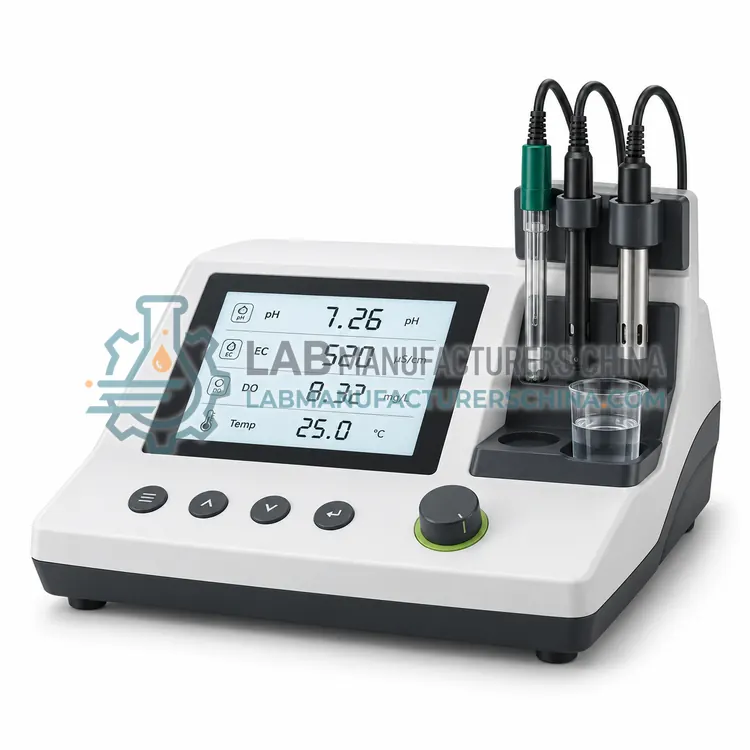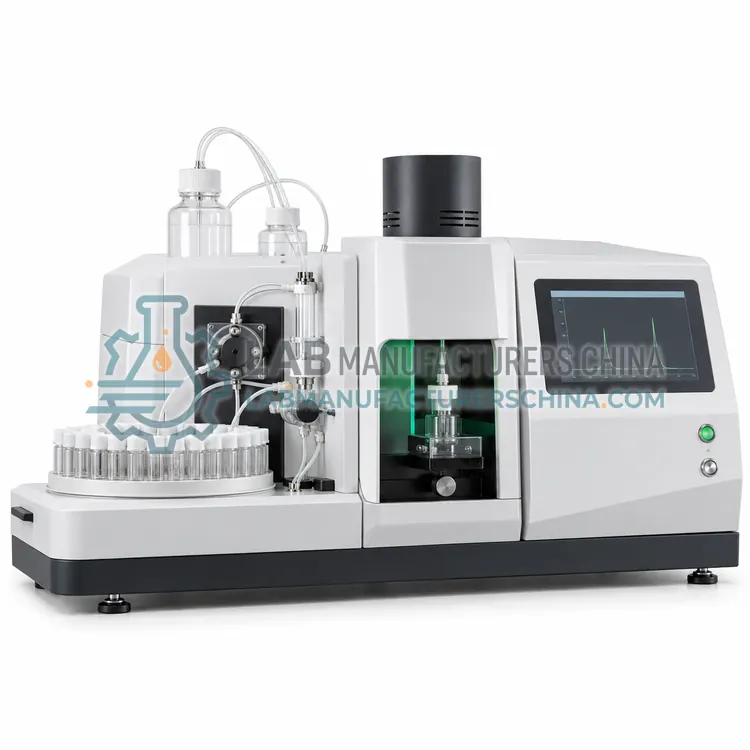
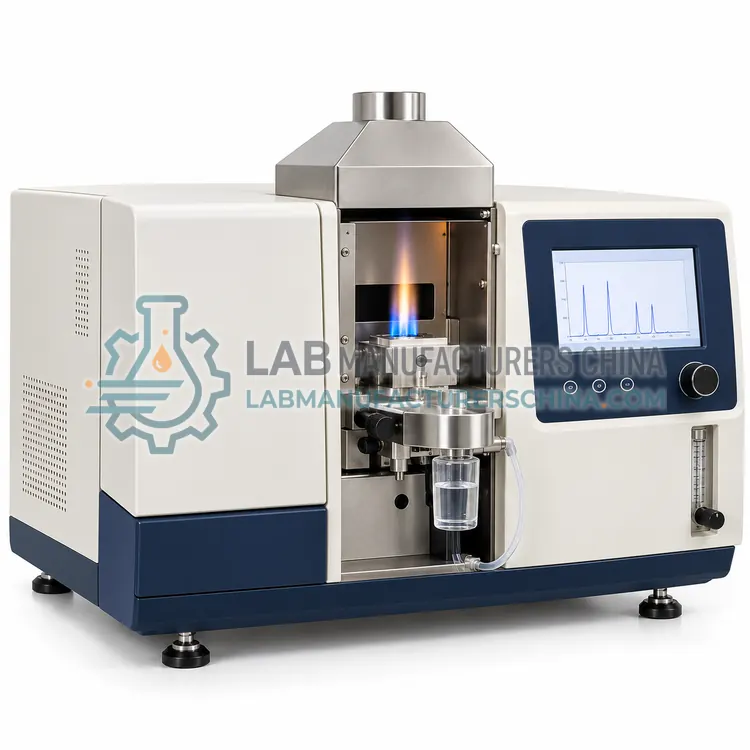
Atomic Fluorescence Spectrometer for Mercury and Arsenic in Water
水中汞砷测定原子荧光光谱仪
- CE (to be confirmed)
- +1
Welcome to Lab Manufacturers China — laboratory instruments direct from a Chinese manufacturer
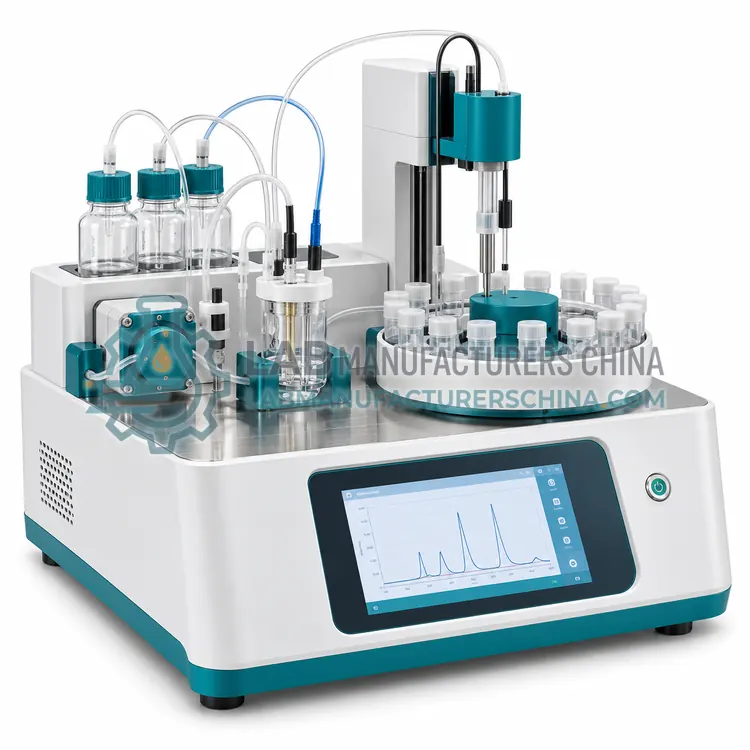
阳极溶出伏安重金属分析仪
Price on request — FOB / CIF quoted per order
Prices depend on configuration, quantity and destination port.
| Measuring method | Anodic stripping voltammetry (SWASV / DPASV) |
|---|---|
| Analytes | Zn, Cd, Pb, Cu (Hg, As optional) |
| Measuring range | 0.1–1000 µg/L |
| Detection limit (Pb, Cd) | 0.1–1 µg/L |
| Repeatability | RSD ≤ 5% |
| Deposition time | 30–600 s (programmable) |
By Lab Manufacturers China Technical TeamLast reviewed Standards: ISO 15586, ISO 17294-2, ISO 11885
An electrochemical analyzer that preconcentrates metals on a working electrode and measures stripping peaks for lead, cadmium, copper and zinc at 0.1 to 1000 µg/L. It provides a low-cost, compact alternative to atomic spectroscopy for screening water and wastewater.
An electrochemical analyzer that preconcentrates metals on a working electrode and measures stripping peaks for lead, cadmium, copper and zinc at 0.1 to 1000 µg/L. It provides a low-cost, compact alternative to atomic spectroscopy for screening water and wastewater.
This variant uses a three-electrode cell comprising a working electrode such as glassy carbon with bismuth or gold film, an Ag/AgCl reference and a platinum counter electrode. After deposition at about −1.2 V for 60–300 seconds, a square-wave or differential pulse sweep re-oxidizes the metals, producing peaks for zinc, cadmium, lead and copper at characteristic potentials. Standard addition calibration compensates for matrix effects, and software integrates peaks automatically. Detection limits are typically 0.1–1 µg/L for lead and cadmium, with relative standard deviation below 5%. Samples are acidified to pH 1–2 and often UV digested when organics are present. The analyzer can handle drinking water, surface water and moderately clean effluents, and it requires no gases. The measurement takes 5 to 10 minutes per sample, limiting throughput, and interferences from high organics, surfactants or intermetallic compounds need attention.
Heavy metal analyzers rely on electrochemical or atomic spectroscopic principles. In anodic stripping voltammetry (ASV), metals are first deposited onto a working electrode at a negative potential, then re-oxidized by a potential sweep, and the stripping current peak at a characteristic potential is proportional to concentration. In atomic absorption spectrometry (AAS), a sample is atomized in a flame or graphite furnace and a hollow cathode lamp beam is absorbed at the metal's wavelength according to Beer–Lambert law. Atomic fluorescence spectrometry (AFS) generates mercury or arsenic hydrides by reaction with borohydride, excites the atoms with a lamp and detects the emitted fluorescence at right angles. Calibration with certified standards, matrix modification and blank correction yield concentrations in µg/L.
A typical anodic stripping voltammetry heavy metal analyzer configuration offers measuring method of Anodic stripping voltammetry (SWASV / DPASV), analytes of Zn, Cd, Pb, Cu (Hg, As optional), measuring range of 0.1–1000 µg/L, detection limit (Pb, Cd) of 0.1–1 µg/L, repeatability of RSD ≤ 5% and deposition time of 30–600 s (programmable). Values are indicative of the product class; the exact figures for each configuration are confirmed on the quotation and the calibration documents supplied with the instrument.
The Anodic Stripping Voltammetry Heavy Metal Analyzer is used in screening lead and cadmium in drinking water, copper and zinc monitoring in electroplating rinse water, groundwater screening surveys and teaching electrochemistry laboratories. Across the wider Heavy Metal Analyzers class, laboratories also deploy it for drinking water lead, cadmium and arsenic compliance, industrial wastewater discharge metal monitoring and mercury and arsenic determination in surface water.
Relevant standards and methods include ISO 15586, ISO 17294-2, ISO 11885, ISO 17852, ISO 11969, HJ 694, HJ 700, GB/T 5750.6, ASTM D3559 and IEC 61010-1. Certification candidates for this model are CE and ISO 9001 manufacturing; each is to be confirmed for the specific configuration before shipment, and certificates are supplied only where they have been issued.
Trace metal work starts with contamination control: use acid-washed plastic containers, high-purity nitric acid and ultrapure water, and preserve samples to pH below 2. Digest samples containing particulates or organics according to the method before analysis. Calibrate with a blank and at least three standards and verify with independent check standards, spikes and duplicates each batch. AAS and AFS need compressed gases, exhaust ventilation and lamp warm-up, and mercury methods need gold-trap or cold-vapor handling. Electrodes for ASV need polishing or replacement of mercury-free film. Handle acid, mercury and arsenic waste under local hazardous waste rules. Use instruments in rooms with stable temperature and follow IEC 61010-1 safety requirements.
Choose the ASV analyzer for affordable screening of lead, cadmium, copper and zinc, or where gases and laboratory infrastructure are limited. For mercury, arsenic or regulatory compliance, use AFS or AAS. In an RFQ, specify target metals, detection limits, sample matrices, electrode type, autosampler need and any reference method the results must match.
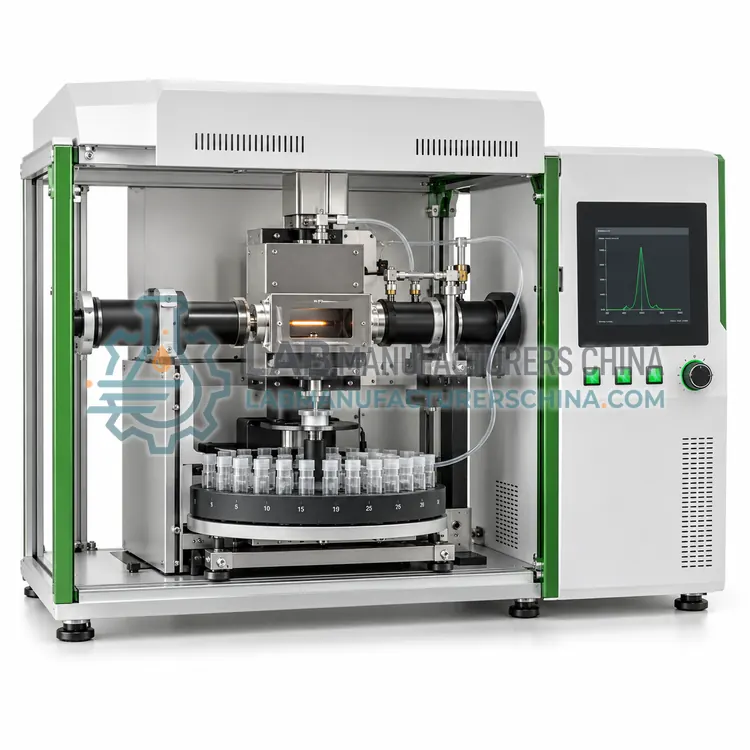
Match the technique to the metals, detection limits and workload. For lead, cadmium, copper and zinc screening at low cost, stripping voltammetry offers µg/L sensitivity and portability. Mercury, arsenic, selenium and antimony at sub-µg/L are best served by atomic fluorescence with hydride generation. Flame AAS handles mg/L to high µg/L levels of common metals such as copper, zinc, iron and chromium quickly and economically. Graphite furnace AAS reaches sub-µg/L for cadmium, lead and chromium with tiny sample volumes but at lower throughput. If you must analyze many elements simultaneously at ng/L levels, ICP-MS is a different class of instrument. Consider the regulatory limit, sample numbers, digestion needs, gases required, operator skill and whether results must follow a named method such as HJ 694 or ISO 15586.
| Measuring method | Anodic stripping voltammetry (SWASV / DPASV) |
|---|---|
| Analytes | Zn, Cd, Pb, Cu (Hg, As optional) |
| Measuring range | 0.1–1000 µg/L |
| Detection limit (Pb, Cd) | 0.1–1 µg/L |
| Repeatability | RSD ≤ 5% |
| Deposition time | 30–600 s (programmable) |
| Potential range | −2.0 to +2.0 V |
| Sample volume | 10–20 mL |
| Analysis time | 5–10 min per sample |
| Power supply | AC 100–240 V, 50/60 Hz, 50 VA |
Indicative values for this product class. Final specifications are confirmed on the quotation and in the calibration documents supplied with the instrument.
Acidifying to pH 1–2 keeps metals dissolved and releases them from complexes or adsorption on container walls. Supporting electrolyte such as acetate buffer or nitric acid also ensures adequate conductivity. Organic-rich samples need UV or acid digestion first.
Surfactants and dissolved organics can foul the electrode, and high copper can form intermetallic compounds that suppress zinc and cadmium peaks. Dissolved oxygen is removed by nitrogen purging where needed. Standard addition and UV digestion help reduce these effects.
Bismuth film electrodes are renewed regularly, often in situ before each run or daily, while solid gold or glassy carbon substrates last months with polishing. Loss of peak height or poor reproducibility signals electrode renewal or replacement.
Common regulated metals include lead, cadmium, mercury, arsenic, chromium (VI), copper, iron, manganese and zinc. GB 5749 limits include 0.01 mg/L for lead and arsenic, 0.005 mg/L for cadmium and 0.001 mg/L for mercury. Confirm the standard applicable to your jurisdiction.
AAS measures light absorbed by ground-state atoms, while AFS measures fluorescence re-emitted by excited atoms. AFS with hydride generation is more sensitive for mercury, arsenic, selenium and antimony, and needs less gas. AAS covers more elements, including metals like copper, zinc and lead.
Anodic stripping voltammetry offers comparable sensitivity for lead, cadmium, copper and zinc at low cost and supports field use, but it covers fewer elements and is sensitive to organics. Regulatory compliance usually requires the specified atomic spectroscopy or ICP method.
水中汞砷测定原子荧光光谱仪
水中痕量金属测定石墨炉原子吸收光谱仪