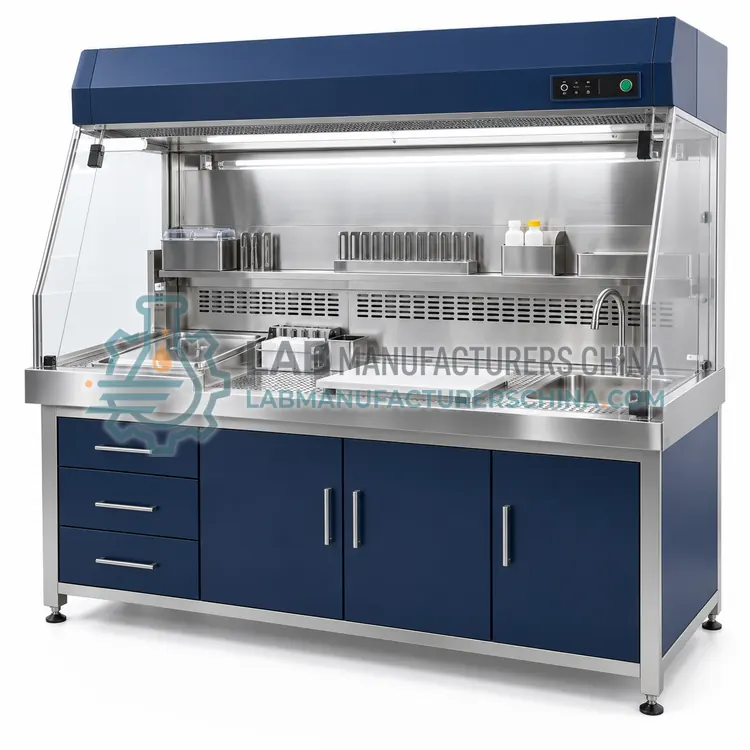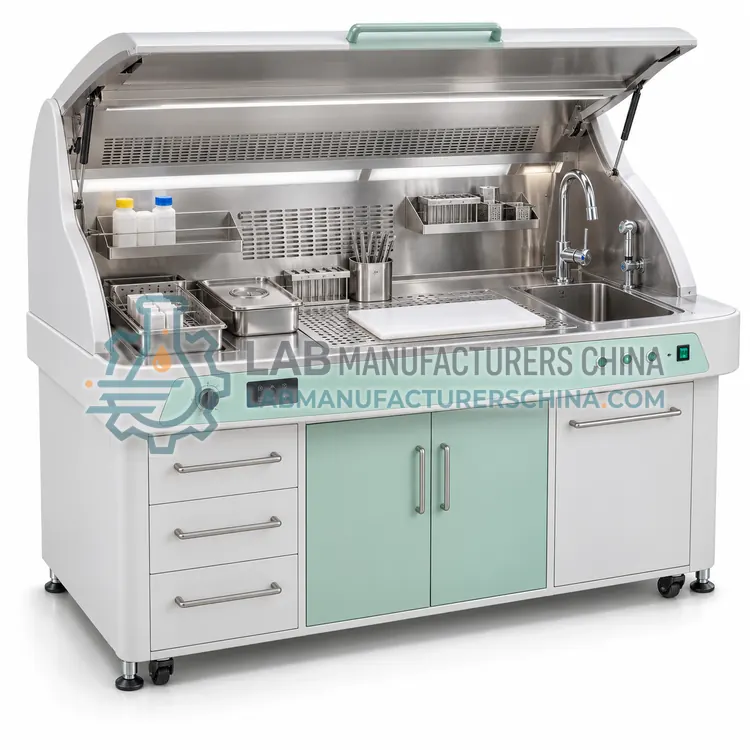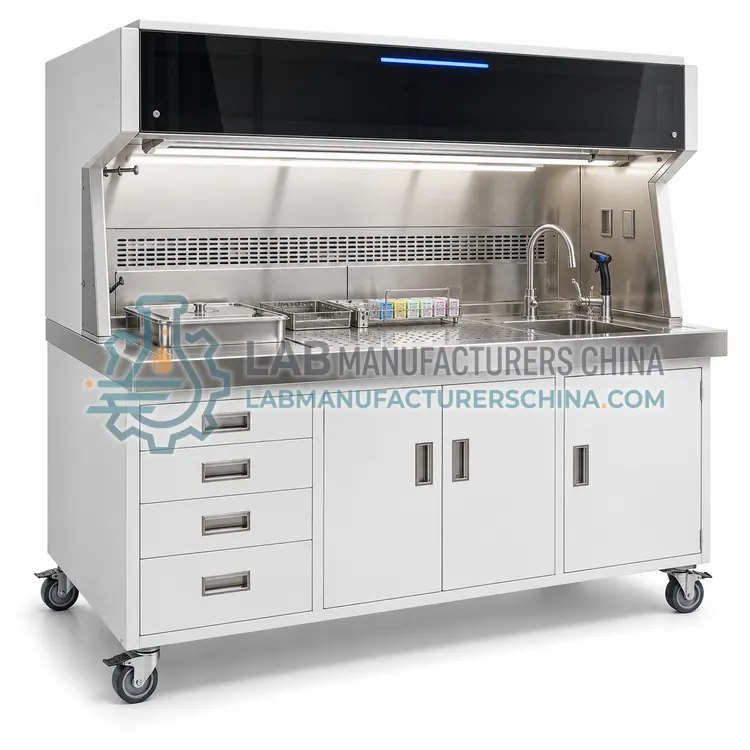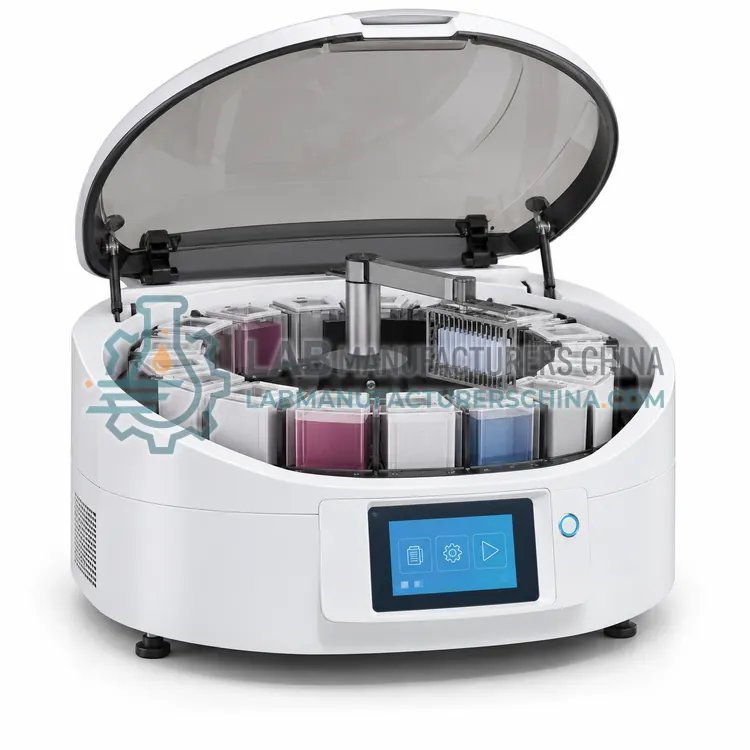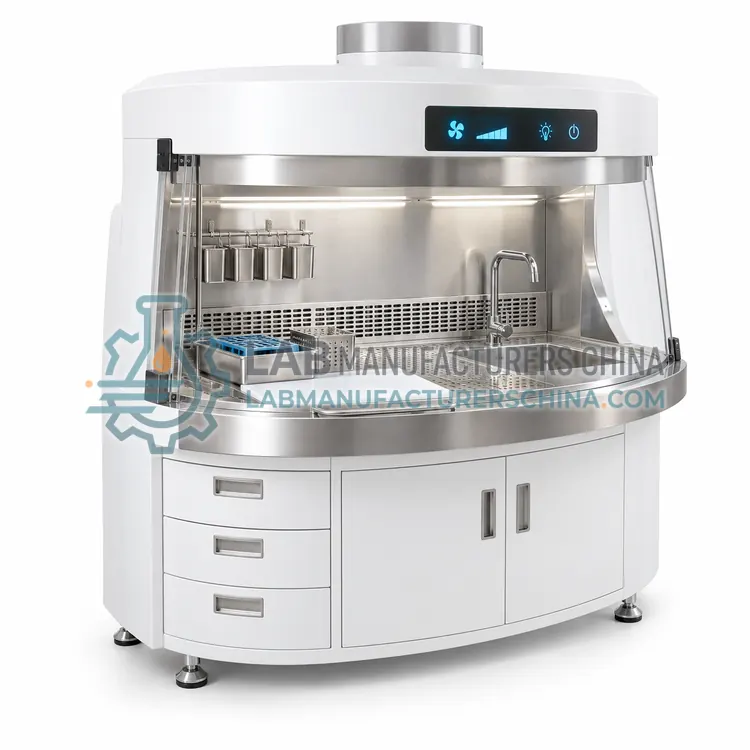
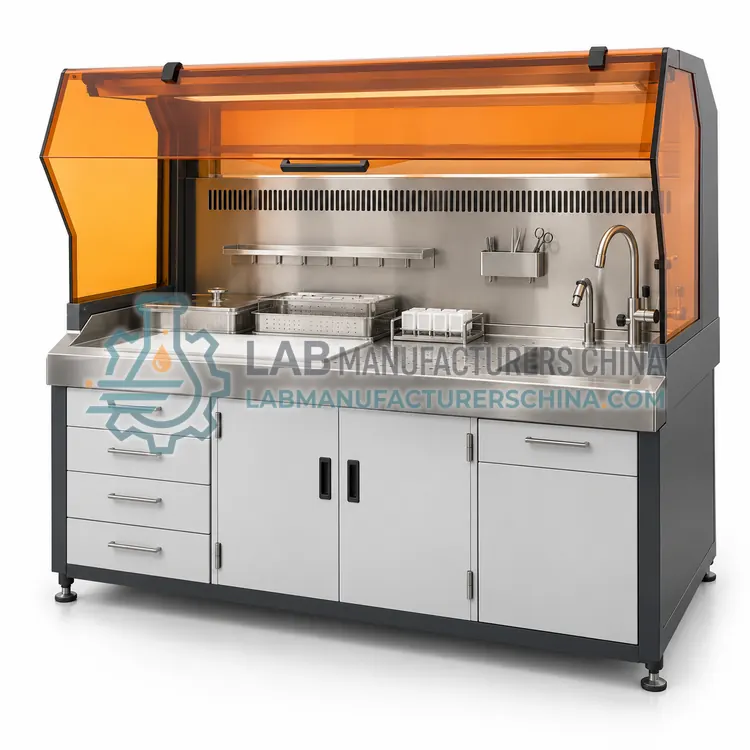
Downdraft Grossing Station
下吸式取材台
- SKU GRS-0001
- Grossing Stations
- CE (to be confirmed)
- IEC 61010-1 compliance (to be confirmed)
- ISO 9001 manufacturing (to be confirmed)
Price on request — FOB / CIF quoted per order
Prices depend on configuration, quantity and destination port.
Key specifications
| Work surface width | 1200–1800 mm |
|---|---|
| Work surface depth | 700–800 mm |
| Face velocity | 0.3–0.5 m/s |
| Airflow | 800–1500 m³/h |
| Surface material | 304 stainless steel |
| Height | 850–950 mm, optionally adjustable |
Request a quote Download brochure · to be provided
By Lab Manufacturers China Technical TeamLast reviewed Standards: OSHA 29 CFR 1910.1048 (formaldehyde), ISO 15189, IEC 61010-1
What is the Downdraft Grossing Station?
A downdraft grossing station draws air down through a perforated work surface into a plenum, capturing formalin vapors at the source. It is preferred for large specimens and when the operator needs an unobstructed work area.
What is the Downdraft Grossing Station?
A downdraft grossing station draws air down through a perforated work surface into a plenum, capturing formalin vapors at the source. It is preferred for large specimens and when the operator needs an unobstructed work area.
Overview
The downdraft grossing station has a grated or slotted stainless steel work surface through which a fan pulls air at 0.3 to 0.5 m/s into a plenum and then into ducting or filters. Because vapor is pulled downward and away from the breathing zone, operators can work with large specimens such as colectomy or mastectomy samples without a hood obstructing access. Work surfaces typically measure 1200 to 1800 mm wide with raised edges to contain liquids, and a drain channel directs fluids to a sink or collection tray. Height-adjustable versions help ergonomics. Lighting, a foot-operated tap and a scale can be added. Airflow design must avoid eddies around the operator, and the room should have makeup air. The unit is often installed with ducted exhaust for best performance.
How does it work?
A grossing station protects the operator from formaldehyde and biological hazards by drawing air away from the breathing zone. Downdraft tables pull air through a perforated or slotted work surface into a plenum below, backdraft designs pull air through a rear slot behind the work area, and hooded types use a canopy. Air passes through a duct to the outside or through carbon filters in a ductless unit that captures vapors. Typical face velocities of 0.3 to 0.5 m/s maintain capture. Work surfaces are stainless steel or solid resin, resistant to formalin and disinfectants. A sink with foot or sensor water control, a waste disposal chute, task lighting, a balance and sometimes an overhead camera support workflow. Fans are sized to give quiet operation and adequate airflow without disrupting dissection.
What are the key features?
- Perforated or slotted stainless steel work surface
- Airflow of 0.3 to 0.5 m/s into a lower plenum
- Raised edges and drain channel for liquids
- Work surface width of 1200 to 1800 mm
- Foot-operated tap, lighting and scale options
- Suitable for ducted or filtered exhaust
What are the technical specifications?
A typical downdraft grossing station configuration offers work surface width of 1200–1800 mm, work surface depth of 700–800 mm, face velocity of 0.3–0.5 m/s, airflow of 800–1500 m³/h, surface material of 304 stainless steel and height of 850–950 mm, optionally adjustable. Values are indicative of the product class; the exact figures for each configuration are confirmed on the quotation and the calibration documents supplied with the instrument.
Which applications is it used for?
The Downdraft Grossing Station is used in large surgical specimens, surgical pathology, forensic and autopsy sampling and teaching and anatomy. Across the wider Grossing Stations class, laboratories also deploy it for surgical pathology grossing, autopsy sample handling and veterinary pathology.
Which standards and certifications apply?
Relevant standards and methods include OSHA 29 CFR 1910.1048 (formaldehyde), ISO 15189, IEC 61010-1, ISO 14644-1 and GBZ 2.1. Certification candidates for this model are CE, IEC 61010-1 compliance and ISO 9001 manufacturing; each is to be confirmed for the specific configuration before shipment, and certificates are supplied only where they have been issued.
Test airflow at installation and at least annually, recording face velocity across the work area. Formaldehyde exposure should be measured against local occupational limits, with action levels and monitoring programs in place. Carbon filters in ductless units saturate and must be replaced on schedule, ideally with a vapor sensor. Keep the work surface and drain clean and use compatible disinfectants. Provide makeup air so that room pressure stays balanced. Train staff to work within the capture zone and to keep specimens away from the edge. Dispose of formalin-contaminated waste under hazardous waste rules, and inspect electrical and mechanical parts regularly.
How do I select the right Downdraft Grossing Station?
Choose downdraft when large specimens, open access and strong capture at the work surface are priorities. It needs more floor space and a duct. Specify table size, airflow, surface material, sink position, height adjustment, noise and exhaust connection, and request airflow test data.
How does it compare with other Grossing Stations variants?
Choose the airflow design first: downdraft for large specimens and best capture at the work surface, backdraft for bench-style setups, and ductless filtered units where ducting is not possible. Consider table size and height adjustment for ergonomics, sink position, surface material, integrated scales, cameras and lighting. Check airflow and face velocity data, noise level and whether filter life indicators are provided. Ducted systems need exhaust capacity and makeup air, while ductless units need scheduled carbon filter changes and formaldehyde monitoring. Confirm the layout of multiple stations in the room and compliance with workplace exposure limits. Ask for installation, airflow testing and staff training support, and confirm compatibility with laboratory information systems if data capture is included.
Full specifications
| Work surface width | 1200–1800 mm |
|---|---|
| Work surface depth | 700–800 mm |
| Face velocity | 0.3–0.5 m/s |
| Airflow | 800–1500 m³/h |
| Surface material | 304 stainless steel |
| Height | 850–950 mm, optionally adjustable |
| Noise level | ≤ 60 dB(A) |
| Lighting | LED, about 1000 lux |
| Power supply | 220 V, 50 Hz, about 0.5 kW |
Indicative values for this product class. Final specifications are confirmed on the quotation and in the calibration documents supplied with the instrument.
Applications
- Large surgical specimens
- Surgical pathology
- Forensic and autopsy sampling
- Teaching and anatomy
Key features
- Perforated or slotted stainless steel work surface
- Airflow of 0.3 to 0.5 m/s into a lower plenum
- Raised edges and drain channel for liquids
- Work surface width of 1200 to 1800 mm
- Foot-operated tap, lighting and scale options
- Suitable for ducted or filtered exhaust
Frequently asked questions about Downdraft Grossing Station
Air flows down and away from the operator, so large organs can be handled without a hood or rear wall blocking movement. It also pulls heavy formalin vapors, which are denser than air, away from the breathing zone.
Raised edges and a sloped surface direct liquid to a drain or collection tray, while grates or slots keep specimens above the fluid. A removable tray under the grate is easy to clean and helps avoid clogging of the plenum.
Ducted exhaust to the outside is preferred, with duct size matched to airflow and fan capacity. If ducting is not possible, use a verified ductless configuration with carbon filters and vapor monitoring. Confirm building ventilation and makeup air design.
A grossing station is a ventilated dissection workstation for examining and cutting surgical specimens. It captures formaldehyde vapors and aerosols near the work surface, protecting staff while they describe, measure and sample tissue for processing.
Most designs aim for a face velocity of 0.3 to 0.5 m/s across the work surface, with total airflow of 500 to 1500 m³/h depending on size. Verify with smoke tests and anemometer readings at installation and yearly.
Ductless units with activated carbon or chemical filters can control formaldehyde when filters are replaced on schedule and vapor monitoring is used. They suit rooms where ducting is difficult, but may need more monitoring than ducted systems.
Related models