
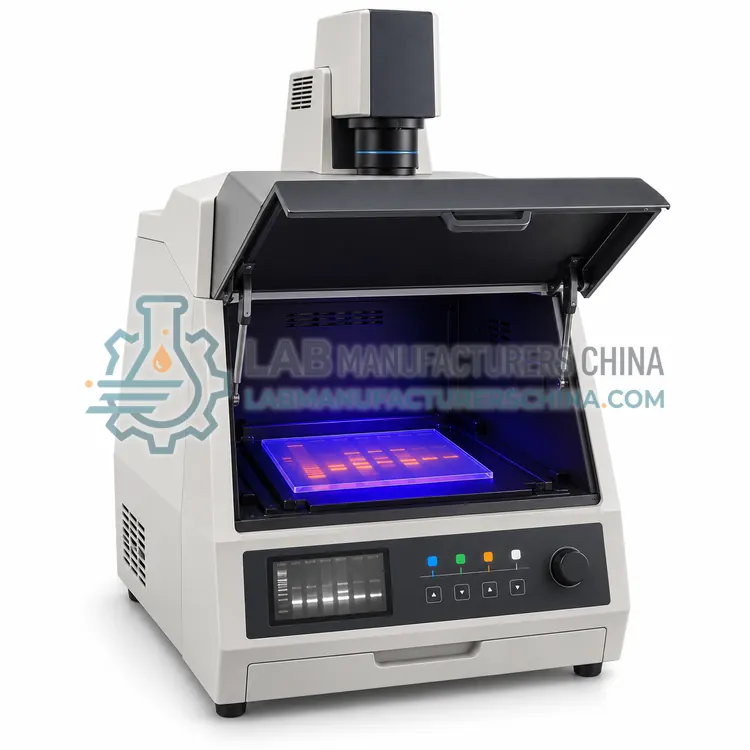
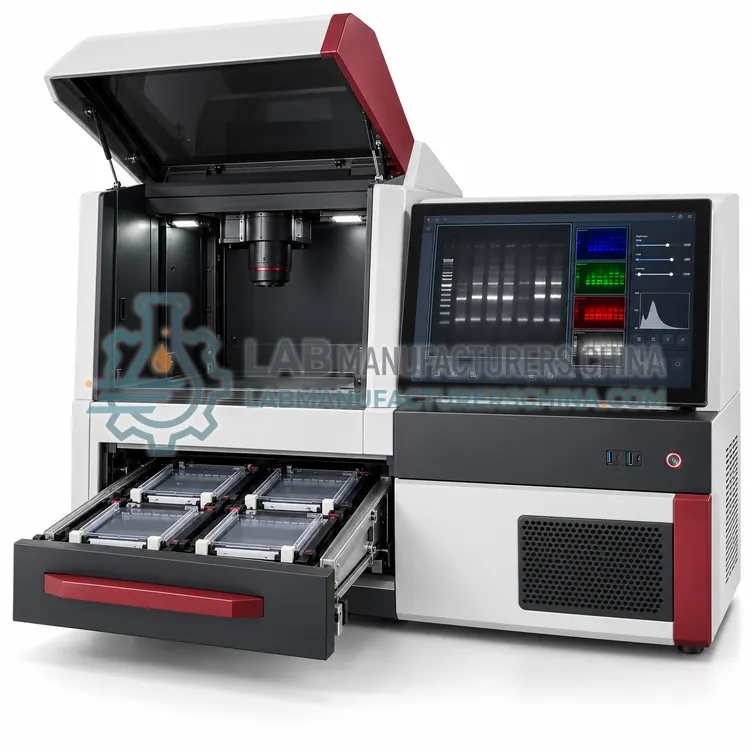
Automated Multi-Gel Documentation System
自动多胶成像系统
- SKU GED-0005
- Gel Documentation
- CE (to be confirmed)
- ISO 9001 manufacturing (to be confirmed)
- IEC 61010-1 test report (to be confirmed)
Price on request — FOB / CIF quoted per order
Prices depend on configuration, quantity and destination port.
Key specifications
| Tray capacity | 4-20 gels per load |
|---|---|
| Throughput | 20-80 gels per hour |
| Excitation options | 302 nm UV, 470 nm blue LED, white |
| Emission filter wheel | 4-6 positions |
| Camera type | Cooled CCD or sCMOS, 16 bit |
| Gel size accepted | Up to 20 cm × 25 cm |
Request a quote Download brochure · to be provided
By Lab Manufacturers China Technical TeamLast reviewed Standards: IEC 61010-1, IEC 61010-2-081, IEC 62471
What is the Automated Multi-Gel Documentation System?
A gel documentation platform that images several gels or blots in sequence without manual handling, using a tray magazine, automated illumination and barcode-linked file naming. It suits high-volume, high-throughput screening and genotyping laboratories.
What is the Automated Multi-Gel Documentation System?
A gel documentation platform that images several gels or blots in sequence without manual handling, using a tray magazine, automated illumination and barcode-linked file naming. It suits high-volume, high-throughput screening and genotyping laboratories.
Overview
The automated multi-gel system adds a motorized tray changer or magazine of 4 to 20 gel trays, a robotic or indexing transport into the imaging position, and software that links each image to a tray barcode or lane map. Illumination options typically cover UV transillumination, blue LED and white epi-illumination, with a filter wheel to select emission bands, so one instrument documents several assay types. Automated focus and exposure routines set parameters per gel and flag saturated images for re-imaging, and results are written to a network share with run metadata. Throughput reaches 20 to 80 gels per hour depending on exposure time, which helps laboratories processing large PCR screening or genotyping batches. Consumable trays, lamp hours and filter cleanliness become the main maintenance items.
How does it work?
Gel documentation converts a stained or labelled gel into a digital image. A light source excites the sample, either from below through a transilluminator or from above with reflected light, and an emission filter blocks the excitation wavelengths so that only fluorescent signal reaches the camera. UV at 302 nm excites stains such as ethidium bromide, blue LEDs at about 470 nm excite SYBR-type dyes, and chemiluminescence needs no excitation because the blot emits light directly. A fixed-focus or motorized lens projects the image onto a cooled CCD or sCMOS sensor, where long exposures accumulate signal while cooling limits dark current. Software controls exposure, binning and filter selection, then displays 16-bit images and can measure band intensity, calculate molecular weights against a ladder and quantify fluorescence for densitometry.
What are the key features?
- Motorized tray magazine for 4 to 20 gels or blots.
- UV, blue LED and white illumination options.
- Filter wheel for multiple emission wavelengths.
- Automatic focus, exposure and saturation flagging.
- Barcode-linked file naming and metadata logging.
- Throughput of 20 to 80 gels per hour.
What are the technical specifications?
A typical automated multi-gel documentation system configuration offers tray capacity of 4-20 gels per load, throughput of 20-80 gels per hour, excitation options of 302 nm UV, 470 nm blue LED, white, emission filter wheel of 4-6 positions, camera type of Cooled CCD or sCMOS, 16 bit and gel size accepted of Up to 20 cm × 25 cm. Values are indicative of the product class; the exact figures for each configuration are confirmed on the quotation and the calibration documents supplied with the instrument.
Which applications is it used for?
The Automated Multi-Gel Documentation System is used in high-volume PCR screening documentation, genotyping batch imaging, contract laboratory gel records and long unattended imaging runs overnight. Across the wider Gel Documentation class, laboratories also deploy it for agarose gel imaging after electrophoresis, western blot chemiluminescence imaging and fluorescence multiplex gel documentation.
Which standards and certifications apply?
Relevant standards and methods include IEC 61010-1, IEC 61010-2-081, IEC 62471, IEC 61326-1 and ISO 13485 manufacturing. Certification candidates for this model are CE, ISO 9001 manufacturing and IEC 61010-1 test report; each is to be confirmed for the specific configuration before shipment, and certificates are supplied only where they have been issued.
Position the system away from strong ambient light and vibration, and keep the enclosure closed during exposure. Inspect and clean the UV transilluminator filter periodically, because scratches and stains scatter light and reduce contrast. Protect the camera lens and emission filter from dust and fingerprints, storing filters in their cases. Check UV intensity with a radiometer at defined intervals, replace lamps at the rated hours and verify the interlock each time the unit is serviced. Apply a consistent exposure and aperture setting across a project so intensities are comparable, and record imaging parameters with each saved file. Ensure that users follow local rules on UV exposure, gloves and stain waste disposal.
How do I select the right Automated Multi-Gel Documentation System?
Select the automated platform when dozens of gels are imaged daily and manual loading limits productivity. Compare tray capacity and throughput with your batch size, confirm which stains and illumination modes are supported, and check how images are named and transferred, since traceability often drives the purchase. Verify that saturated images are flagged automatically.
How does it compare with other Gel Documentation variants?
Choose by the detection chemistry: UV transillumination for ethidium bromide and similar stains, blue-light LED for safer alternatives, and multifluorescence for multiplexed labels. Chemiluminescence work needs a darkroom system with a deeply cooled camera but no light source. Sensitivity depends mainly on camera quantum efficiency, cooling and lens aperture, so compare those before resolution figures. Check the excitation wavelengths and emission filters provided, whether the transilluminator is 302, 365 or dual wavelength, and how much of the gel area the lens covers. Confirm software features for band detection, ladder-based sizing, densitometry and export, and verify UV shielding and interlocks for operator safety.
Full specifications
| Tray capacity | 4-20 gels per load |
|---|---|
| Throughput | 20-80 gels per hour |
| Excitation options | 302 nm UV, 470 nm blue LED, white |
| Emission filter wheel | 4-6 positions |
| Camera type | Cooled CCD or sCMOS, 16 bit |
| Gel size accepted | Up to 20 cm × 25 cm |
| Automation | Auto focus, auto exposure, saturation detection |
| Data handling | Barcode-linked naming, network export |
| Safety | Enclosed optics, interlocked access door |
| Power supply | 220 V, 50 Hz, 300-800 W |
Indicative values for this product class. Final specifications are confirmed on the quotation and in the calibration documents supplied with the instrument.
Applications
- High-volume PCR screening documentation
- Genotyping batch imaging
- Contract laboratory gel records
- Long unattended imaging runs overnight
Key features
- Motorized tray magazine for 4 to 20 gels or blots.
- UV, blue LED and white illumination options.
- Filter wheel for multiple emission wavelengths.
- Automatic focus, exposure and saturation flagging.
- Barcode-linked file naming and metadata logging.
- Throughput of 20 to 80 gels per hour.
Frequently asked questions about Automated Multi-Gel Documentation System
Not if calibration is maintained. Automated systems use the same optics and cameras but set focus and exposure by algorithm, so quality depends on regular calibration of the autofocus reference and lamp output rather than on operator skill.
Through tray barcodes or lane maps entered in software, which are written into the file metadata together with date, exposure and illumination settings. Confirm the export format if your quality system needs external review.
Replacing UV lamps at rated hours, cleaning the transilluminator glass and filters, checking tray transport alignment, and verifying the exposure calibration with a reference target at fixed intervals.
UV at 302 nm excites ethidium bromide and similar intercalating stains, blue LEDs near 470 nm excite SYBR-type dyes, and white or coloured epi-illumination suits colorimetric stains. Chemiluminescence needs no light source at all.
Moderately cooled cameras are adequate for bright UV-excited gels, while chemiluminescence and weak fluorescence need cooling to -30 °C or below to keep dark current low during long exposures. Cooling extends usable exposure time.
Only with care. Intensity depends on exposure, aperture, stain concentration, gel thickness and illumination uniformity. Use fixed settings, include a ladder or standard on each gel, and confirm that no band is saturated before comparing samples.
Related models
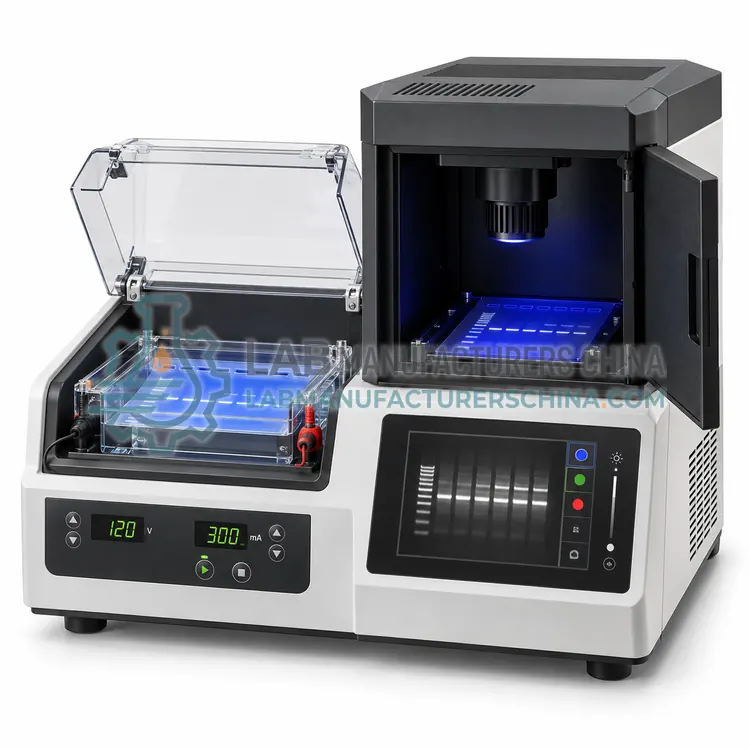
Automated Agarose Gel Electrophoresis System with On-Board Imaging
带机上成像的自动琼脂糖凝胶电泳系统
- CE (to be confirmed)
- +2