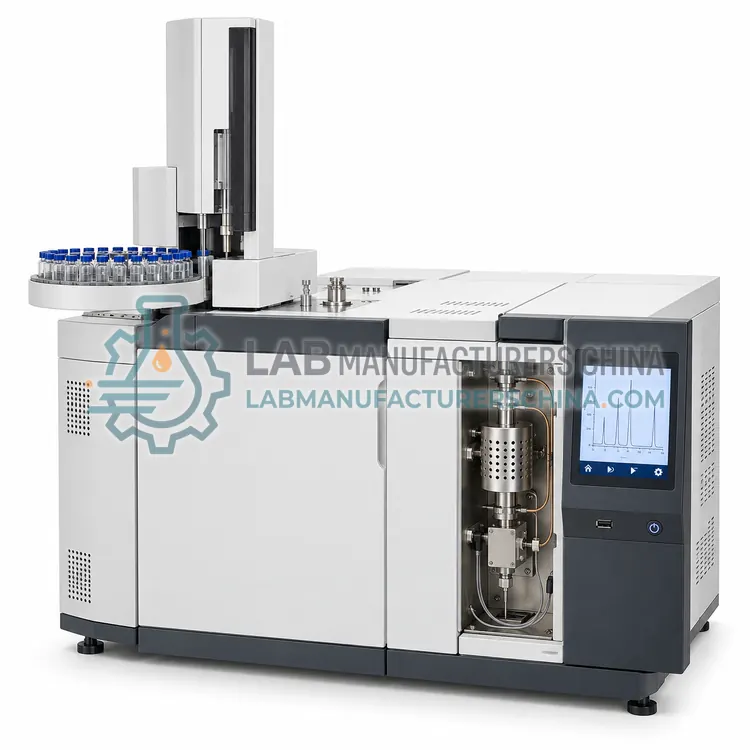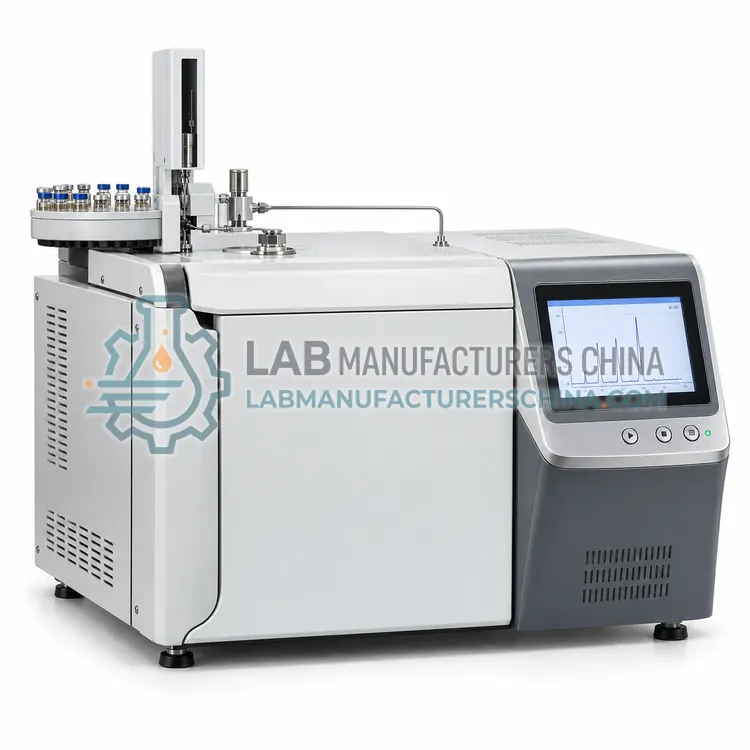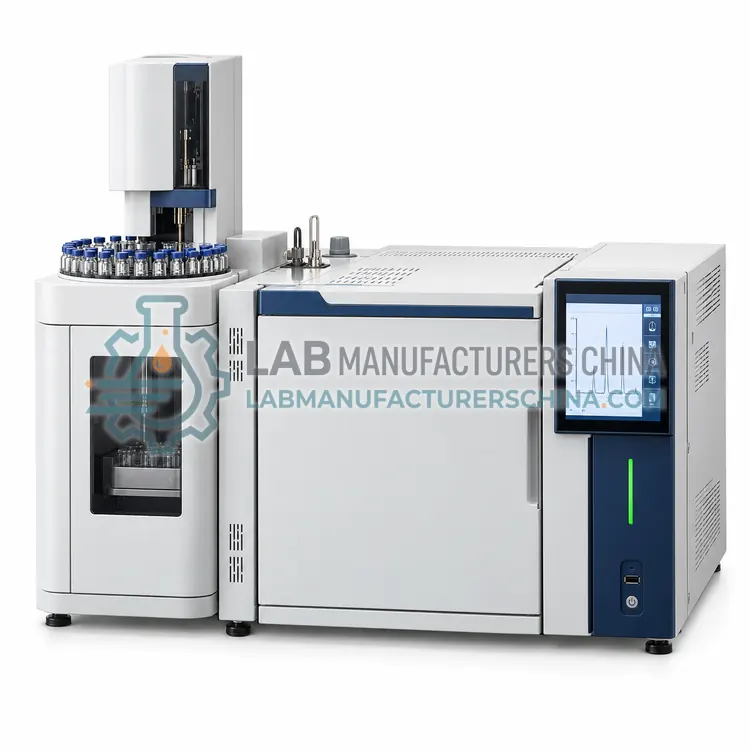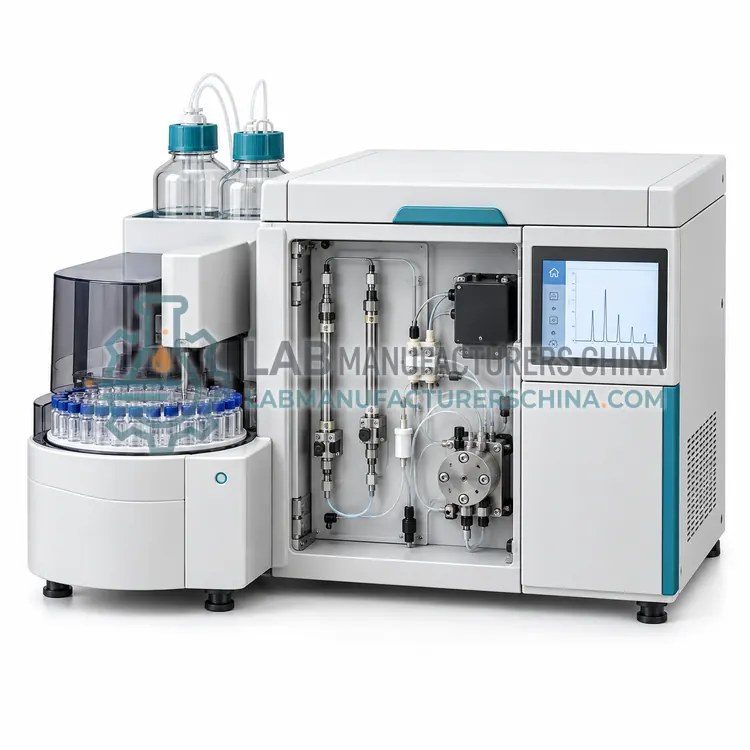
Portable Gas Chromatograph
便携式气相色谱仪
- SKU GAC-0005
- Gas Chromatography
- CE (to be confirmed)
- ISO 9001 manufacturing (to be confirmed)
- IP rating for field use (to be confirmed)
Price on request — FOB / CIF quoted per order
Prices depend on configuration, quantity and destination port.
Key specifications
| Detector options | PID (10.6 eV), micro FID, micro TCD |
|---|---|
| Detection limit (benzene, PID) | ≤1 ppb |
| Analysis time | 1–10 min |
| Column length | 5–20 m |
| Maximum oven temperature | 200–250 °C |
| Oven ramp rate | up to 300 °C/min |
Request a quote Download brochure · to be provided
By Lab Manufacturers China Technical TeamLast reviewed Standards: USP <621>, USP <467>, Ph. Eur. 2.2.28
What is the Portable Gas Chromatograph?
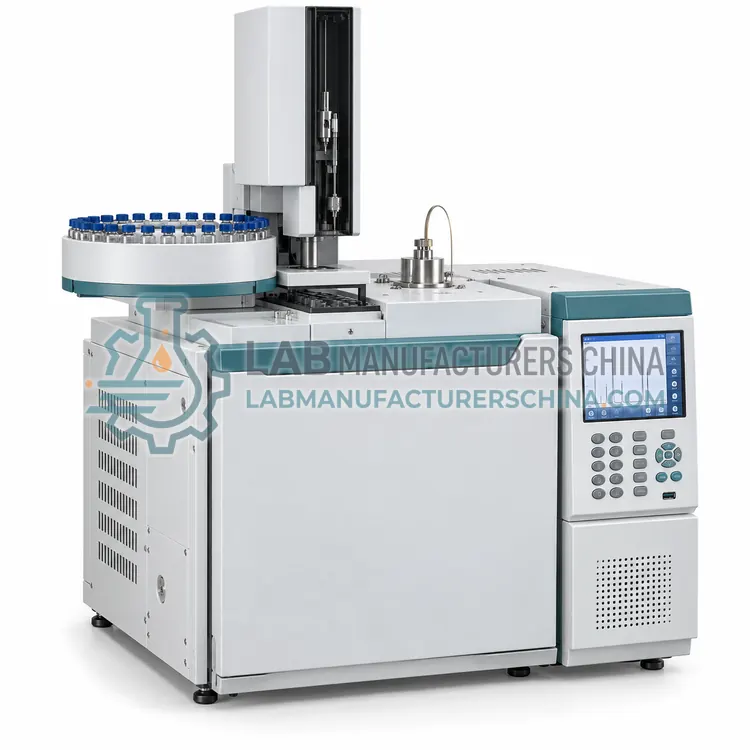
A portable gas chromatograph is a battery-operated, low-thermal-mass GC built for on-site measurement of volatile organic compounds and gases. It is chosen for field screening, emergency response and process checks where samples cannot be transported to the laboratory, trading peak capacity and sensitivity for speed and mobility.
What is the Portable Gas Chromatograph?
A portable gas chromatograph is a battery-operated, low-thermal-mass GC built for on-site measurement of volatile organic compounds and gases. It is chosen for field screening, emergency response and process checks where samples cannot be transported to the laboratory, trading peak capacity and sensitivity for speed and mobility.
Overview
Portable GCs use short columns of 5–20 m or micro-machined columns with low-thermal-mass resistive heating, allowing oven ramps of several hundred degrees per minute and analysis times of 1–10 minutes. Detectors are commonly a photoionization detector (PID), a miniature FID or a micro TCD. Weight is 5–15 kg with internal battery operation of 2–8 hours, and carrier gas comes from a small cylinder or purified ambient air. Samples are drawn through an internal pump, a built-in sorbent trap can preconcentrate trace volatiles, and a touch screen provides operation with stored methods. Performance is lower than a laboratory instrument: resolution is reduced, detection limits are typically low ppb to ppm, and calibration must be checked against standards in the field. Typical uses are BTEX and VOC screening at contaminated sites, vapor intrusion surveys, process leak checks and chemical incident response.
How does it work?
A gas chromatograph injects a liquid or gas sample into a heated inlet, commonly split/splitless at 150–350 °C, where it vaporizes and mixes with carrier gas such as helium, hydrogen or nitrogen. The vapor passes through a capillary column, typically 15–60 m long, 0.25 mm internal diameter, coated with a polysiloxane or polyethylene glycol film of 0.1–1.0 µm. Analytes partition between gas and film according to volatility and polarity. A programmable oven ramps temperature, often from 40 to 300 °C, eluting compounds in boiling-point order. Detectors respond differently: the flame ionization detector senses carbon-containing compounds, the thermal conductivity detector responds to all gases, the electron capture detector to electronegative halogens, and mass spectrometers give identification. Electronic pneumatic control regulates pressure and flow to keep retention times reproducible.
What are the key features?
- Low-thermal-mass column heating allowing oven ramps up to 300 °C/min and 1–10 minute analysis
- Battery operation of 2–8 hours with total instrument weight of roughly 5–15 kg
- Photoionization or miniature FID detector suited to BTEX and volatile organic compound screening
- Built-in sampling pump and optional sorbent trap for preconcentration of trace volatiles
- Touch-screen interface with stored methods and GPS or data logging for field reporting
What are the technical specifications?
A typical portable gas chromatograph configuration offers detector options of PID (10.6 eV), micro FID, micro TCD, detection limit (benzene, PID) of ≤1 ppb, analysis time of 1–10 min, column length of 5–20 m, maximum oven temperature of 200–250 °C and oven ramp rate of up to 300 °C/min. Values are indicative of the product class; the exact figures for each configuration are confirmed on the quotation and the calibration documents supplied with the instrument.
Which applications is it used for?
The Portable Gas Chromatograph is used in BTEX and VOC site screening, vapor intrusion surveys, emergency response and hazardous release monitoring, process leak detection and workplace air monitoring. Across the wider Gas Chromatography class, laboratories also deploy it for residual solvent testing in pharmaceuticals, petrochemical hydrocarbon and purity analysis and environmental volatile organic compounds.
Which standards and certifications apply?
Relevant standards and methods include USP <621>, USP <467>, Ph. Eur. 2.2.28, ASTM D6729, ASTM D5134, US EPA Method 8015, ISO 6974, ChP 0521 and IEC 61010-1. Certification candidates for this model are CE, ISO 9001 manufacturing and IP rating for field use; each is to be confirmed for the specific configuration before shipment, and certificates are supplied only where they have been issued.
Provide high-purity carrier and detector gases, at least 99.999%, with moisture, oxygen and hydrocarbon traps, and install leak-tight fittings since oxygen damages columns at high temperature. If hydrogen is used, install a hydrogen sensor and follow flammable gas safety requirements. Condition new columns following the manufacturer's procedure and respect maximum temperature limits. Replace septa, inlet liners and O-rings regularly, and trim the column inlet to restore peak shape. Verify oven temperature, flow and detector sensitivity during qualification under USP <1058>. Ventilate exhaust, particularly when analyzing toxic solvents, and keep a stable laboratory temperature for electronic pneumatics.
How do I select the right Portable Gas Chromatograph?
Select a portable GC for on-site decisions where same-day results matter more than laboratory-grade resolution. Positive findings requiring regulatory defensibility should be confirmed by laboratory GC-MS. In an RFQ specify target compounds, required ppb detection limit, battery life, carrier gas logistics, ruggedness and field calibration procedure.
How does it compare with other Gas Chromatography variants?
Choose the detector first, because it defines what you can measure. FID covers hydrocarbons, solvents and most organic compounds at ppm to ppb levels; ECD is selective for halogenated pesticides and PCBs at ppt levels; TCD is universal and suits permanent gases and percent-level analysis. Headspace sampling is selected for volatile analytes in solid or liquid matrices without injecting the matrix. Portable GC suits field screening. Then consider inlet type, number of detectors, oven ramp rate, electronic pneumatic control precision, autosampler capacity, and carrier gas availability, since hydrogen generators can replace helium. Confirm software support for regulatory reporting, and compare column compatibility with your validated methods, including ASTM, EPA or pharmacopoeial procedures that specify particular phases and dimensions.
Full specifications
| Detector options | PID (10.6 eV), micro FID, micro TCD |
|---|---|
| Detection limit (benzene, PID) | ≤1 ppb |
| Analysis time | 1–10 min |
| Column length | 5–20 m |
| Maximum oven temperature | 200–250 °C |
| Oven ramp rate | up to 300 °C/min |
| Carrier gas | Nitrogen, helium or purified air |
| Battery runtime | 2–8 h |
| Weight | 5–15 kg |
| Repeatability (RSD) | ≤5% |
Indicative values for this product class. Final specifications are confirmed on the quotation and in the calibration documents supplied with the instrument.
Applications
- BTEX and VOC site screening
- Vapor intrusion surveys
- Emergency response and hazardous release monitoring
- Process leak detection
- Workplace air monitoring
Key features
- Low-thermal-mass column heating allowing oven ramps up to 300 °C/min and 1–10 minute analysis
- Battery operation of 2–8 hours with total instrument weight of roughly 5–15 kg
- Photoionization or miniature FID detector suited to BTEX and volatile organic compound screening
- Built-in sampling pump and optional sorbent trap for preconcentration of trace volatiles
- Touch-screen interface with stored methods and GPS or data logging for field reporting
Frequently asked questions about Portable Gas Chromatograph
Portable GCs are fit for screening and trend monitoring, with typical repeatability of 5% RSD and detection limits in the low ppb to ppm range. Resolution is lower than a 30 m laboratory column, so laboratory GC-MS confirmation is advised where results support enforcement or legal decisions.
Many units use a small cylinder of nitrogen or helium, typically giving several hundred analyses per cylinder. Some use purified ambient air through a scrubber, which removes cylinder logistics but can limit detector choice and baseline quality.
A 10.6 eV PID cannot ionize compounds with ionization potential above 10.6 eV, such as methane, CO and many chlorinated solvents like carbon tetrachloride. A micro FID or TCD can be used for these, or a higher-energy 11.7 eV lamp for some compounds.
Gas chromatography analyzes compounds that can be vaporized without decomposing, generally with boiling points below about 400 °C and molecular weights under roughly 500 Da. This includes hydrocarbons, solvents, pesticides, fatty acid esters and permanent gases. Polar or non-volatile compounds may need derivatization.
Helium is inert and widely specified in methods, but supply is variable. Hydrogen gives faster separations at optimum linear velocity and can be produced by a generator, but requires safety measures. Nitrogen is cheapest and suits some detectors but gives slower analysis and lower efficiency at high flows.
Split injection vents most of the vaporized sample, typically at ratios of 10:1 to 100:1, to prevent column overload with concentrated samples. Splitless injection transfers nearly the entire sample to the column for trace analysis, but requires solvent focusing and a longer inlet residence time.
Related models