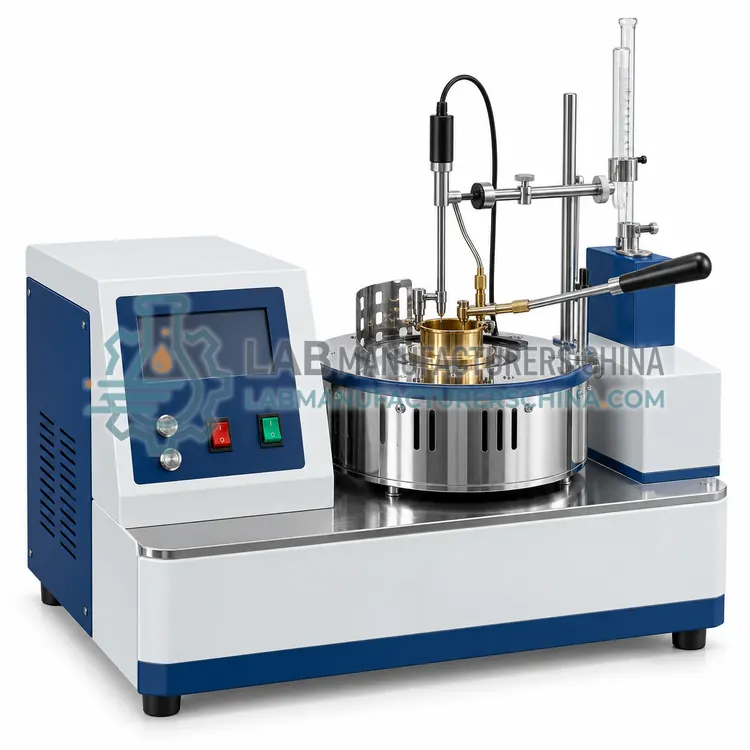
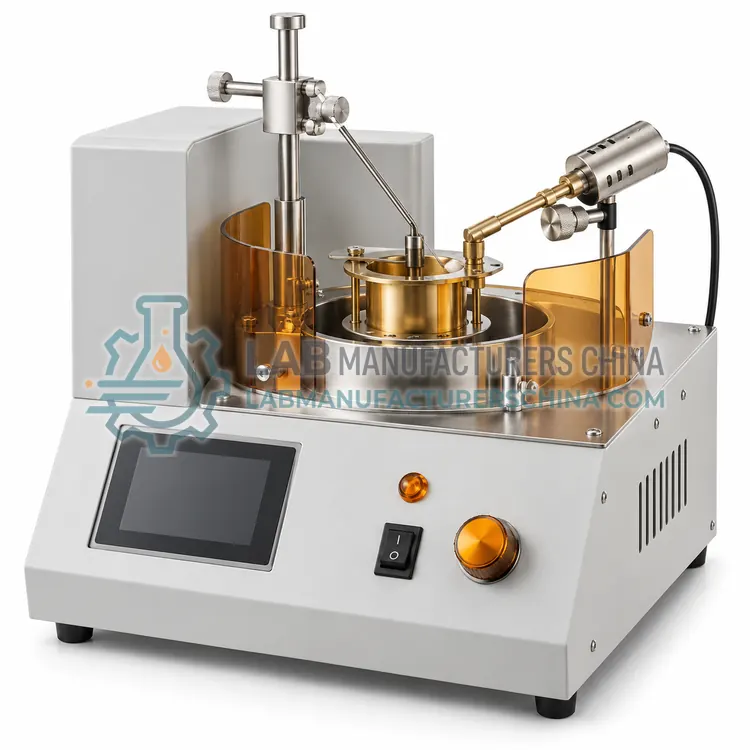
Small-Scale Closed-Cup Flash Point Tester
微量闭口闪点测定仪
- SKU FPT-0005
- Flash Point Testers
- CE (to be confirmed)
- ISO 9001 manufacturing (to be confirmed)
Price on request — FOB / CIF quoted per order
Prices depend on configuration, quantity and destination port.
Key specifications
| Test method | ASTM D3828, ASTM D3278, ISO 3679 |
|---|---|
| Temperature range | Ambient to 300 °C |
| Sample volume | 2–4 mL |
| Equilibration time | 1–2 min |
| Temperature resolution | 0.1 °C |
| Temperature accuracy | ±0.3 °C typical |
Request a quote Download brochure · to be provided
By Lab Manufacturers China Technical TeamLast reviewed Standards: ASTM D93, ASTM D92, ASTM D56
What is the Small-Scale Closed-Cup Flash Point Tester?
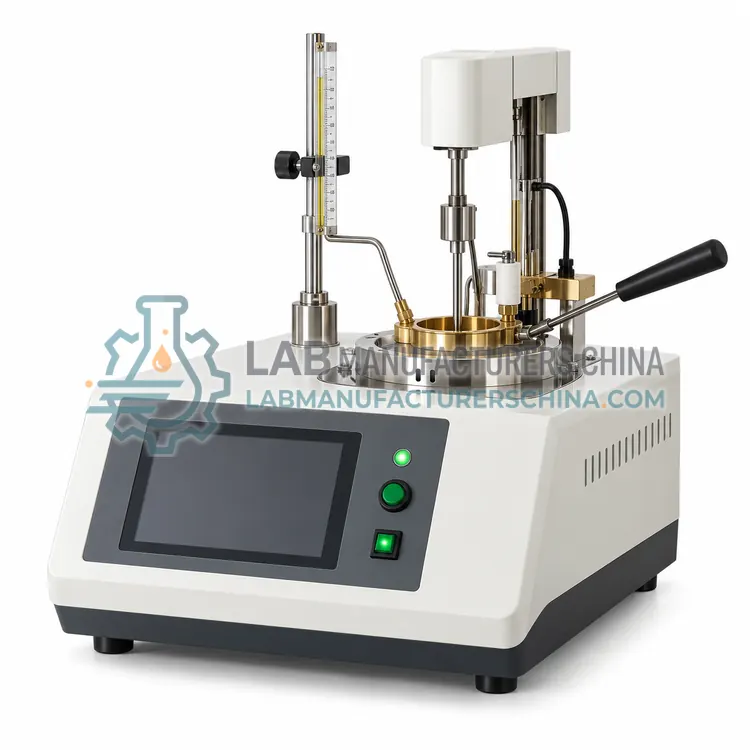
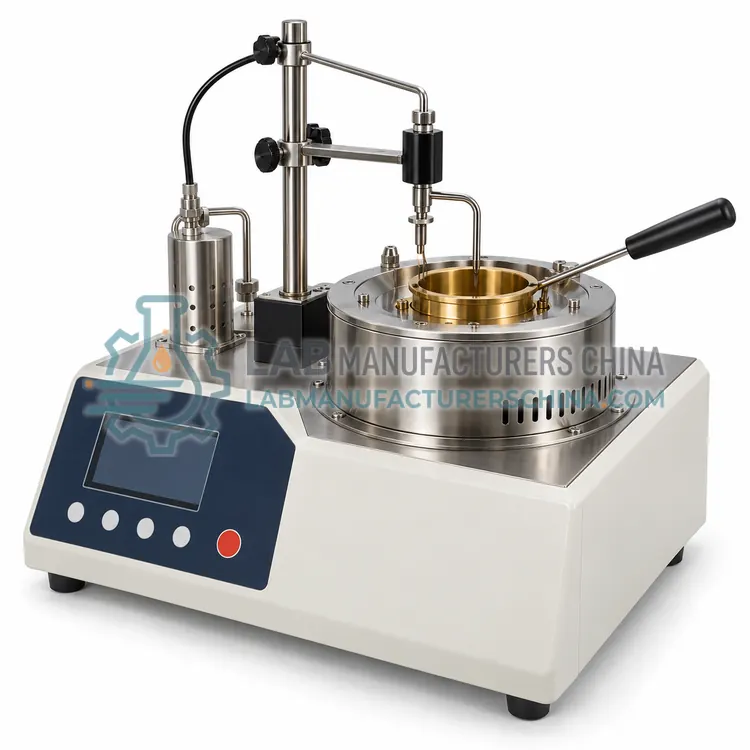
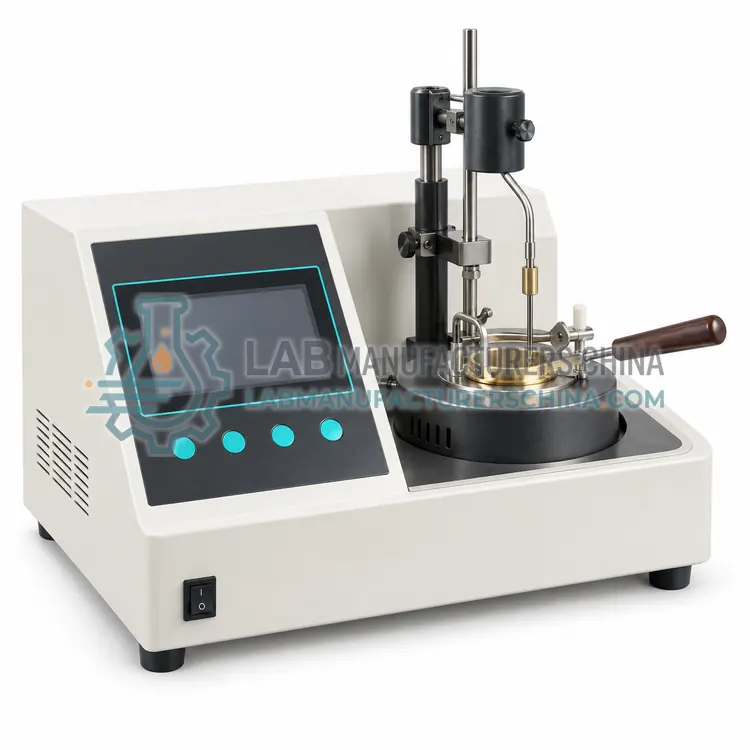
A small-scale closed-cup tester determines flash point with only about 2 to 4 mL of sample using a rapidly heated metal block and a small flame or electric igniter. It provides fast results under ASTM D3828 and D3278 for screening and field-lab use where sample volume and time are limited.
What is the Small-Scale Closed-Cup Flash Point Tester?
A small-scale closed-cup tester determines flash point with only about 2 to 4 mL of sample using a rapidly heated metal block and a small flame or electric igniter. It provides fast results under ASTM D3828 and D3278 for screening and field-lab use where sample volume and time are limited.
Overview
The small-scale closed-cup tester, often called a rapid equilibrium tester, uses a small sample cup in a thermostatically controlled aluminum block. A measured 2 to 4 mL sample is injected, the lid is closed, and the block is held at a set temperature for a short equilibration period, typically one to two minutes. An igniter is then applied, and the operator or a detector notes whether a flash occurs. Two modes are common, a pass/fail test at a specification temperature and a finding mode, in which temperature is stepped to locate the flash point. The small sample volume reduces fire risk and solvent disposal and suits expensive or scarce samples. The rapid equilibrium principle, however, means results can differ from Pensky-Martens values, so the method is often used for screening or where the specification specifically allows it.
How does it work?
A flash point tester heats a measured sample in a standard cup at a prescribed rate while stirring or not, depending on the method. At set temperature intervals an ignition source, either a gas flame or an electric igniter, is dipped into the vapor space above the liquid. The flash point is the lowest corrected temperature at which the vapors ignite with a distinct flash. Closed-cup designs confine vapors under a lid and give lower values, while open-cup designs expose the surface to air and give higher values. Main components are the test cup, heating block or bath, stirrer, shutter and igniter assembly, temperature probe and, in automatic models, a flash detector using ionization or thermal sensing. Barometric pressure is recorded because results are corrected to 101.3 kPa.
What are the key features?
- Only 2–4 mL sample per test
- Thermostatically controlled aluminum heating block
- Pass/fail and flash point finding modes
- Electric or gas igniter with automatic flash detection
- Rapid equilibration, tests in minutes
- Compact and suitable for portable laboratory setups
What are the technical specifications?
A typical small-scale closed-cup flash point tester configuration offers test method of ASTM D3828, ASTM D3278, ISO 3679, temperature range of Ambient to 300 °C, sample volume of 2–4 mL, equilibration time of 1–2 min, temperature resolution of 0.1 °C and temperature accuracy of ±0.3 °C typical. Values are indicative of the product class; the exact figures for each configuration are confirmed on the quotation and the calibration documents supplied with the instrument.
Which applications is it used for?
The Small-Scale Closed-Cup Flash Point Tester is used in quick screening of incoming fuel, jet fuel and diesel depot checks, paint and coating QC and small-sample research work. Across the wider Flash Point Testers class, laboratories also deploy it for refinery product release, lubricant and base oil QC and hazardous goods classification.
Which standards and certifications apply?
Relevant standards and methods include ASTM D93, ASTM D92, ASTM D56, ASTM D3828, ISO 2719, ISO 2592, IP 34, GB/T 261 and IEC 61010-1. Certification candidates for this model are CE and ISO 9001 manufacturing; each is to be confirmed for the specific configuration before shipment, and certificates are supplied only where they have been issued.
Place the tester in a draft-free area, because air movement disturbs vapor concentration and shifts results. Connect a fume extraction hood and keep flammable samples away from the heating block. Verify the temperature probe and, where applicable, the barometer against traceable references at least annually. Check instrument performance regularly with certified reference fluids such as n-decane or n-hexadecane and compare results with stated tolerances. Clean the cup, lid and igniter after each test to prevent carbon build-up. Replace gas supply hoses on schedule, and confirm flame-out detection works. Record the ambient pressure with each result. Operators should be trained on sample handling, because losing volatile fractions before the test lowers apparent flammability risk.
How do I select the right Small-Scale Closed-Cup Flash Point Tester?
Choose a small-scale tester for fast screening, limited sample volume, or where the governing specification allows ASTM D3828. It is not always accepted as a referee method for Pensky-Martens limits. In an RFQ specify the methods needed, pass/fail temperatures, whether automatic detection is required, and the sample types.
How does it compare with other Flash Point Testers variants?
Select first by the method your specification cites, since cup geometry, heating rate and stirring differ between Pensky-Martens, Cleveland, Tag and small-scale procedures. Closed-cup methods suit fuels, solvents and most regulatory classification. Open-cup methods suit viscous lubricants, bitumen and products whose fire point is also required. Next consider throughput and operator dependence: manual testers are economical for occasional use, while automatic models control the heating ramp, detect the flash electronically and apply barometric correction. Check the temperature range against your products, including whether you need cooling for sub-ambient samples. Small-scale testers save sample and time for screening but may not be accepted as a referee method. Confirm fume extraction, flame-safety shutoff and available calibration reference fluids.
Full specifications
| Test method | ASTM D3828, ASTM D3278, ISO 3679 |
|---|---|
| Temperature range | Ambient to 300 °C |
| Sample volume | 2–4 mL |
| Equilibration time | 1–2 min |
| Temperature resolution | 0.1 °C |
| Temperature accuracy | ±0.3 °C typical |
| Test modes | Pass/fail and finding |
| Flash detection | Thermal or ionization sensor |
| Power supply | 220 V, 50 Hz, 300 W |
Indicative values for this product class. Final specifications are confirmed on the quotation and in the calibration documents supplied with the instrument.
Applications
- Quick screening of incoming fuel
- Jet fuel and diesel depot checks
- Paint and coating QC
- Small-sample research work
Key features
- Only 2–4 mL sample per test
- Thermostatically controlled aluminum heating block
- Pass/fail and flash point finding modes
- Electric or gas igniter with automatic flash detection
- Rapid equilibration, tests in minutes
- Compact and suitable for portable laboratory setups
Frequently asked questions about Small-Scale Closed-Cup Flash Point Tester
Not always. The rapid equilibrium principle can yield values that differ from D93 results, and some specifications accept only one method. Use small-scale testers where the specification permits them, or for screening, and confirm disputed samples with a referee method.
The instrument is held at the specification flash temperature and a sample is tested once. If no flash occurs, the sample passes, meaning its flash point is above that temperature. This gives a quick conformance check without finding the exact flash point.
Generally it reduces hazard because only a few milliliters of flammable liquid are heated, and there is less vapor and waste. It still involves an ignition source, so fume extraction, flame safety and proper sample storage remain necessary.
Closed-cup testers confine vapors under a lid, so they reach ignitable concentration at lower temperature and give lower, more conservative values. Open-cup testers expose the liquid surface to air and give higher values. Regulations and product specifications state which method applies to each product type.
Diesel fuel flash point is usually determined by ASTM D93 using the Pensky-Martens closed cup, which ISO 2719 mirrors. Jet fuel often uses D56 Tag or D3828 small-scale methods instead. Check your product specification, such as ASTM D975, for the required method and minimum flash point.
Flash point varies with atmospheric pressure, because vapor-air ignition depends on partial pressure. Methods such as ASTM D93 require correcting the observed value to standard pressure of 101.3 kPa. Automatic testers often include a built-in barometer and apply the correction to the reported result.
Related models