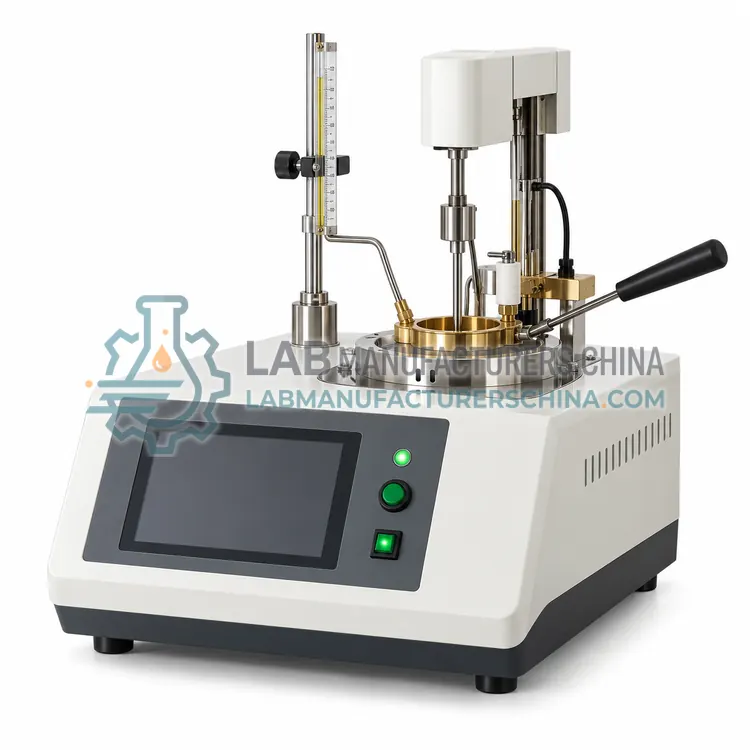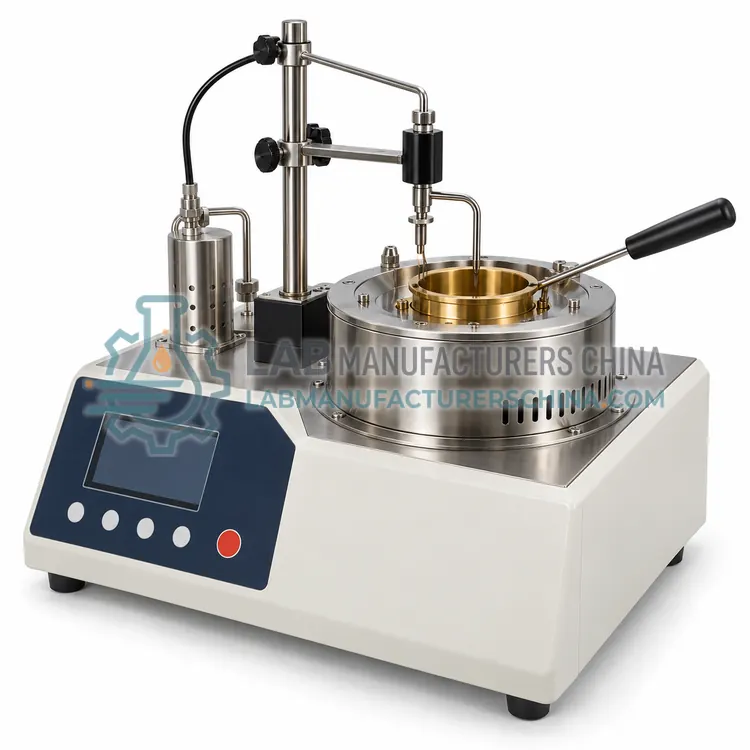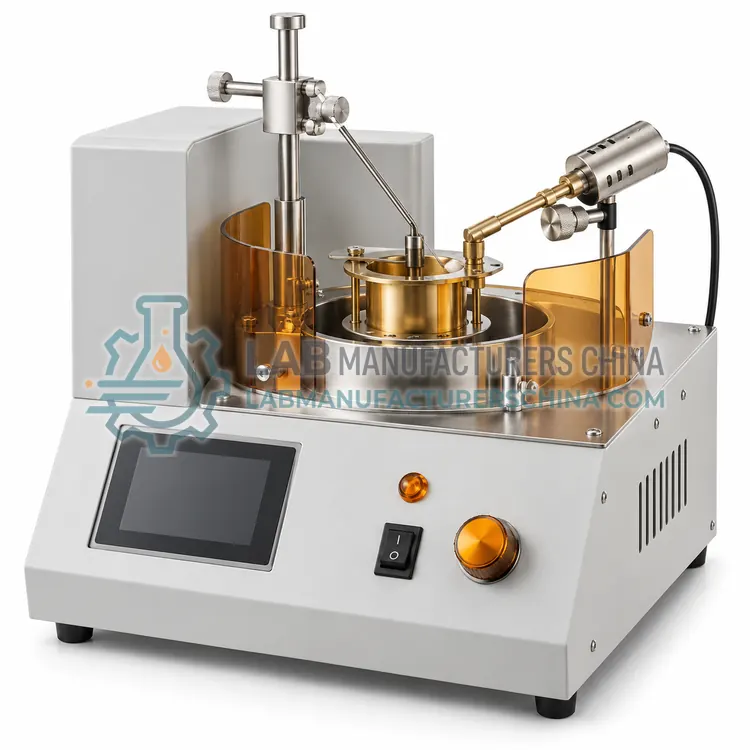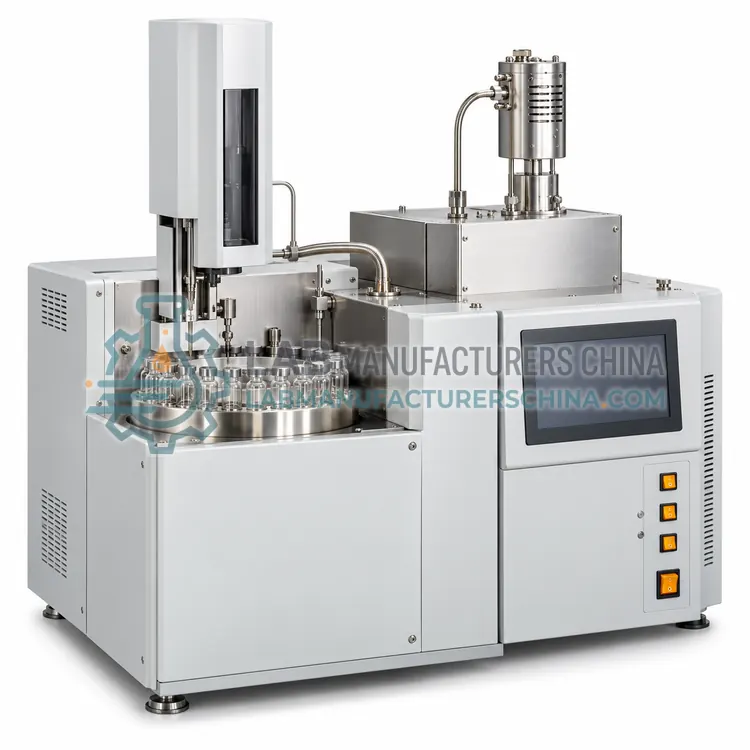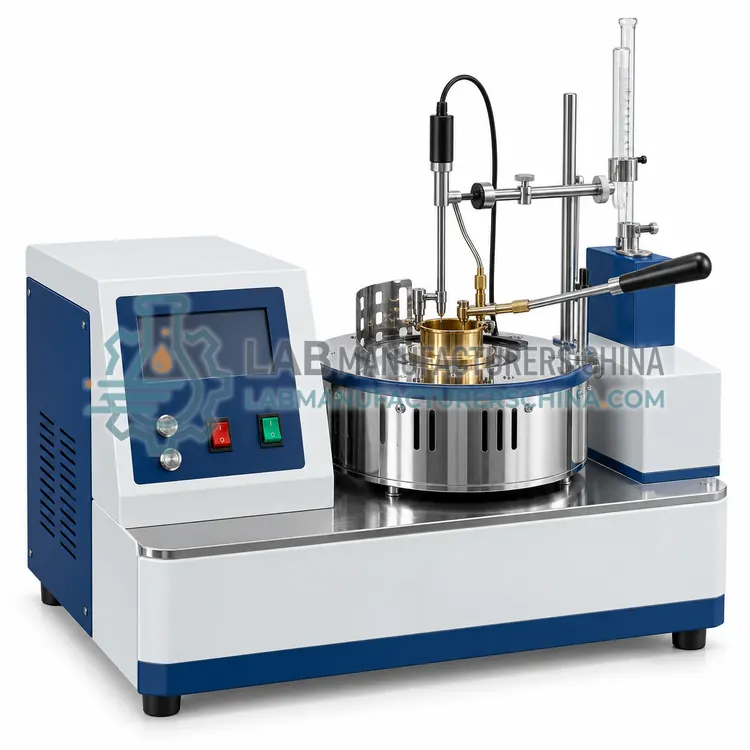
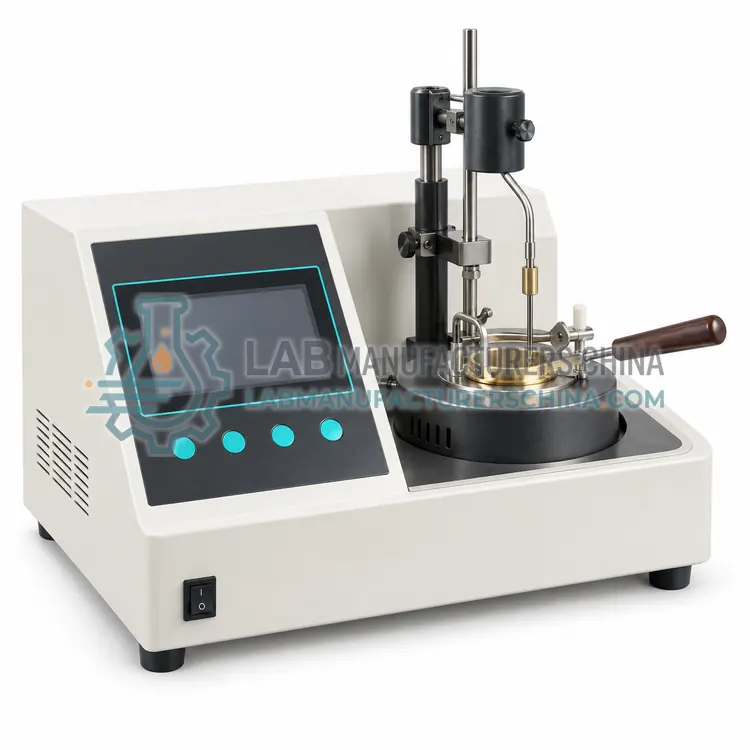
Tag Closed Cup Flash Point Tester
泰格闭口闪点测定仪
- SKU FPT-0004
- Flash Point Testers
- CE (to be confirmed)
- ISO 9001 manufacturing (to be confirmed)
Price on request — FOB / CIF quoted per order
Prices depend on configuration, quantity and destination port.
Key specifications
| Test method | ASTM D56, GB/T 5208 related |
|---|---|
| Temperature range | Ambient to 110 °C (cooling option to 0 °C) |
| Flash point range | Below 93 °C |
| Bath liquid | Water or ethylene glycol |
| Heating rate | About 1 °C/min |
| Sample volume | About 50 mL |
Request a quote Download brochure · to be provided
By Lab Manufacturers China Technical TeamLast reviewed Standards: ASTM D93, ASTM D92, ASTM D56
What is the Tag Closed Cup Flash Point Tester?
A Tag closed cup tester heats a sample in a glass cup set in a liquid bath at a slow constant rate and tests for flash point with a small gas flame. It is applied under ASTM D56 to low-viscosity liquids with flash points below 93 °C, such as aviation fuels, solvents and paint thinners.
What is the Tag Closed Cup Flash Point Tester?
A Tag closed cup tester heats a sample in a glass cup set in a liquid bath at a slow constant rate and tests for flash point with a small gas flame. It is applied under ASTM D56 to low-viscosity liquids with flash points below 93 °C, such as aviation fuels, solvents and paint thinners.
Overview
The Tag closed cup design uses a glass sample cup immersed in a liquid bath, often water or ethylene glycol, which transfers heat evenly and gives a slow, well-controlled ramp of about 1 °C/min. A close-fitting lid with a shutter lets a small test flame enter the vapor space at each temperature interval, typically every 0.5 °C near the expected flash point. The design does not stir the sample and is intended for liquids of low viscosity that do not form a surface film. Because the sample is heated gently and the vapor is confined, repeatability is good for volatile products. Many modern instruments add electronic temperature control, a cooling coil to start below ambient and automated flame handling. The liquid bath needs topping up and periodic replacement, and the method is limited to lower flash point ranges.
How does it work?
A flash point tester heats a measured sample in a standard cup at a prescribed rate while stirring or not, depending on the method. At set temperature intervals an ignition source, either a gas flame or an electric igniter, is dipped into the vapor space above the liquid. The flash point is the lowest corrected temperature at which the vapors ignite with a distinct flash. Closed-cup designs confine vapors under a lid and give lower values, while open-cup designs expose the surface to air and give higher values. Main components are the test cup, heating block or bath, stirrer, shutter and igniter assembly, temperature probe and, in automatic models, a flash detector using ionization or thermal sensing. Barometric pressure is recorded because results are corrected to 101.3 kPa.
What are the key features?
- Glass sample cup immersed in liquid heating bath
- Slow, even heating near 1 °C/min
- Small test flame through shuttered lid
- Cooling coil option for sub-ambient starting temperatures
- Electronic bath temperature control
- Suited to volatile, low-viscosity liquids
What are the technical specifications?
A typical tag closed cup flash point tester configuration offers test method of ASTM D56, GB/T 5208 related, temperature range of Ambient to 110 °C (cooling option to 0 °C), flash point range of Below 93 °C, bath liquid of Water or ethylene glycol, heating rate of About 1 °C/min and sample volume of About 50 mL. Values are indicative of the product class; the exact figures for each configuration are confirmed on the quotation and the calibration documents supplied with the instrument.
Which applications is it used for?
The Tag Closed Cup Flash Point Tester is used in aviation and jet fuel testing, paint thinner and solvent safety, kerosene quality control and hazard classification for shipping. Across the wider Flash Point Testers class, laboratories also deploy it for refinery product release, lubricant and base oil QC and hazardous goods classification.
Which standards and certifications apply?
Relevant standards and methods include ASTM D93, ASTM D92, ASTM D56, ASTM D3828, ISO 2719, ISO 2592, IP 34, GB/T 261 and IEC 61010-1. Certification candidates for this model are CE and ISO 9001 manufacturing; each is to be confirmed for the specific configuration before shipment, and certificates are supplied only where they have been issued.
Place the tester in a draft-free area, because air movement disturbs vapor concentration and shifts results. Connect a fume extraction hood and keep flammable samples away from the heating block. Verify the temperature probe and, where applicable, the barometer against traceable references at least annually. Check instrument performance regularly with certified reference fluids such as n-decane or n-hexadecane and compare results with stated tolerances. Clean the cup, lid and igniter after each test to prevent carbon build-up. Replace gas supply hoses on schedule, and confirm flame-out detection works. Record the ambient pressure with each result. Operators should be trained on sample handling, because losing volatile fractions before the test lowers apparent flammability risk.
How do I select the right Tag Closed Cup Flash Point Tester?
Select the Tag tester when your specification names ASTM D56 or when testing low-viscosity, volatile liquids below 93 °C such as paints and kerosene. It is not suitable for viscous oils or liquids with surface films. In an RFQ specify the cooling option, bath liquid, and whether automatic flame handling is needed.
How does it compare with other Flash Point Testers variants?
Select first by the method your specification cites, since cup geometry, heating rate and stirring differ between Pensky-Martens, Cleveland, Tag and small-scale procedures. Closed-cup methods suit fuels, solvents and most regulatory classification. Open-cup methods suit viscous lubricants, bitumen and products whose fire point is also required. Next consider throughput and operator dependence: manual testers are economical for occasional use, while automatic models control the heating ramp, detect the flash electronically and apply barometric correction. Check the temperature range against your products, including whether you need cooling for sub-ambient samples. Small-scale testers save sample and time for screening but may not be accepted as a referee method. Confirm fume extraction, flame-safety shutoff and available calibration reference fluids.
Full specifications
| Test method | ASTM D56, GB/T 5208 related |
|---|---|
| Temperature range | Ambient to 110 °C (cooling option to 0 °C) |
| Flash point range | Below 93 °C |
| Bath liquid | Water or ethylene glycol |
| Heating rate | About 1 °C/min |
| Sample volume | About 50 mL |
| Temperature resolution | 0.1 °C |
| Flame size | 4 mm diameter bead |
| Power supply | 220 V, 50 Hz, 500 W |
Indicative values for this product class. Final specifications are confirmed on the quotation and in the calibration documents supplied with the instrument.
Applications
- Aviation and jet fuel testing
- Paint thinner and solvent safety
- Kerosene quality control
- Hazard classification for shipping
Key features
- Glass sample cup immersed in liquid heating bath
- Slow, even heating near 1 °C/min
- Small test flame through shuttered lid
- Cooling coil option for sub-ambient starting temperatures
- Electronic bath temperature control
- Suited to volatile, low-viscosity liquids
Frequently asked questions about Tag Closed Cup Flash Point Tester
It is meant for low-viscosity liquids with flash points below 93 °C that do not form a surface film or contain suspended solids. Examples include kerosene, aviation fuel, solvents and many paints. Viscous oils should be tested with a Pensky-Martens or Cleveland cup.
A bath provides uniform heat transfer and a very slow, steady ramp, which reduces temperature gradients across the sample and improves repeatability for volatile liquids. It also keeps the glass cup stable, although the bath liquid must be replaced periodically.
Yes, if the model has a cooling coil or chiller connection, it can start at 0 °C or lower to test liquids with very low flash points. Without cooling, the starting temperature must be near ambient, so specify this requirement when ordering.
Closed-cup testers confine vapors under a lid, so they reach ignitable concentration at lower temperature and give lower, more conservative values. Open-cup testers expose the liquid surface to air and give higher values. Regulations and product specifications state which method applies to each product type.
Diesel fuel flash point is usually determined by ASTM D93 using the Pensky-Martens closed cup, which ISO 2719 mirrors. Jet fuel often uses D56 Tag or D3828 small-scale methods instead. Check your product specification, such as ASTM D975, for the required method and minimum flash point.
Flash point varies with atmospheric pressure, because vapor-air ignition depends on partial pressure. Methods such as ASTM D93 require correcting the observed value to standard pressure of 101.3 kPa. Automatic testers often include a built-in barometer and apply the correction to the reported result.
Related models