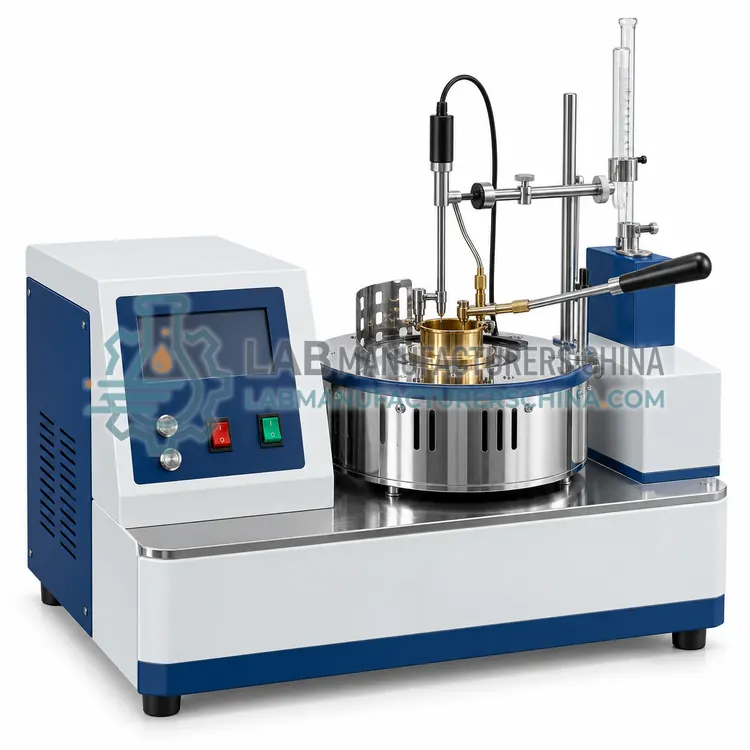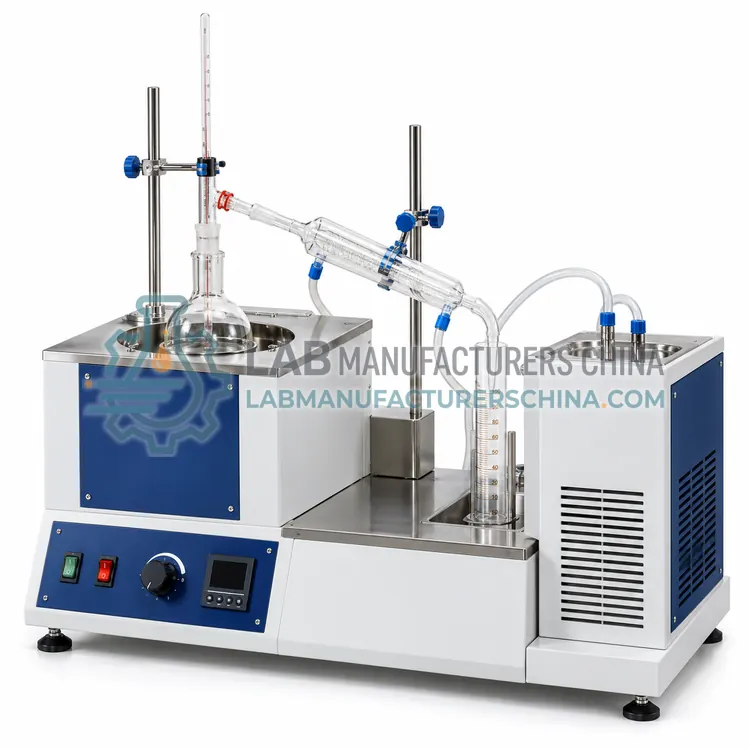
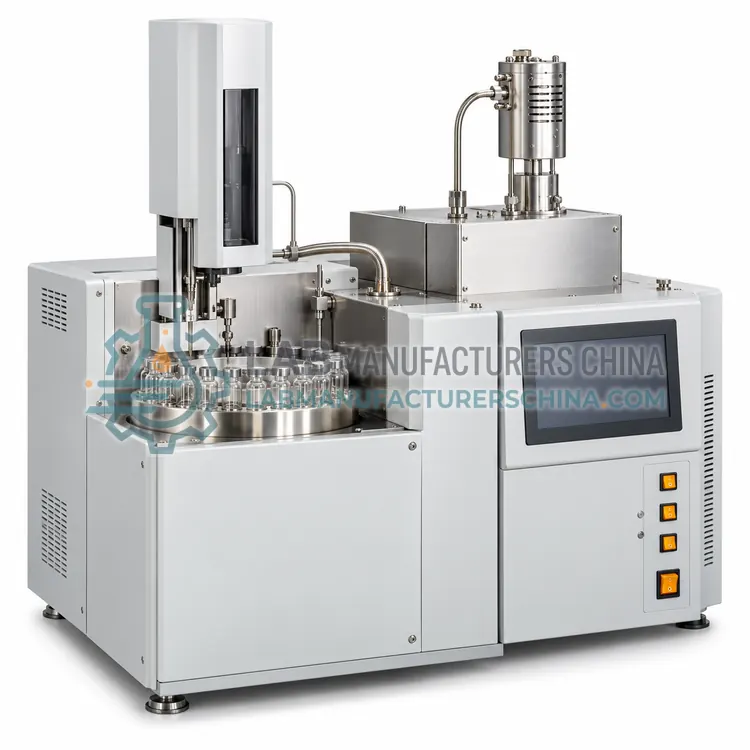
Simulated Distillation Gas Chromatograph for Petroleum Fractions
石油馏分模拟蒸馏气相色谱仪
- SKU DTE-0005
- Distillation Testers
- CE (to be confirmed)
- ISO 9001 manufacturing (to be confirmed)
Price on request — FOB / CIF quoted per order
Prices depend on configuration, quantity and destination port.
Key specifications
| Test method | ASTM D2887, D7169, D7096, IP 406 |
|---|---|
| Boiling range | 55–538 °C (D2887), up to 720 °C (D7169) |
| Oven temperature range | -80 to 450 °C with cryogenic cooling |
| Oven ramp rate | Up to 100 °C/min |
| Detector | Flame ionization detector |
| Injection volume | 0.1–1 µL |
Request a quote Download brochure · to be provided
By Lab Manufacturers China Technical TeamLast reviewed Standards: ASTM D86, ASTM D1160, ASTM D2887
What is the Simulated Distillation Gas Chromatograph for Petroleum Fractions?
A simulated distillation gas chromatograph separates hydrocarbons by boiling point on a nonpolar column and converts retention times into a boiling point distribution. It follows ASTM D2887 and related methods for petroleum fractions, giving full distillation curves from a microliter sample.
What is the Simulated Distillation Gas Chromatograph for Petroleum Fractions?
A simulated distillation gas chromatograph separates hydrocarbons by boiling point on a nonpolar column and converts retention times into a boiling point distribution. It follows ASTM D2887 and related methods for petroleum fractions, giving full distillation curves from a microliter sample.
Overview
Simulated distillation, often called SimDis, uses a gas chromatograph with a nonpolar capillary or packed column in which hydrocarbons elute in approximate order of boiling point. The oven is temperature-programmed, for example from -20 to 350 °C, and a flame ionization detector records the response. A calibration mixture of n-paraffins of known boiling points links retention time to boiling temperature. Software integrates the chromatogram, calculates cumulative area percent versus boiling point and reports temperatures at given percent recoveries. Cool-on-column or programmable temperature vaporizer injectors reduce discrimination of high boilers. ASTM D2887 covers boiling ranges of 55 to 538 °C, D7169 extends to about 720 °C for residues, and D7096 addresses gasoline. The instrument needs carrier gas, hydrogen and air, and a skilled operator, but produces detailed distributions from tiny samples without physical distillation.
How does it work?
A distillation tester heats a measured sample in a flask so that it boils and the vapor passes through a condenser held at a controlled temperature. The condensate is collected in a graduated receiver, and the vapor temperature is recorded at the initial boiling point and as specific volumes are recovered, such as 5, 10, 50, 90 and 95 percent, up to the final boiling point. The heating rate is adjusted to keep the distillation rate within method limits. Apparatus includes the flask, heater, condenser bath, receiver cylinder and temperature sensor. Automatic models add level-tracking sensors and refrigeration. Vacuum methods reduce pressure so heavy oils distill without thermal cracking, and simulated distillation uses gas chromatography to infer boiling distribution from retention time. Barometric correction is applied to atmospheric results.
What are the key features?
- Nonpolar capillary column with fast oven ramp
- Flame ionization detector with n-paraffin calibration
- Cool-on-column or programmable injector
- Automated boiling point distribution software
- Sub-ambient oven cooling option
- Autosampler for unattended sequences
What are the technical specifications?
A typical simulated distillation gas chromatograph for petroleum fractions configuration offers test method of ASTM D2887, D7169, D7096, IP 406, boiling range of 55–538 °C (D2887), up to 720 °C (D7169), oven temperature range of -80 to 450 °C with cryogenic cooling, oven ramp rate of Up to 100 °C/min, detector of Flame ionization detector and injection volume of 0.1–1 µL. Values are indicative of the product class; the exact figures for each configuration are confirmed on the quotation and the calibration documents supplied with the instrument.
Which applications is it used for?
The Simulated Distillation Gas Chromatograph for Petroleum Fractions is used in crude oil and fraction evaluation, process stream monitoring, diesel and jet fuel boiling range and lubricant base oil volatility. Across the wider Distillation Testers class, laboratories also deploy it for gasoline and diesel volatility control, jet fuel and kerosene specification testing and naphtha and solvent boiling range.
Which standards and certifications apply?
Relevant standards and methods include ASTM D86, ASTM D1160, ASTM D2887, ASTM D7345, ISO 3405, IP 123, GB/T 6536 and IEC 61010-1. Certification candidates for this model are CE and ISO 9001 manufacturing; each is to be confirmed for the specific configuration before shipment, and certificates are supplied only where they have been issued.
Install distillation testers in a ventilated area with stable room temperature, because ambient conditions affect condenser and receiver temperatures. Use properly dimensioned flasks, supports and baffles, since small changes in geometry alter results. Calibrate temperature probes and level sensors against traceable standards, and run check samples such as reference toluene or certified reference fuels at defined intervals. Check refrigerated baths for coolant level and temperature stability. Clean condenser tubes regularly to prevent residue carry-over, and inspect glassware for cracks before heating. Record barometric pressure and apply corrections where the method requires. Dispose of distillation residues as flammable waste. For vacuum systems, verify leak tightness and pressure gauge calibration before each series.
How do I select the right Simulated Distillation Gas Chromatograph for Petroleum Fractions?
Choose a SimDis system when you need full boiling curves from small samples, high throughput with autosamplers, or data for refinery process modeling. It needs skilled staff and gas supplies. In an RFQ specify methods (D2887, D7169, D7096), injector type, sub-ambient capability, and calibration mixtures.
How does it compare with other Distillation Testers variants?
Begin with the method and product type. ASTM D86 atmospheric distillation covers gasoline, diesel, kerosene and naphtha, while heavy oils that decompose at atmospheric boiling points need vacuum distillation under D1160. Decide between manual and automatic operation: manual apparatus is inexpensive but needs constant attention and is operator-dependent, whereas automatic units control heating profiles, track volume electronically and apply corrections. Small sample volumes or many samples favor micro-distillation, and full boiling distributions from small samples favor simulated distillation by gas chromatography, which needs a different skill set. Check condenser cooling capability, since light gasoline requires near 0 °C baths, and confirm the apparatus supports the sample groups you test. Also compare footprint, fume extraction needs and glassware replacement costs.
Full specifications
| Test method | ASTM D2887, D7169, D7096, IP 406 |
|---|---|
| Boiling range | 55–538 °C (D2887), up to 720 °C (D7169) |
| Oven temperature range | -80 to 450 °C with cryogenic cooling |
| Oven ramp rate | Up to 100 °C/min |
| Detector | Flame ionization detector |
| Injection volume | 0.1–1 µL |
| Carrier gas | Helium or hydrogen |
| Run time | 10–30 min per sample |
| Autosampler | 50-position typical |
| Power supply | 220 V, 50 Hz, 2500 W |
Indicative values for this product class. Final specifications are confirmed on the quotation and in the calibration documents supplied with the instrument.
Applications
- Crude oil and fraction evaluation
- Process stream monitoring
- Diesel and jet fuel boiling range
- Lubricant base oil volatility
Key features
- Nonpolar capillary column with fast oven ramp
- Flame ionization detector with n-paraffin calibration
- Cool-on-column or programmable injector
- Automated boiling point distribution software
- Sub-ambient oven cooling option
- Autosampler for unattended sequences
Frequently asked questions about Simulated Distillation Gas Chromatograph for Petroleum Fractions
Hydrocarbons elute from a nonpolar GC column in roughly boiling point order. A calibration mixture of n-paraffins links retention time to boiling temperature, so the chromatogram area can be converted into a cumulative boiling point distribution.
ASTM D2887 covers roughly 55 to 538 °C, D7169 extends to about 720 °C for crude oils and residues, and D7096 covers gasoline. Coverage depends on column and injector, so confirm the configuration when ordering.
It correlates well but does not produce identical values, since physical distillation is affected by reflux and thermal effects. Specifications state which method governs, so refineries often run both and use correlations for routine control.
It measures the boiling range of a petroleum product, recording vapor temperature at the initial boiling point, at fixed recovered volumes such as 10, 50 and 90 percent, and at the final boiling point. These values describe volatility and help predict engine performance and evaporation losses.
ASTM D86 is atmospheric distillation for gasoline, diesel, kerosene and naphtha. D1160 uses reduced pressure to distill heavier oils, up to about 400 °C atmospheric equivalent, that would crack at atmospheric boiling temperature. Product type and boiling range decide which method applies.
Condenser temperature affects how completely vapors liquefy. Too warm a bath loses light ends and lowers recovered volume, while too cold a bath may freeze waxy components. D86 specifies bath temperature by sample group, from 0 to 60 °C, so refrigerated baths are usually required.
Related models
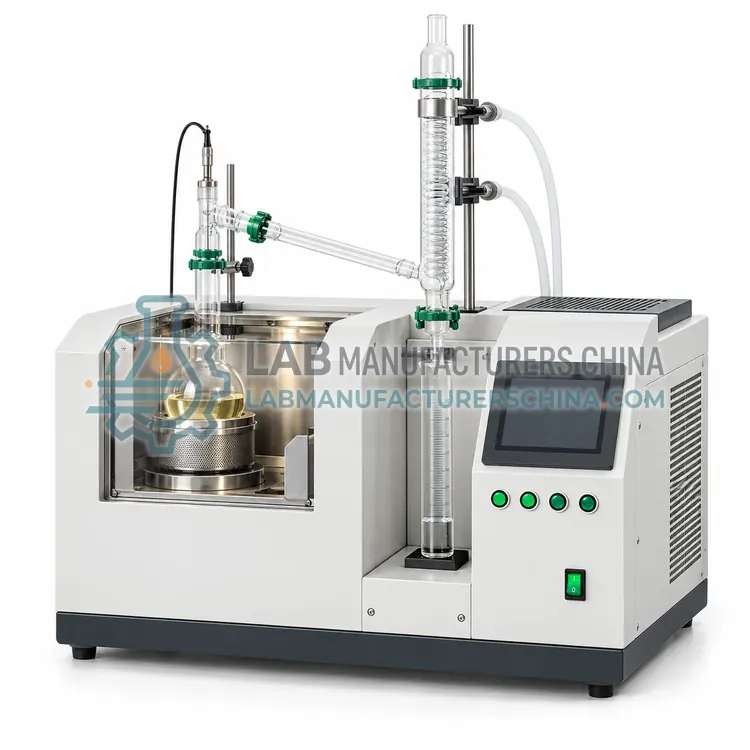
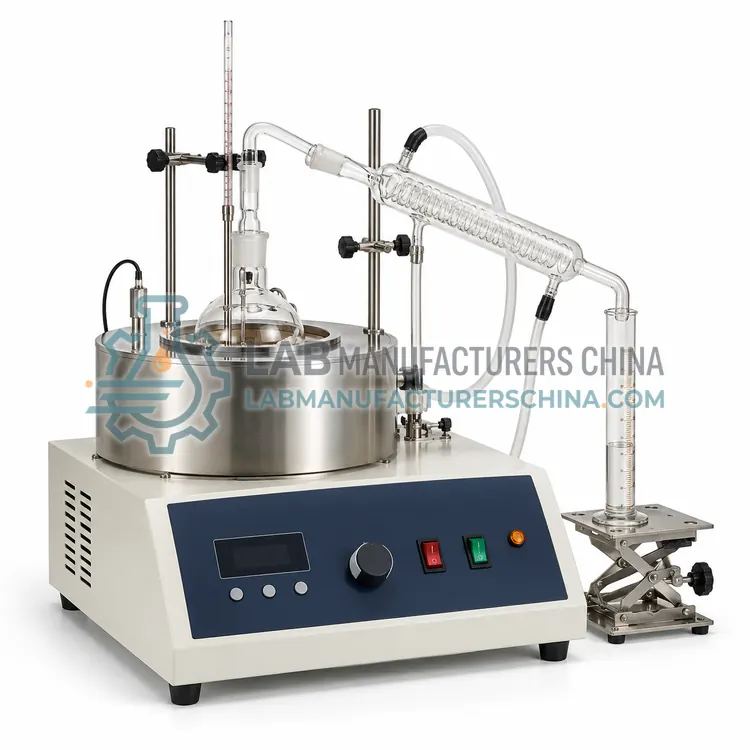
Automatic Atmospheric Distillation Analyzer with Refrigerated Condenser
带制冷冷凝器的自动常压蒸馏分析仪
- CE (to be confirmed)
- +2
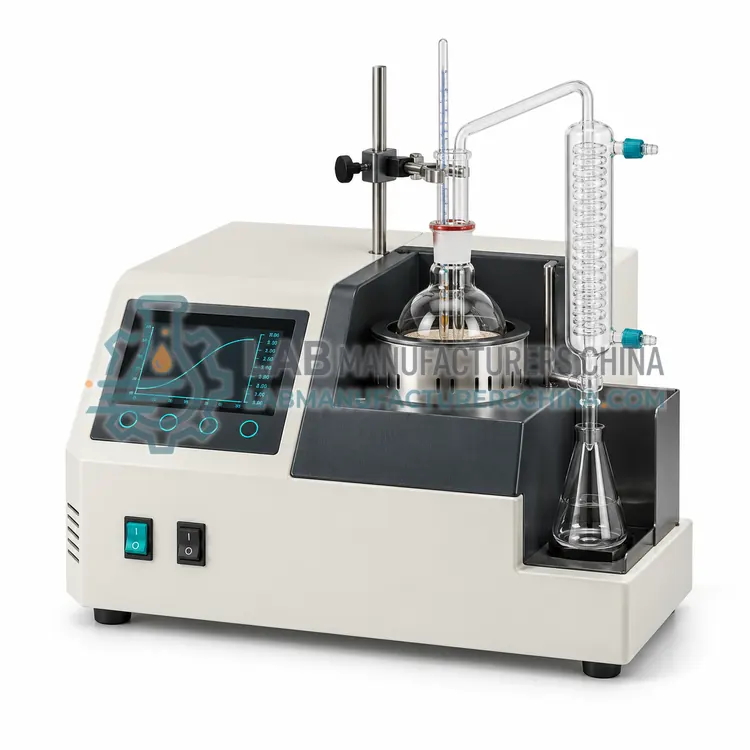
Automatic Vacuum Distillation Analyzer for Heavy Petroleum Products
重质石油产品自动减压蒸馏分析仪
- CE (to be confirmed)
- +1
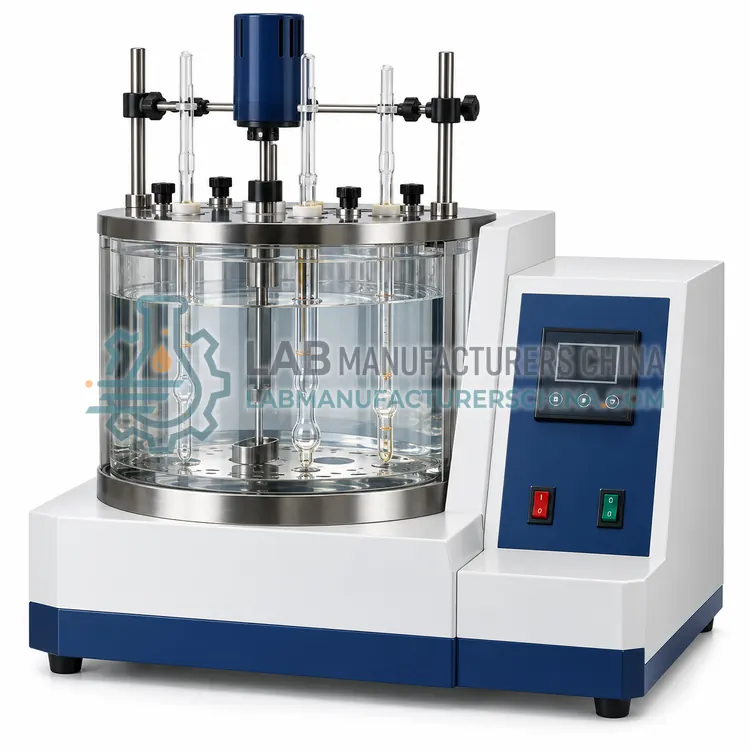
Manual Kinematic Viscosity Bath with Glass Capillary Viscometers
带玻璃毛细管粘度计的手动运动粘度恒温浴
- CE (to be confirmed)
- +1