
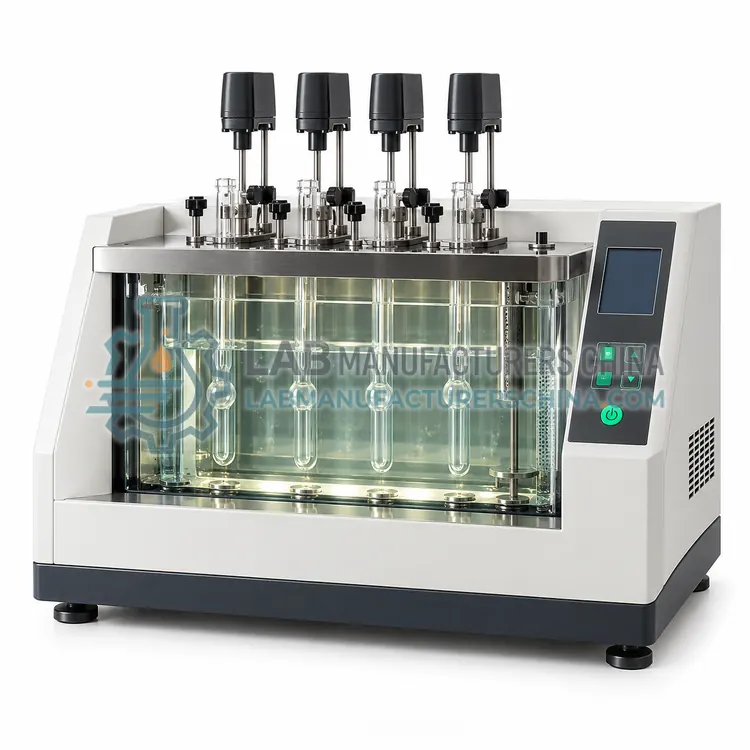
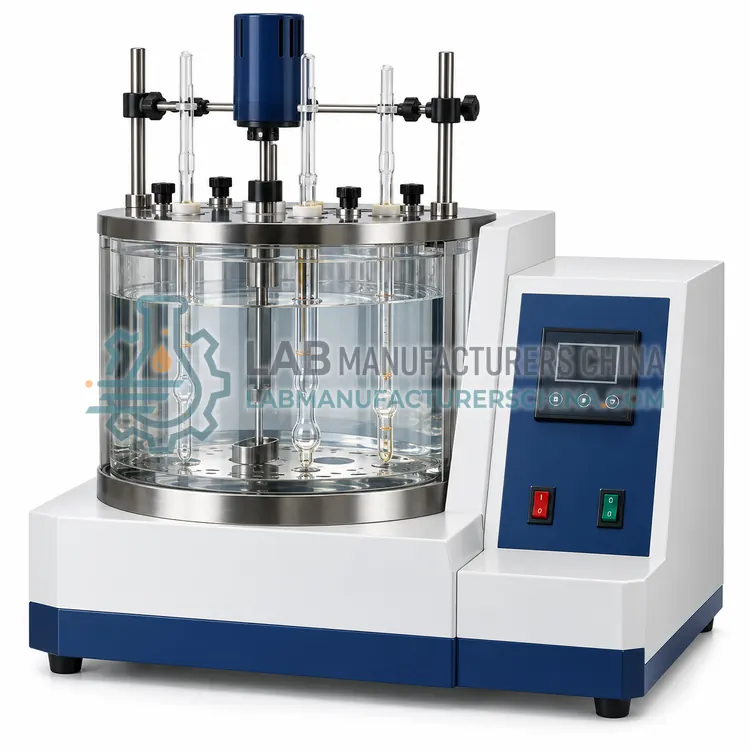
Manual Kinematic Viscosity Bath with Glass Capillary Viscometers
带玻璃毛细管粘度计的手动运动粘度恒温浴
- SKU VIT-0001
- Viscosity Testers
- CE (to be confirmed)
- ISO 9001 manufacturing (to be confirmed)
Price on request — FOB / CIF quoted per order
Prices depend on configuration, quantity and destination port.
Key specifications
| Test method | ASTM D445, ISO 3104, GB/T 265 |
|---|---|
| Temperature range | Ambient +5 to 150 °C |
| Temperature stability | ±0.02 °C |
| Viscometer positions | 2–6 tubes |
| Viscosity range | 0.5–10,000 mm²/s with tube set |
| Bath volume | About 20 L |
Request a quote Download brochure · to be provided
By Lab Manufacturers China Technical TeamLast reviewed Standards: ASTM D445, ISO 3104, ASTM D88
What is the Manual Kinematic Viscosity Bath with Glass Capillary Viscometers?
A manual kinematic viscosity bath holds glass capillary viscometers at a stable temperature while the operator times the flow of oil with a stopwatch. It gives ASTM D445 and ISO 3104 results for fuels and lubricants at 40 and 100 °C and suits laboratories with modest sample numbers.
What is the Manual Kinematic Viscosity Bath with Glass Capillary Viscometers?
A manual kinematic viscosity bath holds glass capillary viscometers at a stable temperature while the operator times the flow of oil with a stopwatch. It gives ASTM D445 and ISO 3104 results for fuels and lubricants at 40 and 100 °C and suits laboratories with modest sample numbers.
Overview
The manual kinematic viscosity bath is the reference configuration for D445 testing. A thermostatically controlled bath filled with clear liquid, typically water for 40 °C and silicone oil for 100 °C, holds one to six glass capillary viscometers of Ubbelohde, Cannon-Fenske or similar types in vertical holders. A high-resolution circulator or heater with stirrer keeps bath temperature stable within 0.02 °C, verified with a calibrated thermometer. The operator charges the sample into the tube, lets it equilibrate, draws it above the upper timing mark and measures the flow time between two marks with a stopwatch. Kinematic viscosity equals flow time multiplied by the tube constant. Precision depends on tube selection, since flow times should remain above 200 seconds to limit kinetic energy effects. The system is economical and robust but needs an attentive operator.
How does it work?
Kinematic viscosity testers time the gravity-driven flow of a fixed liquid volume through a calibrated glass capillary viscometer held in a constant-temperature bath. Viscosity equals the measured flow time multiplied by the tube constant, expressed in mm²/s, and bath temperature must be held within about 0.02 °C because viscosity changes rapidly with temperature. Rotational instruments drive a spindle or rotor in the sample and measure the torque required, giving dynamic viscosity in mPa·s. Cold-cranking simulators rotate a rotor inside a stator at low temperature and relate motor speed to apparent viscosity for engine oils. Efflux cup methods such as Saybolt measure time for a set volume to drain through an orifice. Key components are the bath, thermostat, viscometer tubes, timing device and, in automatic models, optical or ultrasonic meniscus sensors.
What are the key features?
- Bath stability within 0.02 °C at 40 and 100 °C
- Holds up to six glass capillary viscometers
- Transparent bath with stirrer and viewing window
- Digital controller with high-resolution thermometer
- Compatible with Ubbelohde and Cannon-Fenske tubes
- Simple, low-cost and easy to maintain
What are the technical specifications?
A typical manual kinematic viscosity bath with glass capillary viscometers configuration offers test method of ASTM D445, ISO 3104, GB/T 265, temperature range of Ambient +5 to 150 °C, temperature stability of ±0.02 °C, viscometer positions of 2–6 tubes, viscosity range of 0.5–10,000 mm²/s with tube set and bath volume of About 20 L. Values are indicative of the product class; the exact figures for each configuration are confirmed on the quotation and the calibration documents supplied with the instrument.
Which applications is it used for?
The Manual Kinematic Viscosity Bath with Glass Capillary Viscometers is used in lubricant grade verification, diesel and fuel oil testing, base oil QC and teaching laboratories. Across the wider Viscosity Testers class, laboratories also deploy it for lubricant viscosity grade verification, fuel oil and diesel specification testing and engine oil low-temperature grading.
Which standards and certifications apply?
Relevant standards and methods include ASTM D445, ISO 3104, ASTM D88, ASTM D2983, ASTM D5293, SAE J300, IP 71, GB/T 265 and IEC 61010-1. Certification candidates for this model are CE and ISO 9001 manufacturing; each is to be confirmed for the specific configuration before shipment, and certificates are supplied only where they have been issued.
Level the bath and keep it away from drafts and vibration, because temperature stability and tube verticality drive precision. Use certified viscosity reference standards to calibrate tubes and check the bath thermometer against a traceable reference at least annually. Filter or degas samples to remove particles and bubbles, and allow adequate thermal equilibration, usually 15 to 30 minutes. Clean viscometer tubes with suitable solvents and dry with filtered air so residue does not change the tube constant. Inspect glass for cracks or chips. Replace bath fluid at intervals recommended by the supplier. For rotational and cold-cranking instruments, verify torque and speed calibration with standard oils and keep cooling systems free of moisture build-up.
How do I select the right Manual Kinematic Viscosity Bath with Glass Capillary Viscometers?
Choose the manual bath for routine D445 work with low to moderate sample numbers and limited budget. It needs operator time and skill in timing. In an RFQ specify the temperature range, number of tube positions, bath liquid, calibrated thermometer, and the set of capillary tubes and reference standards to be supplied.
How does it compare with other Viscosity Testers variants?
Choose by the method named in your product specification. ASTM D445 capillary viscometry is the reference for kinematic viscosity of fuels and lubricants, and automatic multi-tube instruments raise throughput and remove timing subjectivity. Saybolt viscometers remain in use where legacy specifications are expressed in Saybolt seconds. Rotational instruments suit non-Newtonian or very viscous products and low-temperature lubricant tests, while cold-cranking simulators are specific to engine oil low-temperature grading under SAE J300. Consider the temperature range, from 40 and 100 °C for routine oils to -40 °C for low-temperature work, and confirm the bath can maintain stability. Check the tube range, sample volume, cleaning and drying arrangements, and calibration fluid availability. For large workloads, automatic cleaning stations and multi-position baths reduce labor considerably.
Full specifications
| Test method | ASTM D445, ISO 3104, GB/T 265 |
|---|---|
| Temperature range | Ambient +5 to 150 °C |
| Temperature stability | ±0.02 °C |
| Viscometer positions | 2–6 tubes |
| Viscosity range | 0.5–10,000 mm²/s with tube set |
| Bath volume | About 20 L |
| Bath liquid | Water or silicone oil |
| Temperature resolution | 0.01 °C |
| Timer | Digital stopwatch, 0.01 s |
| Power supply | 220 V, 50 Hz, 1500 W |
Indicative values for this product class. Final specifications are confirmed on the quotation and in the calibration documents supplied with the instrument.
Applications
- Lubricant grade verification
- Diesel and fuel oil testing
- Base oil QC
- Teaching laboratories
Key features
- Bath stability within 0.02 °C at 40 and 100 °C
- Holds up to six glass capillary viscometers
- Transparent bath with stirrer and viewing window
- Digital controller with high-resolution thermometer
- Compatible with Ubbelohde and Cannon-Fenske tubes
- Simple, low-cost and easy to maintain
Frequently asked questions about Manual Kinematic Viscosity Bath with Glass Capillary Viscometers
You need tubes covering each product's viscosity range so flow times exceed 200 seconds, plus spares. A typical laboratory keeps a set of sizes from 0.5 to 10,000 mm²/s, each with its calibration certificate and constant.
Silicone oil or another high-temperature transparent liquid is typically used at 100 °C because water evaporates and produces steam. Follow the supplier guidance for fluid type and check for fluid discoloration, which reduces visibility of the timing marks.
Tubes are calibrated with certified viscosity standards when new and then verified periodically, commonly annually or whenever results are suspect. Damaged, chipped or contaminated tubes should be replaced rather than recalibrated.
Kinematic viscosity is the flow time of a liquid under gravity, expressed in mm²/s, and equals dynamic viscosity divided by density. Dynamic viscosity is the resistance to shear measured by torque in rotational instruments, expressed in mPa·s. Fuel and lubricant specifications commonly use kinematic values.
Viscosity of oils changes by several percent per degree Celsius, so even small temperature errors create large errors in results. ASTM D445 requires bath stability within 0.02 °C at 40 and 100 °C, which needs a well-stirred thermostat and a calibrated reference thermometer.
Viscosity index is calculated from kinematic viscosity at 40 and 100 °C using the equations in ASTM D2270. A higher index means viscosity changes less with temperature. Lubricant suppliers report it to describe how oil behaves between cold start and operating temperature.
Related models
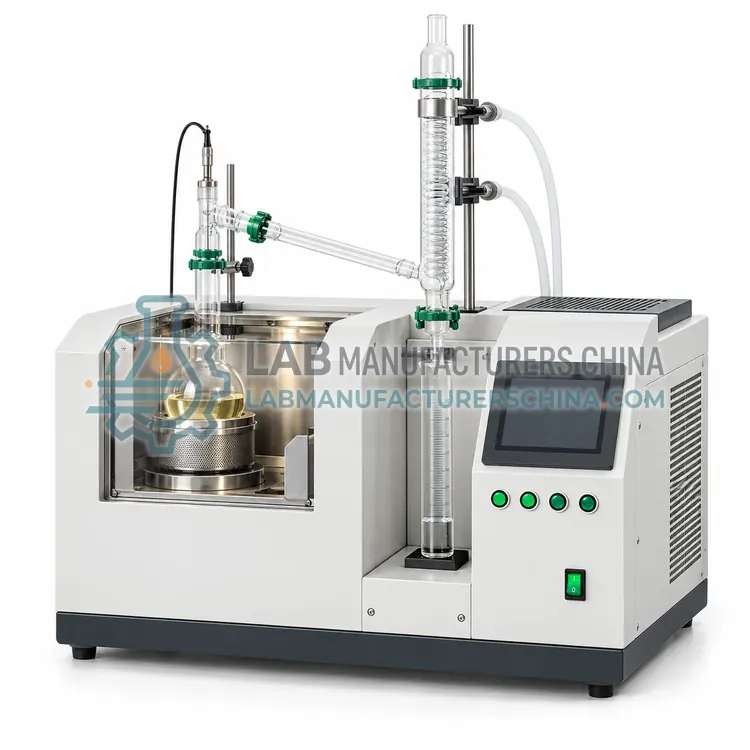
Automatic Atmospheric Distillation Analyzer with Refrigerated Condenser
带制冷冷凝器的自动常压蒸馏分析仪
- CE (to be confirmed)
- +2