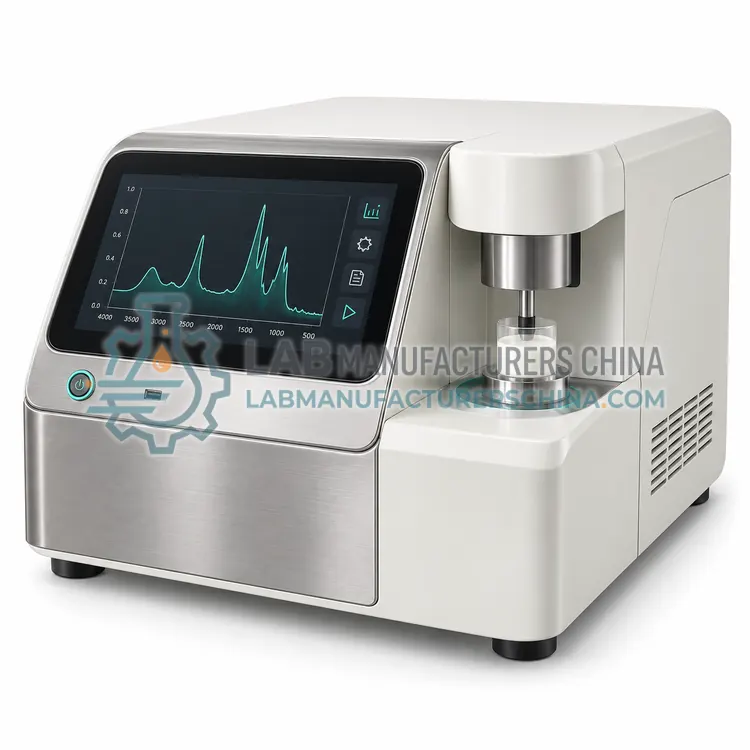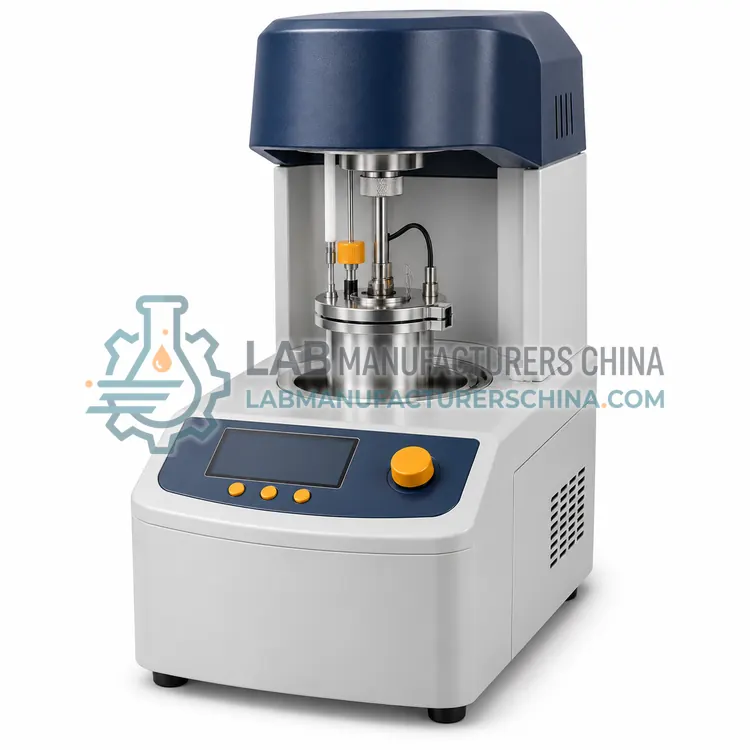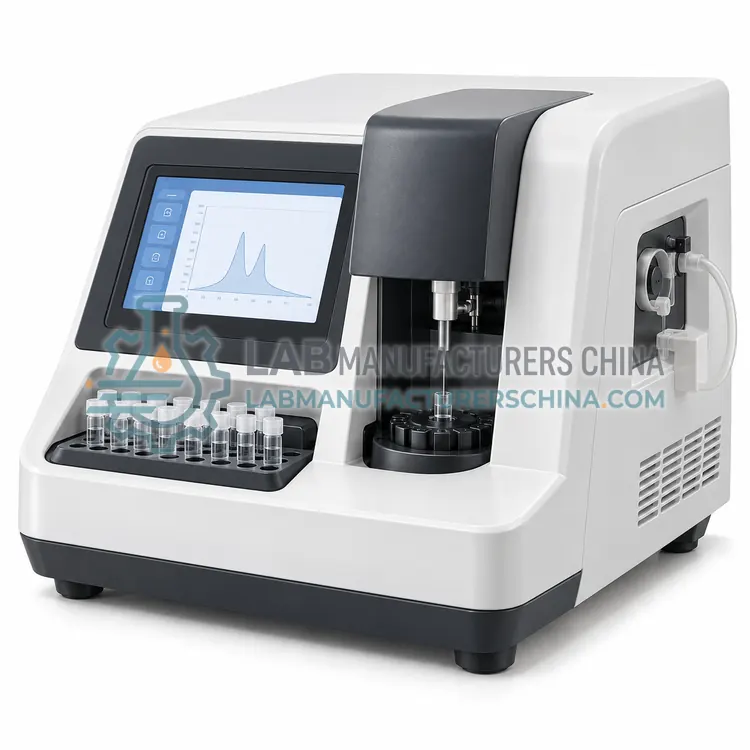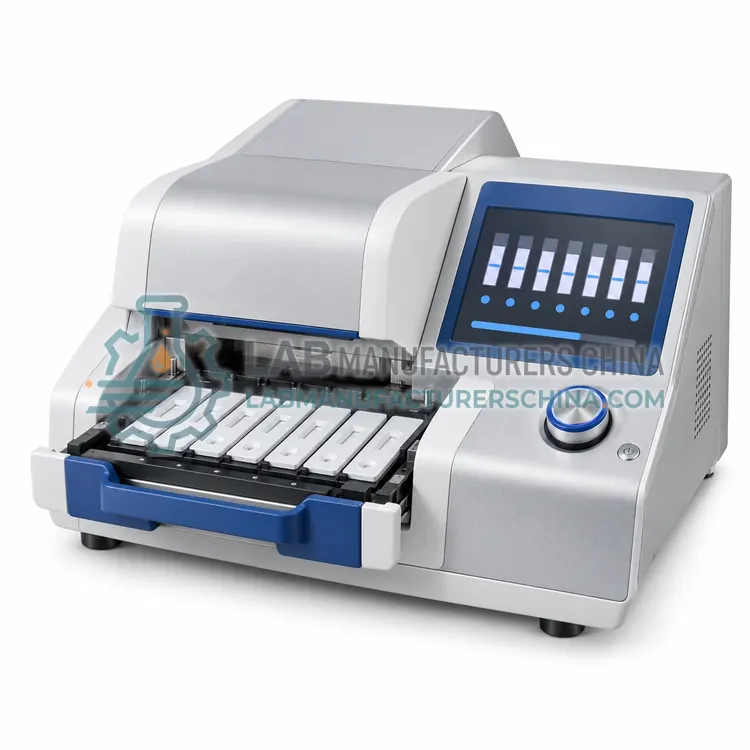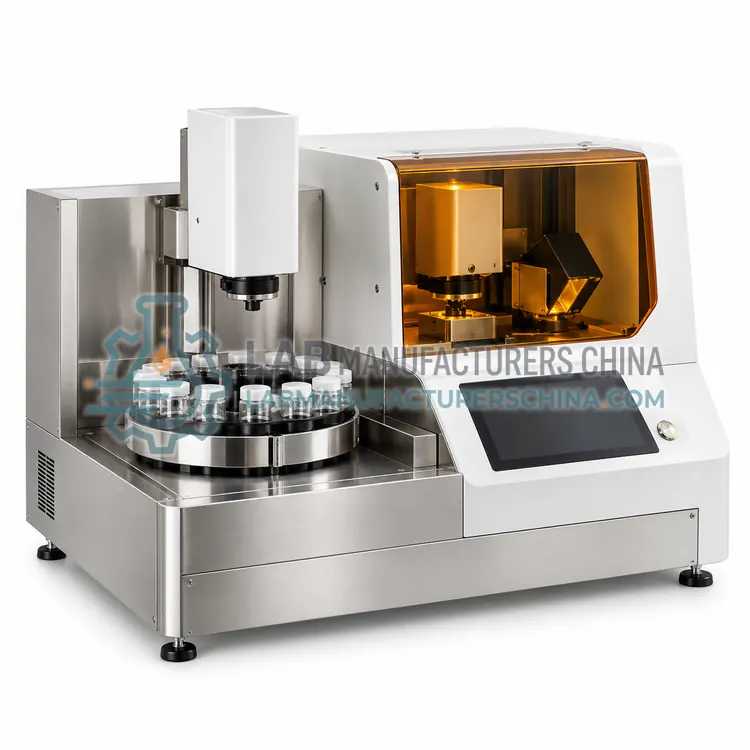
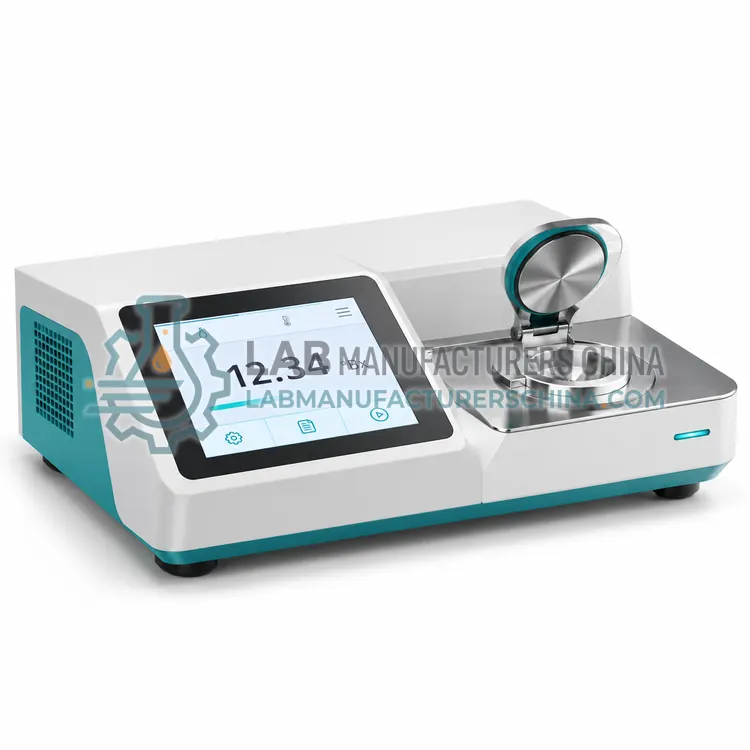
Digital Refractometer for Brix and Sugar Measurement
数字折光仪(白利糖度与糖度测量)
- SKU FCA-0004
- Food Composition Analysis
- CE (to be confirmed)
- ISO 9001 manufacturing (to be confirmed)
Price on request — FOB / CIF quoted per order
Prices depend on configuration, quantity and destination port.
Key specifications
| Brix range | 0–95 Brix |
|---|---|
| Resolution | 0.1 Brix |
| Accuracy | ±0.2 Brix |
| Refractive index range | 1.3300–1.5100 nD |
| Temperature compensation | 10–40 °C automatic |
| Sample volume | 0.2–0.3 mL |
Request a quote Download brochure · to be provided
By Lab Manufacturers China Technical TeamLast reviewed Standards: AOAC Official Methods of Analysis, ISO 12099, ISO 6658
What is the Digital Refractometer for Brix and Sugar Measurement?
A digital refractometer measures Brix, refractive index and often sugar concentration in beverages, syrups and preserves from the refraction of light in a small sample. It is a simple, rapid tool for concentration control on the production line and in the laboratory.
What is the Digital Refractometer for Brix and Sugar Measurement?
A digital refractometer measures Brix, refractive index and often sugar concentration in beverages, syrups and preserves from the refraction of light in a small sample. It is a simple, rapid tool for concentration control on the production line and in the laboratory.
Overview
The instrument places a few drops of sample on a prism and measures the critical angle at which light is totally internally reflected. Because dissolved solids raise the refractive index, the angle converts directly into a Brix or refractive-index reading on a temperature-compensated scale. Digital models show results in seconds on a display, log readings and apply automatic temperature correction, typically between 10 and 40 °C. Ranges commonly span 0–95 Brix with resolution of 0.1 Brix and accuracy near ±0.2 Brix. Improvements over manual Abbe refractometers include less operator influence, easier cleaning and stored records. Turbid or coloured samples may need filtration, and emulsions cannot be measured reliably.
How does it work?
Composition analysis instruments rely on physical or chemical properties that change with the concentration of the component of interest. Near-infrared and mid-infrared analysers measure absorbance by O–H, C–H and N–H bonds and convert spectra into concentrations with multivariate calibration models. Bomb calorimeters determine gross energy from the heat released during complete combustion in oxygen. Refractometers measure the refractive index, which rises with dissolved solids such as sugars. Enzymatic analysers use specific enzyme reactions coupled to NADH or colorimetric readouts. Salt analysers use potentiometric or conductivity sensing to measure sodium chloride. All secondary methods must be correlated with reference chemistry for each matrix.
What are the key features?
- Brix range 0–95 with 0.1 Brix resolution and ±0.2 accuracy
- Automatic temperature compensation between 10 and 40 °C
- Measurement in 2–3 seconds from a few drops of sample
- Stainless steel or sapphire prism with flat cleaning surface
- Internal memory for reading logs and sample IDs
- Optional scales for refractive index, salinity or honey moisture
What are the technical specifications?
A typical digital refractometer for brix and sugar measurement configuration offers brix range of 0–95 Brix, resolution of 0.1 Brix, accuracy of ±0.2 Brix, refractive index range of 1.3300–1.5100 nD, temperature compensation of 10–40 °C automatic and sample volume of 0.2–0.3 mL. Values are indicative of the product class; the exact figures for each configuration are confirmed on the quotation and the calibration documents supplied with the instrument.
Which applications is it used for?
The Digital Refractometer for Brix and Sugar Measurement is used in soft drink and juice concentration control, jam, syrup and confectionery production, incoming inspection of fruit and sugar syrups and honey moisture and ripeness checks. Across the wider Food Composition Analysis class, laboratories also deploy it for nutrition labelling and specification verification, raw-material acceptance in grain, dairy and feed plants and in-process control of blending and drying.
Which standards and certifications apply?
Relevant standards and methods include AOAC Official Methods of Analysis, ISO 12099, ISO 6658, ISO 6496, ISO 2171, ISO 8968 and ISO/IEC 17025. Certification candidates for this model are CE and ISO 9001 manufacturing; each is to be confirmed for the specific configuration before shipment, and certificates are supplied only where they have been issued.
Infrared analysers need a representative calibration set covering the full range of moisture, fat and protein found in routine samples, and the model must be re-validated after major raw-material changes. Temperature and sample presentation strongly affect spectra, so cups and grinder settings should be controlled. Bomb calorimeters require oxygen of high purity, careful pellet preparation and regular benzoic acid checks. Enzymatic and refractometric methods need clean optics, fresh reagents and control samples. Keep records of reference-method comparisons, and confirm that calibrations, service and spare parts remain available for the life of the instrument.
How do I select the right Digital Refractometer for Brix and Sugar Measurement?
Select a digital refractometer when you need fast concentration checks with automatic temperature compensation and stored readings. Confirm that the Brix range covers your most concentrated product and that the accuracy matches your specification limits. For coloured or viscous samples, check whether filtration accessories or a heated prism option is offered.
How does it compare with other Food Composition Analysis variants?
Choose the technique from the parameter and the accuracy you must report. Near-infrared analysers give the fastest multi-parameter results for grains, powders and liquids, but they depend entirely on the calibration set, so they suit high sample numbers and stable matrices. Mid-infrared milk analysers are the accepted tool for dairy payment and standardisation at several hundred samples per hour. Bomb calorimetry is the only direct energy measurement and remains the reference for feed and labelling energy. Refractometry is simple and robust for sugar, juice and syrup control. Enzymatic analysers provide specificity for sugars, organic acids and starch where rapid kits are not accurate enough. Consider consumable use, calibration transfer and service response when comparing platforms.
Full specifications
| Brix range | 0–95 Brix |
|---|---|
| Resolution | 0.1 Brix |
| Accuracy | ±0.2 Brix |
| Refractive index range | 1.3300–1.5100 nD |
| Temperature compensation | 10–40 °C automatic |
| Sample volume | 0.2–0.3 mL |
| Measurement time | 2–3 s |
| Prism material | Sapphire or stainless steel |
| Memory | Up to 1000 readings |
| Power | Rechargeable battery or USB |
Indicative values for this product class. Final specifications are confirmed on the quotation and in the calibration documents supplied with the instrument.
Applications
- Soft drink and juice concentration control
- Jam, syrup and confectionery production
- Incoming inspection of fruit and sugar syrups
- Honey moisture and ripeness checks
Key features
- Brix range 0–95 with 0.1 Brix resolution and ±0.2 accuracy
- Automatic temperature compensation between 10 and 40 °C
- Measurement in 2–3 seconds from a few drops of sample
- Stainless steel or sapphire prism with flat cleaning surface
- Internal memory for reading logs and sample IDs
- Optional scales for refractive index, salinity or honey moisture
Frequently asked questions about Digital Refractometer for Brix and Sugar Measurement
Brix expresses the concentration of dissolved solids as an equivalent sucrose percentage, because the scale is based on pure sucrose solutions. In fruit juice it approximates sugar content, but other dissolved solids also contribute to the reading.
Refractive index changes with temperature, so readings drift if the sample is warmer or cooler than the reference. Automatic temperature compensation corrects the value to the standard reference temperature, giving comparable results across production rooms and seasons.
Only with care. The measurement depends on light passing through the sample, so particles scatter light and bias the result. Turbid samples are usually filtered or centrifuged first, and emulsions are not suitable for refractometric analysis.
Near-infrared and mid-infrared analysers measure composition in 30 to 60 seconds with no reagents, provided a calibration model for that product has been built and validated against reference chemistry. They are screening and process tools rather than referee methods.
A Brix refractometer measures dissolved solids, mostly sugars, from the refractive index of a clear liquid. It is used for fruit juice, soft drinks, syrups and preserves to check concentration and to control evaporation or blending.
A bomb calorimeter directly measures gross energy by combusting the sample in oxygen. It is the reference for feed energy values and is used where calculated energy from fat, protein and carbohydrate would be inaccurate, such as high-fibre or novel ingredients.
Related models