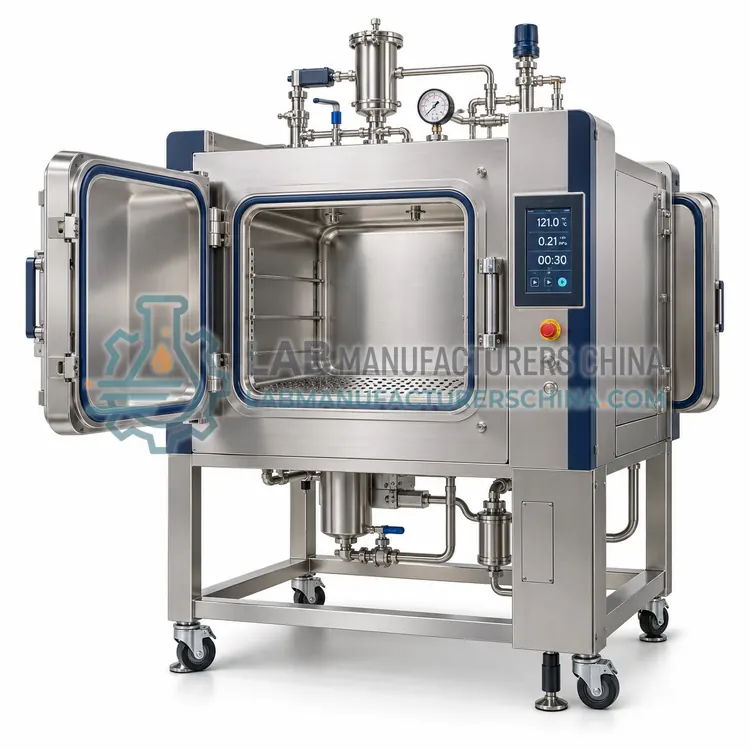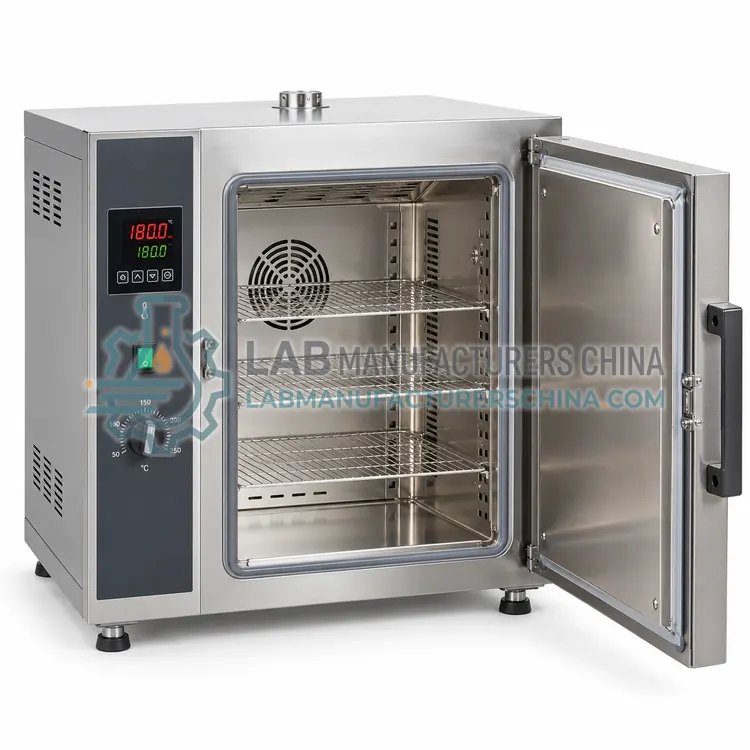
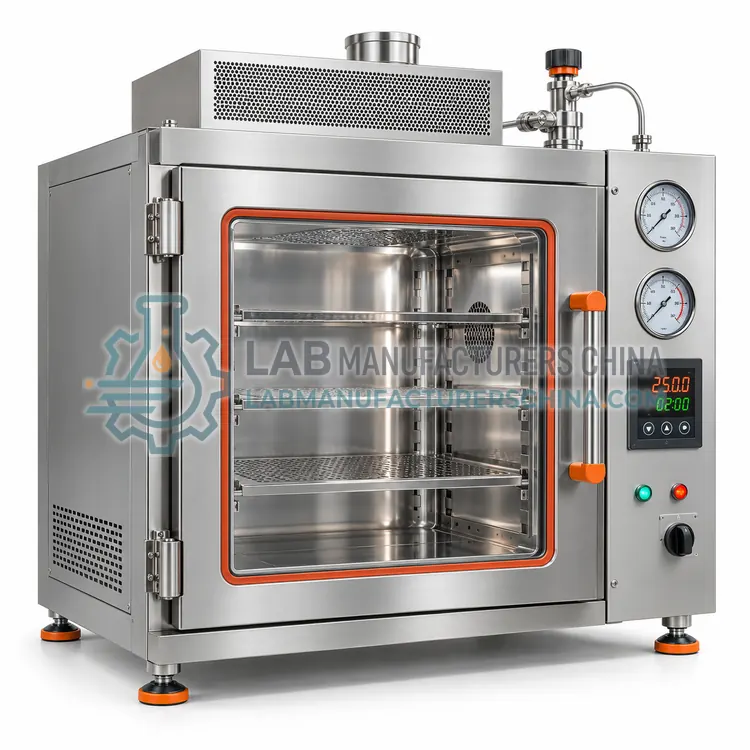
Depyrogenation Oven with HEPA-Filtered Air
带 HEPA 过滤送风的除热原烘箱
- SKU DHS-0003
- Dry Heat Sterilizers
- CE (to be confirmed)
- ISO 13485 manufacturing (to be confirmed)
- GMP-oriented documentation (to be confirmed)
Price on request — FOB / CIF quoted per order
Prices depend on configuration, quantity and destination port.
Key specifications
| Temperature range | Up to 350 °C |
|---|---|
| Chamber volume | 100-1000 L |
| Temperature uniformity | ±5 °C at 250 °C |
| Air filtration | HEPA H14, heat-resistant |
| Typical depyrogenation cycle | 250 °C for 30 min or 300 °C for 10 min |
| Chamber material | SUS316L or 304 stainless steel, welded |
Request a quote Download brochure · to be provided
By Lab Manufacturers China Technical TeamLast reviewed Standards: USP <1211>, Ph. Eur. 5.1.1, USP <1228.1> Dry heat depyrogenation
What is the Depyrogenation Oven with HEPA-Filtered Air?
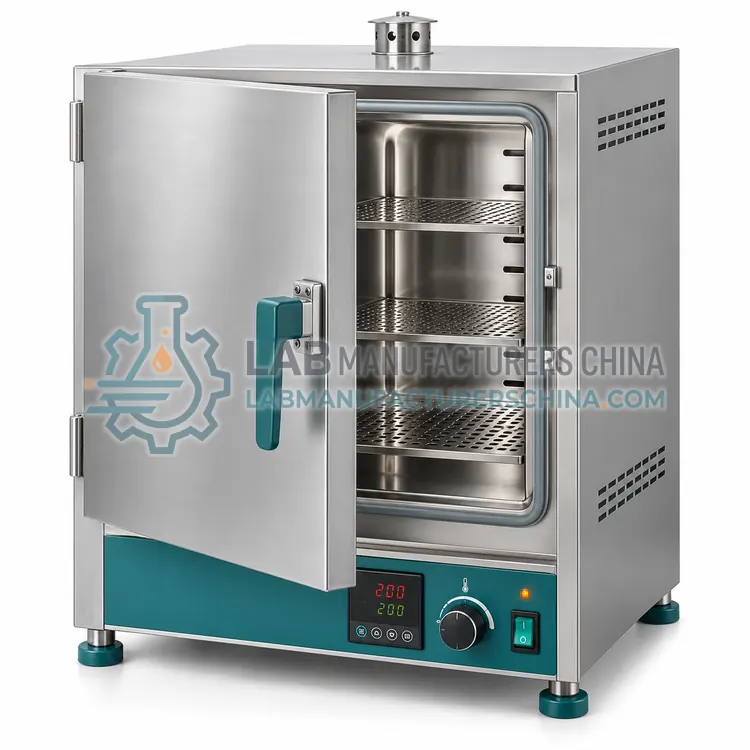
A high-temperature oven that reaches 250 to 350 °C with HEPA-filtered air supply, used to destroy bacterial endotoxin on vials, glassware and metal parts before aseptic filling or endotoxin testing in pharmaceutical laboratories.
What is the Depyrogenation Oven with HEPA-Filtered Air?
A high-temperature oven that reaches 250 to 350 °C with HEPA-filtered air supply, used to destroy bacterial endotoxin on vials, glassware and metal parts before aseptic filling or endotoxin testing in pharmaceutical laboratories.
Overview
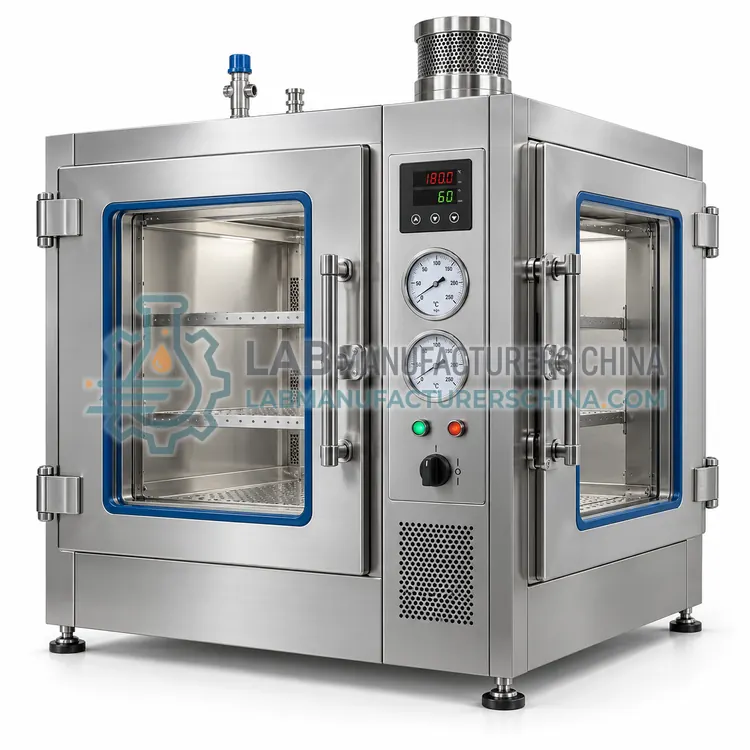
The depyrogenation oven is built for dry heat processes that reduce endotoxin by at least three logs, for example 250 °C for 30 minutes or 300 °C for 10 minutes, as described in pharmacopoeial guidance. A fan draws air through a HEPA filter, heats it and circulates it through the chamber, which keeps particulate contamination low and improves uniformity to about ±5 °C at 250 °C or better. Chambers range from 100 to 1000 L and are made from SUS304 or SUS316L with welded seams. Programmable controllers, multi-point temperature probes and data logging support validation. Many versions are double-door for clean-room installation, and cooling fans with HEPA filters lower the load temperature quickly. Endotoxin challenge testing with spiked indicators is used for qualification.
How does it work?
Dry heat sterilization kills microorganisms by oxidation and protein denaturation in the absence of moisture. Because air conducts heat less efficiently than steam, higher temperatures and longer times are needed, for example 160 °C for 120 minutes, 170 °C for 60 minutes or 180 °C for 30 minutes. A heated chamber uses electric heating elements, and either natural gravity convection or a fan circulates air to equalize temperature. Fan-forced models reduce gradients and speed heat-up. A controller reads a platinum resistance or thermocouple sensor, and an independent overtemperature cut-out protects the unit. Timing begins when the coldest point in the load reaches the set temperature. Depyrogenation ovens run at 250 to 350 °C to destroy endotoxin, often with HEPA-filtered air supply. Insulated walls and a sealed door limit heat loss.
What are the key features?
- Reaches 250 to 350 °C for validated endotoxin reduction of three logs or more.
- HEPA-filtered supply and cooling air limit particulate contamination.
- Welded stainless chamber of 100 to 1000 L.
- Multi-point temperature probes and data logging for validation.
- Double-door option for clean-room wall installation.
- Programmable heat-up, hold and cooling stages.
What are the technical specifications?
A typical depyrogenation oven with hepa-filtered air configuration offers temperature range of Up to 350 °C, chamber volume of 100-1000 L, temperature uniformity of ±5 °C at 250 °C, air filtration of HEPA H14, heat-resistant, typical depyrogenation cycle of 250 °C for 30 min or 300 °C for 10 min and chamber material of SUS316L or 304 stainless steel, welded. Values are indicative of the product class; the exact figures for each configuration are confirmed on the quotation and the calibration documents supplied with the instrument.
Which applications is it used for?
The Depyrogenation Oven with HEPA-Filtered Air is used in vial and glassware depyrogenation, endotoxin test labware preparation, metal part depyrogenation and pharmaceutical QC laboratories. Across the wider Dry Heat Sterilizers class, laboratories also deploy it for glassware sterilization, metal instrument sterilization and depyrogenation of vials and glassware.
Which standards and certifications apply?
Relevant standards and methods include USP <1211>, Ph. Eur. 5.1.1, USP <1228.1> Dry heat depyrogenation, ISO 20857, EN 61010-2-010, GB/T 30690 and EN 13060. Certification candidates for this model are CE, ISO 13485 manufacturing and GMP-oriented documentation; each is to be confirmed for the specific configuration before shipment, and certificates are supplied only where they have been issued.
Place the sterilizer on a non-combustible surface with clearance for ventilation and keep flammable materials away. Use a dedicated electrical circuit sized for the heater. Load items in racks so air can circulate, and do not overfill. Wrap or cover items with aluminum foil or place them in metal or borosilicate containers that tolerate the temperature. Start timing at the set temperature for the coldest point, which is verified with thermocouples during validation. Use chemical indicators or biological indicators such as Bacillus atrophaeus spores to verify cycles. Allow the load to cool before opening, since glass can crack with thermal shock. Calibrate the temperature sensor annually and check door seals and fans regularly. Follow burn-safety rules when unloading.
How do I select the right Depyrogenation Oven with HEPA-Filtered Air?
Select the depyrogenation oven when a validated endotoxin reduction is required, as in pharmaceutical testing and filling. Standard sterilizer ovens do not reach the needed temperature. Specify temperature, chamber volume, HEPA grade, door type, mapping and endotoxin challenge support.
How does it compare with other Dry Heat Sterilizers variants?
Decide first whether you need sterilization, which runs at 160 to 180 °C, or depyrogenation, which needs 250 °C or above. Then choose between gravity convection, which is simple and gentle on powders, and forced-air models, which give tighter uniformity and faster cycles. Size the chamber for the largest racks or trays and allow space between items for airflow. Check temperature range, uniformity across the chamber, programmable cycles and cooling rate. Regulated laboratories need data logging, validated load mapping and, for pharmaceutical use, HEPA filtration and double-door configurations. Confirm that the materials to be processed tolerate the temperature. Plastics, rubber, liquids, and most textiles are unsuitable, and sharp instruments may lose temper at higher temperatures.
Full specifications
| Temperature range | Up to 350 °C |
|---|---|
| Chamber volume | 100-1000 L |
| Temperature uniformity | ±5 °C at 250 °C |
| Air filtration | HEPA H14, heat-resistant |
| Typical depyrogenation cycle | 250 °C for 30 min or 300 °C for 10 min |
| Chamber material | SUS316L or 304 stainless steel, welded |
| Endotoxin reduction | At least 3 log (validated) |
| Temperature probes | Multi-point, platinum resistance |
| Door configuration | Single or double door |
| Power supply | 380 V, 50 Hz, 3 phase |
Indicative values for this product class. Final specifications are confirmed on the quotation and in the calibration documents supplied with the instrument.
Applications
- Vial and glassware depyrogenation
- Endotoxin test labware preparation
- Metal part depyrogenation
- Pharmaceutical QC laboratories
Key features
- Reaches 250 to 350 °C for validated endotoxin reduction of three logs or more.
- HEPA-filtered supply and cooling air limit particulate contamination.
- Welded stainless chamber of 100 to 1000 L.
- Multi-point temperature probes and data logging for validation.
- Double-door option for clean-room wall installation.
- Programmable heat-up, hold and cooling stages.
Frequently asked questions about Depyrogenation Oven with HEPA-Filtered Air
It is the destruction or removal of bacterial endotoxin, a heat-stable lipopolysaccharide. Dry heat at 250 °C or higher is widely used, with validation showing at least a three-log reduction.
Heated air circulating over cleaned glassware could deposit particles or microbes. HEPA filters keep supply and cooling air clean so that items leave the oven sterile and particle-free.
Validation uses temperature mapping with multiple probes, plus endotoxin challenge indicators spiked at known levels. The cycle is accepted if reduction is at least three logs at the coldest location.
Common cycles are 160 °C for 120 minutes, 170 °C for 60 minutes or 180 °C for 30 minutes, with timing starting when the coldest point reaches the set temperature. Validate parameters for your load.
Sterilization kills viable microorganisms at about 160 to 180 °C. Depyrogenation destroys bacterial endotoxin and needs about 250 °C or higher, since endotoxin is far more heat-resistant than spores.
Glassware, metal instruments, ceramics, powders and oils can be processed. Plastics, rubber, liquids in sealed containers, paper and most textiles are unsuitable because they melt, burn or degrade.