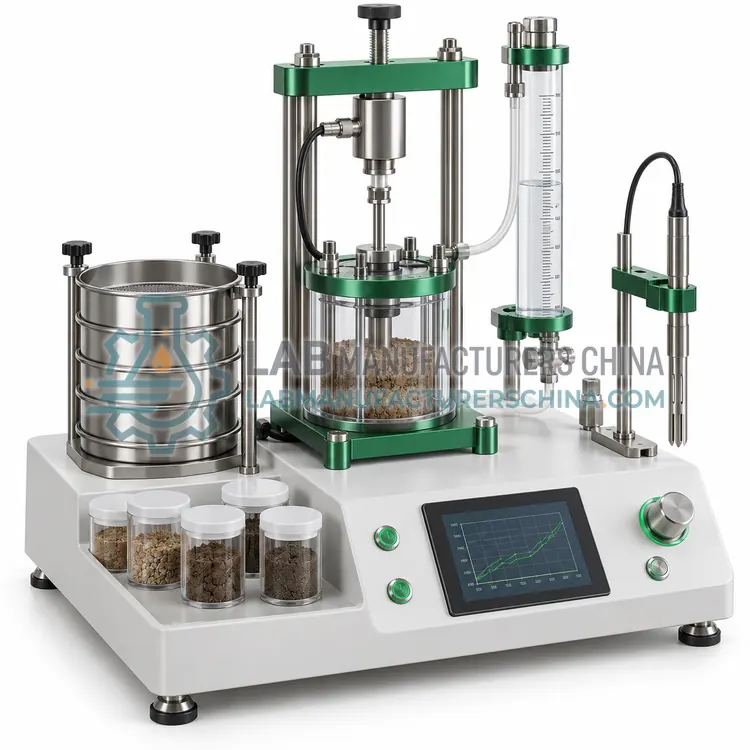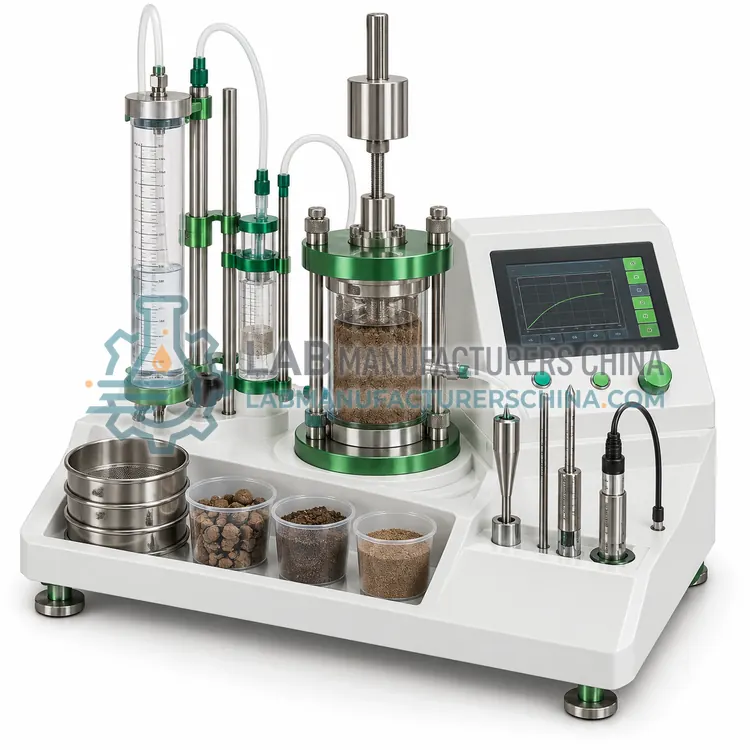
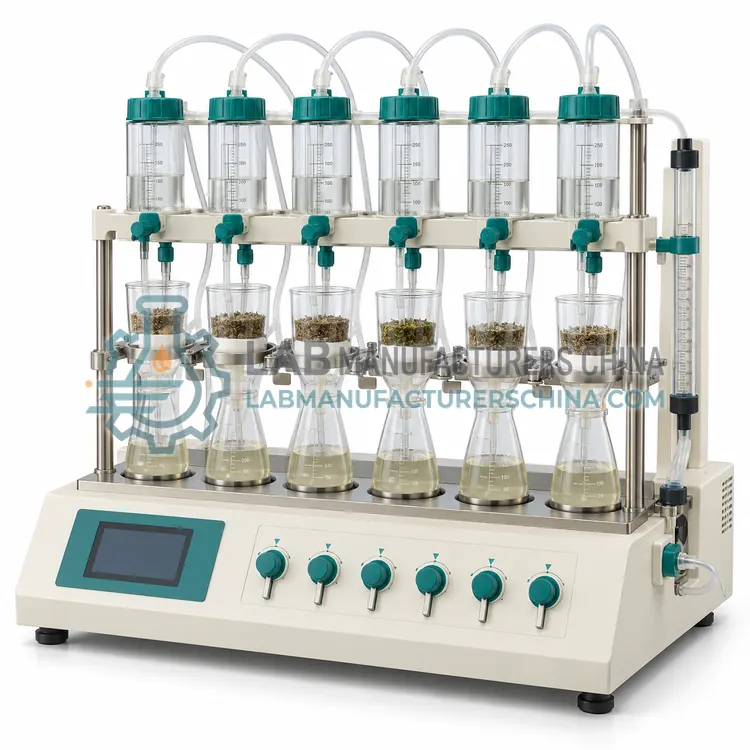
Forage Dry Matter and Moisture Analyzer
饲草干物质和水分分析仪
- SKU CRA-0005
- Crop Analysis
- CE (to be confirmed)
- RoHS (to be confirmed)
- ISO 9001 manufacturing (to be confirmed)
Price on request — FOB / CIF quoted per order
Prices depend on configuration, quantity and destination port.
Key specifications
| Measurement principle | Microwave or halogen loss-on-drying |
|---|---|
| Dry matter range | 10–95% |
| Resolution | 0.1% |
| Accuracy | ±0.5% vs oven method |
| Sample mass | 50–200 g |
| Drying time | 3–15 min |
Request a quote Download brochure · to be provided
By Lab Manufacturers China Technical TeamLast reviewed Standards: ISO 2173 (soluble solids), ISO 5984 (crude ash), ISO 6496 (moisture, feeds)
What is the Forage Dry Matter and Moisture Analyzer?
An instrument that determines dry matter in silage, hay and fresh forage by rapid drying. It is the right choice for harvest timing, wilting control and accurate ration formulation in dairy and livestock operations.
What is the Forage Dry Matter and Moisture Analyzer?
An instrument that determines dry matter in silage, hay and fresh forage by rapid drying. It is the right choice for harvest timing, wilting control and accurate ration formulation in dairy and livestock operations.
Overview
The forage moisture analyzer determines dry matter by drying a weighed sample and reweighing it, using microwave energy, a halogen heater or an infrared lamp. A microwave unit dries a 100 gram representative sample in a few minutes with results close to the oven reference, while halogen and infrared models suit smaller samples and benchtop operation. Because dry matter changes rapidly during wilting, growers use field measurements to decide when to bale or ensile, targeting the range that avoids effluent and poor fermentation on one side and mould on the other. Accurate dry matter also underpins ration formulation, since feed values are expressed on a dry matter basis and a wrong figure distorts the whole diet. Sample handling matters: a representative sample must be collected, chopped or spread to promote even drying, and burning must be avoided, which an automatic endpoint based on weight change prevents.
How does it work?
Crop analysis uses several measurement principles. Penetrometers push a calibrated plunger into fruit flesh and record the peak force needed, giving a firmness index related to ripeness and storage life. Refractometers measure the refractive index of juice, which depends on dissolved solids, and report results as degrees Brix for sugars and total soluble solids. Colorimeters illuminate the surface and measure reflected light in defined colour spaces, so ripeness, sorting and defects can be assessed objectively. Near-infrared analyzers measure reflectance from ground forage or feed and predict protein, fibre, fat, starch and dry matter from calibration models. Moisture meters and microwave or halogen analyzers determine dry matter by loss on drying, which is important for silage and hay. Together these tools support harvest timing, grading, blending and quality control.
What are the key features?
- Microwave or halogen drying gives dry matter in minutes.
- Automatic endpoint based on weight change prevents burning.
- Short cycle allows multiple field checks during wilting.
- Digital readout displays dry matter percentage directly.
- Suits silage, hay, fresh forage and total mixed ration samples.
- Battery or mains options support field and lab use.
What are the technical specifications?
A typical forage dry matter and moisture analyzer configuration offers measurement principle of Microwave or halogen loss-on-drying, dry matter range of 10–95%, resolution of 0.1%, accuracy of ±0.5% vs oven method, sample mass of 50–200 g and drying time of 3–15 min. Values are indicative of the product class; the exact figures for each configuration are confirmed on the quotation and the calibration documents supplied with the instrument.
Which applications is it used for?
The Forage Dry Matter and Moisture Analyzer is used in silage and hay harvest timing, wilting management for baling, ration formulation support and forage trading and quality checks. Across the wider Crop Analysis class, laboratories also deploy it for fruit and vegetable harvest timing, produce grading and packing lines and silage and hay dry matter management.
Which standards and certifications apply?
Relevant standards and methods include ISO 2173 (soluble solids), ISO 5984 (crude ash), ISO 6496 (moisture, feeds), ISO 6865 (crude fibre), UNECE FFV standards and AOAC 934.01. Certification candidates for this model are CE, RoHS and ISO 9001 manufacturing; each is to be confirmed for the specific configuration before shipment, and certificates are supplied only where they have been issued.
Follow the standard sampling and preparation procedure, because firmness, Brix and dry matter depend strongly on fruit temperature, sample position and time since harvest. Calibrate refractometers with distilled water and check them against a sucrose standard, and clean the prism carefully to avoid a cloudy reading. For penetrometers, standardise the plunger size, penetration speed and skin removal, and discard samples with visible defects. Keep near-infrared instruments clean and update forage and feed calibrations with local samples each season. For moisture and dry matter, control drying temperature and time exactly. Record sample origin, handling and instrument settings, and keep reference samples for traceability. Store and transport instruments so that optics, probes and batteries are protected.
How do I select the right Forage Dry Matter and Moisture Analyzer?
Select this analyzer when frequent dry matter checks are needed to time harvest and baling, and when ration accuracy depends on reliable figures. For occasional laboratory work, an oven may suffice but is slower. In an RFQ, specify the drying technology, sample mass, accuracy target and portability needs.
How does it compare with other Crop Analysis variants?
Define the quality parameter that drives the decision before choosing an instrument. For ripeness and harvest timing in fruit, a penetrometer and a refractometer give direct, low-cost readings; select a plunger diameter and force range suited to the crop, since standards specify these. For objective grading and sorting, a colorimeter with the correct colour space and aperture avoids subjective judgement. For feed and forage value, a near-infrared analyzer predicts several nutrients at once but needs local calibrations from wet chemistry. For dry matter in silage and hay, choose a microwave or halogen analyzer with the sample preparation the standard requires. Consider portability for field use, calibration and reference sample support, and whether results must be exported to grading or quality systems.
Full specifications
| Measurement principle | Microwave or halogen loss-on-drying |
|---|---|
| Dry matter range | 10–95% |
| Resolution | 0.1% |
| Accuracy | ±0.5% vs oven method |
| Sample mass | 50–200 g |
| Drying time | 3–15 min |
| Endpoint control | Automatic by weight change |
| Display | Dry matter, moisture, sample weight |
| Data memory | Up to 500 records |
| Power supply | Mains or battery |
| Operating temperature | 5–40 °C |
Indicative values for this product class. Final specifications are confirmed on the quotation and in the calibration documents supplied with the instrument.
Applications
- Silage and hay harvest timing
- Wilting management for baling
- Ration formulation support
- Forage trading and quality checks
Key features
- Microwave or halogen drying gives dry matter in minutes.
- Automatic endpoint based on weight change prevents burning.
- Short cycle allows multiple field checks during wilting.
- Digital readout displays dry matter percentage directly.
- Suits silage, hay, fresh forage and total mixed ration samples.
- Battery or mains options support field and lab use.
Frequently asked questions about Forage Dry Matter and Moisture Analyzer
The instrument weighs the sample continuously and stops when the rate of weight loss falls below a set threshold, which indicates that free water has evaporated. This prevents both under-drying and the scorching that skews dry matter upward.
Too low, and seepage removes nutrients and fermentation becomes acidic and inefficient; too high, and the silage cannot be compacted, so air remains and mould develops. Target ranges differ by crop and silo type and are set by extension guidance.
Within a field or silo, dry matter varies by several percentage points, so a non-representative scoop can be wrong by more than the instrument error. Collect several subsamples from different positions, mix them and analyse the mixture.
Brix is the concentration of dissolved solids in juice, mainly sugars, expressed in degrees, and it predicts sweetness, maturity and potential quality. It is measured by refractometry and is used widely in fruit, grape and sugar crop assessment.
A penetrometer presses a plunger of specified diameter into peeled flesh at a controlled speed and records the peak force in newtons or pounds. Firmness falls as fruit ripens, so the reading guides harvest date and predicts storage life.
Dry matter determines the feeding value and preservation of silage and hay. If it is too low, effluent and poor fermentation result; if too high, compaction and mould are problems. Growers use it to time cutting and to manage wilting.
Related models