Portable Colorimeter for Crop Grading
作物分级便携式色差仪
- SKU CRA-0004
- Crop Analysis
- CE (to be confirmed)
- RoHS (to be confirmed)
- ISO 9001 manufacturing (to be confirmed)
Price on request — FOB / CIF quoted per order
Prices depend on configuration, quantity and destination port.
Key specifications
| Measurement principle | Reflectance colorimetry, 45/0 geometry |
|---|---|
| Colour spaces | CIE L*a*b*, XYZ, Hunter Lab, RGB |
| Wavelength range | 400–700 nm (visible) |
| Aperture size | 8 mm or 4 mm |
| Repeatability | ΔE ≤ 0.05 |
| Measurement time | < 2 s |
Request a quote Download brochure · to be provided
By Lab Manufacturers China Technical TeamLast reviewed Standards: ISO 2173 (soluble solids), ISO 5984 (crude ash), ISO 6496 (moisture, feeds)
What is the Portable Colorimeter for Crop Grading?
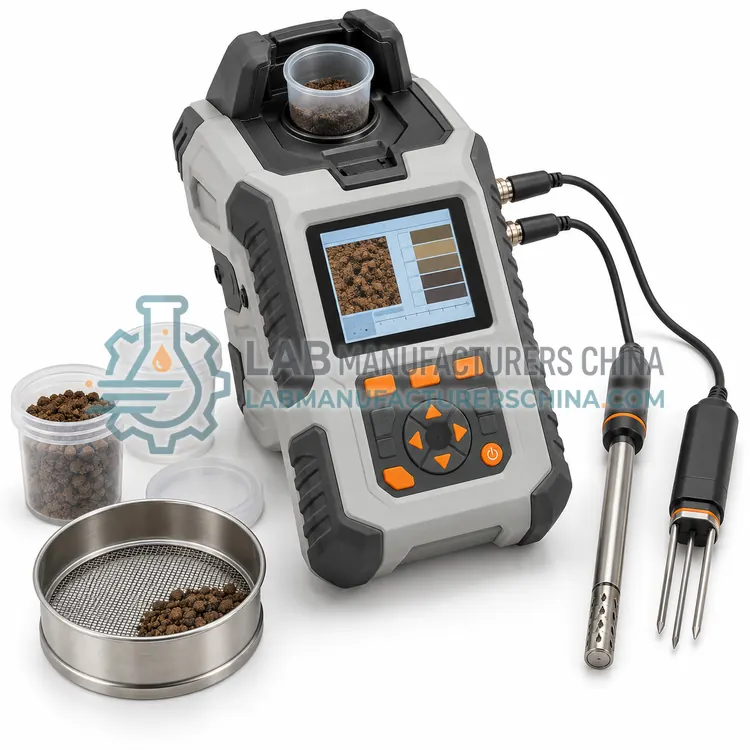
A portable instrument that measures the colour of produce and crops in a defined colour space. It is the right choice for objective ripeness assessment, defect detection and consistent sorting at harvest and in packhouses.
What is the Portable Colorimeter for Crop Grading?
A portable instrument that measures the colour of produce and crops in a defined colour space. It is the right choice for objective ripeness assessment, defect detection and consistent sorting at harvest and in packhouses.
Overview
The portable colorimeter illuminates the sample surface with a controlled light source and measures reflected light in several wavelength bands, converting the result to colour coordinates such as CIE L*a*b*, Hunter Lab or RGB indices. Handheld units use a fixed aperture and a shroud to exclude ambient light, and some provide crop-specific indices such as the tomato colour index or apple colour grades. Measurements are taken on a marked area of the fruit or leaf and averaged over several samples to overcome natural variation. Because colour relates to pigment development, chlorophyll loss and carotenoid accumulation, the data track ripening and support harvest scheduling and automated sorting. Portable units are used in the field and grading lines, while bench-top spectrophotometers offer wider spectral data for research. Calibration uses a white and often a black reference tile, and care with the aperture and sample presentation keeps measurements comparable.
How does it work?
Crop analysis uses several measurement principles. Penetrometers push a calibrated plunger into fruit flesh and record the peak force needed, giving a firmness index related to ripeness and storage life. Refractometers measure the refractive index of juice, which depends on dissolved solids, and report results as degrees Brix for sugars and total soluble solids. Colorimeters illuminate the surface and measure reflected light in defined colour spaces, so ripeness, sorting and defects can be assessed objectively. Near-infrared analyzers measure reflectance from ground forage or feed and predict protein, fibre, fat, starch and dry matter from calibration models. Moisture meters and microwave or halogen analyzers determine dry matter by loss on drying, which is important for silage and hay. Together these tools support harvest timing, grading, blending and quality control.
What are the key features?
- Reports colour coordinates in standard colour spaces such as CIE L*a*b*.
- Crop-specific indices suit tomato, apple, citrus and other produce.
- Fixed aperture and shroud exclude ambient light for repeatability.
- Averaging over several samples overcomes natural variation.
- Portable design works in orchards and on grading lines.
- White and black tile calibration maintains measurement traceability.
What are the technical specifications?
A typical portable colorimeter for crop grading configuration offers measurement principle of Reflectance colorimetry, 45/0 geometry, colour spaces of CIE L*a*b*, XYZ, Hunter Lab, RGB, wavelength range of 400–700 nm (visible), aperture size of 8 mm or 4 mm, repeatability of ΔE ≤ 0.05 and measurement time of < 2 s. Values are indicative of the product class; the exact figures for each configuration are confirmed on the quotation and the calibration documents supplied with the instrument.
Which applications is it used for?
The Portable Colorimeter for Crop Grading is used in harvest ripeness assessment, packhouse colour grading, post-harvest storage monitoring and breeding and variety colour trials. Across the wider Crop Analysis class, laboratories also deploy it for fruit and vegetable harvest timing, produce grading and packing lines and silage and hay dry matter management.
Which standards and certifications apply?
Relevant standards and methods include ISO 2173 (soluble solids), ISO 5984 (crude ash), ISO 6496 (moisture, feeds), ISO 6865 (crude fibre), UNECE FFV standards and AOAC 934.01. Certification candidates for this model are CE, RoHS and ISO 9001 manufacturing; each is to be confirmed for the specific configuration before shipment, and certificates are supplied only where they have been issued.
Follow the standard sampling and preparation procedure, because firmness, Brix and dry matter depend strongly on fruit temperature, sample position and time since harvest. Calibrate refractometers with distilled water and check them against a sucrose standard, and clean the prism carefully to avoid a cloudy reading. For penetrometers, standardise the plunger size, penetration speed and skin removal, and discard samples with visible defects. Keep near-infrared instruments clean and update forage and feed calibrations with local samples each season. For moisture and dry matter, control drying temperature and time exactly. Record sample origin, handling and instrument settings, and keep reference samples for traceability. Store and transport instruments so that optics, probes and batteries are protected.
How do I select the right Portable Colorimeter for Crop Grading?
Select the portable colorimeter when objective colour grades are needed at the point of harvest or packing and a rugged, fast instrument is required. For full spectral analysis or laboratory reference work, a bench-top spectrophotometer is better. In an RFQ, specify the colour space, aperture, crop indices and data export needs.
How does it compare with other Crop Analysis variants?
Define the quality parameter that drives the decision before choosing an instrument. For ripeness and harvest timing in fruit, a penetrometer and a refractometer give direct, low-cost readings; select a plunger diameter and force range suited to the crop, since standards specify these. For objective grading and sorting, a colorimeter with the correct colour space and aperture avoids subjective judgement. For feed and forage value, a near-infrared analyzer predicts several nutrients at once but needs local calibrations from wet chemistry. For dry matter in silage and hay, choose a microwave or halogen analyzer with the sample preparation the standard requires. Consider portability for field use, calibration and reference sample support, and whether results must be exported to grading or quality systems.
Full specifications
| Measurement principle | Reflectance colorimetry, 45/0 geometry |
|---|---|
| Colour spaces | CIE L*a*b*, XYZ, Hunter Lab, RGB |
| Wavelength range | 400–700 nm (visible) |
| Aperture size | 8 mm or 4 mm |
| Repeatability | ΔE ≤ 0.05 |
| Measurement time | < 2 s |
| Light source | LED, D65 illuminant |
| Data memory | Up to 10,000 records |
| Outputs | USB, Bluetooth |
| Ingress protection | IP65 |
| Power supply | Rechargeable battery |
Indicative values for this product class. Final specifications are confirmed on the quotation and in the calibration documents supplied with the instrument.
Applications
- Harvest ripeness assessment
- Packhouse colour grading
- Post-harvest storage monitoring
- Breeding and variety colour trials
Key features
- Reports colour coordinates in standard colour spaces such as CIE L*a*b*.
- Crop-specific indices suit tomato, apple, citrus and other produce.
- Fixed aperture and shroud exclude ambient light for repeatability.
- Averaging over several samples overcomes natural variation.
- Portable design works in orchards and on grading lines.
- White and black tile calibration maintains measurement traceability.
Frequently asked questions about Portable Colorimeter for Crop Grading
Colour depends on the area measured and on ambient light, so a defined aperture and a shroud that blocks room or sunlight make readings repeatable. Without them, the same fruit can give different values under different lighting.
Because fruit colour varies across the surface, take readings at several marked positions on each fruit and average over a sample of ten or more fruit. This produces a stable lot value for grading decisions.
Calibrate with a white reference tile and, on many models, a black tile, at the start of each session and after large temperature changes. Keep tiles clean and replace them if scratched, because surface damage shifts readings.
Brix is the concentration of dissolved solids in juice, mainly sugars, expressed in degrees, and it predicts sweetness, maturity and potential quality. It is measured by refractometry and is used widely in fruit, grape and sugar crop assessment.
A penetrometer presses a plunger of specified diameter into peeled flesh at a controlled speed and records the peak force in newtons or pounds. Firmness falls as fruit ripens, so the reading guides harvest date and predicts storage life.
Dry matter determines the feeding value and preservation of silage and hay. If it is too low, effluent and poor fermentation result; if too high, compaction and mould are problems. Growers use it to time cutting and to manage wilting.
Related models