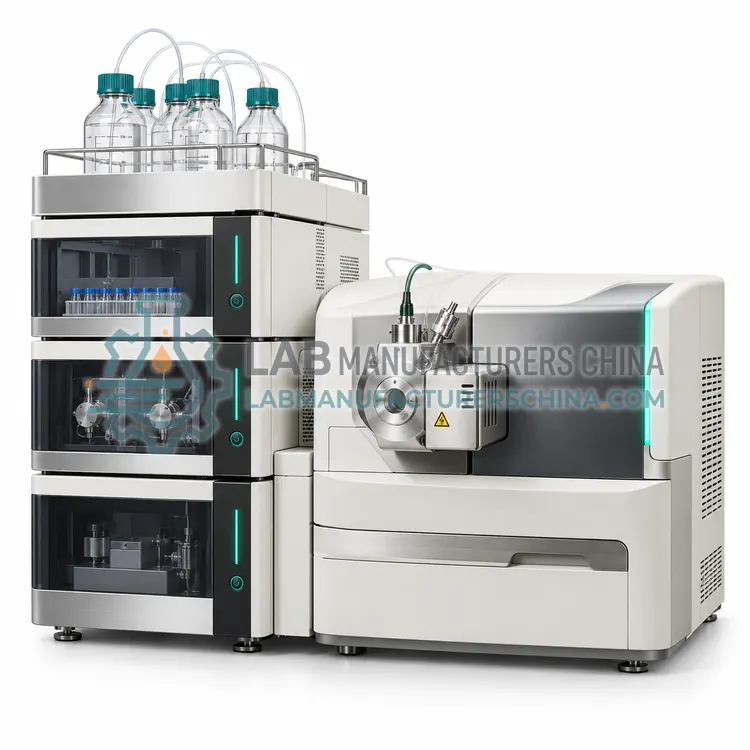
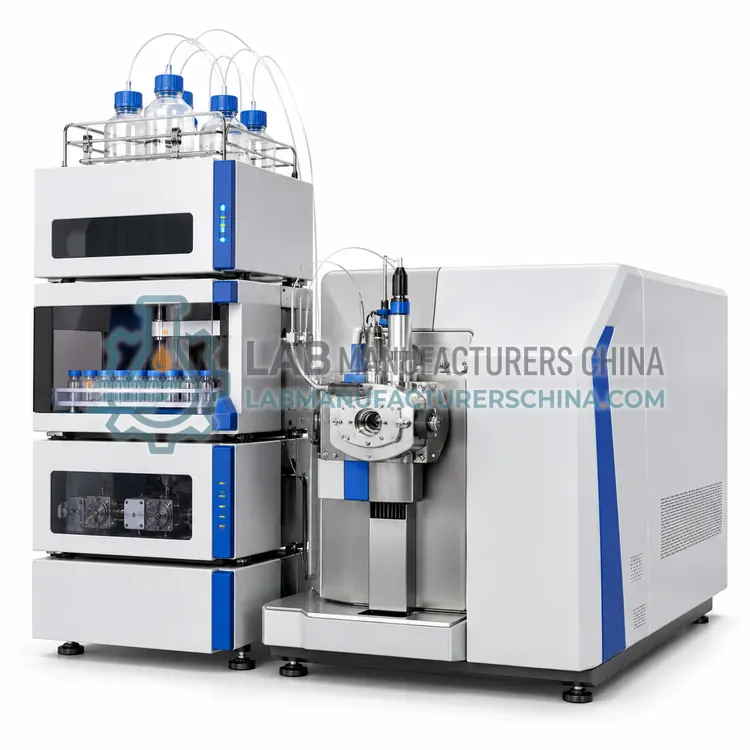
LC-MS/MS System for Mycotoxin Analysis
真菌毒素分析 LC-MS/MS 系统
- SKU COA-0003
- Contaminant Analysis
- CE (to be confirmed)
- ISO 9001 manufacturing (to be confirmed)
- IQ/OQ documentation (to be confirmed)
Price on request — FOB / CIF quoted per order
Prices depend on configuration, quantity and destination port.
Key specifications
| Mass analyser | Triple quadrupole |
|---|---|
| Mass range | 5–2000 m/z |
| Toxins per run | 10–20 regulated mycotoxins |
| Detection limits | 0.1–10 µg/kg |
| Run time | 10–15 min per injection |
| Ionisation | Electrospray, positive and negative |
Request a quote Download brochure · to be provided
By Lab Manufacturers China Technical TeamLast reviewed Standards: ISO 17294-2, EPA 6020B, Commission Regulation (EU) 2023/915
What is the LC-MS/MS System for Mycotoxin Analysis?
An LC-MS/MS system for mycotoxins quantifies aflatoxins, ochratoxin A, deoxynivalenol, zearalenone and fumonisins at microgram per kilogram levels in one run. It is the confirmatory platform for cereals, nuts, spices and feed.
What is the LC-MS/MS System for Mycotoxin Analysis?
An LC-MS/MS system for mycotoxins quantifies aflatoxins, ochratoxin A, deoxynivalenol, zearalenone and fumonisins at microgram per kilogram levels in one run. It is the confirmatory platform for cereals, nuts, spices and feed.
Overview
Mycotoxin analysis begins with extraction in acetonitrile-water or methanol-water, sometimes with a dispersive or immunoaffinity clean-up to remove matrix components that suppress ionisation. The extract is separated on a reversed-phase column and ionised by electrospray, and the tandem mass spectrometer monitors specific fragment transitions for each toxin, including isotope-labelled internal standards such as 13C-aflatoxin. A single method can cover 10 to 20 toxins in 10 to 15 minutes, which is valuable because cereals may contain several toxins at once. Detection limits of 0.1–10 µg/kg meet most regulatory maximum levels. Because toxins are unevenly distributed in bulk lots, sampling and sub-sampling contribute more uncertainty than the instrument.
How does it work?
Contaminant analysis combines an extraction and clean-up step with an element-selective or mass-selective detector. Elemental contaminants are measured by atomic spectroscopy: samples are digested in strong acid under heat or microwave energy, then aspirated into flame atomic absorption, graphite furnace atomic absorption or an inductively coupled plasma coupled to mass spectrometry, which reaches microgram per kilogram levels for lead, cadmium, arsenic and mercury. Organic contaminants are measured by chromatography with mass detection. Mycotoxins and veterinary drug residues are separated by liquid chromatography and detected by tandem mass spectrometry in selected reaction monitoring mode. Process contaminants such as acrylamide, chloropropanols and polycyclic aromatic hydrocarbons are usually separated by gas chromatography with tandem mass detection. Isotope-labelled internal standards correct recovery and matrix effects.
What are the key features?
- Multi-toxin methods covering 10–20 compounds per run
- Tandem mass spectrometry with isotope-labelled internal standards
- Detection limits 0.1–10 µg/kg for regulated mycotoxins
- Compatible with immunoaffinity and dispersive clean-up
- Scheduled MRM for simultaneous polar and non-polar toxins
- Compliance software with maximum level checking
What are the technical specifications?
A typical lc-ms/ms system for mycotoxin analysis configuration offers mass analyser of Triple quadrupole, mass range of 5–2000 m/z, toxins per run of 10–20 regulated mycotoxins, detection limits of 0.1–10 µg/kg, run time of 10–15 min per injection and ionisation of Electrospray, positive and negative. Values are indicative of the product class; the exact figures for each configuration are confirmed on the quotation and the calibration documents supplied with the instrument.
Which applications is it used for?
The LC-MS/MS System for Mycotoxin Analysis is used in aflatoxin testing of nuts and dried fruit, deoxynivalenol and zearalenone in cereals, ochratoxin A in coffee, wine and spices and mycotoxin control in animal feed. Across the wider Contaminant Analysis class, laboratories also deploy it for heavy metal monitoring in rice, seafood and infant food, mycotoxin testing of cereals, nuts and spices and veterinary drug residue control in meat and aquaculture.
Which standards and certifications apply?
Relevant standards and methods include ISO 17294-2, EPA 6020B, Commission Regulation (EU) 2023/915, EN 15662, ISO 16050, SANTE/11312/2021 and ISO/IEC 17025. Certification candidates for this model are CE, ISO 9001 manufacturing and IQ/OQ documentation; each is to be confirmed for the specific configuration before shipment, and certificates are supplied only where they have been issued.
Trace analysis is easily compromised by contamination from reagents, glassware and laboratory air. Use high-purity acids, digested blank checks and a clean, dedicated preparation area, and verify instrument performance with certified reference materials and recovery spiking. Collision or reaction cell gases and tuning solutions must meet the instrument specification, and elemental calibrations need regular verification because drift affects low-level results. For organic contaminants, reference standards are expensive and unstable, so storage and preparation records matter. Laboratories should participate in proficiency testing for the contaminants they report and keep confirmatory ion-ratio criteria under review.
How do I select the right LC-MS/MS System for Mycotoxin Analysis?
Choose LC-MS/MS when you test several toxins at once or need confirmatory results with ion-ratio evidence. Confirm that the method covers the toxins in your monitoring plan, that isotope-labelled standards are available and that the clean-up approach suits your matrices. Because bulk sampling dominates uncertainty, also invest in a proper sampling plan.
How does it compare with other Contaminant Analysis variants?
Choose the elemental technique from the number of elements and the sensitivity required. ICP-MS covers many elements in one run at microgram per kilogram levels and is the default for lead, cadmium, arsenic and mercury, with a speciation option for inorganic arsenic and methylmercury. Flame atomic absorption is economical for higher concentrations of a single element such as sodium, calcium or zinc, while graphite furnace atomic absorption serves low levels where ICP-MS is not available. For organic contaminants, select LC-MS/MS for mycotoxins and veterinary drugs and GC-MS/MS for process contaminants and packaging migrants. Confirm that the compound library, reference standards and validated clean-up procedures exist for your matrices, and compare detection limits with the regulatory maximum levels.
Full specifications
| Mass analyser | Triple quadrupole |
|---|---|
| Mass range | 5–2000 m/z |
| Toxins per run | 10–20 regulated mycotoxins |
| Detection limits | 0.1–10 µg/kg |
| Run time | 10–15 min per injection |
| Ionisation | Electrospray, positive and negative |
| Column temperature | Ambient to 60 °C |
| Internal standards | Isotope-labelled toxin standards |
| Clean-up compatibility | Immunoaffinity, SPE, dispersive |
| Software | Maximum level library and audit trail |
Indicative values for this product class. Final specifications are confirmed on the quotation and in the calibration documents supplied with the instrument.
Applications
- Aflatoxin testing of nuts and dried fruit
- Deoxynivalenol and zearalenone in cereals
- Ochratoxin A in coffee, wine and spices
- Mycotoxin control in animal feed
Key features
- Multi-toxin methods covering 10–20 compounds per run
- Tandem mass spectrometry with isotope-labelled internal standards
- Detection limits 0.1–10 µg/kg for regulated mycotoxins
- Compatible with immunoaffinity and dispersive clean-up
- Scheduled MRM for simultaneous polar and non-polar toxins
- Compliance software with maximum level checking
Frequently asked questions about LC-MS/MS System for Mycotoxin Analysis
Yes. A single LC-MS/MS method with scheduled transitions can cover 10 to 20 mycotoxins, including aflatoxins, trichothecenes, zearalenone and fumonisins, and this is important because one sample often contains several toxins.
Mycotoxins form in pockets, so toxin concentration varies greatly within a bulk lot. A representative sample and correct sub-sampling reduce the total error more than a lower instrument detection limit can, which is why sampling plans are regulated.
Extracts are cleaned by immunoaffinity columns, solid-phase extraction or dispersive sorbents that remove pigments, fats and sugars. Clean-up reduces ion suppression, protects the column and lowers detection limits for complex matrices such as spices and nuts.
Typical regulated contaminants are lead, cadmium, mercury, arsenic, tin, mycotoxins such as aflatoxins and ochratoxin A, process contaminants such as acrylamide, and residues of pesticides and veterinary drugs. Specific maximum levels depend on the commodity and jurisdiction.
ICP-MS measures many elements in a single run at microgram per kilogram levels, has a wide dynamic range and can be coupled with chromatography for speciation. That combination suits the low maximum levels and multielement reporting required for food.
Samples are usually digested in high-purity nitric acid, sometimes with hydrogen peroxide, using a closed microwave system to prevent loss of volatile elements. Digests are diluted and analysed against matrix-matched calibration standards with internal standards.
Related models