Atomic Absorption Spectrometer for Food Elemental Analysis
食品元素分析原子吸收光谱仪
- SKU COA-0002
- Contaminant Analysis
- CE (to be confirmed)
- ISO 9001 manufacturing (to be confirmed)
Price on request — FOB / CIF quoted per order
Prices depend on configuration, quantity and destination port.
Key specifications
| Atomisation | Air-acetylene flame and graphite furnace |
|---|---|
| Wavelength range | 185–900 nm |
| Detection limits (furnace) | 0.05–5 µg/kg for Cd, Pb, Cr |
| Detection limits (flame) | 0.01–1 mg/kg for Zn, Fe, Cu |
| Background correction | Deuterium or Zeeman |
| Lamp positions | 4–8 lamps |
Request a quote Download brochure · to be provided
By Lab Manufacturers China Technical TeamLast reviewed Standards: ISO 17294-2, EPA 6020B, Commission Regulation (EU) 2023/915
What is the Atomic Absorption Spectrometer for Food Elemental Analysis?
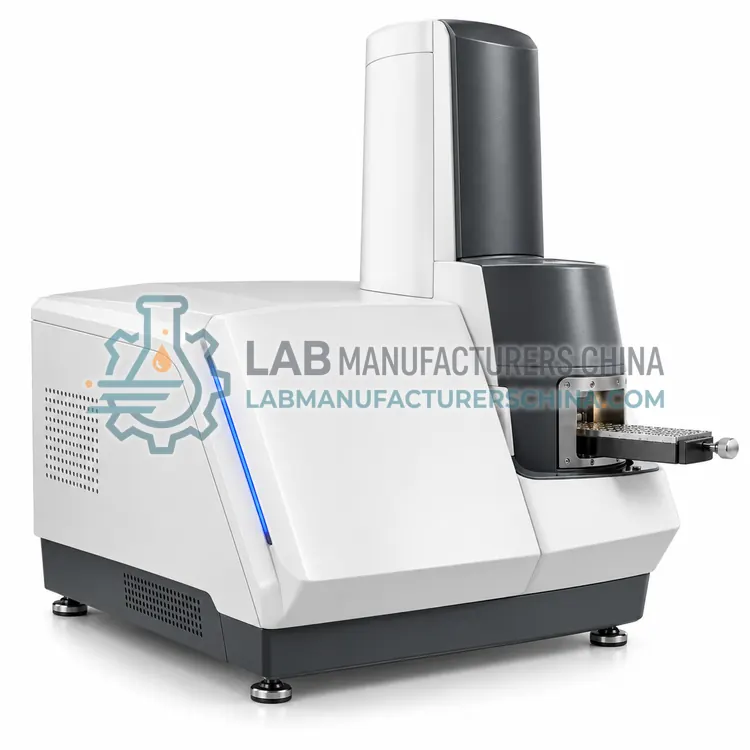
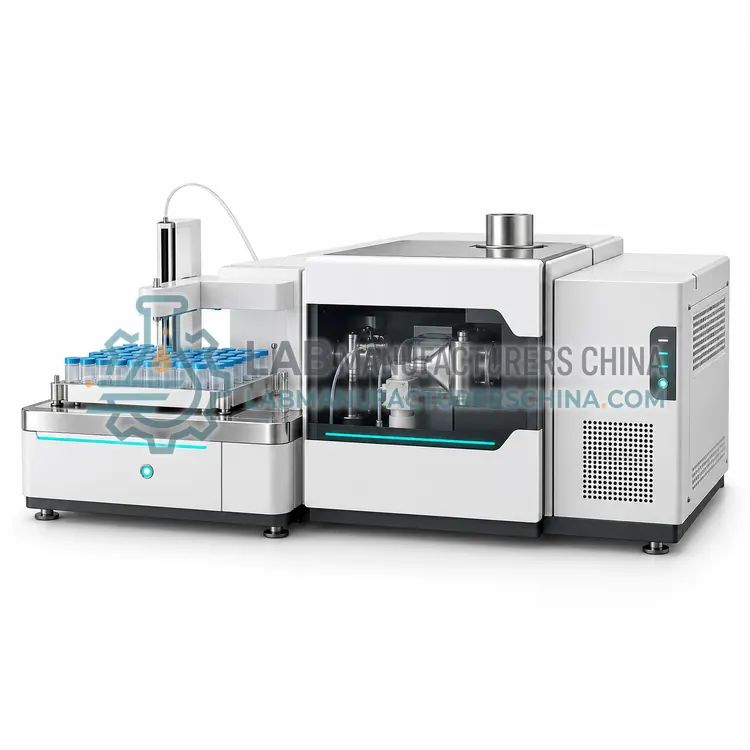
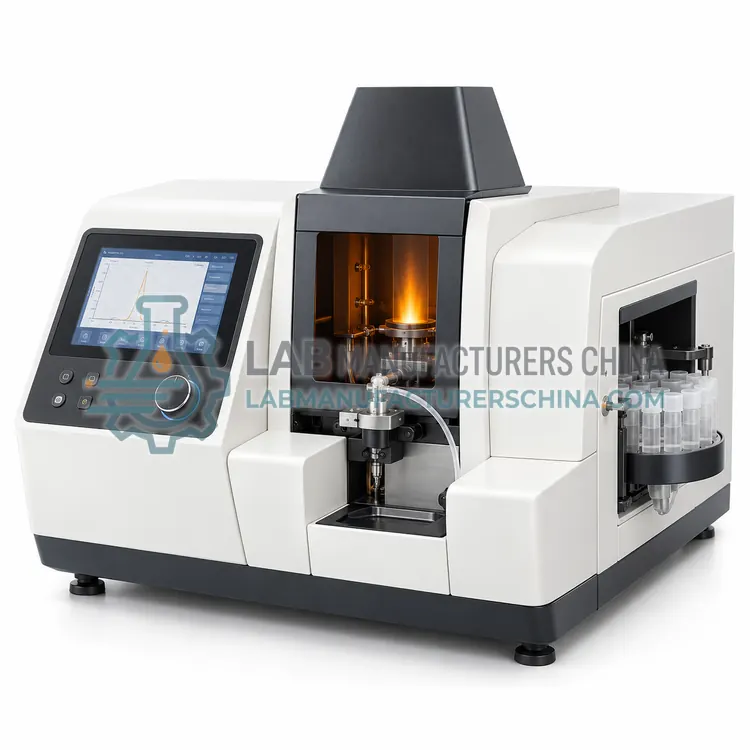
An atomic absorption spectrometer measures individual elements in digested or diluted food samples using flame or graphite furnace atomisation. It is a robust and economical choice for laboratories reporting a small number of elements at moderate to low concentrations.
What is the Atomic Absorption Spectrometer for Food Elemental Analysis?
An atomic absorption spectrometer measures individual elements in digested or diluted food samples using flame or graphite furnace atomisation. It is a robust and economical choice for laboratories reporting a small number of elements at moderate to low concentrations.
Overview
The spectrometer aspirates the sample into an atomiser, where thermal energy converts the analyte to free atoms. A hollow-cathode lamp emits light at the element's characteristic wavelength, and absorption by the atomic vapour is proportional to concentration according to the Beer–Lambert law. Flame atomisation is fast and simple and suits milligram per kilogram levels, while a graphite furnace provides a longer residence time and reaches microgram per kilogram levels for lead, cadmium and chromium. Background correction, matrix modifiers and Zeeman or deuterium correction improve accuracy for complex food digests. Multi-element flame instruments use rotating lamp turrets or multi-lamp assemblies. Calibration uses aqueous or matrix-matched standards with recovery checks.
How does it work?
Contaminant analysis combines an extraction and clean-up step with an element-selective or mass-selective detector. Elemental contaminants are measured by atomic spectroscopy: samples are digested in strong acid under heat or microwave energy, then aspirated into flame atomic absorption, graphite furnace atomic absorption or an inductively coupled plasma coupled to mass spectrometry, which reaches microgram per kilogram levels for lead, cadmium, arsenic and mercury. Organic contaminants are measured by chromatography with mass detection. Mycotoxins and veterinary drug residues are separated by liquid chromatography and detected by tandem mass spectrometry in selected reaction monitoring mode. Process contaminants such as acrylamide, chloropropanols and polycyclic aromatic hydrocarbons are usually separated by gas chromatography with tandem mass detection. Isotope-labelled internal standards correct recovery and matrix effects.
What are the key features?
- Flame and graphite furnace atomisation in one instrument
- Hollow-cathode lamps or a multi-element lamp turret
- Background correction by deuterium or Zeeman effect
- Graphite furnace with programmable temperature steps
- Auto-sampler for furnace and flame modes
- Software with calibration curves and QC limits
What are the technical specifications?
A typical atomic absorption spectrometer for food elemental analysis configuration offers atomisation of Air-acetylene flame and graphite furnace, wavelength range of 185–900 nm, detection limits (furnace) of 0.05–5 µg/kg for Cd, Pb, Cr, detection limits (flame) of 0.01–1 mg/kg for Zn, Fe, Cu, background correction of Deuterium or Zeeman and lamp positions of 4–8 lamps. Values are indicative of the product class; the exact figures for each configuration are confirmed on the quotation and the calibration documents supplied with the instrument.
Which applications is it used for?
The Atomic Absorption Spectrometer for Food Elemental Analysis is used in zinc, iron and copper in cereals and beverages, lead and cadmium in salted snacks and spices, calcium and potassium in dairy and nutrition products and salt and flavour enhancer element control. Across the wider Contaminant Analysis class, laboratories also deploy it for heavy metal monitoring in rice, seafood and infant food, mycotoxin testing of cereals, nuts and spices and veterinary drug residue control in meat and aquaculture.
Which standards and certifications apply?
Relevant standards and methods include ISO 17294-2, EPA 6020B, Commission Regulation (EU) 2023/915, EN 15662, ISO 16050, SANTE/11312/2021 and ISO/IEC 17025. Certification candidates for this model are CE and ISO 9001 manufacturing; each is to be confirmed for the specific configuration before shipment, and certificates are supplied only where they have been issued.
Trace analysis is easily compromised by contamination from reagents, glassware and laboratory air. Use high-purity acids, digested blank checks and a clean, dedicated preparation area, and verify instrument performance with certified reference materials and recovery spiking. Collision or reaction cell gases and tuning solutions must meet the instrument specification, and elemental calibrations need regular verification because drift affects low-level results. For organic contaminants, reference standards are expensive and unstable, so storage and preparation records matter. Laboratories should participate in proficiency testing for the contaminants they report and keep confirmatory ion-ratio criteria under review.
How do I select the right Atomic Absorption Spectrometer for Food Elemental Analysis?
Select atomic absorption when your element list is short and you want low operating cost and simple maintenance. Choose flame for milligram per kilogram work and add a graphite furnace when microgram per kilogram limits apply. Confirm that background correction fits your matrices and that the lamp range covers the elements you report.
How does it compare with other Contaminant Analysis variants?
Choose the elemental technique from the number of elements and the sensitivity required. ICP-MS covers many elements in one run at microgram per kilogram levels and is the default for lead, cadmium, arsenic and mercury, with a speciation option for inorganic arsenic and methylmercury. Flame atomic absorption is economical for higher concentrations of a single element such as sodium, calcium or zinc, while graphite furnace atomic absorption serves low levels where ICP-MS is not available. For organic contaminants, select LC-MS/MS for mycotoxins and veterinary drugs and GC-MS/MS for process contaminants and packaging migrants. Confirm that the compound library, reference standards and validated clean-up procedures exist for your matrices, and compare detection limits with the regulatory maximum levels.
Full specifications
| Atomisation | Air-acetylene flame and graphite furnace |
|---|---|
| Wavelength range | 185–900 nm |
| Detection limits (furnace) | 0.05–5 µg/kg for Cd, Pb, Cr |
| Detection limits (flame) | 0.01–1 mg/kg for Zn, Fe, Cu |
| Background correction | Deuterium or Zeeman |
| Lamp positions | 4–8 lamps |
| Furnace programmes | Up to 20 programmable steps |
| Sample volume (furnace) | 5–50 µL |
| Autosampler capacity | 50–100 positions |
| Gas | Acetylene and argon |
Indicative values for this product class. Final specifications are confirmed on the quotation and in the calibration documents supplied with the instrument.
Applications
- Zinc, iron and copper in cereals and beverages
- Lead and cadmium in salted snacks and spices
- Calcium and potassium in dairy and nutrition products
- Salt and flavour enhancer element control
Key features
- Flame and graphite furnace atomisation in one instrument
- Hollow-cathode lamps or a multi-element lamp turret
- Background correction by deuterium or Zeeman effect
- Graphite furnace with programmable temperature steps
- Auto-sampler for furnace and flame modes
- Software with calibration curves and QC limits
Frequently asked questions about Atomic Absorption Spectrometer for Food Elemental Analysis
Atomic absorption is simpler to operate and cheaper to buy and run for a small number of elements at higher concentrations. ICP-MS is preferred when many elements, very low detection limits or speciation analysis are required.
Flame atomisation introduces the sample continuously and suits milligram per kilogram levels quickly. Graphite furnace atomisation heats a small aliquot stepwise, retaining atoms longer so that microgram per kilogram detection limits are achievable.
Food digests contain salts and organic residues that scatter light or produce broad absorbance, adding a bias to the measurement. Deuterium or Zeeman correction subtracts this background so that the true atomic signal is measured.
Typical regulated contaminants are lead, cadmium, mercury, arsenic, tin, mycotoxins such as aflatoxins and ochratoxin A, process contaminants such as acrylamide, and residues of pesticides and veterinary drugs. Specific maximum levels depend on the commodity and jurisdiction.
ICP-MS measures many elements in a single run at microgram per kilogram levels, has a wide dynamic range and can be coupled with chromatography for speciation. That combination suits the low maximum levels and multielement reporting required for food.
Samples are usually digested in high-purity nitric acid, sometimes with hydrogen peroxide, using a closed microwave system to prevent loss of volatile elements. Digests are diluted and analysed against matrix-matched calibration standards with internal standards.
Related models